
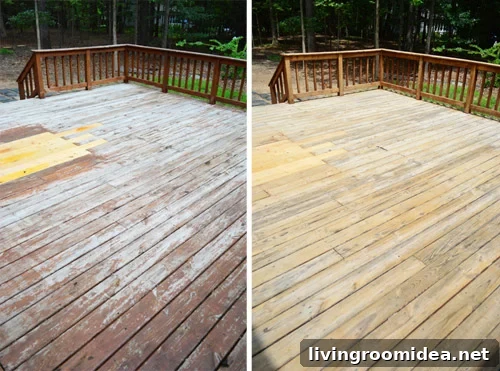
When we bought our house, the deck was in rough shape. Before it could be revived with a fresh coat of stain, we needed to strip off the old finish. It took time and effort — our deck is nearly 700 sq. ft — but it was a totally doable weekend project, even for a first-timer.
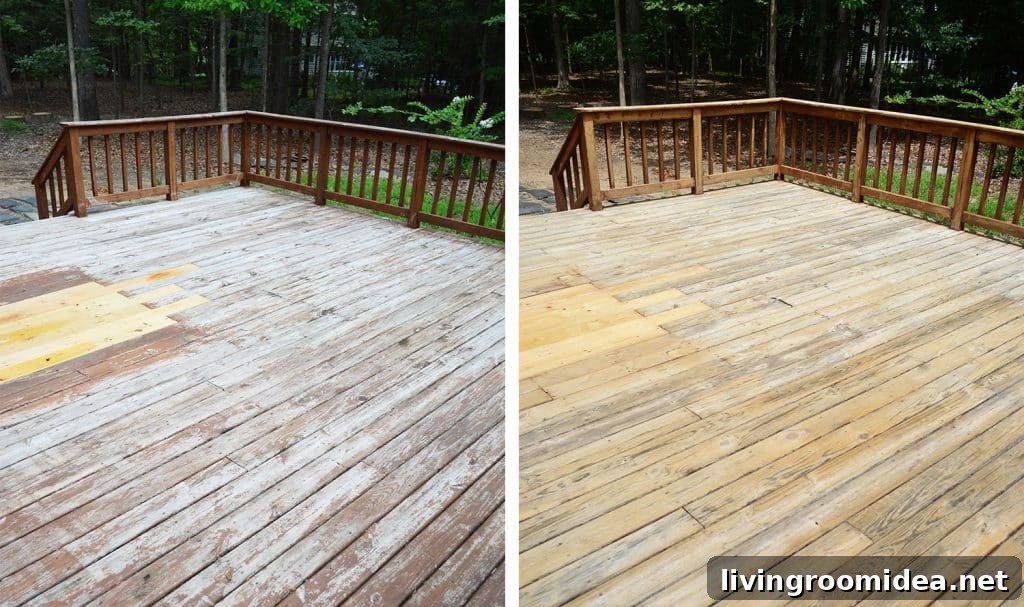
That image shows the deck after stripping. If you want to see the finished result with stain, check our How To Stain & Seal A Deck tutorial.
We also repaired a section where a tree had been growing through the deck. If you need that fix, see our Patching a Wood Deck tutorial.
Can I Skip the Stripping Step?
For the best, longest-lasting result when restaining or repainting, removing the old finish is recommended. Some products are formulated to be applied over existing coatings — for example, coatings that form a thicker, paint-like layer. Those can save time, but they change the final look and texture. We wanted a traditional stained wood appearance, so we chose to strip the deck first.
Can I Just Use a Pressure Washer?
Power washing can be fast and effective, especially when paired with chemical cleaners. It’s great for removing dirt, grime, and mildew, and we’ve used it successfully on other outdoor wood projects. For this deck, however, the wood was soft and in places rotting; we were concerned high-pressure water would cause further damage. Our goal was to extend the deck’s life a few more years, not to risk tearing up the boards.
If your boards are in better condition, pressure washing is worth considering — but adjust pressure and technique for older wood.
How to Strip Your Deck Yourself
Here’s an overview of the six main steps to strip finish from a deck, porch, stairs, or railings. Depending on your deck size and layout, this can often be completed in a day or over a weekend.
- Ready Your Deck
- Wet Your Landscaping
- Apply Stripper With a Roller
- Scrub Off the Old Paint or Stain
- Neutralize the Stripper
- Enjoy the Results
Tools & Supplies
These are the materials we used to strip our deck:
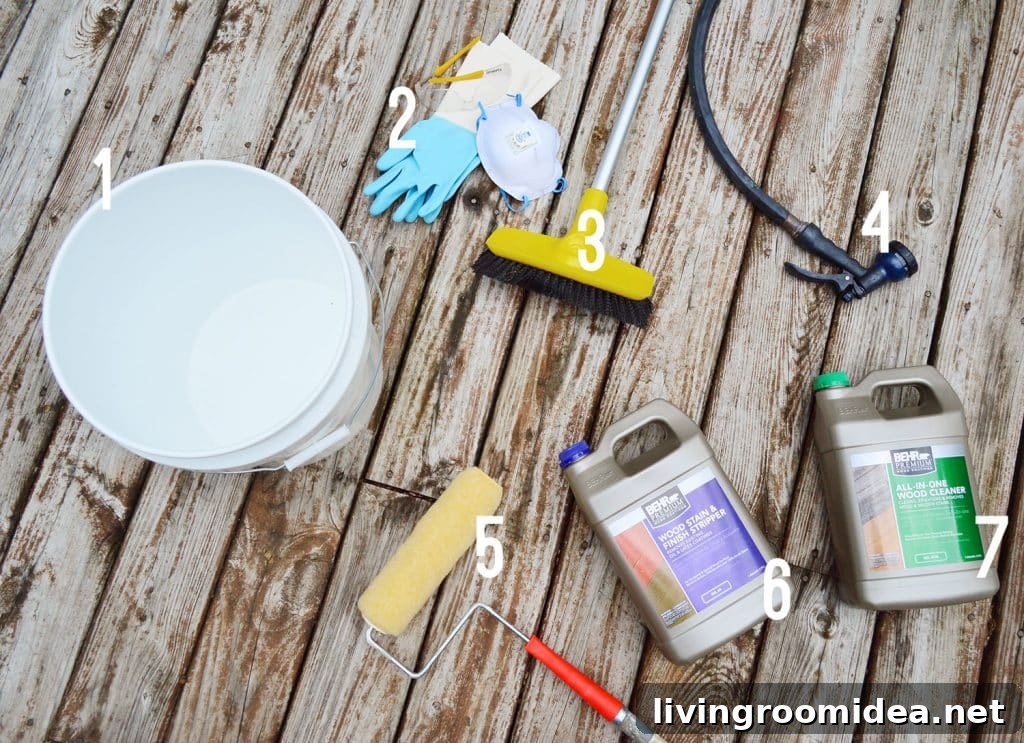
- Bucket — for pouring stripper and dipping the roller.
- Protective gear — rubber gloves, goggles, and a mask; the chemicals can have strong odors.
- Stiff bristle brush with pole — for scrubbing.
- Hose — for rinsing and misting as needed.
- 1/2″ nap paint roller with extension pole — for applying stripper evenly.
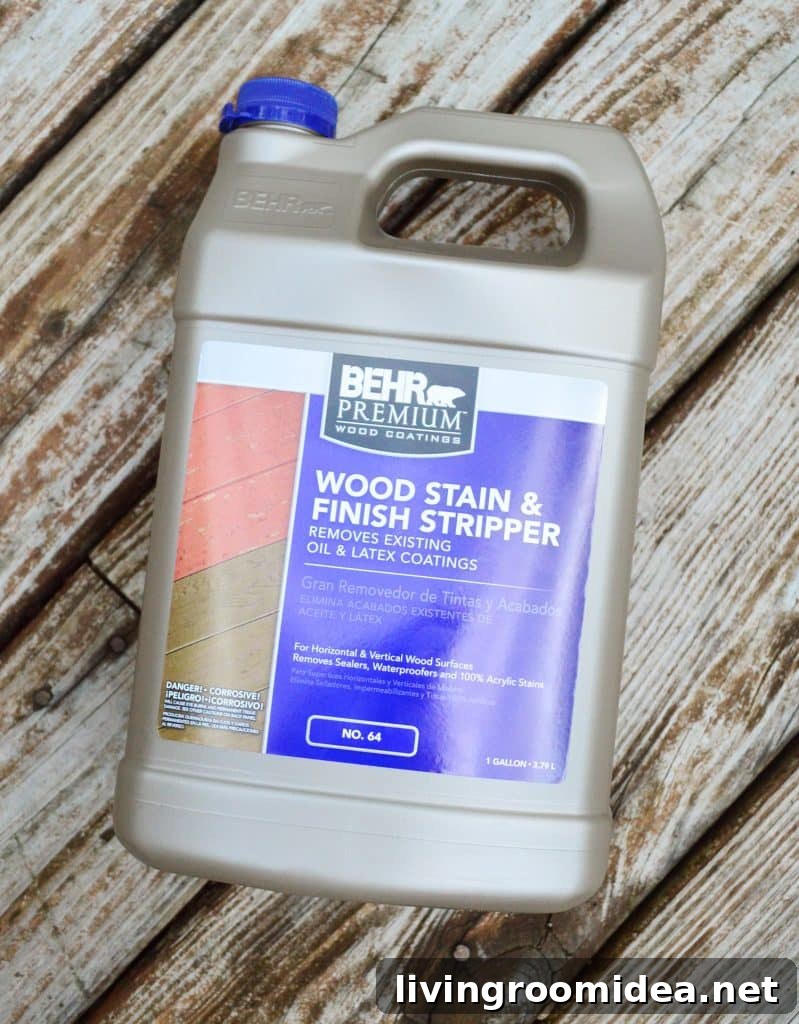
- Wood stain and finish stripper — we bought four bottles and used three.
- All-in-one wood cleaner/brightener — to neutralize the stripper and brighten the wood.
- Pump sprayer — useful for applying cleaner and brightener.
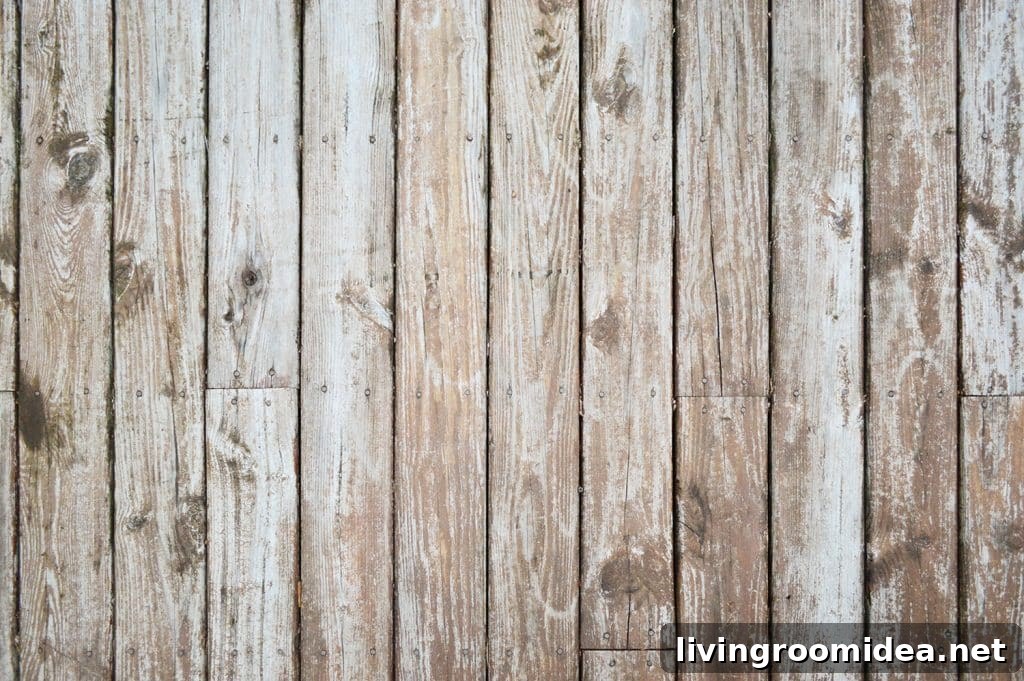
Step 1: Ready Your Deck
Remove furniture and obstacles so you can access the entire surface. Check the forecast — you want enough dry time to complete the job and prefer a cooler, cloudy day so the stripper doesn’t dry too quickly during application.
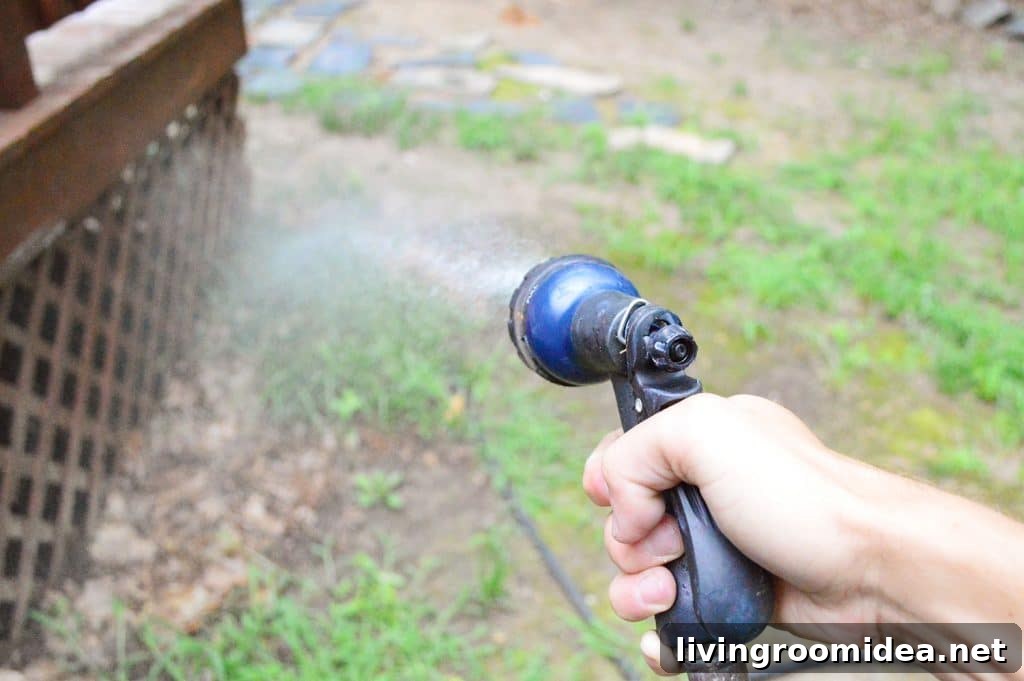
Step 2: Wet Your Landscaping
Wet nearby plants with your hose to dilute any runoff and protect vegetation. The stripper we used is biodegradable and water-cleanable, but it’s still wise to reduce contact with shrubs and flowers.
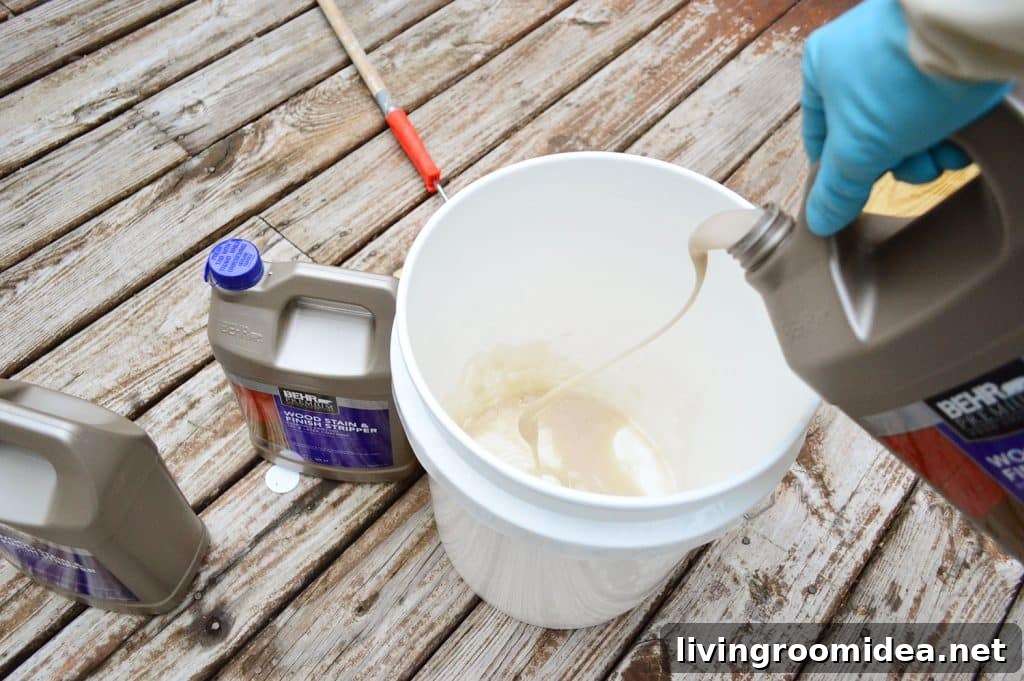
Step 3: Apply Stripper With a Roller
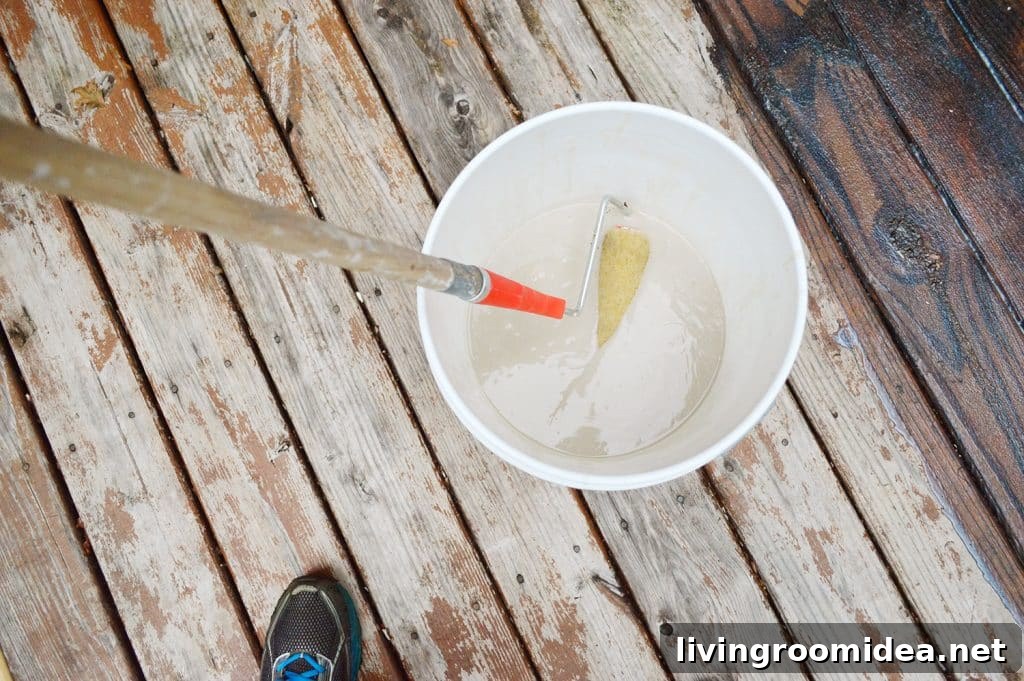
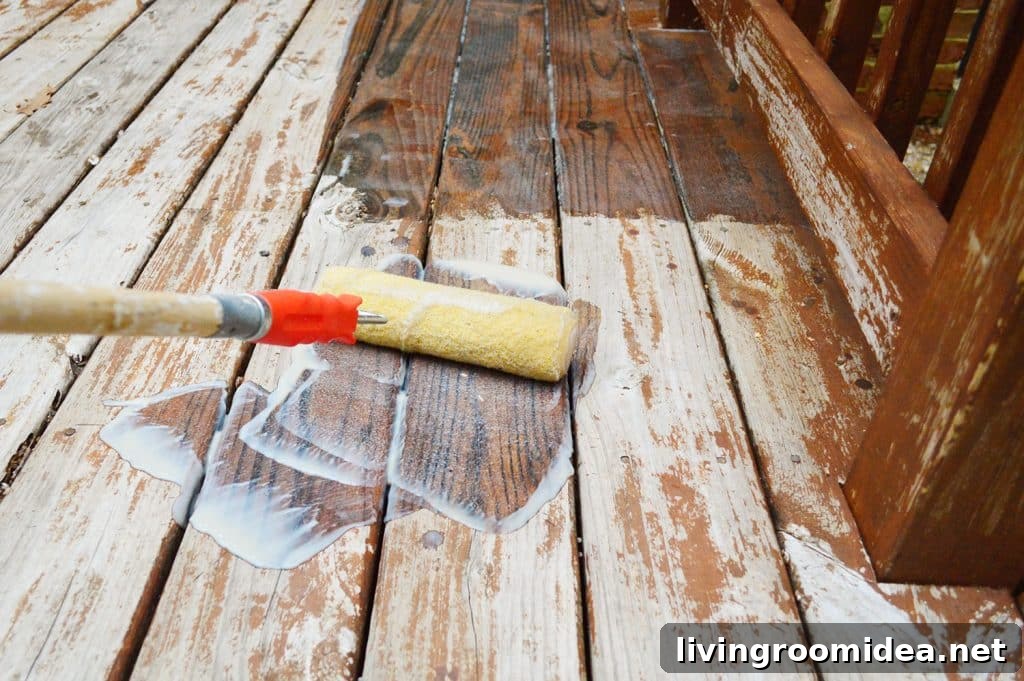
Pour stripper into a bucket for easy dipping. The product we used is thick — almost porridge-like — which makes it easy to control on the roller. Work methodically, coating every board. Instructions usually recommend spreading liberally and letting it sit 5–45 minutes without drying out. If the surface begins to dry, lightly mist it with water.
Step 4: Scrub Off the Old Paint or Stain
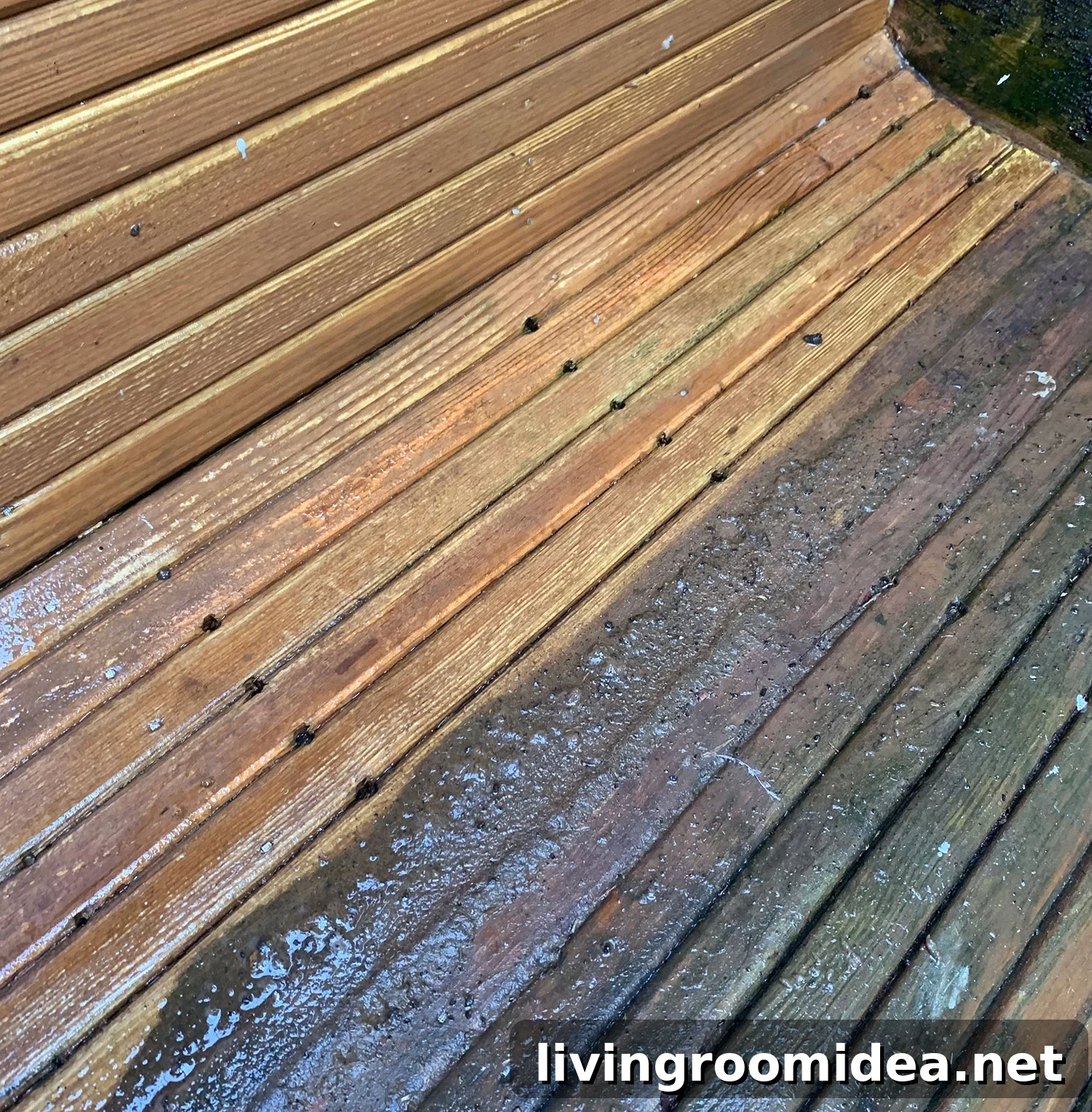
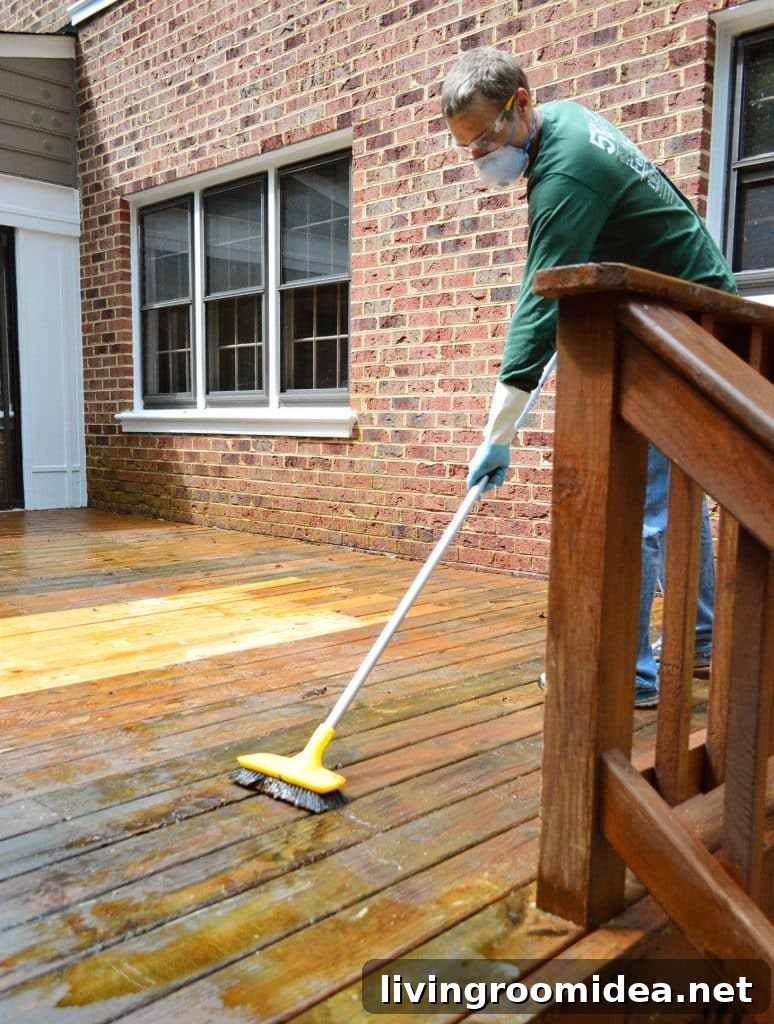
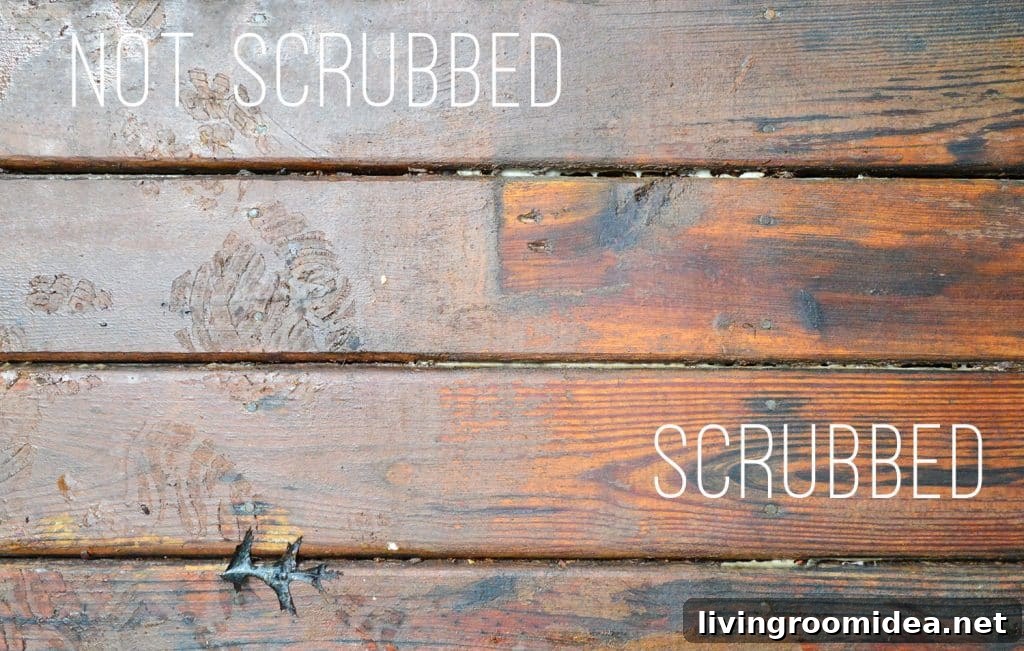
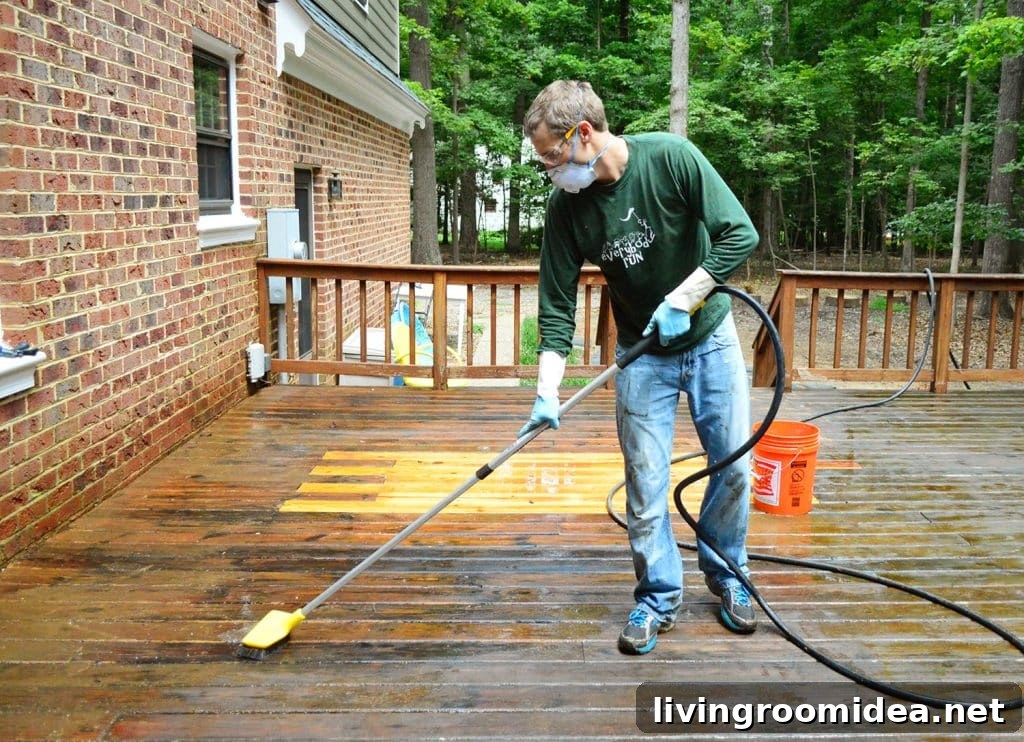
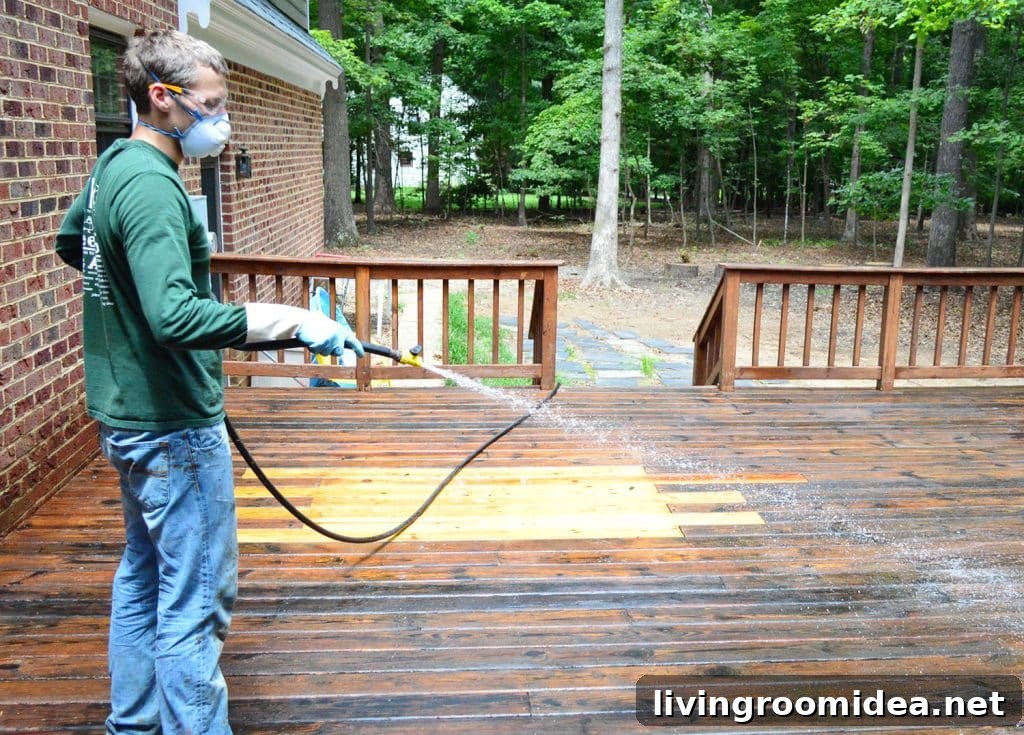
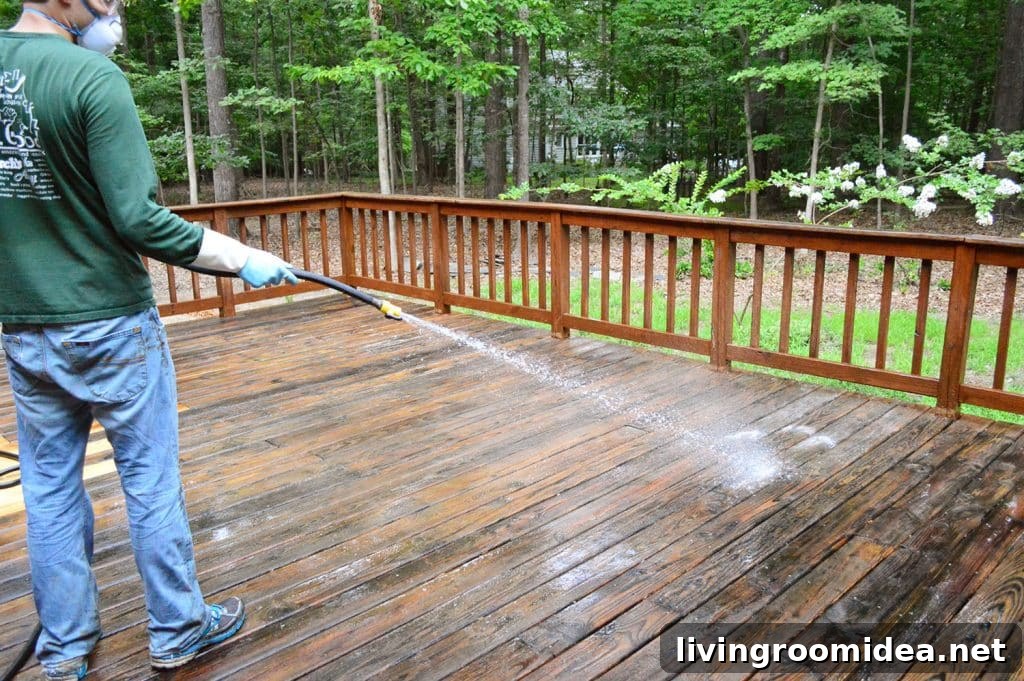
After the stripper has had time to lift the finish, scrub the boards with a stiff-bristled brush to remove it. It will come off in a brownish sludge that rinses away to reveal the wood grain. We hooked our hose to the back of the brush to scrub and rinse at the same time, which sped things up. The initial scrub pass took about 45 minutes for our deck; spot scrubbing and multiple rinses helped remove residual finish.
Step 5: Neutralize the Deck Stripper
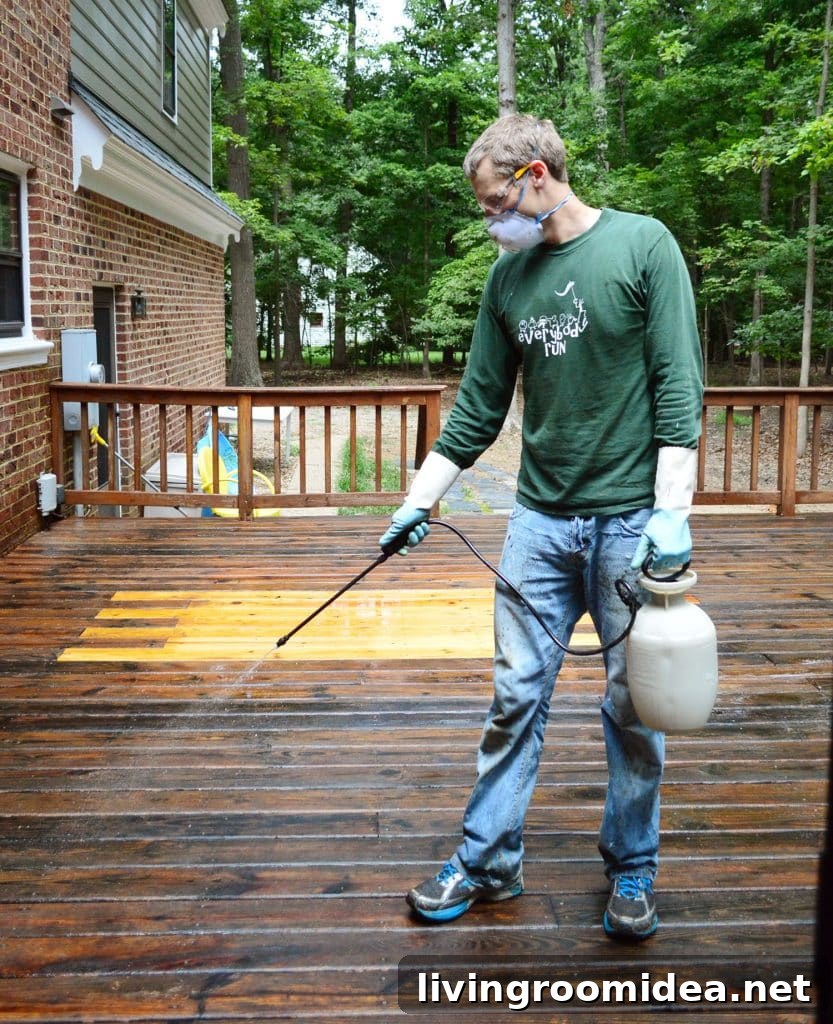
Apply a deck cleaner/brightener to neutralize remaining stripper and brighten the wood. We used a pump sprayer with a 1:1 mix of cleaner and water and applied it across the whole deck, then scrubbed per the product recommendations. After scrubbing and allowing it to work for the suggested time, rinse thoroughly to remove all residues.
Step 6: Enjoy Your Results
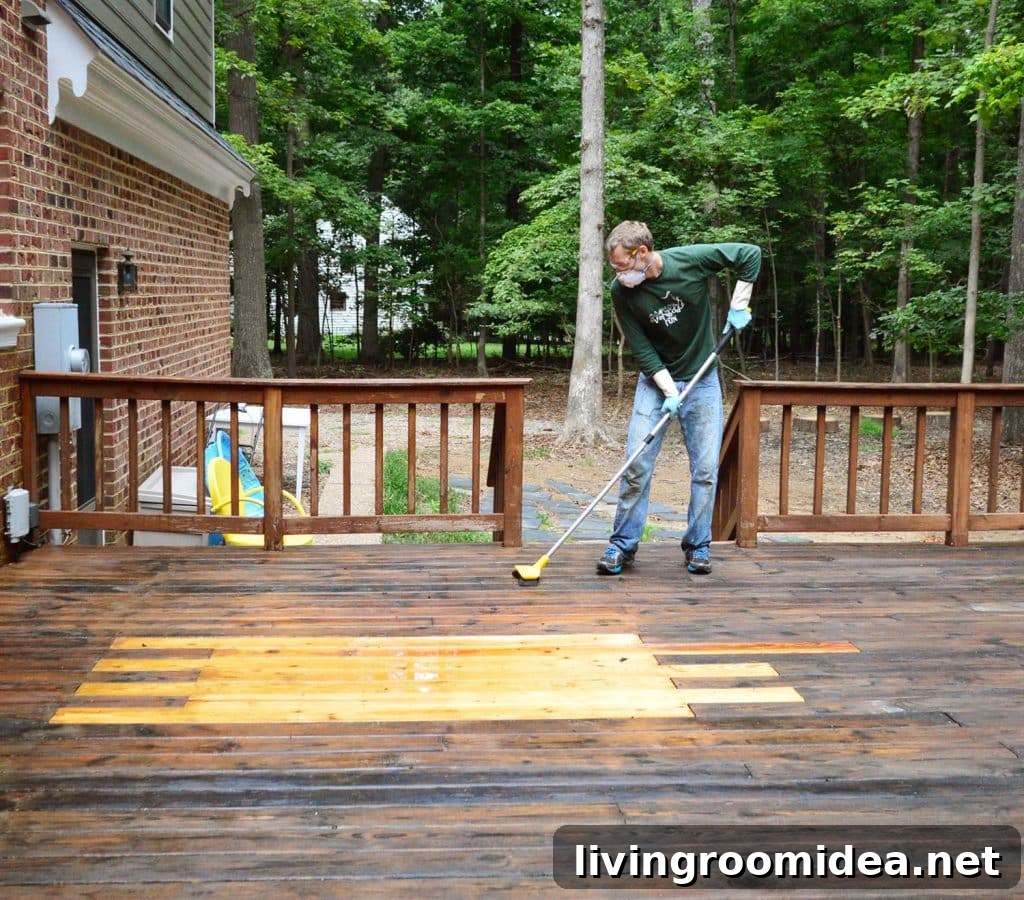
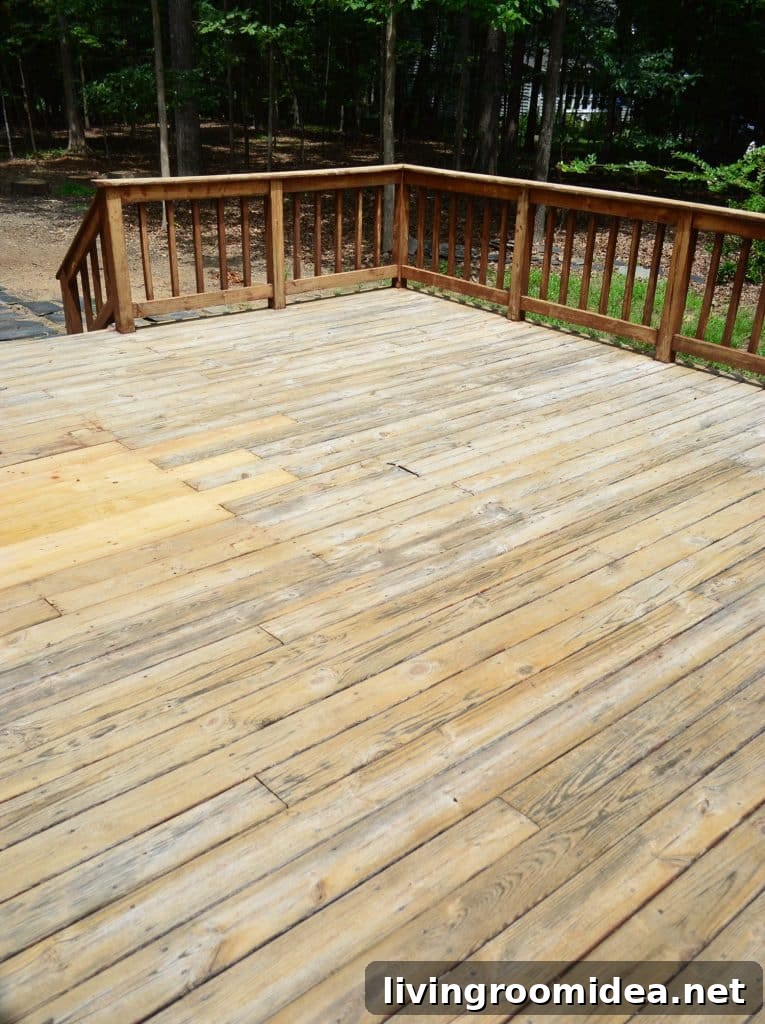
The stripper removed peeling finish and much of the gray weathering, leaving the wood looking almost bleached and refreshed. It blended well with the small sections of new wood we had to add. The whole process took roughly 3.5 hours for our first section; we completed the rest the next day. Working in two sections made the job manageable and let us see the dramatic difference stripping made.
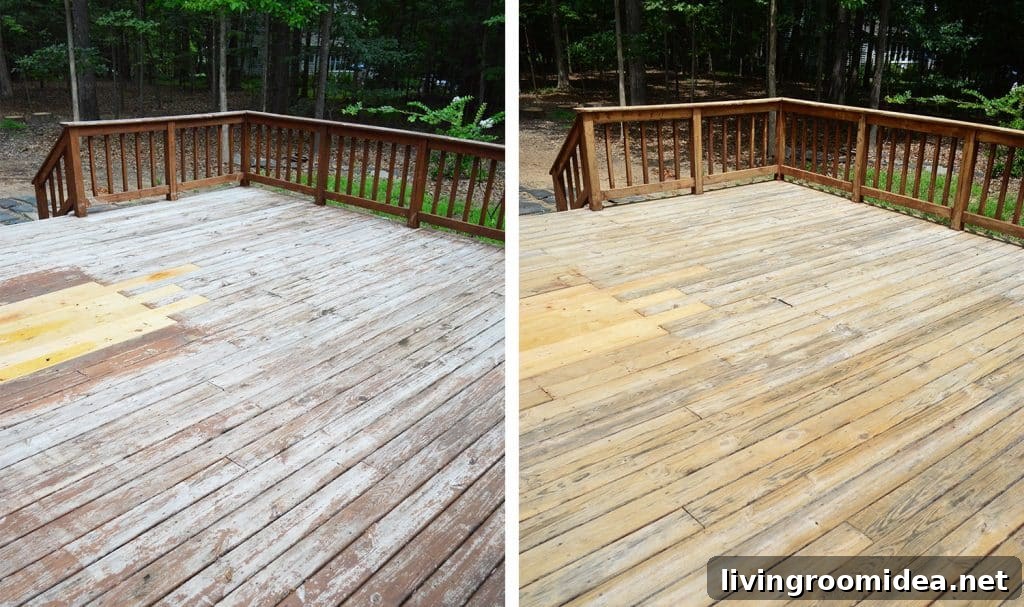
We plan to stain with a semi-transparent color similar to the original rich brown to help the old and new sections blend. We skipped fully stripping small vertical railings because they were in better condition and close enough in color; matching stain should make the overall finish look seamless.
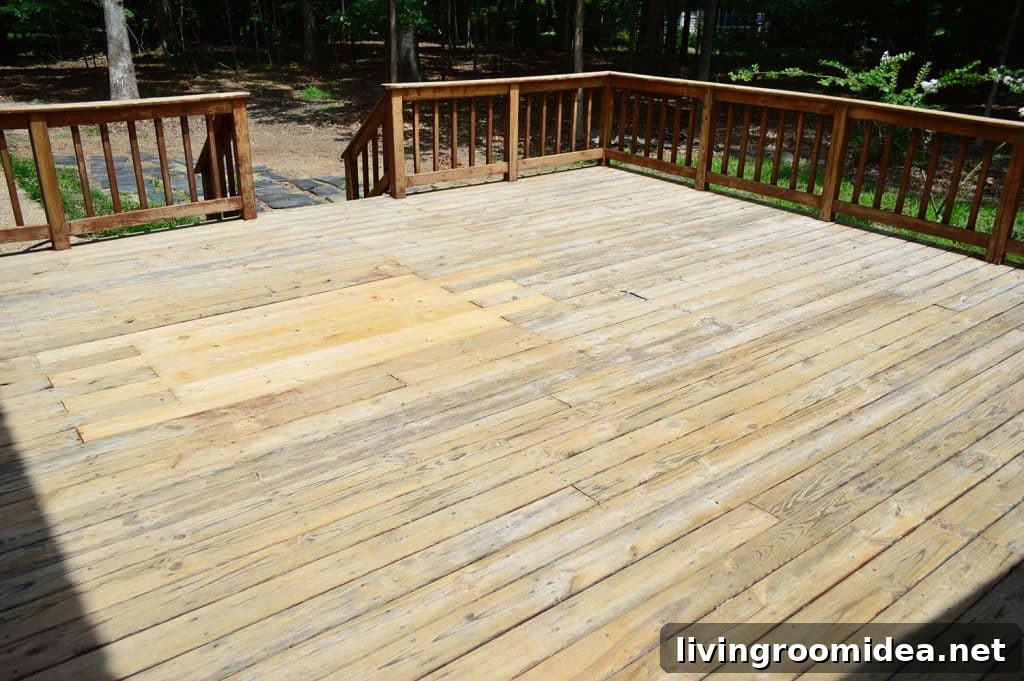
In short: even a tired-looking deck can often be revived with the right stripper, some elbow grease, and careful finishing. We’re excited to move on to staining and sealing and give this deck a new life.
Bonus: More Deck Posts
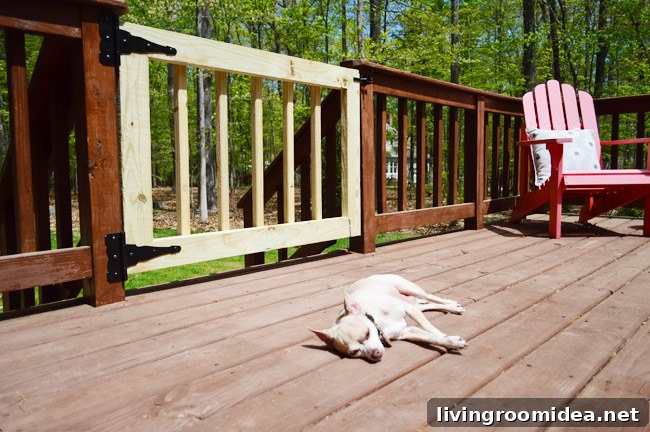
We’ve published more tutorials about decks that you might find helpful, including building a gate, staining and sealing, deck construction, and full replacements. These guides walk through the steps we used and decisions we made while renovating our own outdoor spaces.
*This post contains affiliate links; we may earn a small commission at no extra cost when you purchase through links on our site.