
H
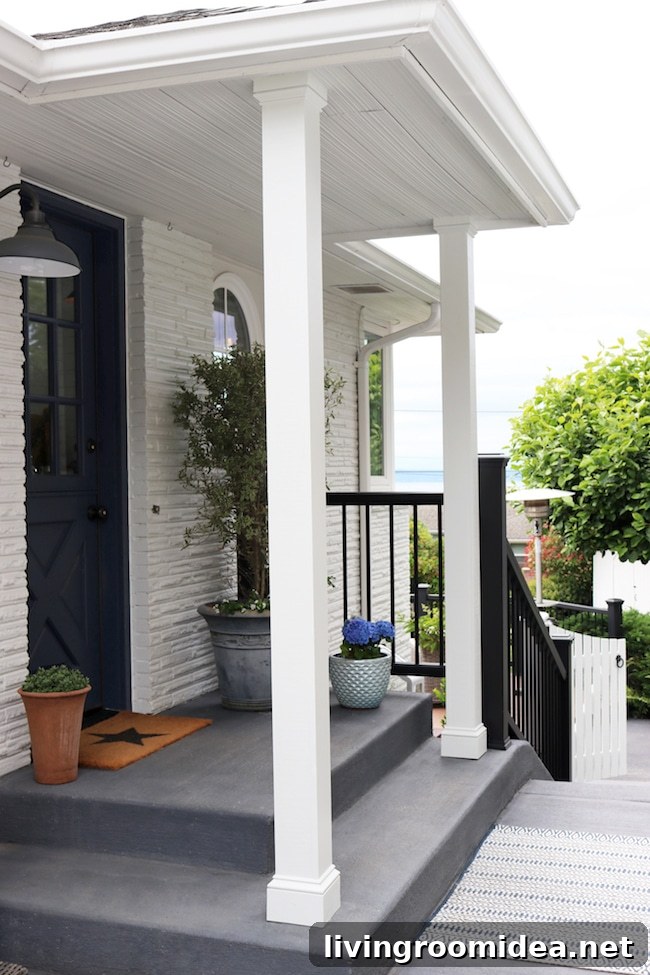
Have you ever wanted to refresh the look of your concrete porch or patio with color? I get a lot of questions about the shade we used on our concrete, so this post explains what we did, how it holds up, and tips if you want to tackle the job yourself.
When we began our side yard project a few years ago, we decided on a deep gray for the concrete to contrast with our newly painted white brick house. We originally ordered a stained finish when the concrete was poured, but a series of issues left us with half the patio white and half gray. It was a setback, but we were able to resolve it and learned a lot in the process.
Can you paint a concrete patio?
Yes. If you’re installing new concrete, staining it during the pour is a great option and gives long-lasting color. That’s what we intended to do. When staining or painting existing concrete, both options are viable depending on the look and durability you want. Stain penetrates the surface and gives a more translucent, natural finish, while paint provides opaque coverage.

Is painting outdoor concrete difficult?
Not at all. If you want to refresh older concrete, painting or staining is a relatively simple DIY project. I painted a concrete porch and steps years ago before selling a house and was surprised at how much impact a coat of dark gray made. It transformed the space and was quick to do. For small porches or patios, refreshing the finish every year or two is manageable and can keep the space looking clean and updated.
Did we use concrete stain or paint?
Technically we used a concrete stain rather than a traditional paint. Stain tends to be thinner and more translucent, so it won’t hide surface imperfections and will wear differently than paint. Stain usually fades over time rather than chipping, which can be an advantage. It’s also common to see lighter marks if furniture is dragged across the surface; lifting furniture helps avoid those streaks. Sealing the stain afterward can increase durability and resistance to wear.
If your concrete already has old paint, check with a paint specialist about proper preparation. You may need to power wash, scrape flaking paint, and possibly use a primer or sealer before applying a new coat.
How long did the concrete stain last on your patio?
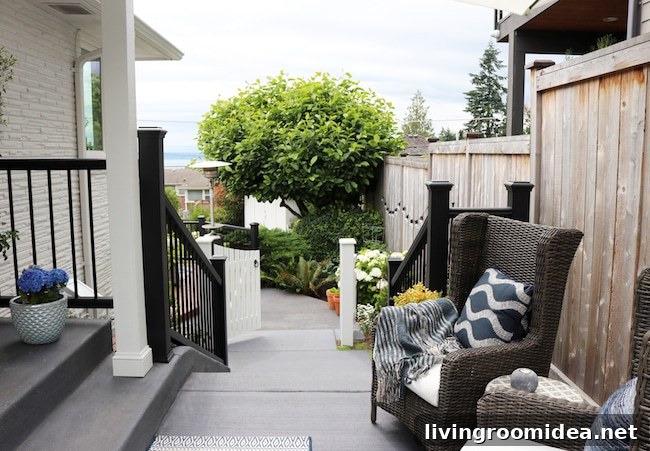
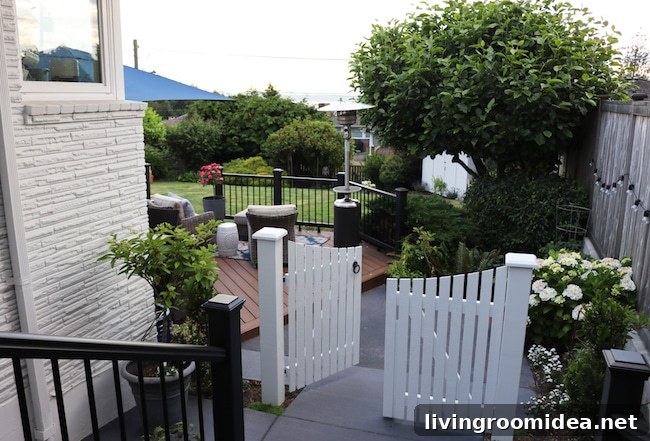
Stain typically needs refreshing every year or two, depending on climate and traffic. We didn’t re-stain our covered porch this year, only the exposed patio, so the covered area faded a bit but remains acceptable for now. We also stained a small section of the older patio to help visually connect the new concrete and the deck; it’s not a perfect match but improves the overall flow.
What is the best brand or product to use for a patio?
There are many suitable products. Visit your local home improvement store or paint supplier and ask for concrete or masonry stains and paints suitable for your region. They can recommend products formulated for outdoor exposure, temperature ranges, and the level of traffic your patio receives. Different brands make concrete floor paint, masonry paint, and specialized sealers for interior and exterior surfaces.
Our exact product is listed at the end of this post for reference.
Did you use a primer or sealer?
We did not apply a primer or sealer ourselves. It’s possible the contractor sealed the concrete before staining the first time. Our contractor did recommend sealing after staining to prolong the finish. A sealer helps protect the stain from moisture and wear and can make the color more durable, which is especially useful for interior concrete floors like garages or basements. Consult a paint professional to determine whether you need a primer or sealer for your specific product and surface.
Five steps we used to prepare and stain our concrete:
- Clean the patio thoroughly. Remove chips, grime, sap, and any contaminants that will prevent proper adhesion.
- Allow the surface to dry completely before applying stain or paint.
- Ask your paint supplier whether a primer is needed for the product you chose.
- Apply the stain or paint with a roller suited for textured surfaces. The product instructions may recommend spraying, but rolling is often easier and effective for homeowners. Use a brush for edges and corners. If working indoors or in enclosed spaces, use appropriate respiratory protection.
- With stain, don’t expect perfection on the first coat. Overlap lines and slight color variation are normal; once it cures and accumulates normal wear, minor imperfections blend in. Apply additional coats if you want fuller coverage, and consider a sealer once you’re satisfied with the color and appearance.
Our approach is summed up by the phrase: better done than perfect. A refreshed surface makes a big difference even if it’s not flawless.
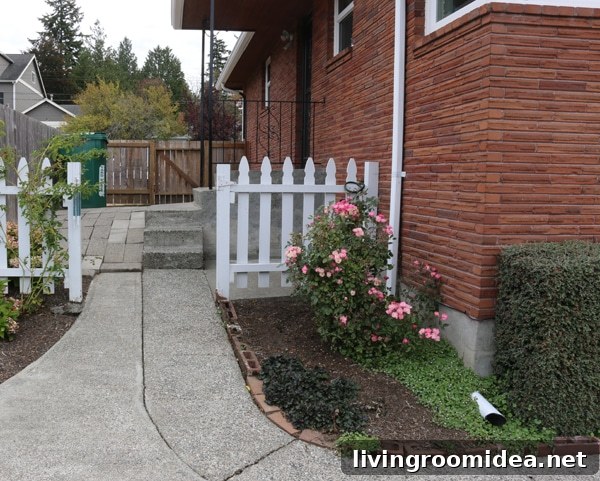
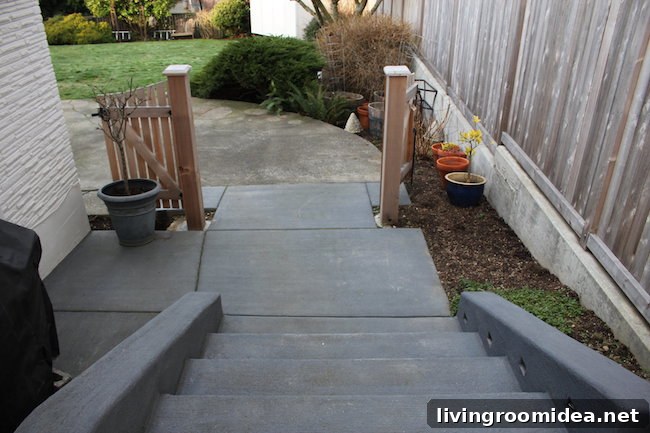
And for comparison, here’s what the patio looked like before we started the makeover.
Any big news about the side patio makeover? Yes—happy day!
* * * * *
Our concrete stain:
Concrete Stain, Smith’s Color Floor
CF-Gray stain concentrate (mixed with distilled water: four quarts distilled water to one quart of product).