
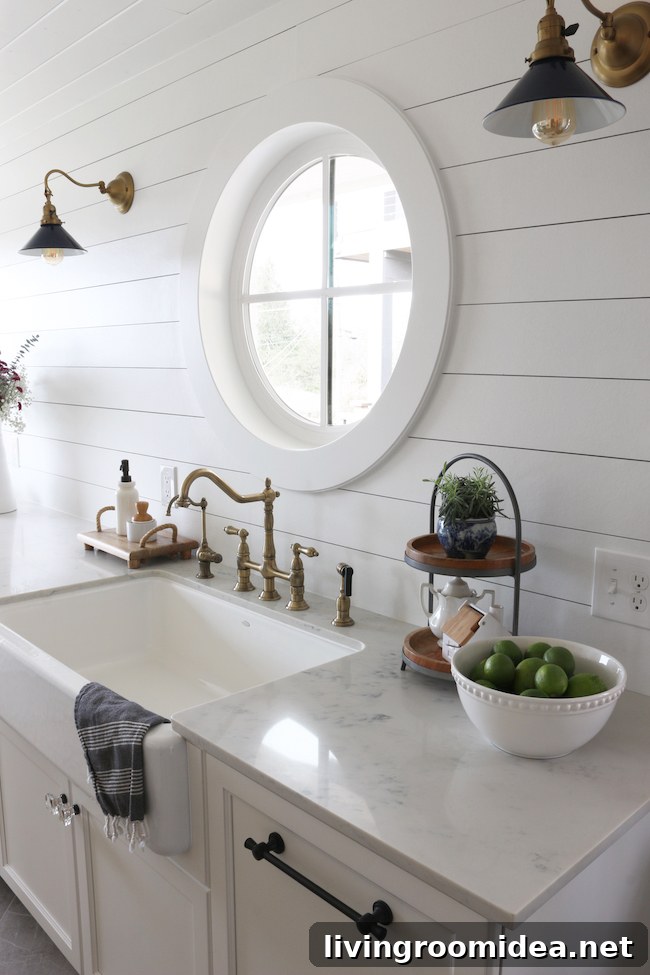
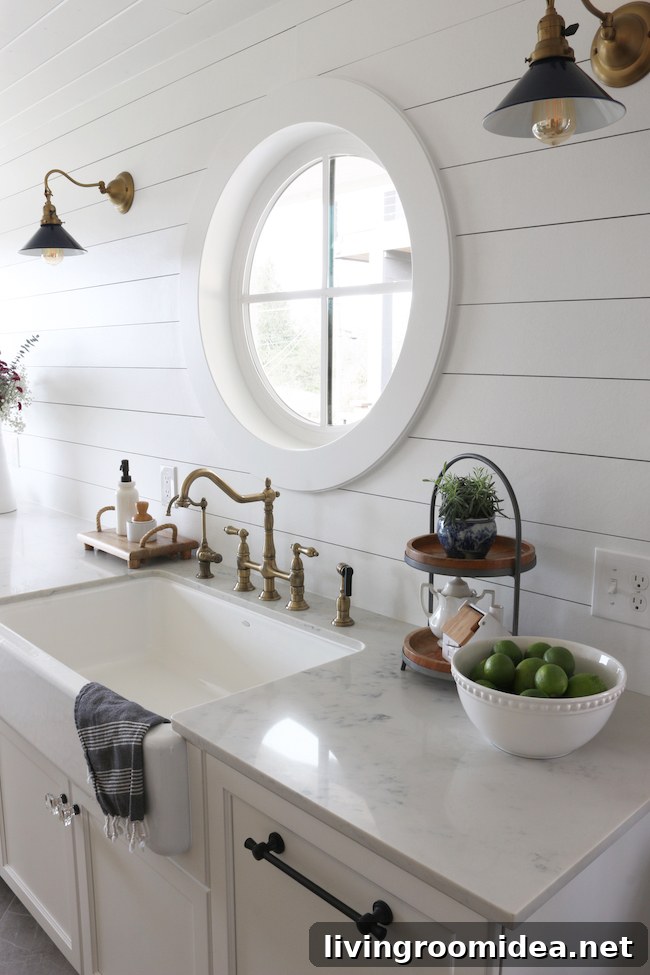
 Hardiplank Shiplap Kitchen
Greetings! After sharing the galley kitchen reveal, I received many questions about particular details in the room. I’m glad so many of you liked the design. I’ll share a before-and-after and a full kitchen design post later, but for now I want to answer questions about a few specific elements people have asked about, starting with the wall and ceiling treatment commonly called “shiplap.”
We didn’t set out to build a traditional shiplap kitchen. Initially we considered tile for the walls and spent hours looking at samples—from classic white to colored tiles, different shapes and patterns. While many options were beautiful, none felt right for this space. With a small kitchen, I aimed for a cozy, layered feeling created by a few textured materials rather than many competing surfaces.
Knowing we would use tile for the floor and quartz for the countertops, I didn’t want tile on the walls as well. Adding a third hard surface would risk making the room feel cold and one-dimensional. I wanted warmth and texture without overwhelming the small space with too many contrasting patterns and colors. Neutrals gave us flexibility to style the kitchen differently throughout the year.
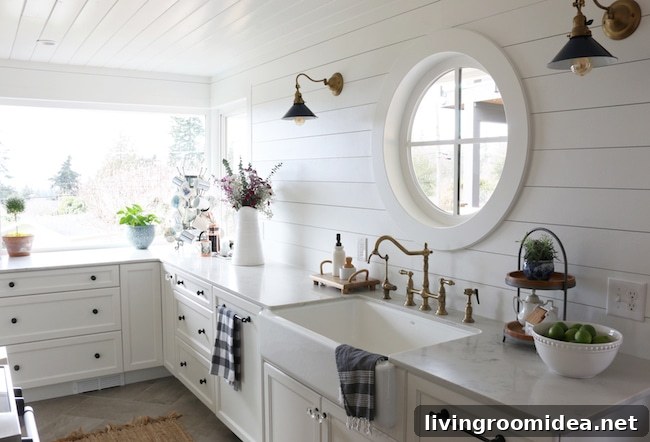 Hardiplank Shiplap Kitchen Walls
Because the room has many doorways and windows and we didn’t want to close any openings, we needed a wall material that would visually tie the space together and provide the texture I wanted without competing with other elements. With not much continuous wall area, the right material had to make a strong, unifying impact.
In the end, planked walls were the best solution. I call them shiplap for simplicity, although they’re not true historical shiplap. Horizontal planks visually connect the openings and guide the eye around the room, creating a cohesive backdrop. The painted planks hold the room together while adding subtle interest and texture.
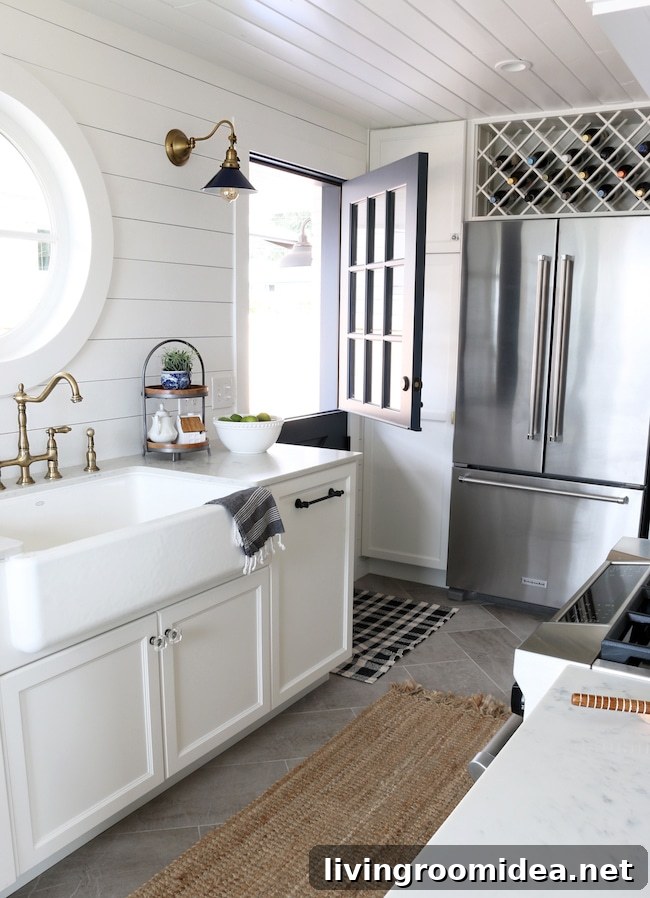
Many readers asked about the material choice and how it performs near the sink and stove. We used smooth HardiePlank siding (Hardiplank) installed horizontally and nailed in place. Our contractor sourced smooth boards from a lumber yard—these were plain, without visible manufacturer text or logos. If ordering, confirm with your supplier or contractor to ensure you receive the smooth finish you expect; if there’s a logo on the face, some people can reverse the boards when installing, but check first.
Our walls weren’t perfectly straight—typical for an older house—but the installers adapted and any small irregularities add character. Raw plank edges were finished with trim or caulking where needed. The planks were sprayed with a quality paint—Benjamin Moore Advance in Simply White—yielding a smooth, durable finish.
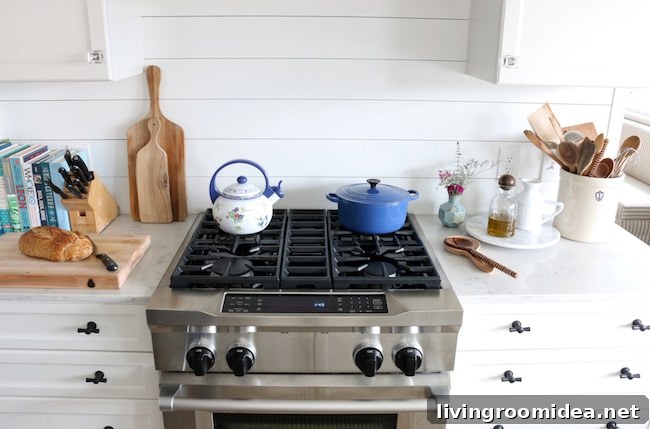
HardiePlank is cement-based, so it’s water- and fire-resistant and holds up well behind the sink and stove. It’s as tough as tile in terms of durability but has the softer visual warmth of painted wood. It wipes clean easily and didn’t require us to redesign around appliances or plumbing. Choosing a material that balanced durability and appearance made the most sense for our small kitchen.
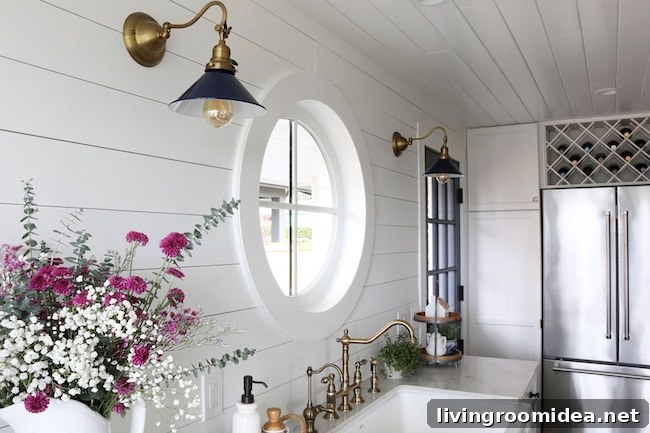
To add more classic charm and unify the room, we paneled the ceiling with tongue-and-groove cedar in a V-groove style. The ceiling boards contrast the smooth wall planks with natural knots and grain, bringing visual richness without overpowering the space. The combination of smooth painted walls and textured wood ceiling creates a layered, balanced look.
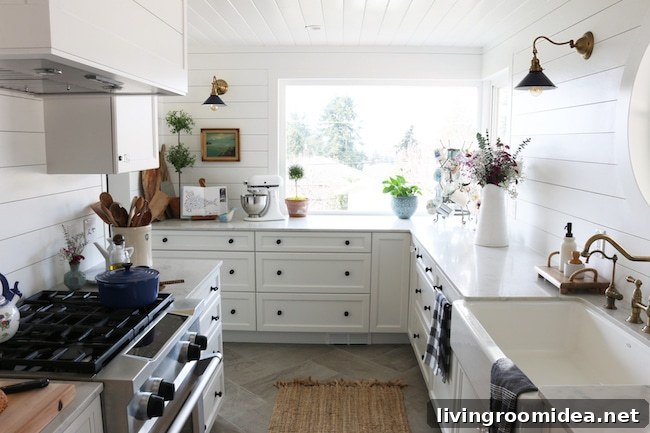
We painted both walls and ceiling in the same Benjamin Moore Simply White, a slightly warm white that helps the room feel cohesive and larger. Using a consistent color allows the planks’ texture and the ceiling’s natural character to be the focus without distracting color changes. The horizontal lines on the walls also create an impression of added height and make the space feel more open.
The overall goal was a simple, classic, and inviting room that’s interesting without being flashy. The clean white backdrop is calming and gives us a flexible canvas to change styling seasonally. I love that the space can be refreshed easily with textiles, hardware, and accessories while the core materials remain timeless.
So, that’s the story of our planked walls and ceiling!

Catch up on additional posts about the kitchen, including sources and tips, in the related articles and source lists originally shared with the remodel reveal.