
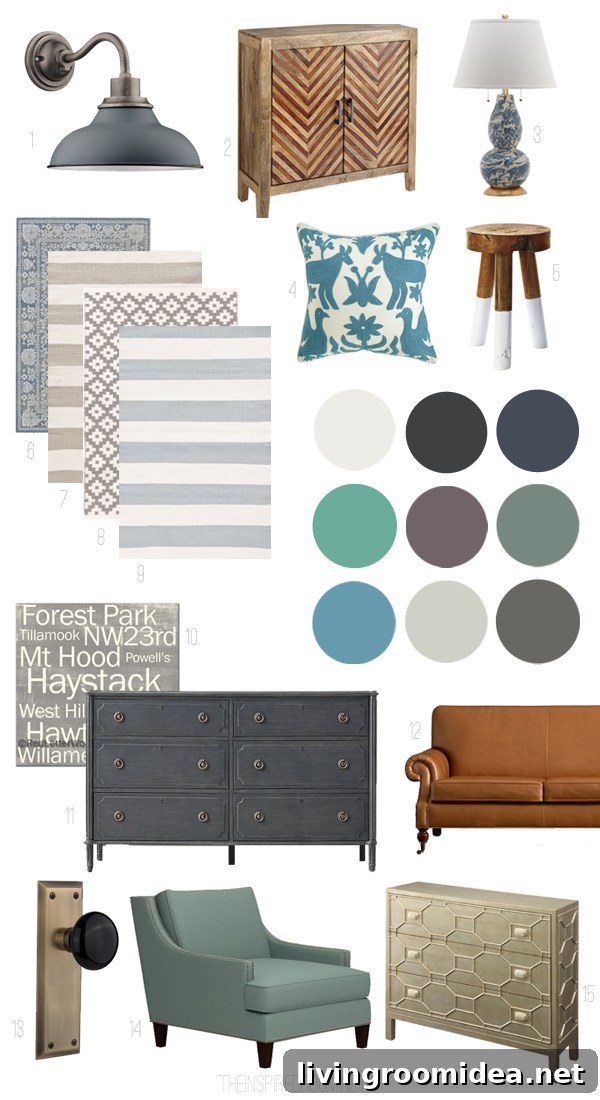
Creating a mood board is a practical and inspiring way to define the mood or look you want in your home. We assembled the example above digitally in Photoshop, but you can create an equally effective, tactile version on a bulletin board or with cut-and-paste materials.
A mood board helps you visualize how existing pieces will perform in a redesigned space and how new furniture, textiles, or lighting might blend with what you already own. Seeing items together lets you assess scale, texture, and how colors interact before you commit to big changes.
Playing with a color palette on a mood board can be especially useful. You can test color families, introduce accent tones, and explore variations in saturation and value to influence the room’s atmosphere. Small shifts in tone can dramatically change whether a room feels calm, cozy, bright, or dramatic.
Stepping away from the actual room and working with elements on paper or a screen often frees your creativity. It lets you focus on combinations of color, pattern, and material without being distracted by the current layout or unfinished details. Often a fresh pairing discovered on a mood board becomes the starting point for a successful redesign.
A mood board also serves as a reference as you shop or hunt for vintage finds. When you carry a clear palette and collection of inspiration with you—physically or digitally—you’re more likely to choose pieces that harmonize and less likely to make impulse buys that don’t fit the overall plan.
There are many approaches to making a mood board. Some people prefer a digital collage that can be edited quickly and easily; others enjoy the tactile process of collecting fabric swatches, paint chips, magazine clippings, and photographs. Either method works well—choose the one that keeps you engaged and helps you make decisions.
Here are a few practical tips to get the most from a mood board:
- Start with a clear goal: decide whether you’re focusing on a whole room, a vignette, or a single element like a seating area or entryway.
- Collect a range of textures and finishes in addition to colors—wood tones, metal finishes, textiles, and natural materials add depth.
- Include aspirational pieces alongside items you already own so you can see how new and existing elements will work together.
- Limit your palette to a few main colors and a couple of accent hues to maintain cohesion.
- Don’t be afraid to experiment: swap out an accent color or try a different fabric to see how it shifts the mood.
Working with a mood board is also a collaborative tool. If you share a space with a partner or family, use the board to gather feedback and find compromises that satisfy everyone’s tastes. It’s a visual way to communicate ideas that can be hard to describe in words alone.
Ultimately, mood boards are about making intentional choices. They reduce guesswork, help you prioritize purchases, and guide the editing process so the finished room reflects a cohesive vision. Whether you prefer a digital layout or a hands-on collage, the process of assembling inspiration can be enjoyable and productive.
Do you ever make mood boards for your home?
PS. Yesterday we kicked off The Love Your Home Challenge! See the list of week one’s challenges here.
Mood board image and sources used for inspiration are noted by the original creator.