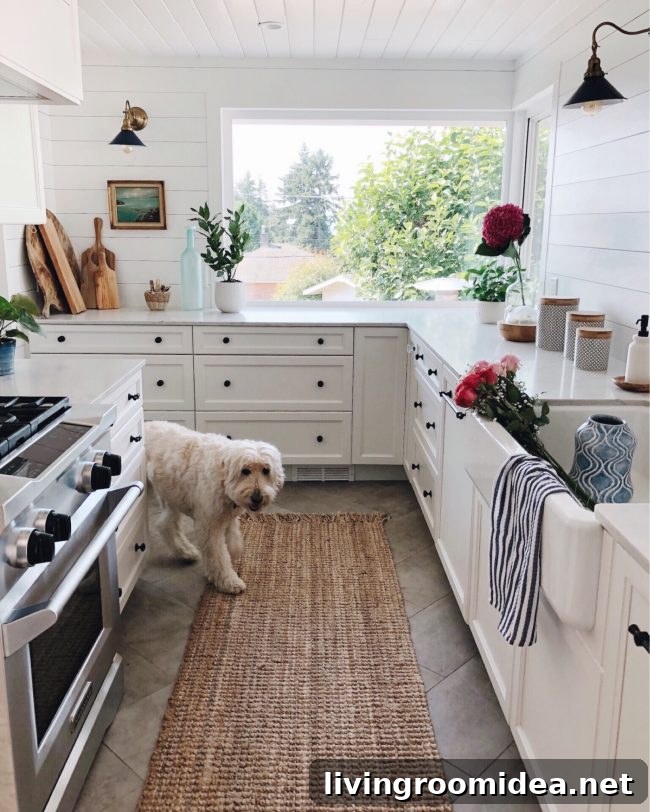
I receive many questions about remodeling, so here are practical, down-to-earth tips for redesigning a kitchen that will help you plan wisely and avoid common mistakes.
1) Take your time!
Gather inspiration from photos and magazines, but avoid rushing into major changes based on a fleeting idea. Thoughtful planning prevents costly regrets. Even seemingly small decisions—like a paint color or a finish—can feel permanent once installed, so live with a concept in your mind for a while before committing.
2) Decide wisely.
Research thoroughly and trust your own judgment over every piece of online advice. Trends change quickly; classic choices often stand the test of time. Prioritize functionality and timelessness where it matters, but know you can update decorative elements more easily later if you tire of a particular look.
3) Dark kitchens get dirty, too.
The visibility of dirt and wear varies with materials and finishes, not simply by light versus dark color choices. Each option—light or dark cabinetry, countertops, and backsplashes—has advantages and maintenance needs. Choose materials based on how you use the space and how much upkeep you’re willing to do.
4) Choose what you love.
Balance practical requirements with personal taste. Blend elements that complement your home’s architecture with pieces that reflect your style so your kitchen feels both functional and inviting. Investing in items you truly enjoy will keep the space feeling fresh for years.
Related remodeling resources and project posts:
Kitchen remodeling case studies and detailed source lists can be valuable when planning your own project. Examples include remodel reveals, material guides like quartz alternatives and tile patterns, and posts about appliance selection, hardware mixing, and specialty features like shiplap or Dutch doors.
When reviewing resources, focus on: choice justification, material pros and cons, maintenance expectations, and realistic timelines and budgets. That will help you avoid impulsive purchases and guide you toward decisions you can live with.
If you’re tackling a full remodel, consider compiling a folder of inspiration images, measurements, and a prioritized list of needs versus wants. For smaller updates, test finishes and colors in the actual space and observe them at different times of day before finalizing.
Selecting durable materials for high-use areas—like the sink surround, countertop edges, and cabinet hardware—pays off over time. Also think about workflow: place appliances and prep zones to minimize steps while cooking, and provide sufficient lighting and storage to support your routine.
Finally, remember that a well-planned kitchen reflects both practicality and personality. Aim for a design you enjoy living with, one that functions reliably and feels inviting to you and your family.
Have you redesigned your kitchen recently?
What tips helped you the most?