
Images: This Old House
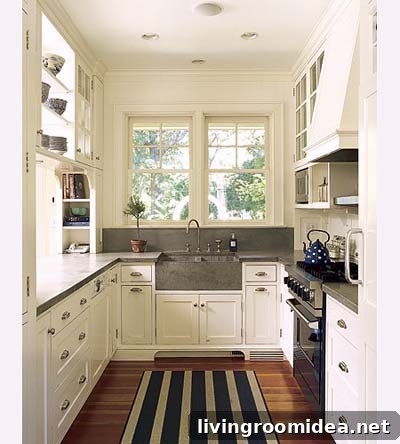
I recently came across three beautiful white kitchens styled with striped rugs. The combination is simple yet striking: the clean, timeless backdrop of a white kitchen paired with bold, graphic stripes on the floor creates instant visual interest and warmth.
White kitchens offer a fresh, versatile canvas. They reflect light and make spaces feel larger, which is especially useful in kitchens that benefit from a bright, airy atmosphere. Adding a striped rug anchors the space and introduces pattern without overwhelming the calm, neutral palette.
Striped runners work particularly well in narrow kitchen layouts or galley kitchens. Their linear design draws the eye along the length of the room, emphasizing flow and guiding movement. In open-plan kitchens, a larger striped rug can define the cooking or dining zone while still allowing the white cabinetry and countertops to remain the focal point.
Color choices for stripes can vary depending on the mood you want to create. Classic black-and-white stripes offer a graphic, modern contrast that feels crisp and sophisticated. Softer hues—such as muted blues, grays, or natural tones—add a relaxed, coastal vibe that complements shiplap, subway tile, or wooden accents.
Texture matters as much as color. Flatweave or low-pile rugs are practical in kitchens because they are easy to clean and lie flat against the floor, reducing tripping hazards. Natural fiber rugs like cotton or jute introduce a tactile element that pairs nicely with wooden or painted cabinetry. For high-traffic kitchens, choose durable materials and rugs with a tight weave to withstand daily use.
Styling a striped rug in a white kitchen is about balance. Keep accessories and textiles simple so the pattern remains a deliberate design choice rather than visual clutter. A few well-chosen accents—such as potted herbs, a dish towel, or a woven basket—can add warmth and personality without competing with the stripes.
If you love the look but worry about maintenance, consider a machine-washable runner or a rug with stain-resistant fibers. Rotating the rug occasionally will help distribute wear evenly, and using a non-slip pad underneath will protect both the rug and the floor.
Ultimately, pairing a white kitchen with a striped rug is an easy way to introduce pattern, anchor the space, and enhance the overall aesthetic. Whether you prefer bold monochrome stripes or softer, muted bands of color, this combination remains a timeless and versatile choice for kitchens of many styles.