
You know the houses you see on blogs, Instagram, or around the neighborhood that look absolutely perfect? I’ve come to believe that “perfect” is often misunderstood—especially when it comes to our own homes.
What does perfect mean to you?
Is a house perfect because you spent a lot on it? Because it has every feature on your list or the exact layout you wanted? Is it the location, the style, or simply that every corner is Instagram-ready? Or does perfection mean everything functions exactly as it should?
I like this dictionary definition of perfect: having all the required or desirable elements, qualities, or characteristics; as good as it is possible to be.
The phrase “required or desirable elements” lets each of us set our own measure of perfection. That’s a good thing—our priorities and circumstances should shape what feels complete to us.
If you choose few limits on what’s desirable, you may measure your home against someone else’s high standard and feel it falls short. But if you define what matters for your family in this season—your priorities and expectations—then “perfect” can change into something attainable and meaningful.
Two years ago we bought a house in Seattle during a wild market. We knew we’d have to compromise to find a home that worked for us in the location we wanted. What mattered most was that the house felt warm and welcoming—something many of the homes we saw lacked. That feeling, more than style or size, guided our choice.
The house didn’t have every feature on my dream list, but because it felt right, we knew we could shape it over time. Making a house our own isn’t about achieving a flawless design overnight; it’s about creating a home that suits your family in the season you’re in.
Recently I’ve been drawn to simplicity—not just in decor, but in life. Applying restraint in design makes the house feel calm and settled, and simple decisions feel best for our family right now. Instead of measuring against an impossible standard, we’re using simplicity as a guiding principle.
When simplicity is the goal, it’s easier to be content with what we can do or invest in during a particular season. That contentment changes how you approach updates and helps you choose solutions that are practical, affordable, and timely.
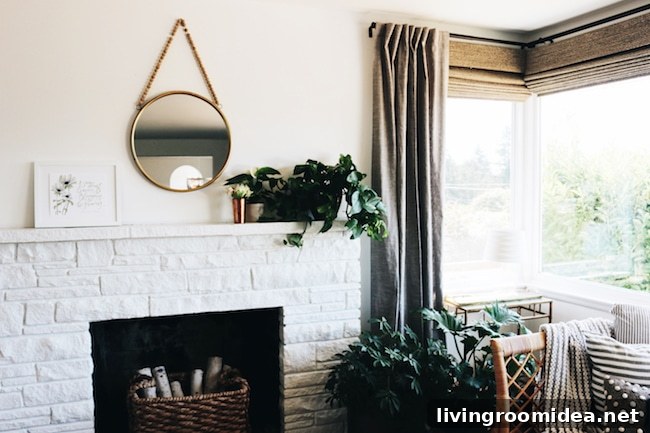
So what does this have to do with painting our stone fireplace white?
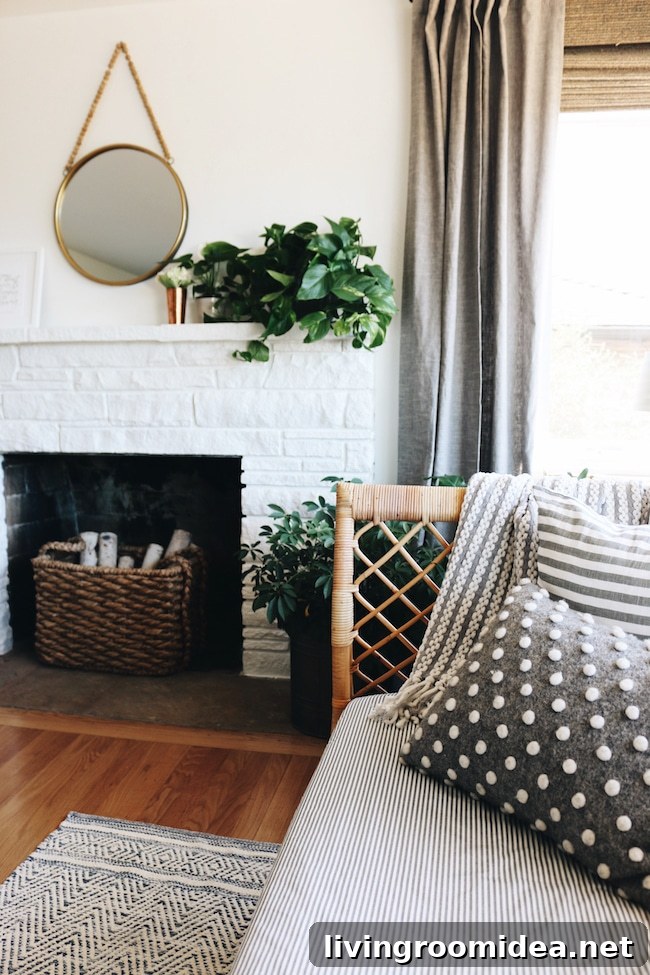
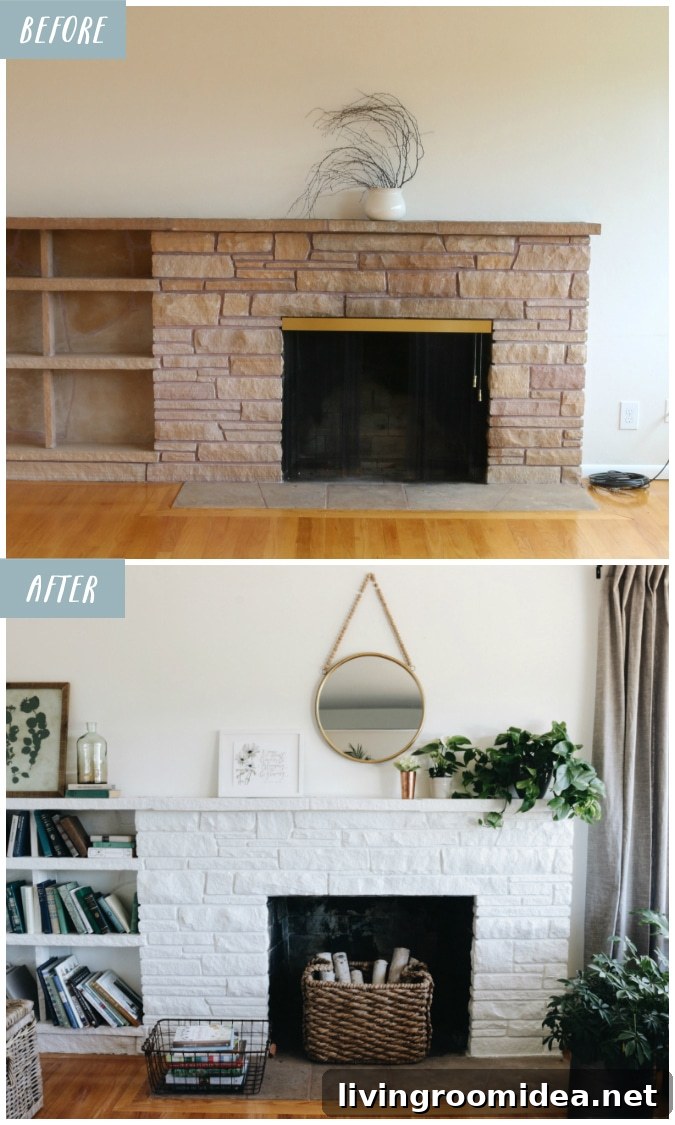
When we first painted the fireplace gray, I wasn’t sure I wanted white stone. Gray was the right, simple choice for that season. I assumed eventually I might rip out the stone and create my dream fireplace, but I also knew paint could be a temporary, low-cost way to refresh the room if I wanted.
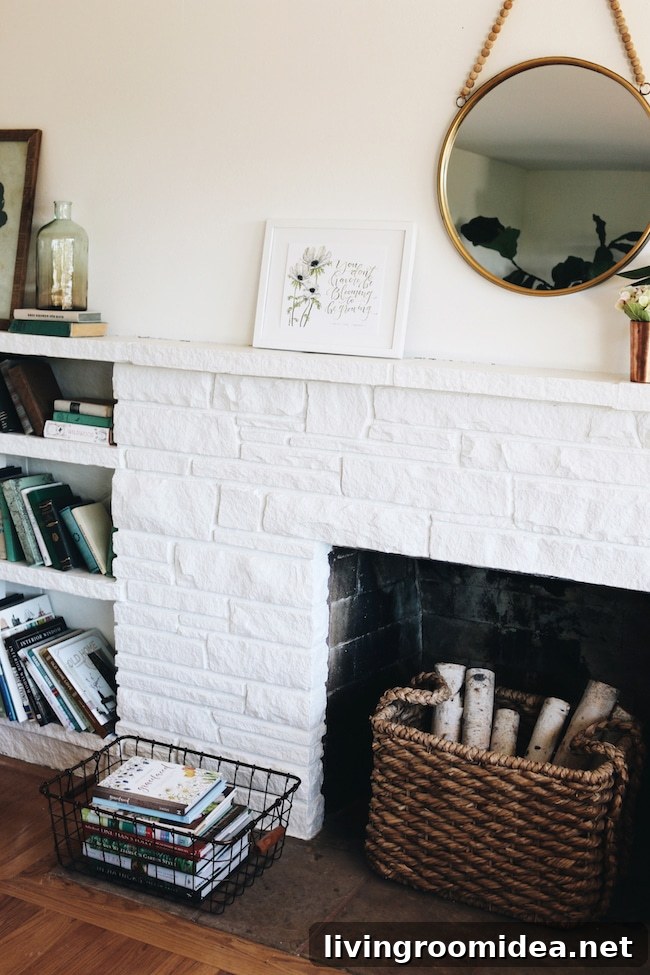
Recently I felt the itch to make bigger changes. Instead of diving into an expensive renovation, I returned to simplicity: a new paint color for the fireplace. If I don’t love it long-term, a more involved project is always an option later when the budget and time align. But that wasn’t where we were right now.
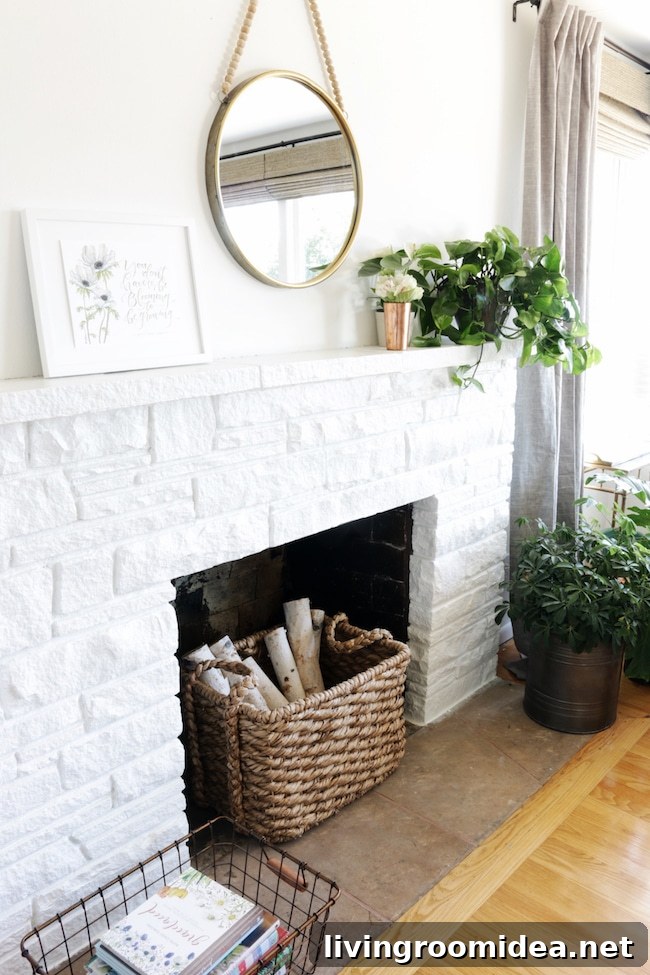
So we painted it white.
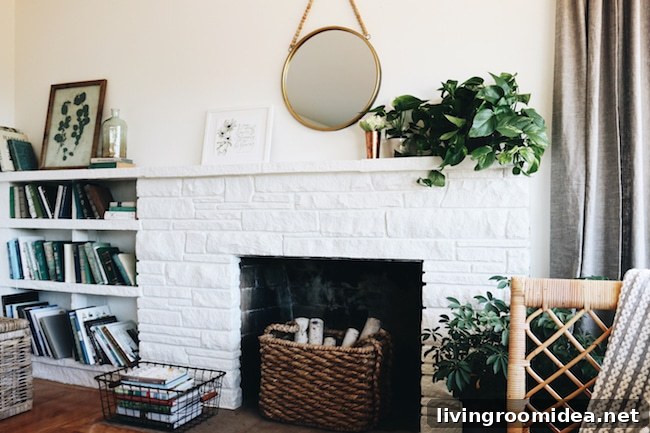
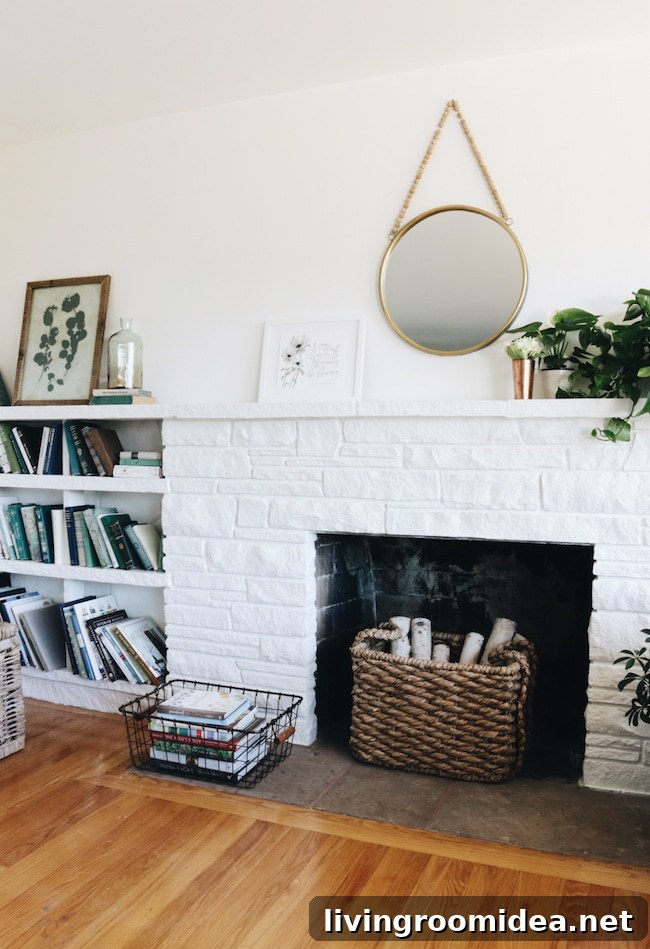
I’m really pleased with the result. The white stone feels fresh, clean, and simple—a calm backdrop for the room. It’s made me excited to decorate for fall and the holidays, and it reminded me that small, thoughtful updates can have a big impact.
For now, I’m comfortable leaving the fireplace as it is. In this season of life, simple feels almost perfect.
Below is a look back at how the fireplace looked when we moved in—a reminder that change can be gradual and intentional.
Do you ever find yourself craving a life of greater simplicity? How does that influence the design of your home?
Sources:
Fireplace and wall paint color – Simply White Benjamin Moore
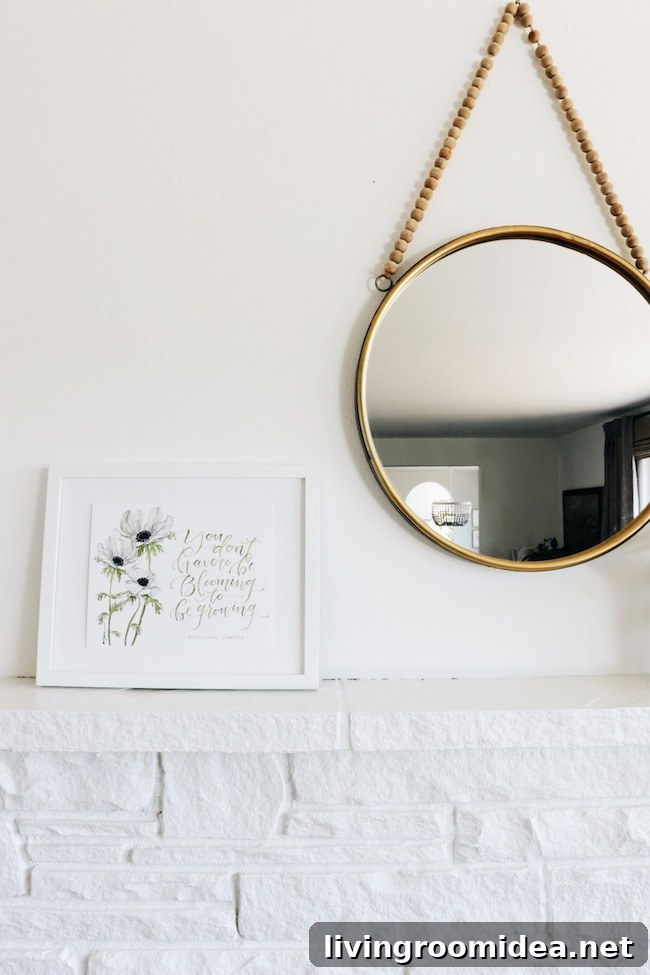
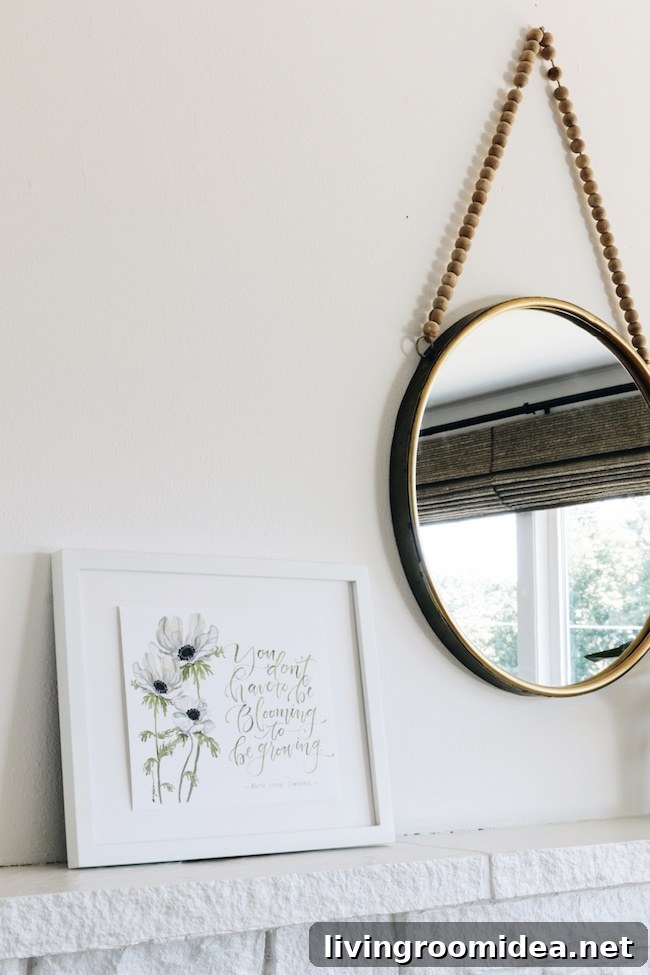
Watercolor quote artwork on mantel – Gracelaced
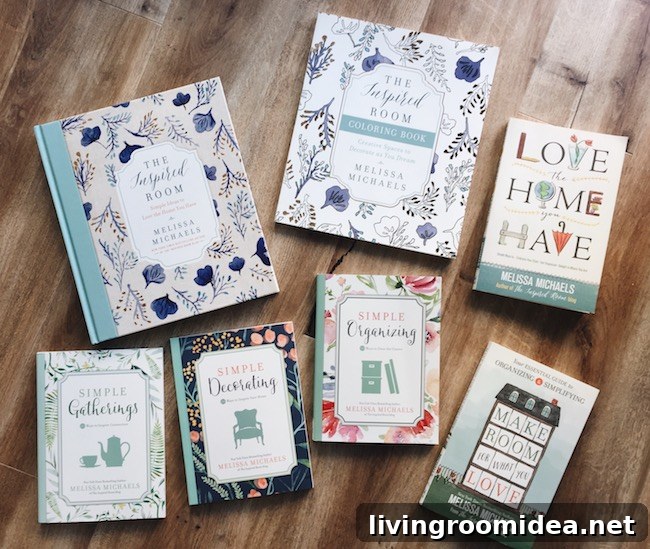
Get inspired by my bestselling books!