

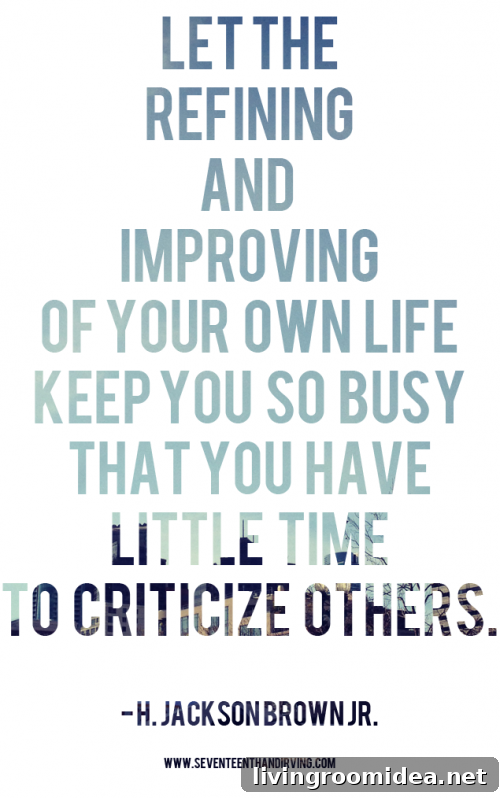
Image via Seventeenth and Irving
This simple reminder—”Don’t Criticize”—resonates because criticism can be quick to flow while encouragement is often harder to give. Choosing kindness over critique changes the tone of our conversations, deepens relationships, and fosters a more supportive environment at home, at work, and in our communities.
When we avoid harsh judgment and opt for empathy, we open space for learning and growth rather than defensiveness. Constructive feedback delivered thoughtfully can be helpful, but blanket criticism tends to shut people down. Practicing restraint, asking questions, and focusing on solutions encourages cooperation and makes it easier for others to hear our perspective.
Instead of pointing out faults, try these alternatives: highlight what is working, acknowledge effort, and offer specific, actionable suggestions if you want to help. Framing comments with genuine curiosity—”Can you tell me how you approached this?” or “I noticed this part; would you like some ideas?”—invites dialogue rather than confrontation.
Being mindful of tone and timing also matters. A rushed or irritated remark rarely lands well. Choosing a calm moment to share observations or waiting until someone is receptive increases the likelihood of a positive outcome. Remembering that everyone is on their own path encourages patience and reduces the impulse to criticize.
Ultimately, embracing a habit of encouragement cultivates stronger connections and better results. Small shifts in language—swapping criticism for appreciation, questions, or helpful suggestions—create an atmosphere where people feel valued and motivated to improve. Let this image serve as a gentle prompt to pause before criticizing and to choose constructive, compassionate communication instead.