
Paper Clutter Organization
With two self-employed parents running startup businesses from home, managing taxes, receipts, schedules for a family of five, and the demands of a busy middle school athlete, paper clutter had become a constant challenge. If that sounds familiar, you’re not alone.
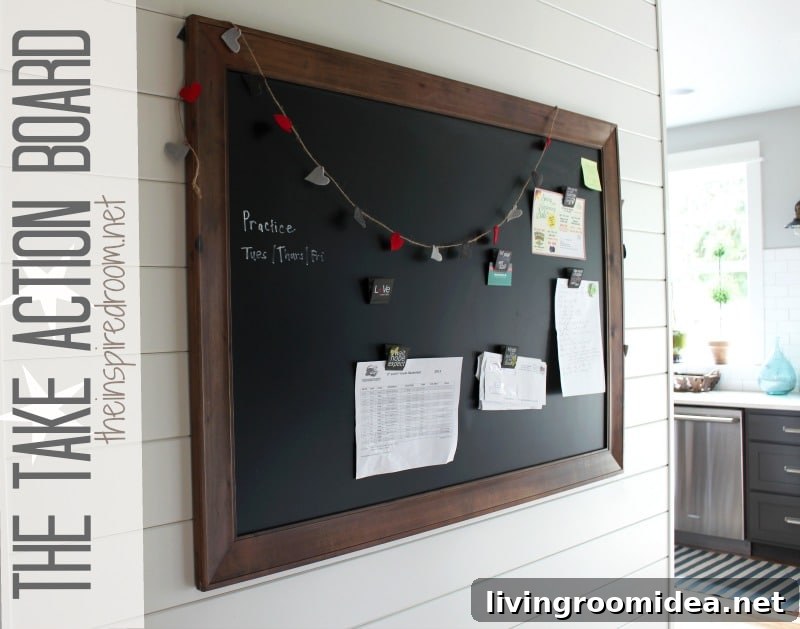
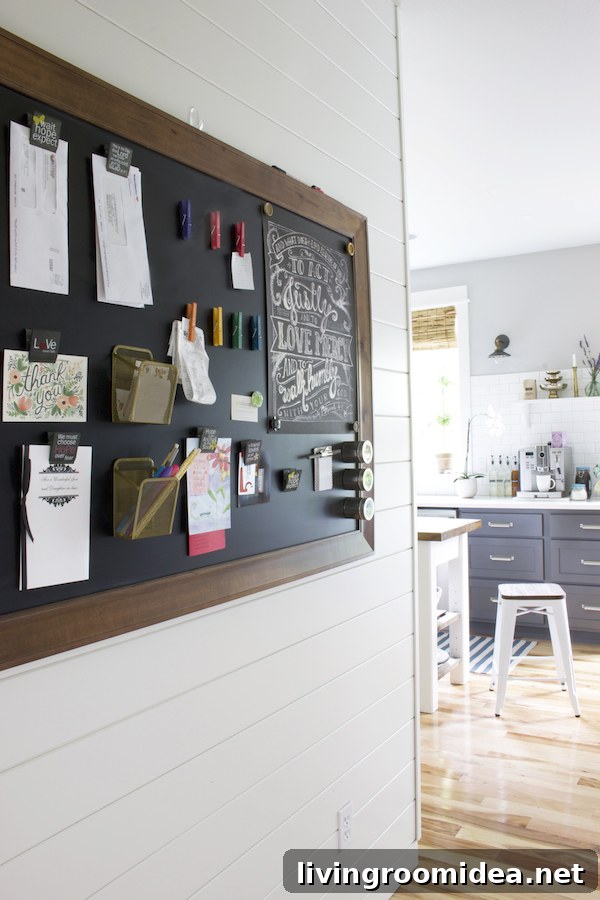
When I began a home refresh last January, my goal wasn’t only to make rooms look nicer — it was to rethink how we use our space and put systems in place that actually work for our daily life. One of the first functional systems I installed was a magnetic “command central” in the small hallway by our kitchen, just outside my office. The board wasn’t glamorous, but it was useful. I learned quickly that waiting for perfect conditions will only delay getting organized.
After experimenting with the board for a year (and pausing during remodeling), I can say two things for sure about it.
1) The hallway where it hangs looks a lot brighter and more inviting than it did before.
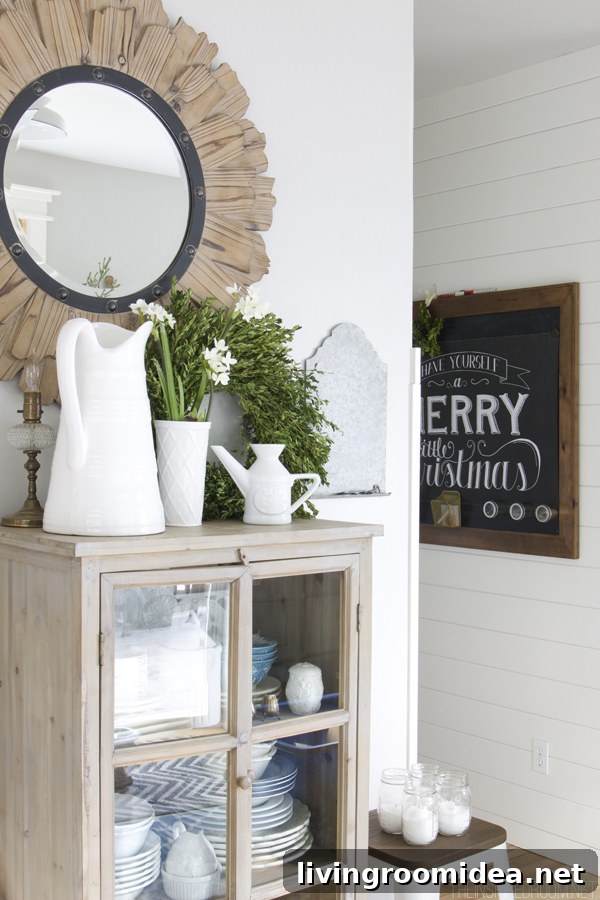
A fresh, attractive space encourages me to use it. Instead of painting or stenciling the wall, I opted for a solid wood planked surface to hang the board. The small hallway now has personality and makes me smile each time I pass through it.
2) The board is now genuinely working for our family.
We originally used it as a visual calendar, which helped with schedules. But the bigger issue in our home was not calendar confusion — it was lost important papers. Too many times documents disappeared into that mystery place where missing socks and stray mail seem to vanish. During the remodel, when the board was inaccessible, those problems only got worse.
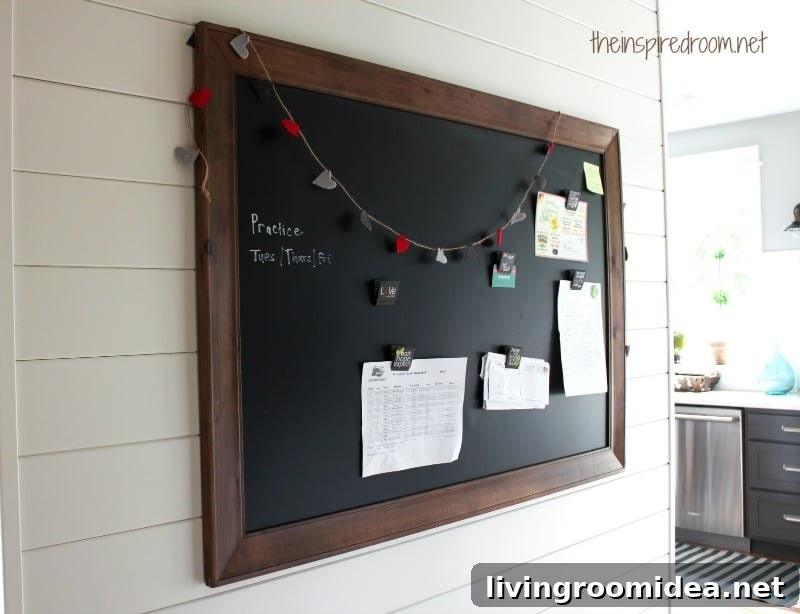
This board serves as our family paper central — the landing spot for urgent items. It’s our “Take Action!” board.
Now that remodeling is complete, our focus is on making the home practical, comfortable, and organized for everyday life. Our house is modest, so every inch must be functional. Four feet of magnetic chalkboard in a tiny hallway is enough to hold upcoming game schedules, to-do lists, mail that needs attention, forms to sign, bills to pay, contact cards, and any item that requires action in the near term.
This is not a filing system, an inspiration wall, or a place for long-term storage or random items. It is reserved strictly for urgent papers and immediate tasks.
Keeping those items visible is key for us. I’m someone who forgets what I can’t see, so a drawer or file box for urgent papers doesn’t work. Writing reminders on the board with chalk pens — like new practice days or upcoming deadlines — helps keep tasks top of mind.
The board also handled larger short-term projects well, such as organizing tax documents. Clipping important papers to the board until I was ready to file or scan them prevented them from being misplaced in a stack or forgotten in a drawer.

I like using large magnetic clips to group related items like bills and receipts. They hold things securely and make it easy to find everything related to a single task.
When items on the board have been dealt with, they are either filed away, shredded, or scanned into digital files. While a fully paperless system works for some households, we find that keeping urgent items visible on the board until action is taken prevents loss and reduces stress.
This approach may not be right for every family, but it has made a real difference for us. We’re feeling less frazzled and more in control of the everyday paperwork that used to pile up and disappear.
Do you struggle with paper organization?