
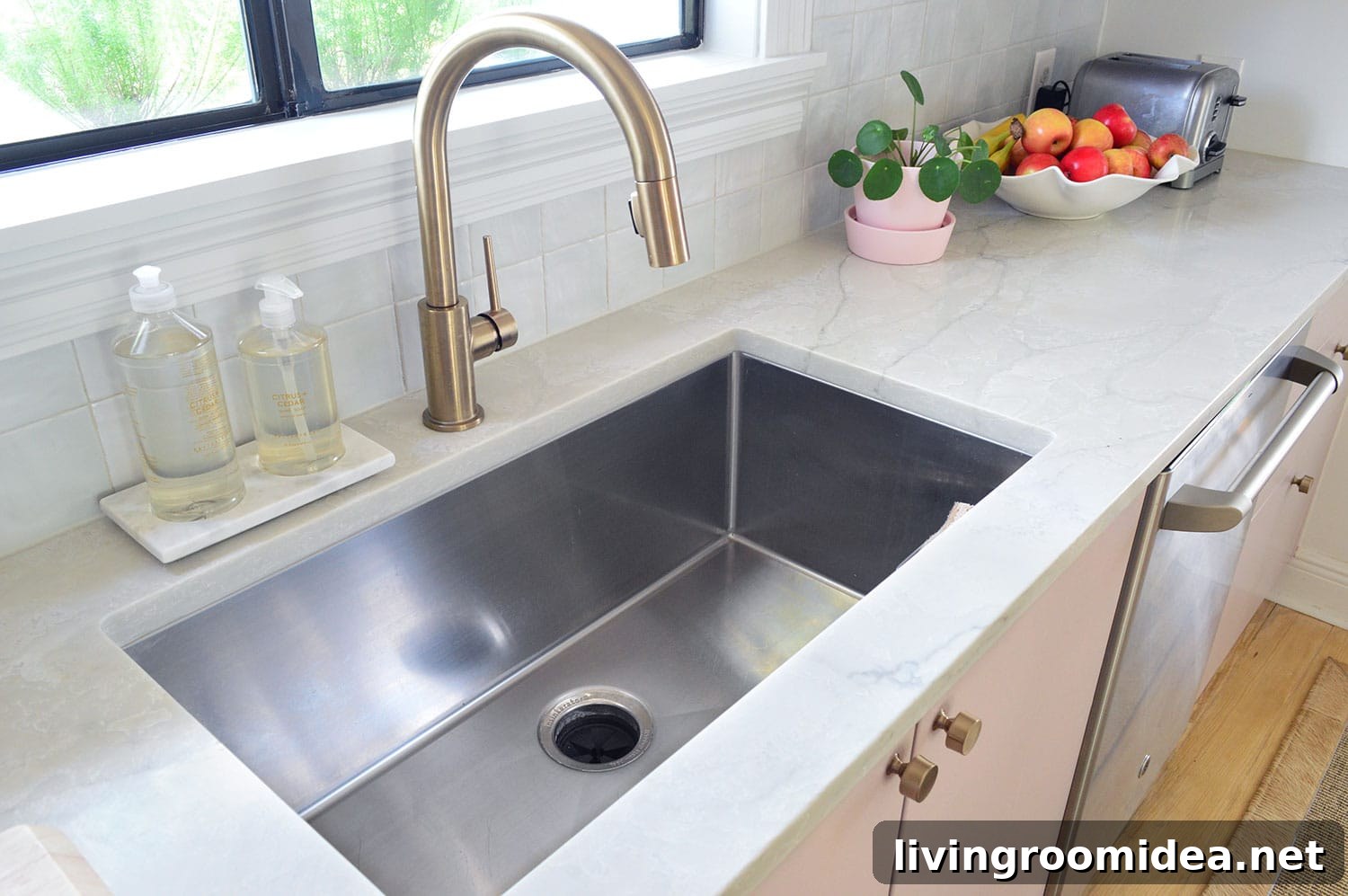
This simple method for cleaning a stainless steel sink is honestly one of my favorite household tasks. It’s easy, fast, and extremely effective. You don’t need harsh or special cleaners—just a few common items to restore your sink’s shine in minutes. Sherry tried this technique first and we’ve used it ever since. I even taught our kids how to do it. It’s satisfying work, so sometimes I keep it to myself.
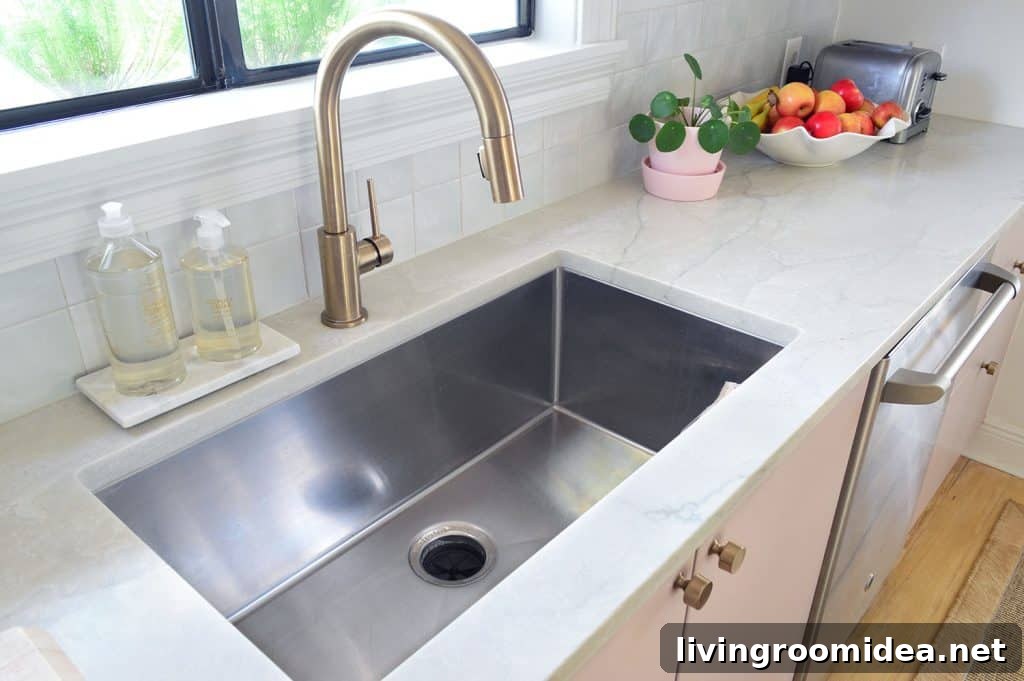
We’ve always appreciated the look and durability of stainless steel sinks. They pair well with stainless appliances and have a high-end appearance, but they do show smudges, fingerprints, and dulling grime from daily use. Fortunately, cleaning a stainless steel sink is simpler and more satisfying than cleaning appliance fronts. With a few basic steps you can keep yours looking like new.
Table of Contents
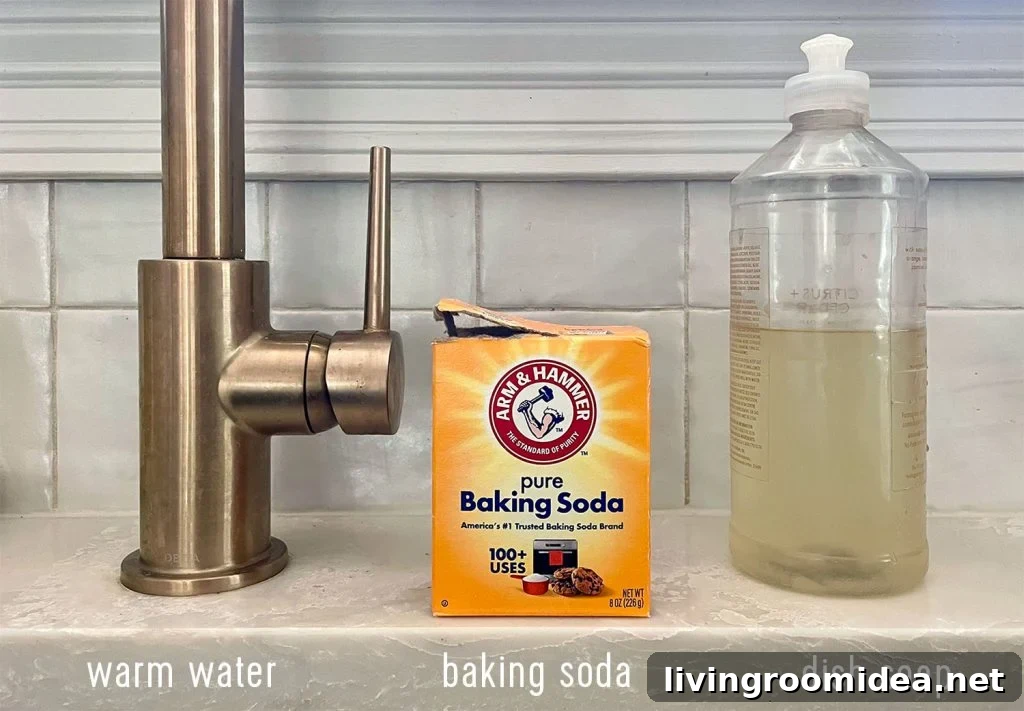
Supplies Needed (Just 3!)
This method uses only three common ingredients:
- Baking soda
- Dish soap
- Warm water (from your faucet)
That’s it. Baking soda may be the only item you need to buy—it’s inexpensive and widely available. Other people use white vinegar, lemon juice, gloves, or microfiber cloths; those can be helpful but aren’t necessary for this routine. Keeping supplies minimal makes it easier to actually do the job.
Six Steps To Clean A Stainless Steel Sink
The steps are simple and satisfying. Follow them and your sink will look refreshed in no time:
- Empty the sink
- Sprinkle baking soda
- Add dish soap
- Scrub
- Rinse
- Dry or buff
Step 1: Empty Your Sink
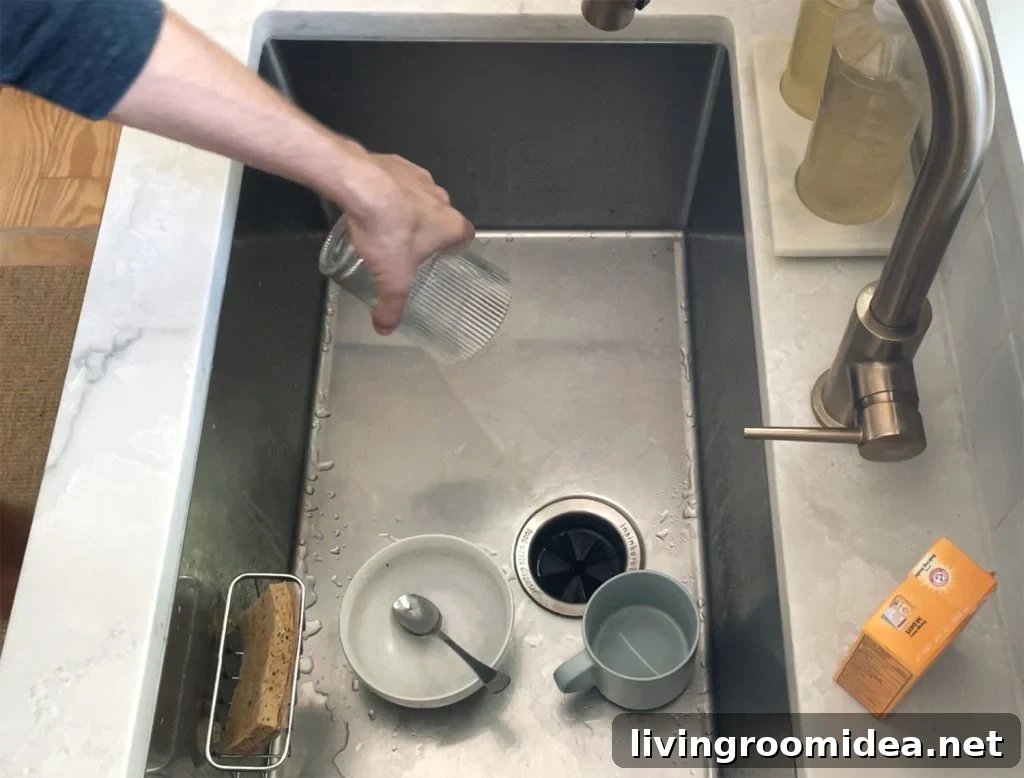
Remove dishes, pots, pans, and any debris. Clear out basin trays, sponge caddies, or other items so you can access the whole sink surface.
Step 2: Sprinkle With Baking Soda
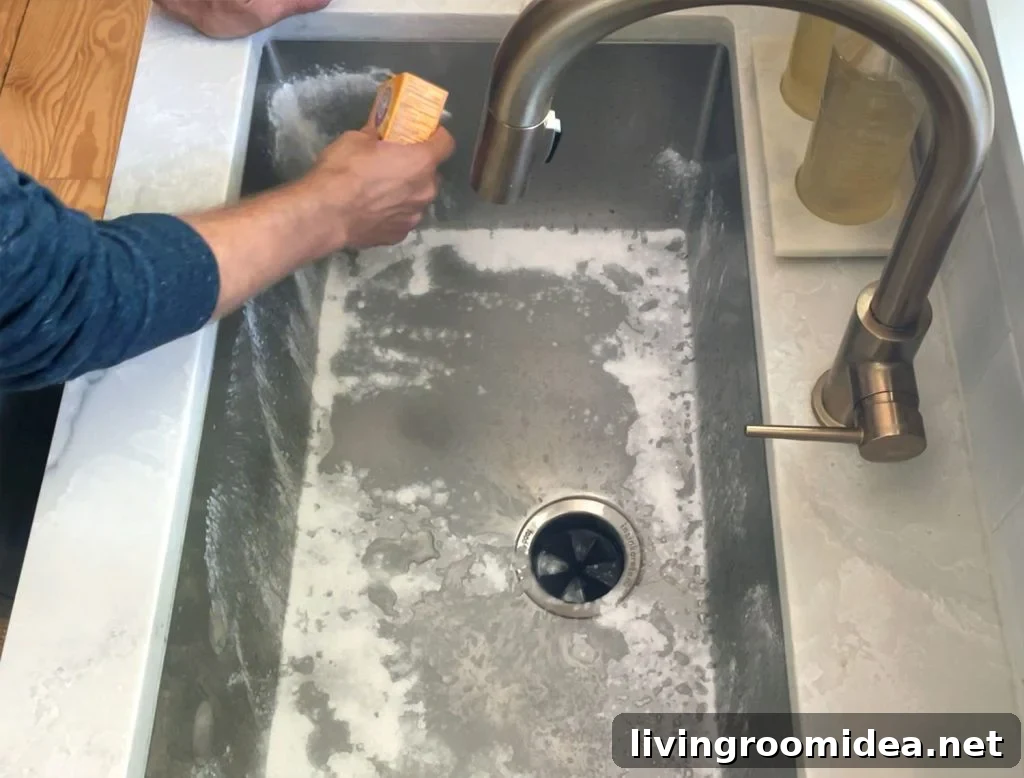
Sprinkle baking soda over the damp sink. You don’t need precise measurements—aim for a generous, even dusting. Add more if you find areas that need extra attention.
Step 3: Add Some Dish Soap
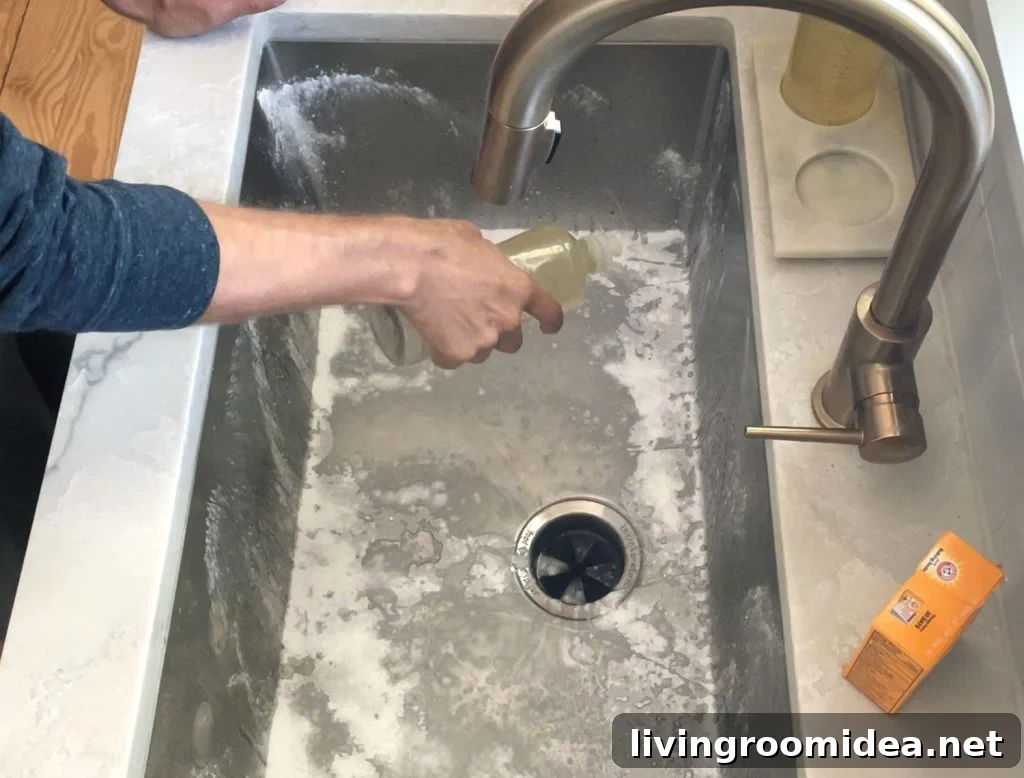
Squeeze a small amount of liquid dish soap over the baking soda. The soap helps clean, deodorize, and lift grime. If you like, add a bit of lemon juice or essential oil for a fresh scent, but this is optional.
Step 4: Scrub, Scrub, Scrub!
The baking soda and dish soap form a slightly gritty paste that makes scrubbing effective. Add a little water if needed to get a scrubby consistency—just not so much that it all rinses away. Use a soft cloth, sponge, or your fingertips to rub the paste around the sink, following the grain where applicable.
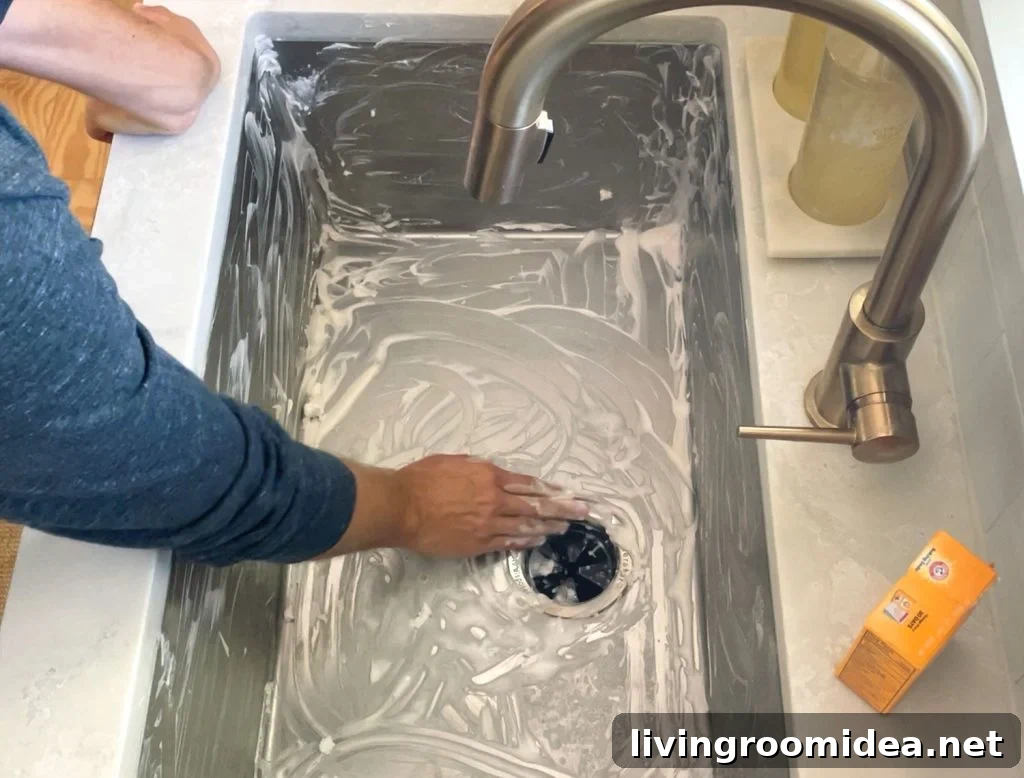
Using bare fingertips lets you feel which spots need more work, but gloves or a cloth work fine too if you prefer.
Step 5: Rinse Your Sink
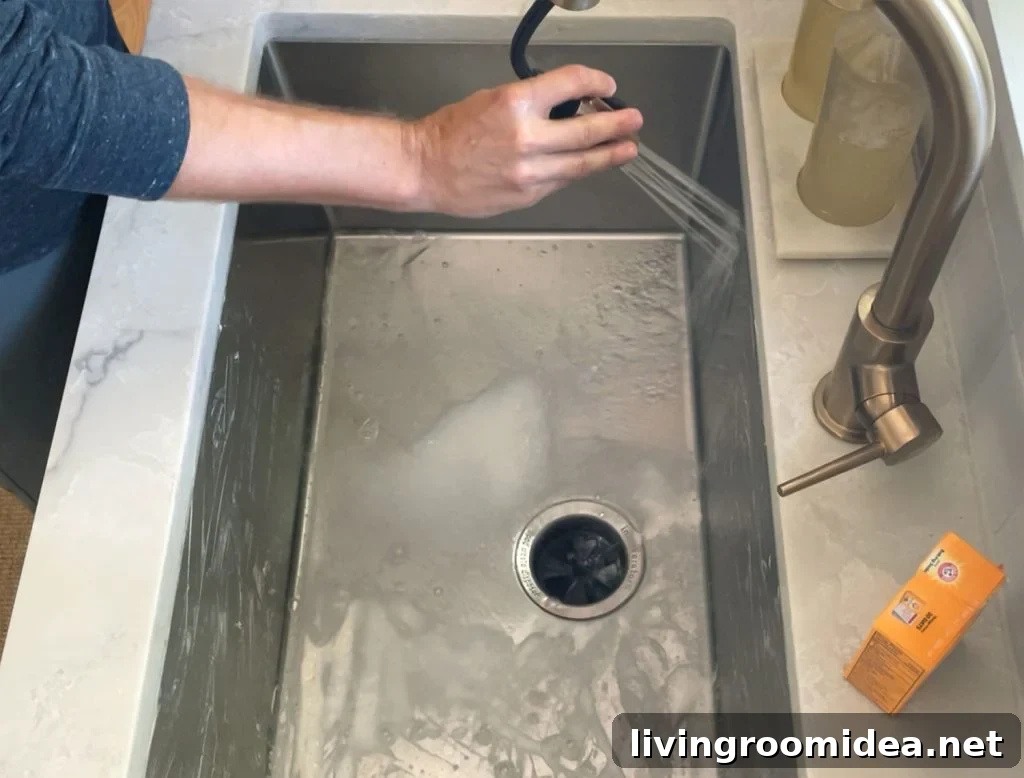
Rinse thoroughly with warm water, paying attention to corners, edges, and around the drain. If a spot remains, add more baking soda and scrub again. The process is forgiving and quick to repeat.
Step 6 (Optional): Dry Or Buff
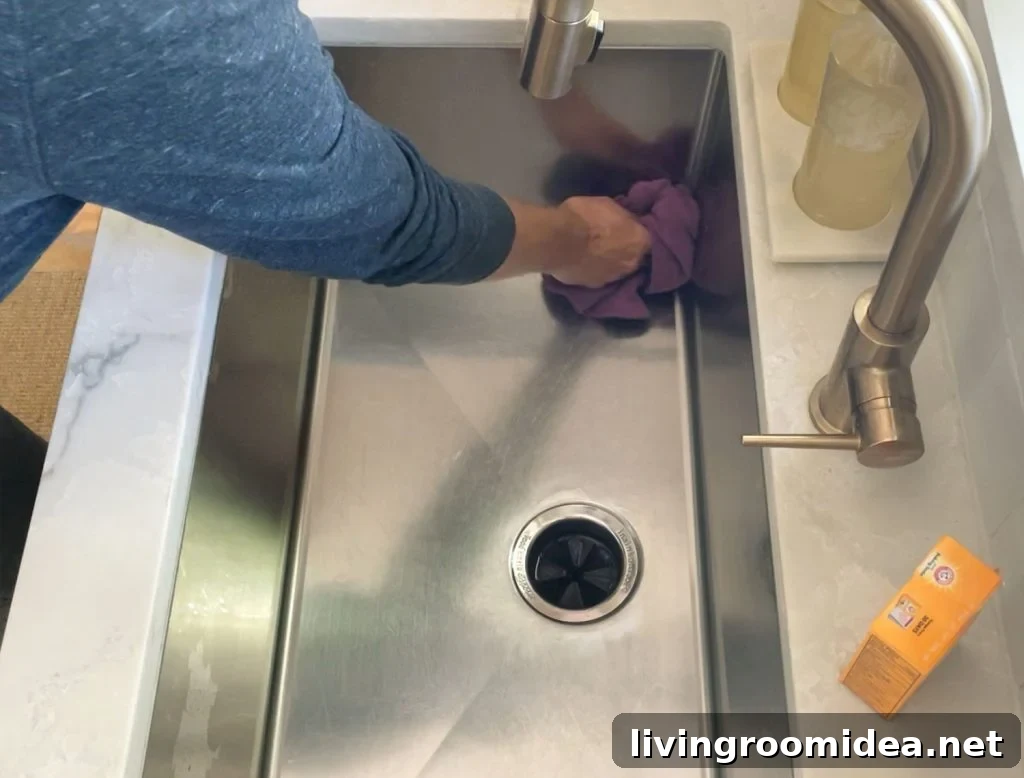
Wipe the sink dry with a clean cloth or paper towel to prevent water spots and add extra shine. This final buffing step makes a noticeable difference, though you can skip it if the sink will get wet again soon.
When To Clean Your Stainless Steel Sink
We use this deeper baking soda cleaning every one to two weeks or as-needed. For daily upkeep, a quick rinse and wipe with the faucet sprayer and a sponge usually keeps food residue and odors away. The baking soda treatment restores that like-new shine, so save it for a fuller refresh.
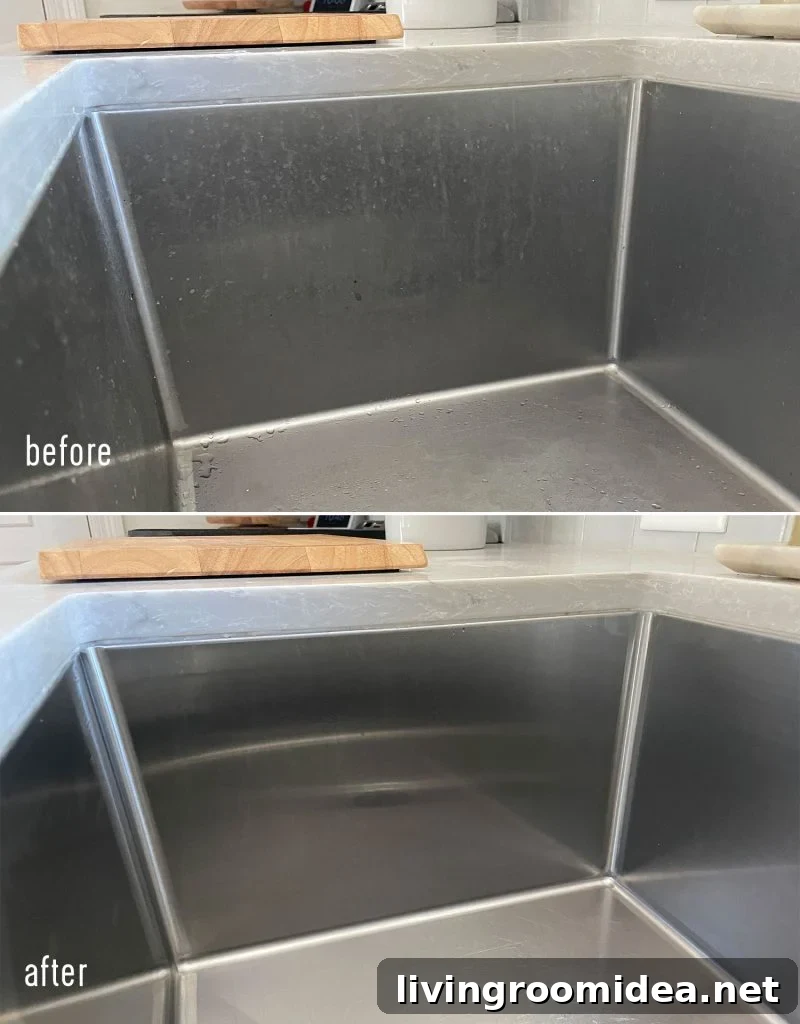
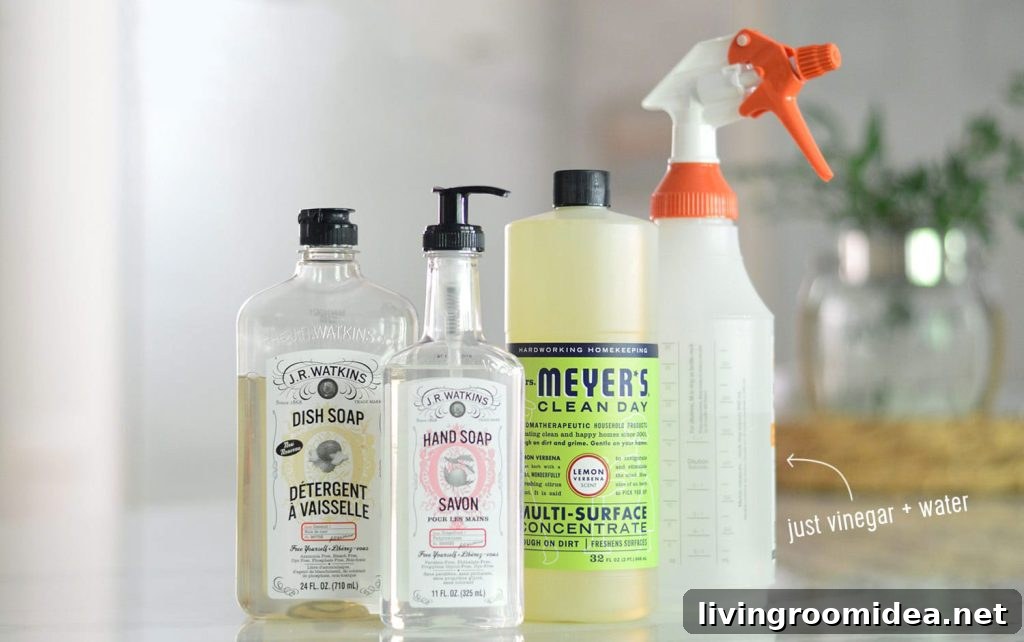
For tougher stains, you can substitute white vinegar for the dish soap; the reaction between vinegar and baking soda can help lift stubborn marks. Commercial stainless steel cleaners are another option for very persistent stains, but for most households the basic baking soda and dish soap routine is enough.
What To Avoid
Stainless steel is durable but can be damaged by abrasive or corrosive treatments. Keep these cautions in mind:
- Don’t use steel wool or stiff abrasive brushes that can scratch the surface.
- Avoid harsh chemicals like bleach or cleaners not intended for stainless steel.
- Don’t leave metal pots or utensils sitting for long periods; they can scratch or promote rust.
- Standing water can cause spots or corrosion—ensure your drain is clear and the sink is properly installed.
Following these guidelines and cleaning regularly will help your sink stay in great condition for years.
Why Clean Your Stainless Steel Sink?
Besides improving appearance, regular deeper cleanings offer practical benefits:
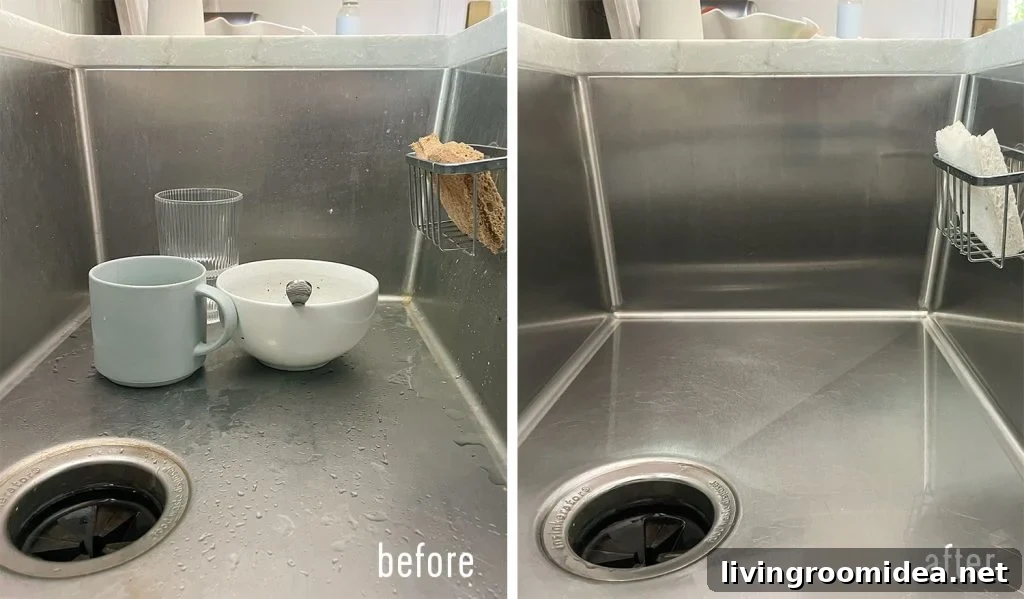
It Reduces Odor
Food residue can cause unpleasant smells. Baking soda neutralizes odors while dish soap or lemon can leave a fresh scent.
It Improves Hygiene
Common cleaners like baking soda, vinegar, lemon, and dish soap have antibacterial properties that help keep the sink more sanitary for food prep and dishwashing.
It Prevents Stains
Regular treatments prevent buildup in hidden areas—like under caddies or around racks—that could lead to lasting stains.
More Cleaning Advice
We first heard about this baking soda method from cleaning experts and podcasts focused on making housework easier. If you enjoy simple, effective cleaning tips, try adapting this routine to other kitchen tasks. Minimal supplies, a consistent schedule, and gentle techniques will keep many surfaces looking their best without harsh chemicals.