
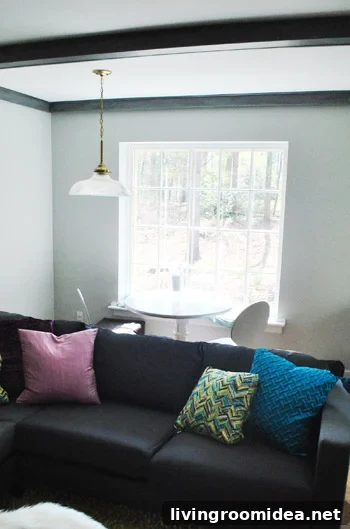
If this were a fable, the moral might be: when something in your home doesn’t feel right, do something about it — or wait for it to die and take it as a sign. Our story’s protagonist is the small hanging light that lived in the corner of our living room.
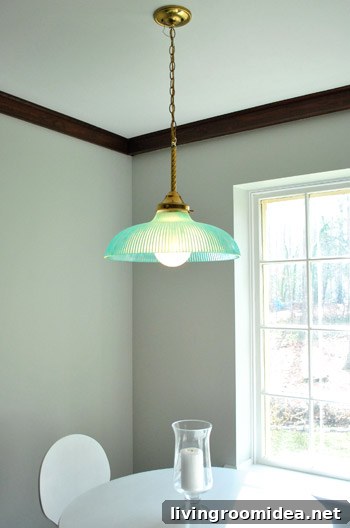
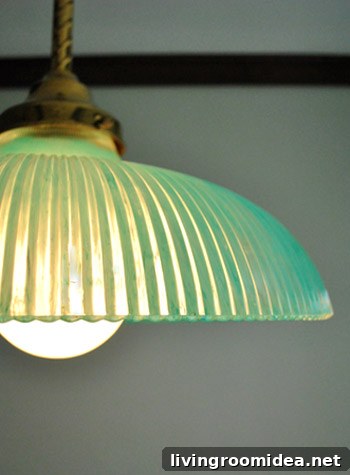
We’d always felt something was off about it — it was the only permanent fixture in that large room and it sat awkwardly in a corner. For a while Sherry tried to make the placement less noticeable by adding a touch of color to the glass shade while I went for a run. The color looked pleasant in person, but every photo we took of that side of the room picked up a strange blue cast from the painted shade. I jokingly called it our “alien invasion corner.” Eventually I persuaded Sherry to wipe the paint off, which is why some of you noticed the shade was back to its original look. Reversible projects for the win.
Returning the fixture to its natural state helped, and we considered spray-painting the chain oil-rubbed bronze to match the curtain rods and the sectional’s legs. In the end, though, we admitted it wasn’t our style. We wanted a drum pendant or recessed lights eventually, so we kept asking ourselves whether it was worth spending a lot of effort prettifying something we planned to replace.
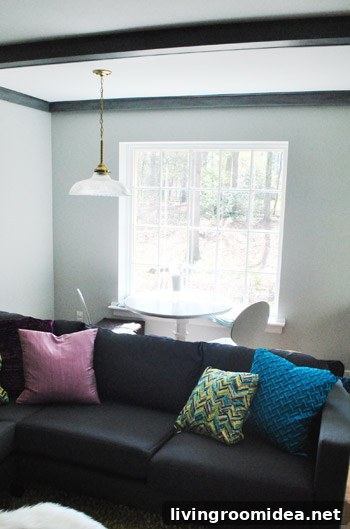
Then, as if the “light fairy” had intervened, the fixture died. About a week after the wipe-down it flickered and then refused to come on at all. We tried the usual troubleshooting — swapping the bulb and checking connections — but it was done. Maybe it overheard our complaints about its random placement and simply gave up. We weren’t devastated, but it felt like poor timing — it died before we had a chance to remove it on our own terms.
Fixing the wiring would have restored light, but wouldn’t have solved the fact that it was off-center — it didn’t sit centered in front of the window or between the ceiling beams — nor that it wasn’t the kind of fixture we wanted long term. So we decided to retire it and move on.
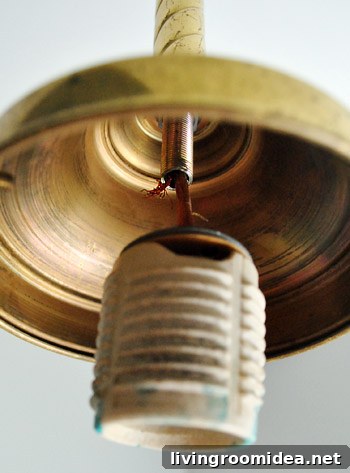
While removing the fixture, I found the cause: a torn or disconnected wire near the base. It was a repairable issue, but by then we were ready to remove the whole thing. Farewell, poorly placed, nonfunctional brass lamp — you held on long enough.
To conceal the junction box quickly, we installed a white plastic ceiling cap over a small metal junction box cover — a $2 fix (about 50 cents for the metal cover and $1.50 for the white cap). It’s a temporary, inexpensive solution until an electrician can either remove the box or relocate it to a more central spot in front of the window.
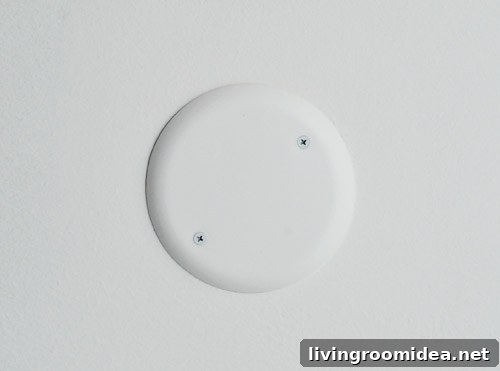
It isn’t the most attractive detail, but it’s far less distracting than the outdated, oddly placed fixture that used to be there.
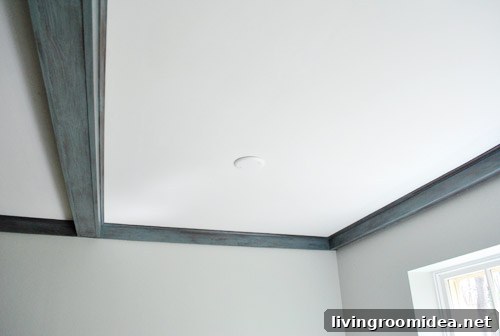
The best part: the view out the window is now unobstructed. No more mentally tugging the light two feet to the right to make it align with the window. Removing the pendant has simplified the sightline and freed up mental energy previously spent lamenting lighting placement. As for the old fixture, it found a new home at the Habitat for Humanity ReStore.
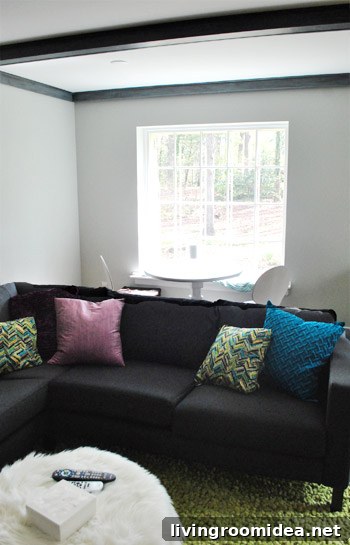
Yes, the corner is a little darker at night now, but that’s easily solved: once our slow-moving console table project is finished we’ll place a table lamp on that side of the sectional. And eventually we’ll hire an electrician to install proper lighting in the right spots — maybe recessed cans or a crisp pendant centered in front of the window.

R.I.P., Weird Light. You won’t be missed — except for the lesson you left us: if something in your home bothers you, fix it, replace it, or let it go.