
It’s about to get exciting…

First, a quick aside: I’m a fan of Jones Soda partly because of the random little fortunes under the cap. The other day I found this one:

Tasks where skill is essential (sounds like a bathroom remodel) may be accomplished. MAY? Not a very confident fortune. Fortunately, our bathroom project has felt more certain than that.
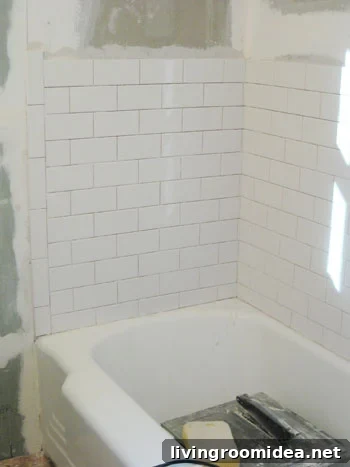
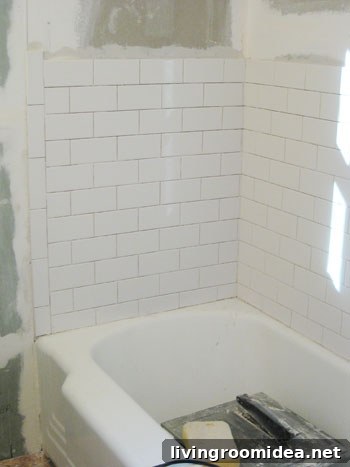
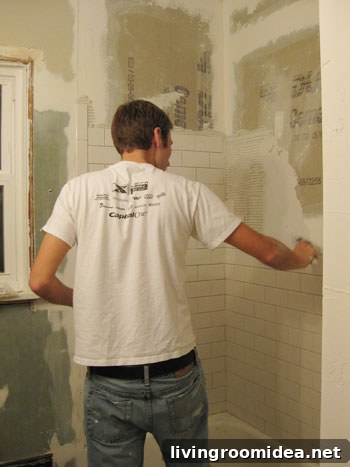
Back to tiling. Even though Sherry shared a peek at the tile job last week, here’s the full tiling story. In Chapter Three of our bathroom redo, my dad and I spent an intense four-day weekend installing drywall and cement backerboard to prepare the shower surround and floor for tile. Between a few unexpected challenges and tight timing, I only just began tiling the shower before my dad left Monday evening. This snapshot was taken while I was still working:

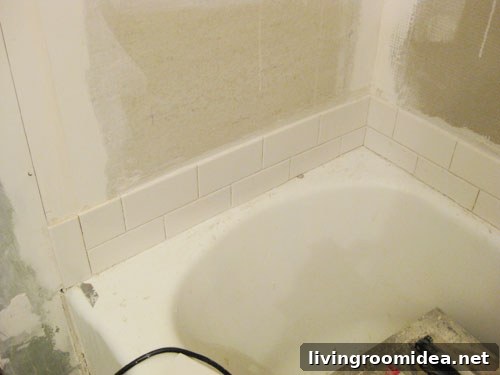
I worked a couple more hours after he left but only completed two rows that first day. The main issue was that our tub wasn’t level, so using its edge as a guide would have produced lines that looked slightly off and might not line up at the corners. With small subway tiles, we also wanted to avoid ending up with thin slivers of tile at the tub edge or ceiling — we preferred full-looking tiles in those visible spots to keep the layout balanced.
So that first evening I spent several hours on the wet saw trimming small slivers from the back of each tile that sat against the tub to create a single level starting line. It was tedious trial-and-error but rewarding:
It genuinely felt fun — the kind of home improvement I enjoy: more mental concentration than brute strength, with immediate visible progress and the chance to learn new tools and techniques. Since it was my first time tiling, I’ll share how I worked rather than claiming to present the only correct method. There are several valid approaches depending on preference and circumstance.
Tools and materials I used:
- Wet saw (borrowed)
- Tile cutter (shared purchase)
- Large buckets of thinset mortar
- Margin trowel (borrowed)
- Notched trowel (borrowed)
- 1/16″ spacers (floor required these; subway tile had built-in spacer)
- Tape measure and level
- Pencil and Sharpie for marking cuts
- Paper towels and a bucket of water for cleanup

The wet saw and tile cutter did most of the cutting. The wet saw is like a circular table saw for tile with a blade that runs through water to reduce dust and heat. It handled small trims and irregular cuts well (notches around pipes, semi-circles), though it was slightly less precise for straight cuts and created a muddy slurry that needed regular cleanup. I kept it in the bathtub when working on the shower and in a drop-clothed area for the floor.
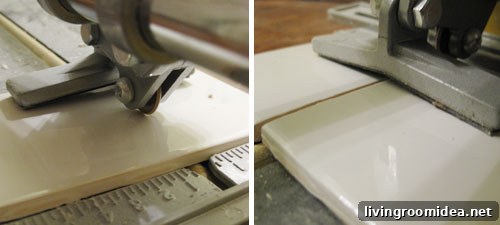
The tile cutter was cleaner and great for straight cuts like halving tiles for a running-bond (brick) pattern. After marking the cut, score the surface, then snap it along the guide. It couldn’t handle our thick marble floor tiles, though, so the wet saw handled those.
Cutting was the slow, meticulous, math-heavy part. Laying tile went faster but required consistent thinset application so tiles would sit level and not squeeze out excess mortar into the grout lines. My process was:
- Apply a blob of thinset and spread it thinly with the margin trowel.
- Use the flat edge of the notched trowel to smooth the mortar at a 45-degree angle.
- Run the notched edge at 45 degrees to leave grooves, ensuring proper mortar coverage.
- Press each tile firmly into place and check level with a level.
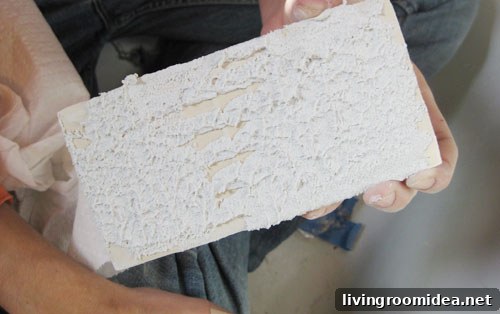
A helpful tip: pry up a tile immediately after setting it to see if thinset fully covers the back. If not, add more. I sometimes used too much thinset, which squeezed into grout lines. Clean excess while wet with a finger, paper towel or old toothbrush — dried thinset is annoying to remove and took a chunk of a Saturday to scrape out later.
After finishing the bottom row, progress sped up because many tiles were whole. Two five-hour sessions after work completed the shower wall. We nearly grouted the following weekend but hit two setbacks: time spent cleaning hardened thinset from grout lines and a grout batch ruined by using twice the needed water. A snowstorm prevented us from buying more grout, so we paused tiling and turned to painting.
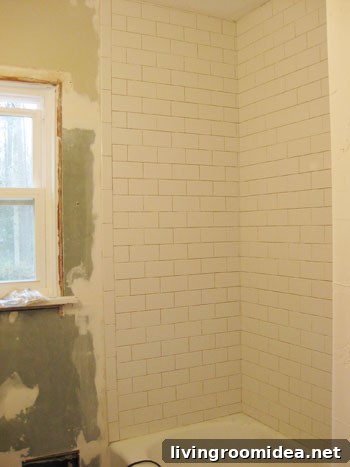
We primed with a Valspar drywall primer and chose Benjamin Moore Dune Grass for a subtle green-taupe. Instead of using BM paint, we took a BM swatch to Lowe’s and had it color-matched in their low-VOC Olympic Premium semi-gloss bathroom paint. (Adding color to the base made it low-VOC rather than no-VOC, but it was still mild and low odor.) Doing the painting before laying the marble floor reduced concerns about paint drips — a happy outcome of our grout delay.
Back to floors: my dad had already cut and set aside the cement backerboard before leaving, so I finished installing it over the plywood subfloor. Tip: use extra-long screws to penetrate the backerboard, through the 3/4″ plywood, into the diagonal subfloor for a solid hold. We secured the pieces, taped seams with mesh tape, mudded, let it dry, sanded, and swept to ensure a clean surface for tile.
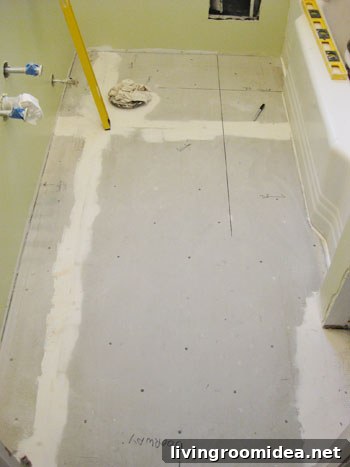
Before tiling, we planned the layout carefully to maximize full tiles in visible areas and avoid awkward slivers by the tub and closet entrance. With such a small room, that mattered more than centering from the middle. We did a dry run with actual 12″ x 12″ tiles and spacers and chose a layout that required simple cuts and left most visible areas with full tiles. Here’s the guideline I drew:
Laying the floor used similar techniques as the walls but with added considerations: the floor had a slight slope, so we “back-buttered” the tiles (apply a thin layer of mortar to the back) to ensure firm, level placement — a common recommendation for marble to reduce movement and long-term cracking. We checked level with a level and a small quarter test, rolling a quarter across adjacent tiles to detect any high spots.
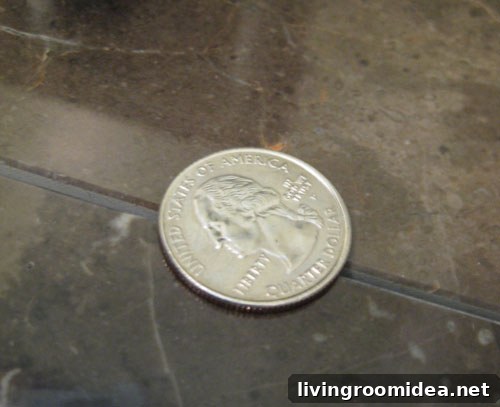
Another useful measuring trick: after placing a full tile, stack the next tile on top and then a spare tile on top of that, sliding the top tile until it touches the wall. The exposed portion of the middle tile shows exactly what needs cutting — mark it with a Sharpie and trim on the wet saw.
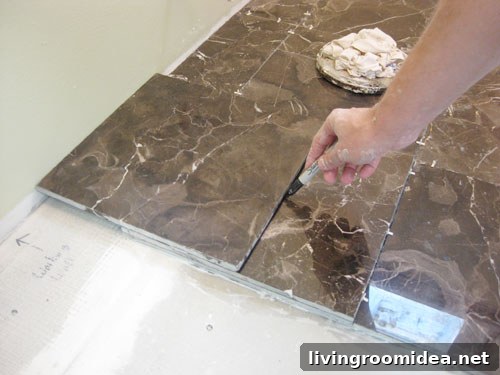
More than half of our 37 floor tiles required wet-sawing, so tiling the floor took most of Christmas Eve and a few more hours on the 27th. It was a lot of work but extremely satisfying — I even found myself missing the wet saw afterward.
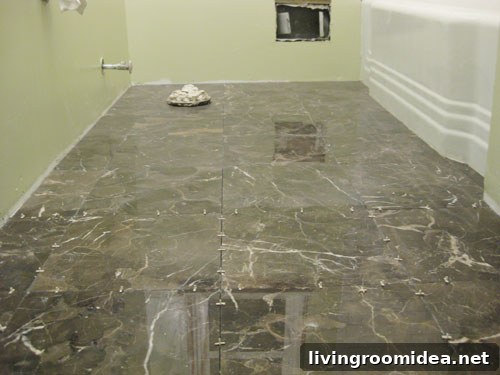
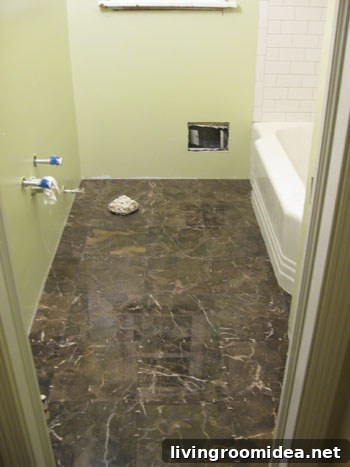
We still need to grout and seal the tiles, so the tiling story continues. I’ll follow up with the grouting and sealing steps later in the week.
We consulted several expert resources during this project, and instructions can vary depending on the situation. Use what works best for your home and skill level.