
The beach house kitchen will be our seventh kitchen project after redoing three of our own (this one is our favorite), a 2014 showhouse, a 2016 spec house for a local builder, and a teachers’ lounge we refreshed last year.
Even with prior experience, planning a kitchen still feels overwhelming because of the many decisions involved: the most functional layout, the right number of drawers, lighting choices, and staying within budget. Despite the stress, a kitchen remodel is one of the most impactful improvements you can make to a home. Now that we’re finally close to installing the beach house kitchen, we want to share the steps and planning tools that shaped our design.
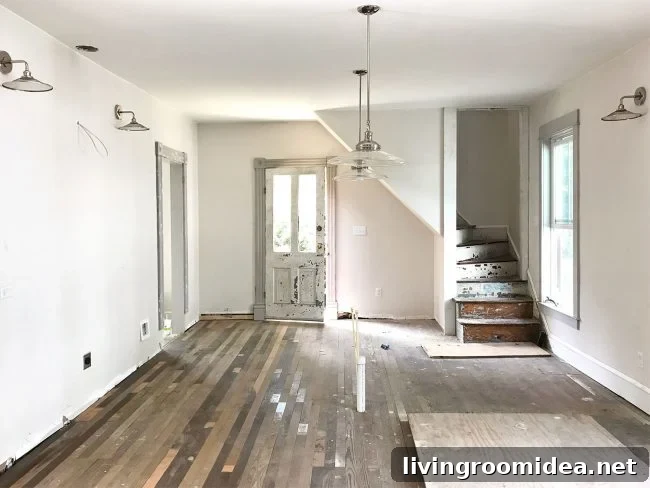
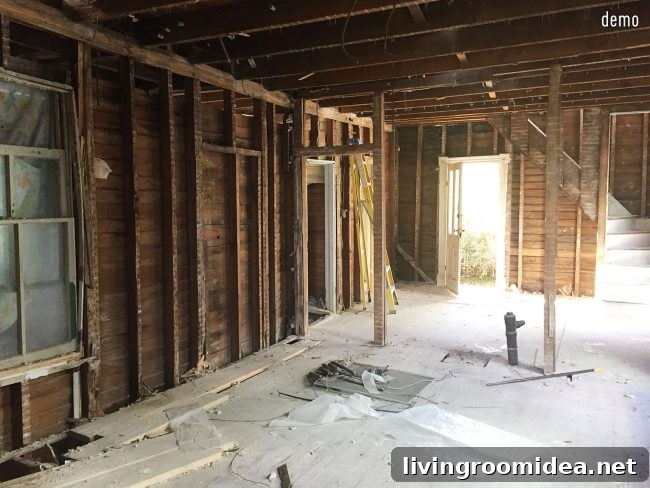
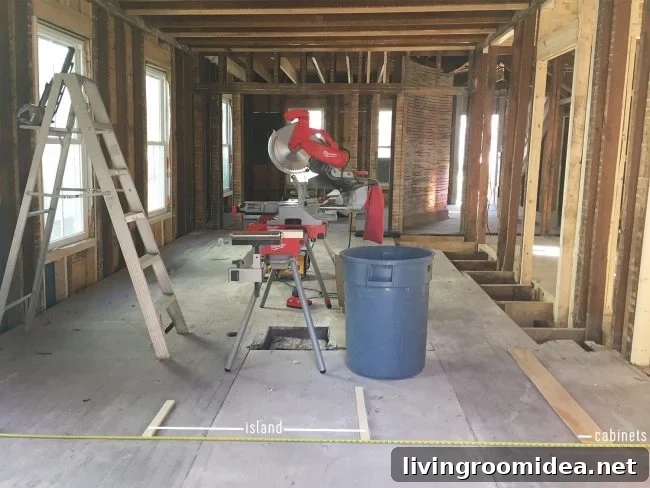
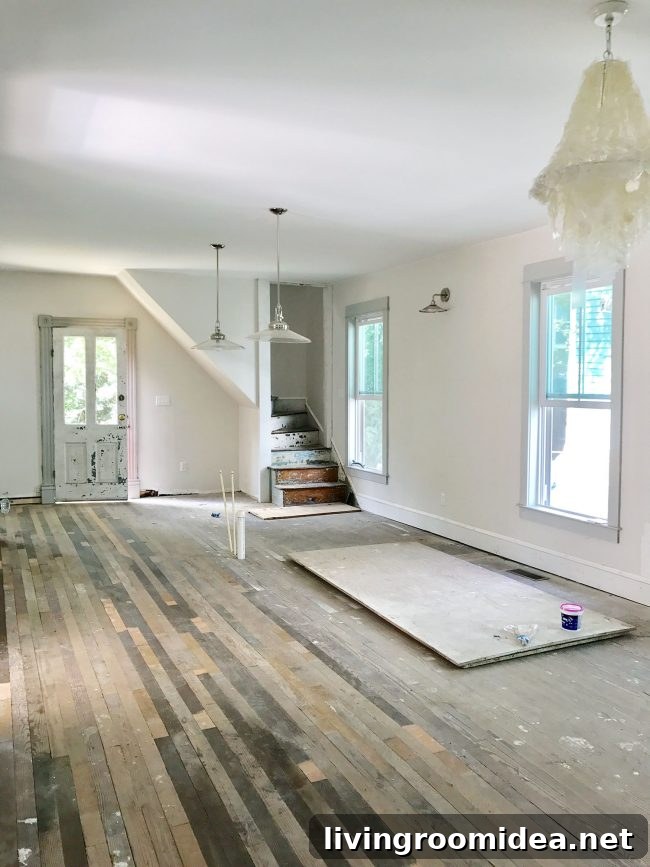
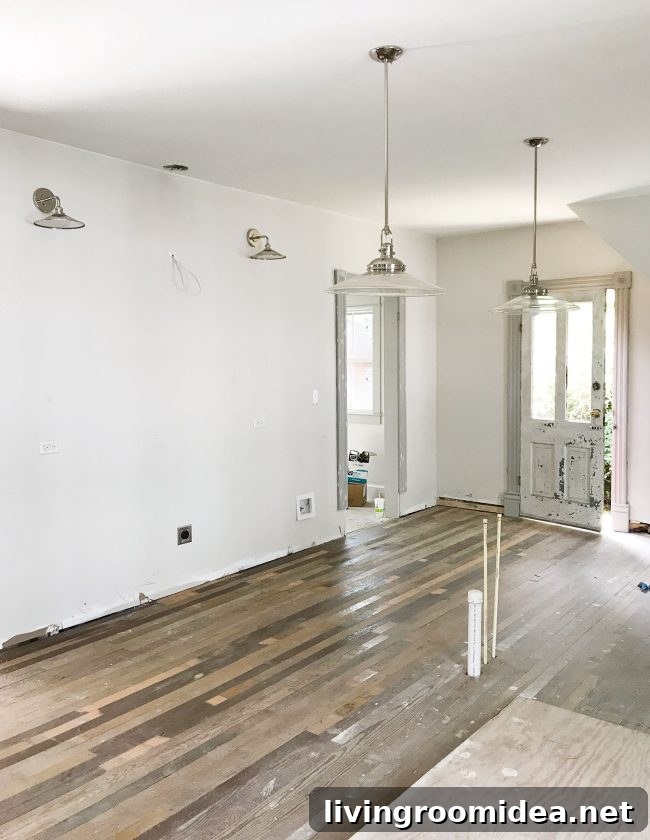
That photo shows the space as of last week: lights hung, trim being painted, and floor holes patched with matching reclaimed pine. Once the floor is sanded and sealed we can begin the kitchen install — it’s starting to feel very real. Below is a reminder of how different it looked when demolition began.
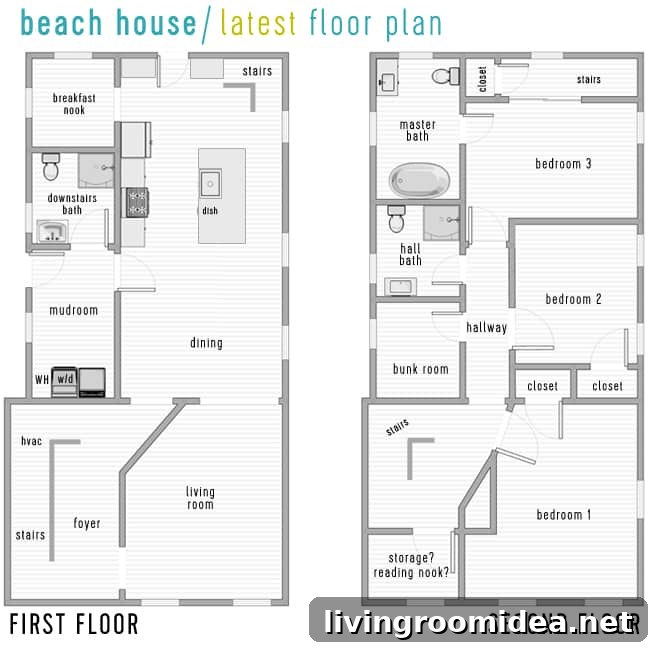
We initially worked through floor plans (the latest schematic shows the kitchen in the upper left) and refined them as the project progressed. Early plans were created in Photoshop as rough sketches, but they weren’t precise enough for ordering cabinets.
Deciding to order cabinetry from Ikea led us to use their free 3D kitchen planning tool. It allowed us to specify exact cabinet sizes and components, even if the interface isn’t our favorite. We’ve used it successfully for other projects like a laundry room and built-ins, so Ikea made sense for a good-looking kitchen without a huge price tag.
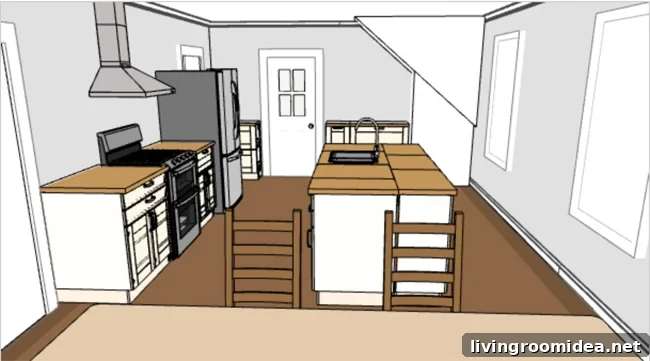
Within the planner we tested a few layouts, ultimately choosing no upper cabinets in favor of open shelves and a lighter visual balance. Because the house will be a weekly vacation rental, we felt storage would still be adequate — especially after adding cabinets by the back door.
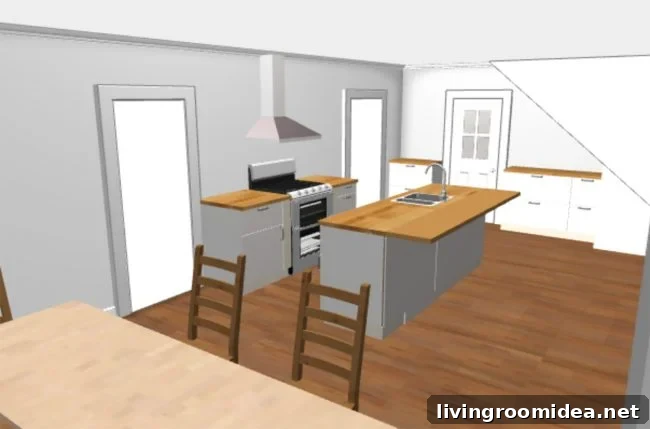
The Ikea planner can’t render non-Ikea products, so some items (like our 40″ pink stove and a specific fridge) couldn’t be shown precisely. The renderings are a helpful guide, but we also mapped clearances in the real space using simple stand-ins for the island to confirm proportions and movement around the room.
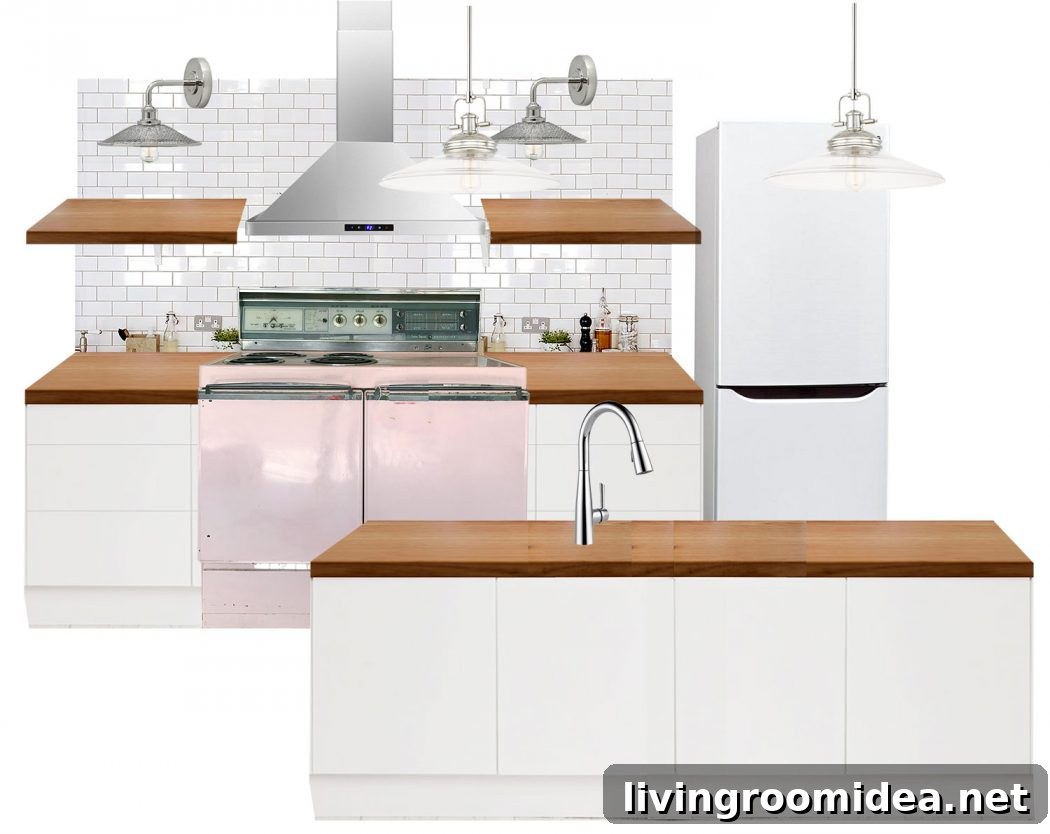
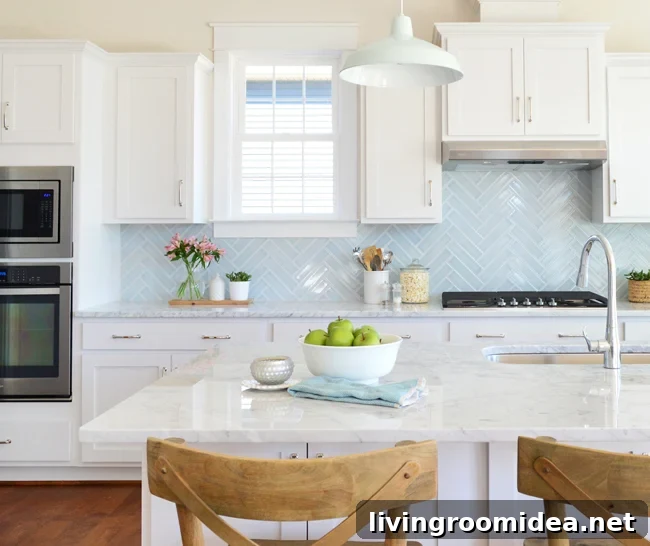
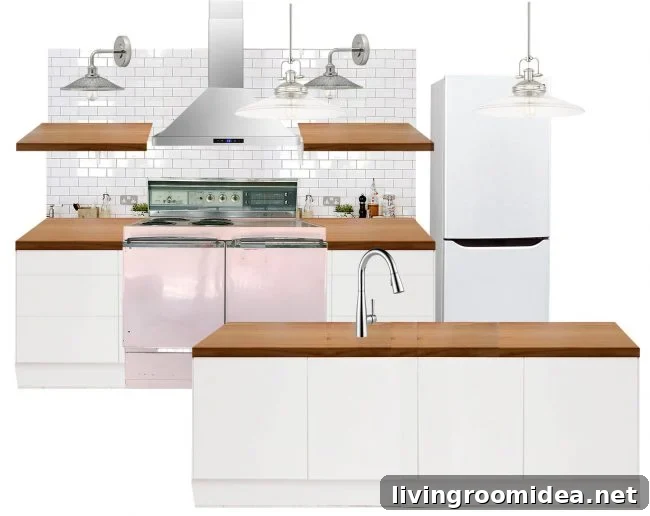
Renderings don’t always convey finishes well, so we created mood boards to lock in materials and the overall vibe. Our goal was a casual, unfussy kitchen that complements the beach setting. We were inspired by a laid-back look that felt inviting rather than formal, which led us toward flat-front cabinet doors and a mix of open shelving. Flat-fronts felt unexpectedly right after exploring more images and realized they suited the relaxed style we wanted.
1. Stove / 2. Faucet / 3. Hood / 4. Sconces / 5. Island Pendants / 6. Counter (inspo) / 7. Cabinet doors / 8. Fridge (inspo)
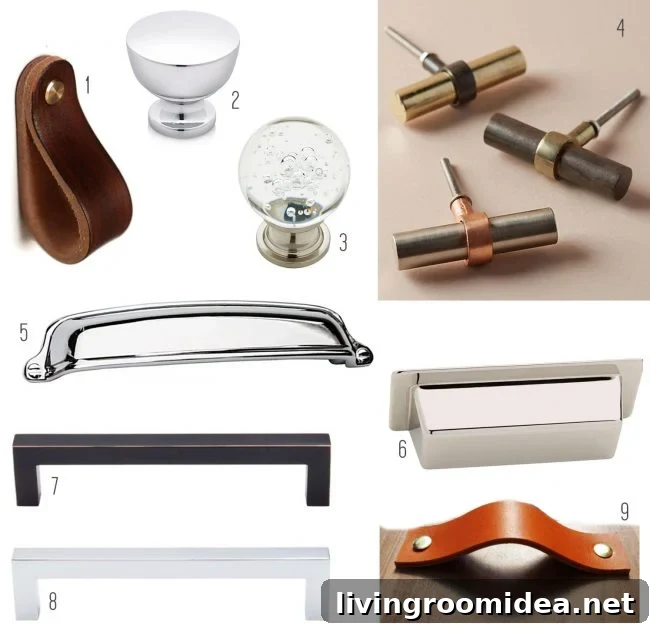
We haven’t finalized hardware yet — we want to see the installed cabinets and finishes first — but leather pulls are an attractive option for flat-front drawers, and we’re also considering wood knobs to echo original door hardware in the house. We expect the final choice to be clearer once samples are in hand.
A big influence was a kitchen revealed by a fellow designer, which convinced us to use Ikea’s Moellekulla butcher block countertops. We ordered extra butcher block so the floating shelves will match the counters. Although butcher block in a rental raises questions, we like that it’s affordable and can be sanded and refinished if it gets beat up — something that’s difficult to do with stone counters.
The fridge choice was also validated by that kitchen reveal — a compact white bottom-freezer model that suits our space without looking cheap.
We placed our cabinet and counter order during Ikea’s Kitchen Event Sale, which saved us about 20% and brought the total (including sink, soft-close hardware, and a pull-out trash can) to roughly $2,600.
Lighting was one area we agonized over. We decided against recessed can lights to preserve the older-house character and avoid dotting the high ceilings with small fixtures. With only two island pendants, three sconces, and two dining lights planned, each fixture needed to contribute usable light in multiple directions. That meant avoiding solid shade fixtures that focus light downward.
We mocked up many pendant and sconce options to see how they coordinated with the kitchen. Some styles felt too modern or too formal for the pink stove and the relaxed beach vibe. Scale was another important factor; a few fixtures we liked were simply too small in relation to the island, so we updated our mockups to better reflect actual dimensions.
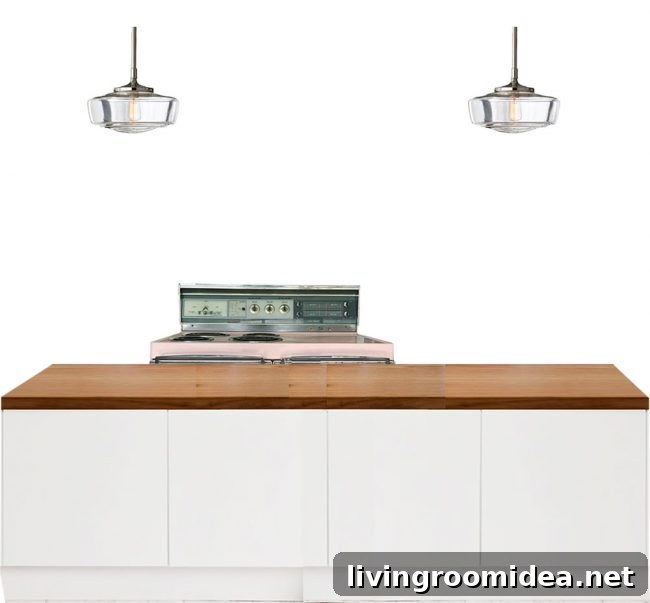
We ultimately selected 15″ wide clear glass pendant shades for the island. Their transparency allows light to disperse widely, and the size feels right — substantial without being heavy. The wire-mesh sconces we chose pass light through as well and looked great when we saw them lit in a showhouse.
We also mocked up the adjacent dining area to ensure the lights there complemented the kitchen. We chose two capiz pendants over the table to avoid an awkward intersection of a single centered fixture with the living room sightlines. The capiz pendants will be hung lower and look more grounded once the table is in place.
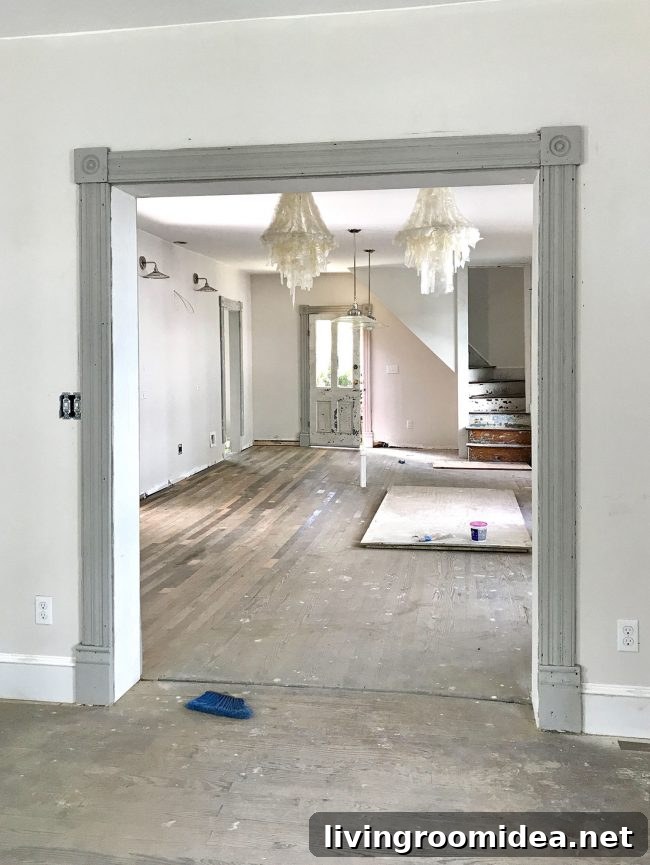
Next steps include finishing a few remaining repairs, completing railing work for the back stairs, and then sanding and sealing the floors. After that the kitchen cabinets, counters, appliances, and hardware will be installed and the space will finally come together. We can’t wait to get those Ikea boxes out of the garage and see the room finished.
Psst — you can read more about our beach house progress in the Our Beach House category.
*This post contains affiliate links