
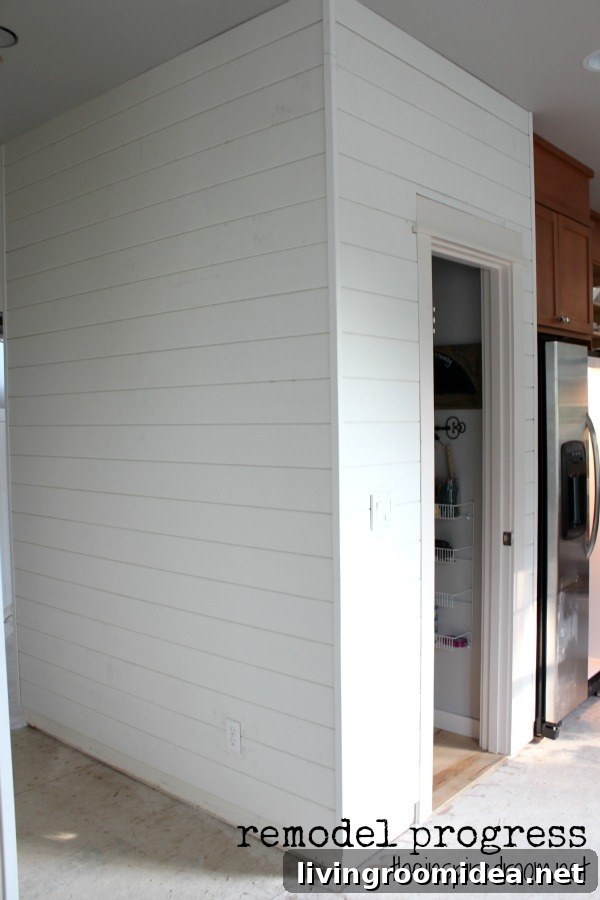
One thing I’ve missed from living in houses nearly a century old is the authentic character—real plank walls, wood paneling, wainscoting, detailed ceilings and trim. Thankfully, you can add that warmth and charm to homes of any age. That’s been my goal with this house. It took almost four years to get to this point, but good things are worth the wait.
For our kids’ upstairs bathroom we created a simple board-and-batten look using only trim—no actual boards. This faux treatment works well in many spots: from photos it can read as authentic and it’s an efficient way to add architectural interest. But sometimes I want the real thing. Real wood has texture, scent and weight that faux materials can’t replicate. In person, real wood just feels different. I want my home to feel right, not just look right.
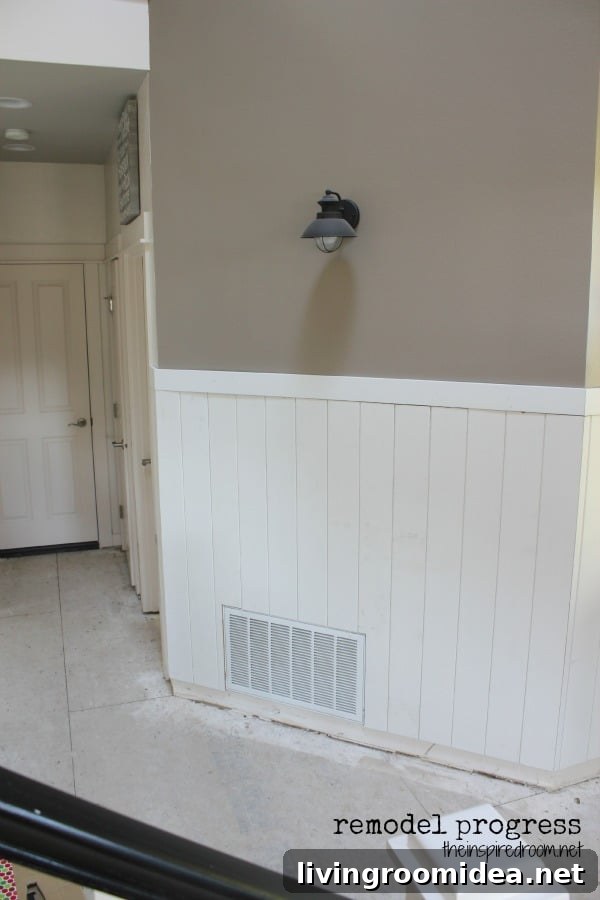
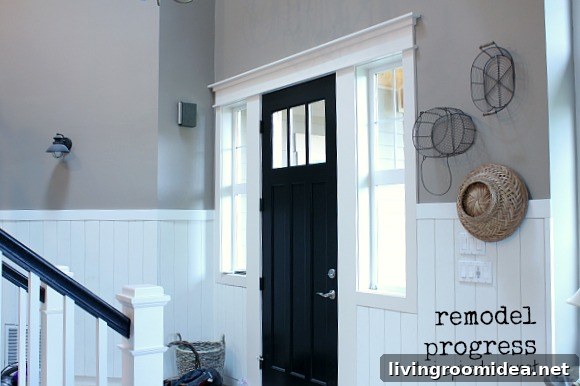
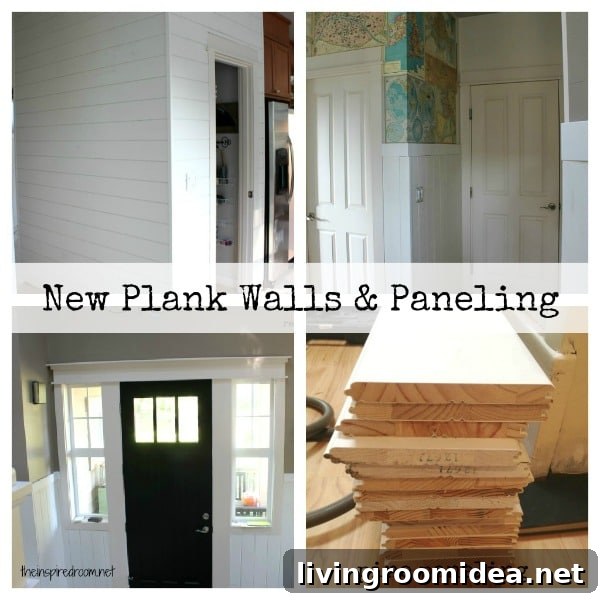
This year, as part of a larger effort to repair and refresh high-traffic areas, we added real tongue-and-groove plank walls throughout the entry, hallway and kitchen. These spaces are connected and had all taken a bit of wear over the four years we’ve been here, so it made sense to tackle them together and create continuity.
While old plaster walls have their own quirks, I’ve found drywall can be even trickier to work with. Unless it’s finished exceptionally well, drywall rarely contributes that old-house feeling I love.
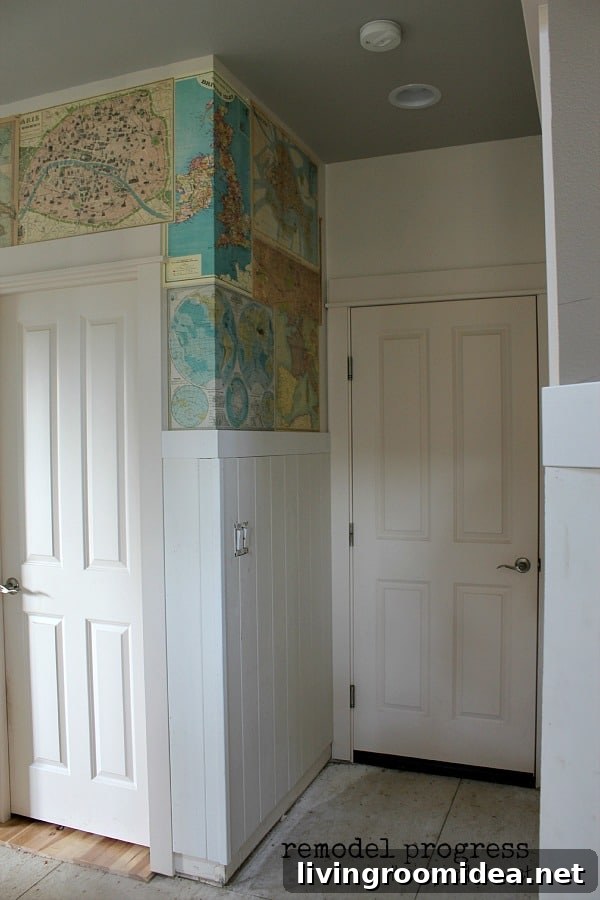
Real wood wainscoting and paneling instantly add warmth and charm. You might recognize the map wall from years ago; I haven’t shared all the details yet, but once the trim and flooring are complete I’ll post more about that feature. For now, it’s enough to say that the new woodwork has already transformed the mood of our home. I can’t stop looking at it—it makes my heart happy.
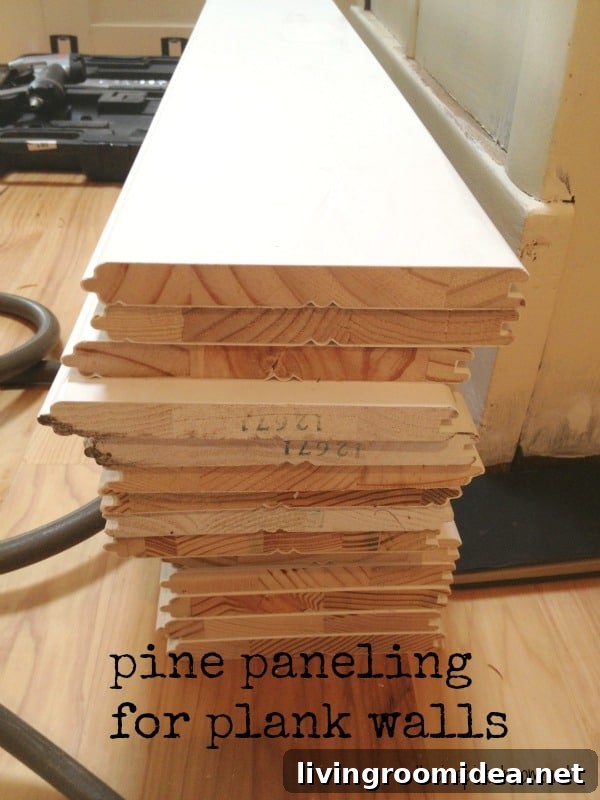
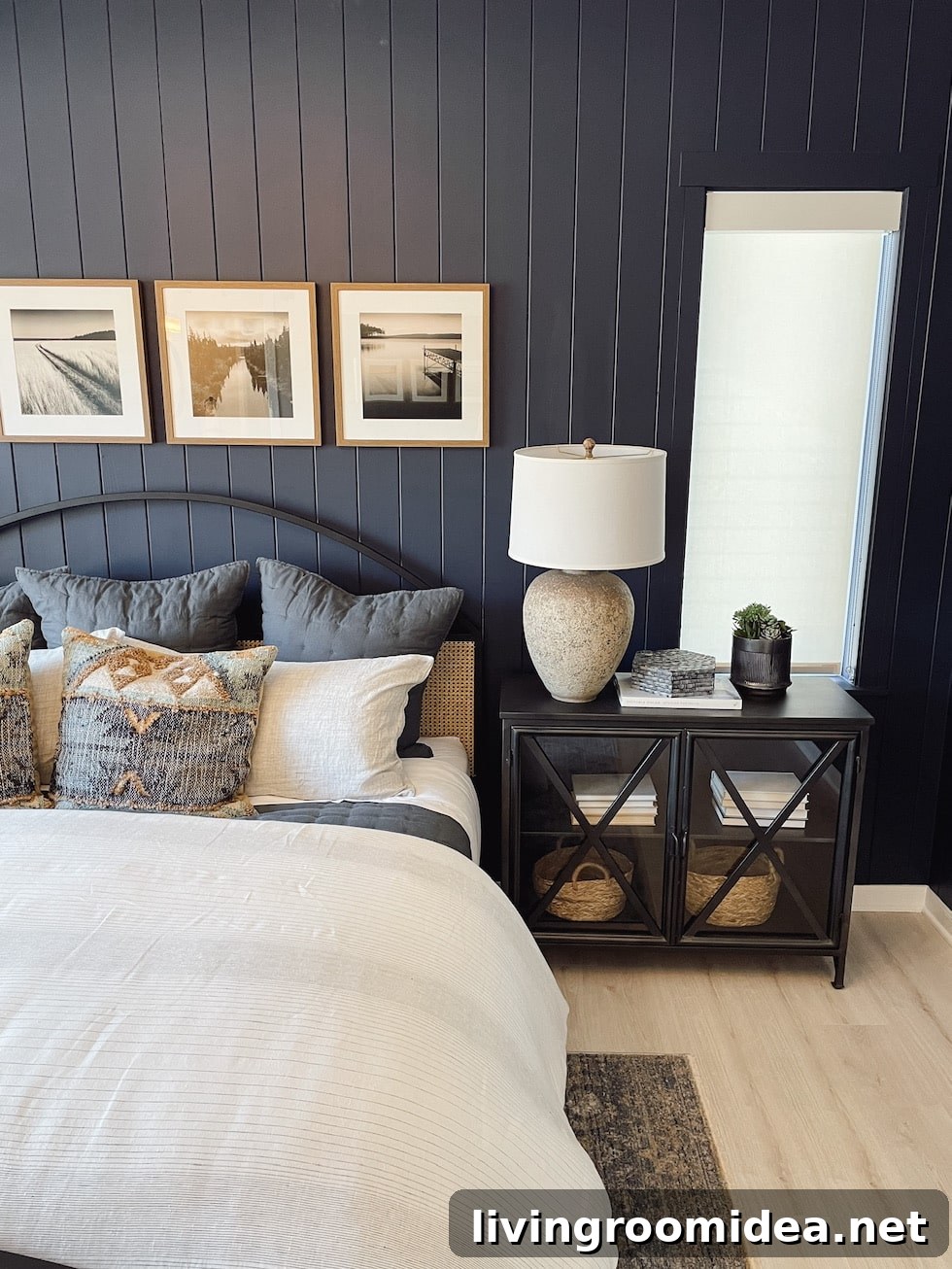
The planks are tongue-and-groove pine, about five inches wide, and we used primed boards so painting would be easy. We actually used the reverse side of tongue-and-groove beadboard paneling. That gives a V-groove plank look rather than beadboard. It’s a simple trick we learned previously when planking the sides of cabinetry.
Where we wanted horizontal planks we turned the boards sideways and installed them from floor to ceiling. In other areas where we preferred a traditional vertical wainscoting, we installed the boards vertically to a height of five feet. Because these are tongue-and-groove panels, there’s no need to prime or paint the existing wall first—the seams aren’t visible once installed.
We kept the trim straightforward to match the simple moldings in the rest of the house. Baseboards will be reinstalled after the new flooring is in.
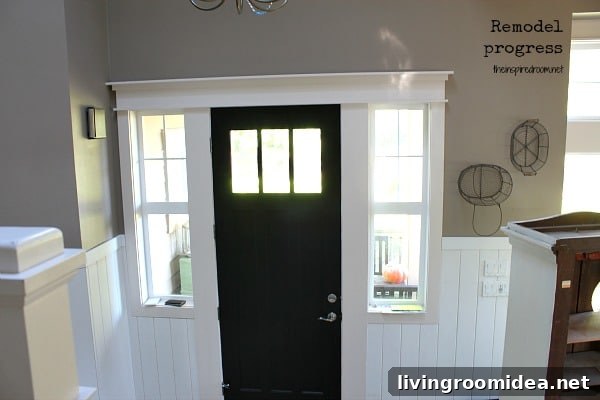
We hired a contractor to install the paneling and trim so we could focus our time and skills elsewhere. Woodworking isn’t our preferred DIY activity, though with the right tools and experience this is a project many homeowners could tackle. There are countless ways to add wood walls and trim to fit different styles and budgets.
There’s additional trim work in the family room that I’ll share in a future post along with more remodeling photos. This week new floors go in, and we’re still waiting on fireplace tile and kitchen cabinet paint. Other than that, progress is moving along and we’re gearing up for the holidays—yes, we’ve already put up one Christmas tree and I’ll show more of that soon.
With relatively simple changes like real wood wainscoting, we’re turning a builder-grade house into the cozy, character-filled home I’ve always imagined—at least the practical version of it. Small, thoughtful updates over time really add up.
Are you making small changes over time to bring your home closer to the vision you want?
Related inspiration post: Plank Walls