
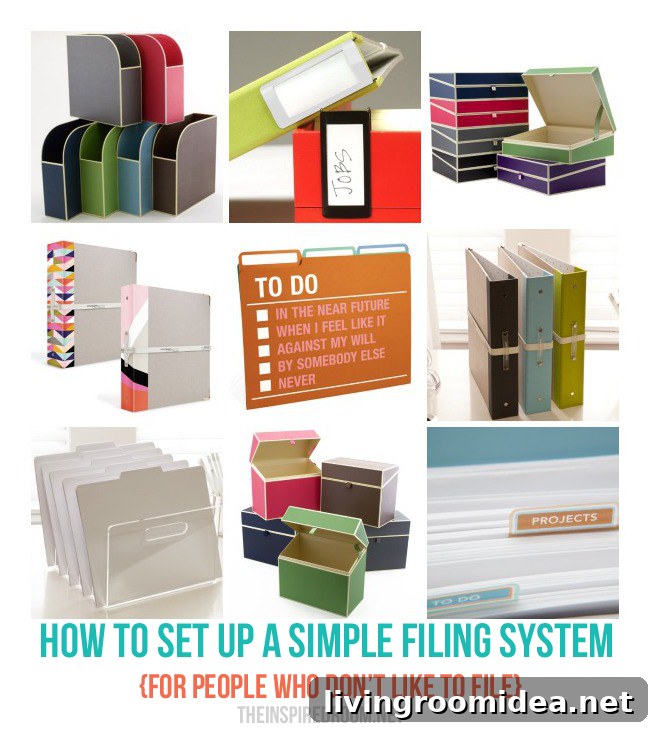
I love the idea of papers being super organized.
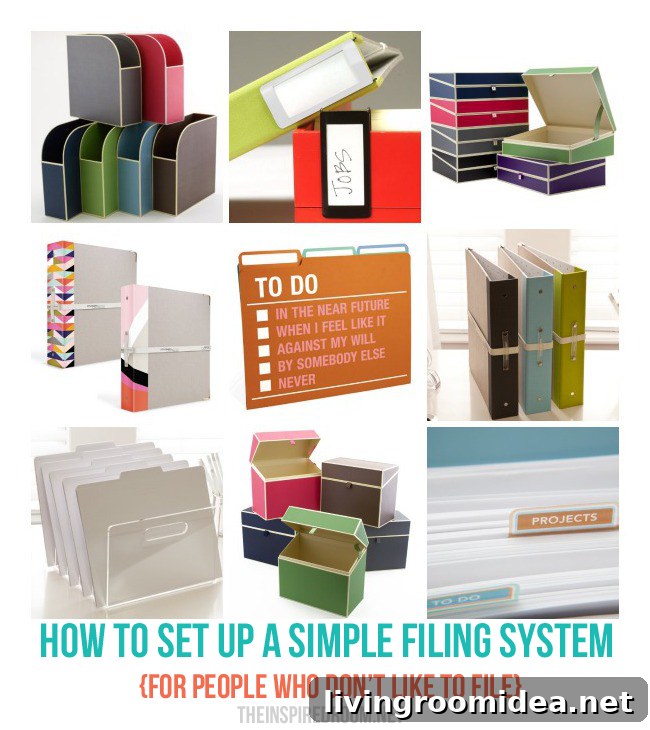
I swoon over beautiful organizers, colorful boxes, patterned binders and color-coded files. I appreciate stickers and labels. Yet despite my affection for pretty supplies, I’ve long struggled with one problem: I don’t like filing. It’s not that I don’t want to be organized—I do. I’ve always wanted to be a person who files, someone who feels “together.” I thought that buying attractive folders and notebooks would solve the issue, but I’ve learned that pretty containers alone don’t make papers organized.
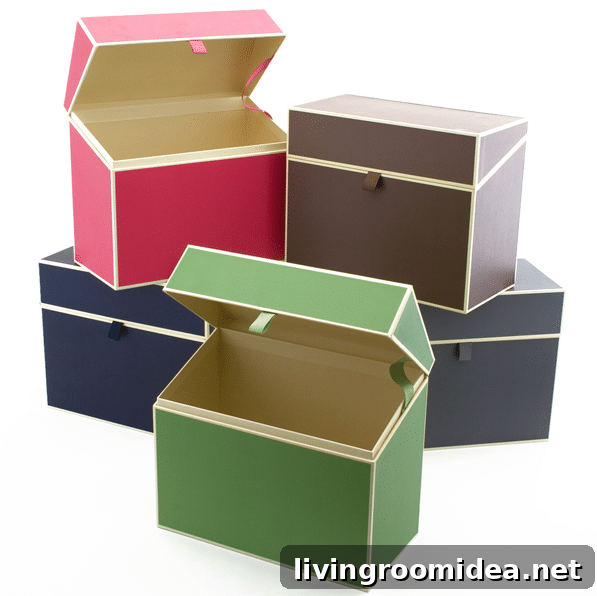
file boxes or organizers in this post via See Jane Work {not affiliate links}
Over the years I developed a few systems that help. One is a hallway magnetic board for urgent papers that I still use and love. It keeps immediate items visible and easy to grab. But that board became cluttered with papers I didn’t need right away—those important-but-not-urgent documents that piled up and made the space messy.
I’m very much an “out of sight, out of mind” person. I don’t like overstuffed file drawers or the hassle of paper cuts, so the instinct is to avoid filing altogether. When I tried to follow elaborate instructions for setting up a multi-category filing system, I felt overwhelmed. If you genuinely enjoy filing, your brain probably operates differently than mine: too many folders and nested categories make me shut down.
I should have just hired an office assistant who loves to file. Maybe I still will.
But I was determined to solve this myself. Faced with the prospect of being buried in paperwork, I finally sat down, mapped out the drawers in my office, and designed simple filing systems I could actually use. The secret was baby steps—small, realistic actions that feel manageable instead of intimidating.
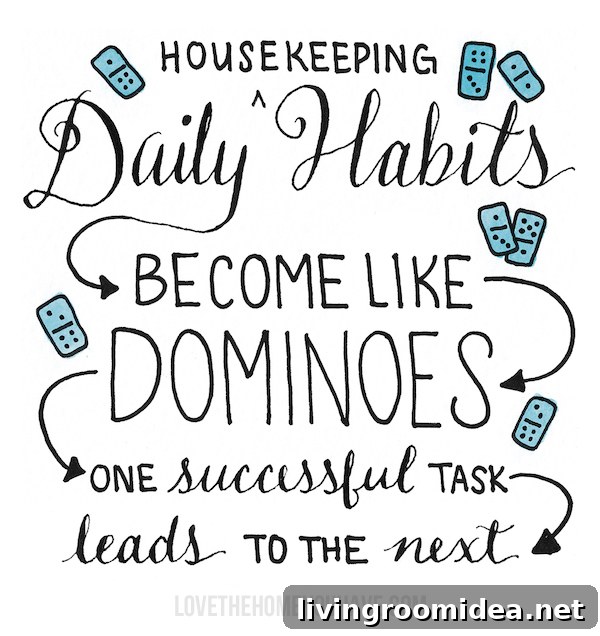
That approach—simplifying a task and breaking it into one easy step at a time—is what makes other household routines stick for me, too. Whether it’s cleaning or organizing, the simpler the process, the more likely I am to maintain it long-term.
Now I’m excited to be overcoming my aversion to filing. Pretty boxes, notebooks and folders still matter because I enjoy creating a pleasant room, but the system inside must be simple and practical. I focused on designing a filing method that removes friction and requires little decision-making so I’ll actually use it.
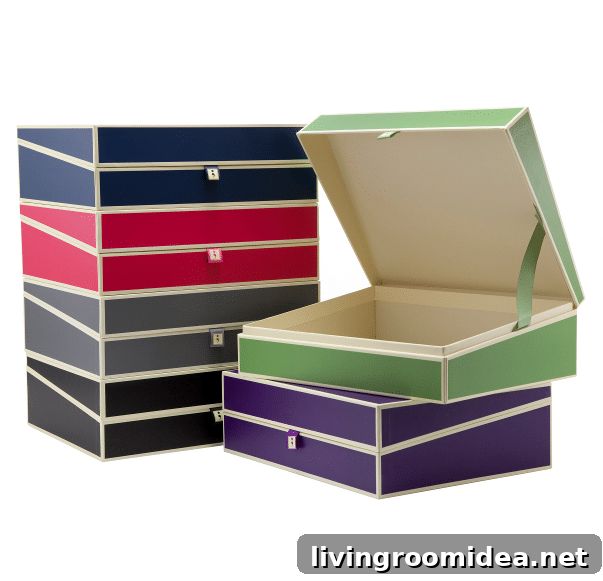
file boxes or organizers in this post via See Jane Work {not affiliate links}
Recently I shared a first baby-step plan for paper organization and filing on The Decluttered Home. In that post I describe how I set up the first drawer of my simple filing system specifically for time-sensitive papers, and I offer practical tips for using it. If you, like me, have an aversion to filing but want to start getting organized, a small, focused plan can make a real difference.
My approach avoids complicated categories and excessive folders. Instead, I dedicate a single drawer to a few clear, actionable tabs—items to pay, items to process, and items to keep. Keeping the system visible and limited to a short list of functions removes the decision fatigue that used to derail me. The goal is consistency, not perfection: do a little each week rather than trying to create an exhaustive filing archive in one session.
For anyone who hates filing, here are a few practical principles I used:
- Simplify categories to a handful of clearly labeled sections so decisions are quick.
- Create a visible, central location for time-sensitive items so nothing gets forgotten.
- Use attractive containers if that motivates you, but pair them with a straightforward internal system.
- Take baby steps—set a small, weekly filing routine rather than attempting an all-day sorting marathon.
- Review and purge regularly so files don’t become overwhelming.
I’m pleased to finally have a plan that works for a “file-challenged” person like me. The system is simple, practical and sustainable, and it makes the pretty organizers actually useful instead of decorative clutter. I’m looking forward to sharing more of the easy systems I’ve developed for organizing papers—ones that help even if filing isn’t your thing.