
So, I’m not really into owls.
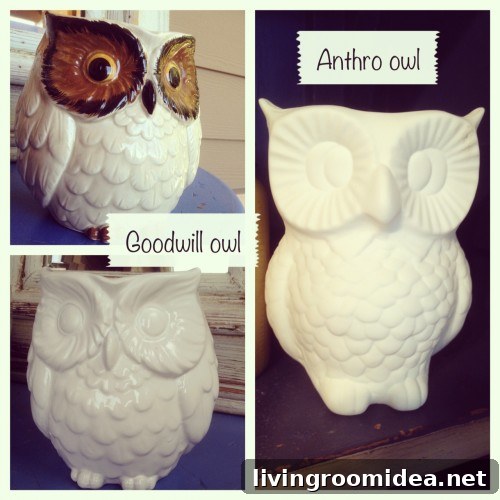
They’ve never been my favorite; to be honest, they make me a little uneasy. Despite that, I’m not completely opposed to them as decor, so when I spotted a small ceramic owl at the Seattle Goodwill priced at $1.99, I decided it could do duty as a pencil cup and brought it home.
Right after that thrift-store find, I stopped into Anthropologie and noticed they were selling an owl pencil cup for about $16. Seeing that, I felt like I’d gotten a bargain.
I gave my thrifted owl a quick coat of white spray paint to freshen it up. The result looked surprisingly similar to the Anthro version—clean, simple, and much less like the original, somewhat eerie figure I’d picked up at Goodwill.
For a moment I celebrated the transformation. It felt like a small victory: a cheap find upgraded into something stylish and functional. But the celebration didn’t last long.
After staring at the newly painted owl for a while, I started to feel oddly guilty. The owl’s original character had been hidden under the white paint. I began to imagine that, in losing its original finish, the little statue had lost a part of its identity.
I kept thinking about what the owl might have looked like before—its original textures, colors, and quirks—and I felt like I’d erased those details. Maybe it sounds silly, but it bothered me that I’d effectively taken away something that made the piece unique.
To make amends, I started imagining how I might restore some personality to the owl rather than leaving it as a plain white cup. I pictured repainting it with patterns, earthy tones, or whimsical accents—something that would bring back character and playfulness without trying to exactly copy anyone else’s design.
Anthropologie’s version has a charming, carefully finished look, and that inspired me to consider a more creative approach than a solid coat of paint. Instead of trying to replicate their product, I thought about giving my thrifted owl a fresh, handcrafted look that celebrates its thrift-store origins while adding personality and purpose.
I’m sorry, owl.
So the plan now is to revive the little owl’s spirit with a fresh paint job that respects its original charm. Whether that means delicate accents, a new color palette, or a fun pattern, the goal is to return a sense of character to the piece so it feels less like a copied object and more like a small treasure with its own story.
In the end, this is what I love about thrifting and DIY: inexpensive finds can be transformed into things that reflect your taste, and the right approach can restore personality rather than erase it. My painted owl will have a second chance at being seen for what it is—an honest, quirky companion on my desk, pencil-friendly and a little bit restored.