
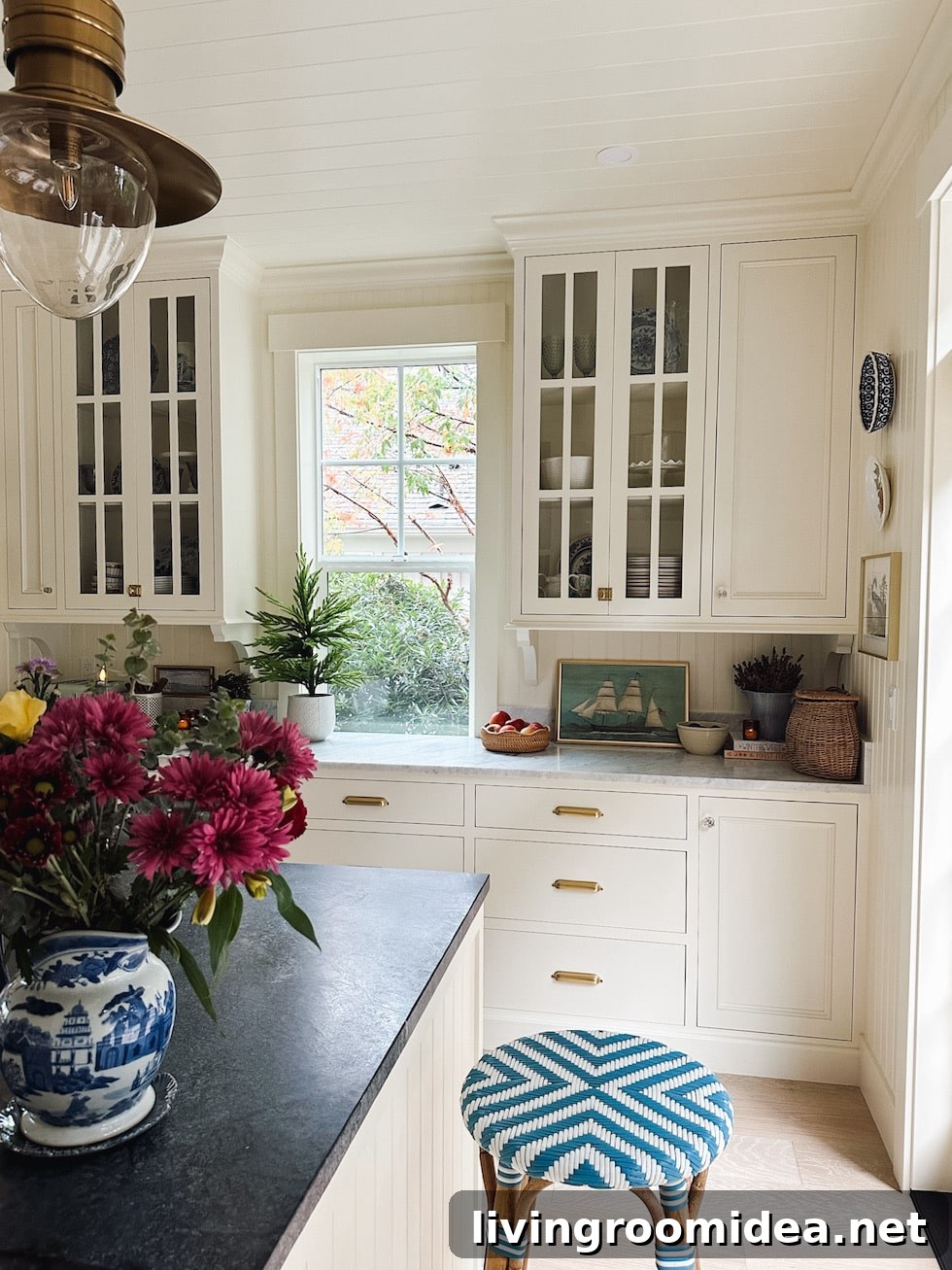
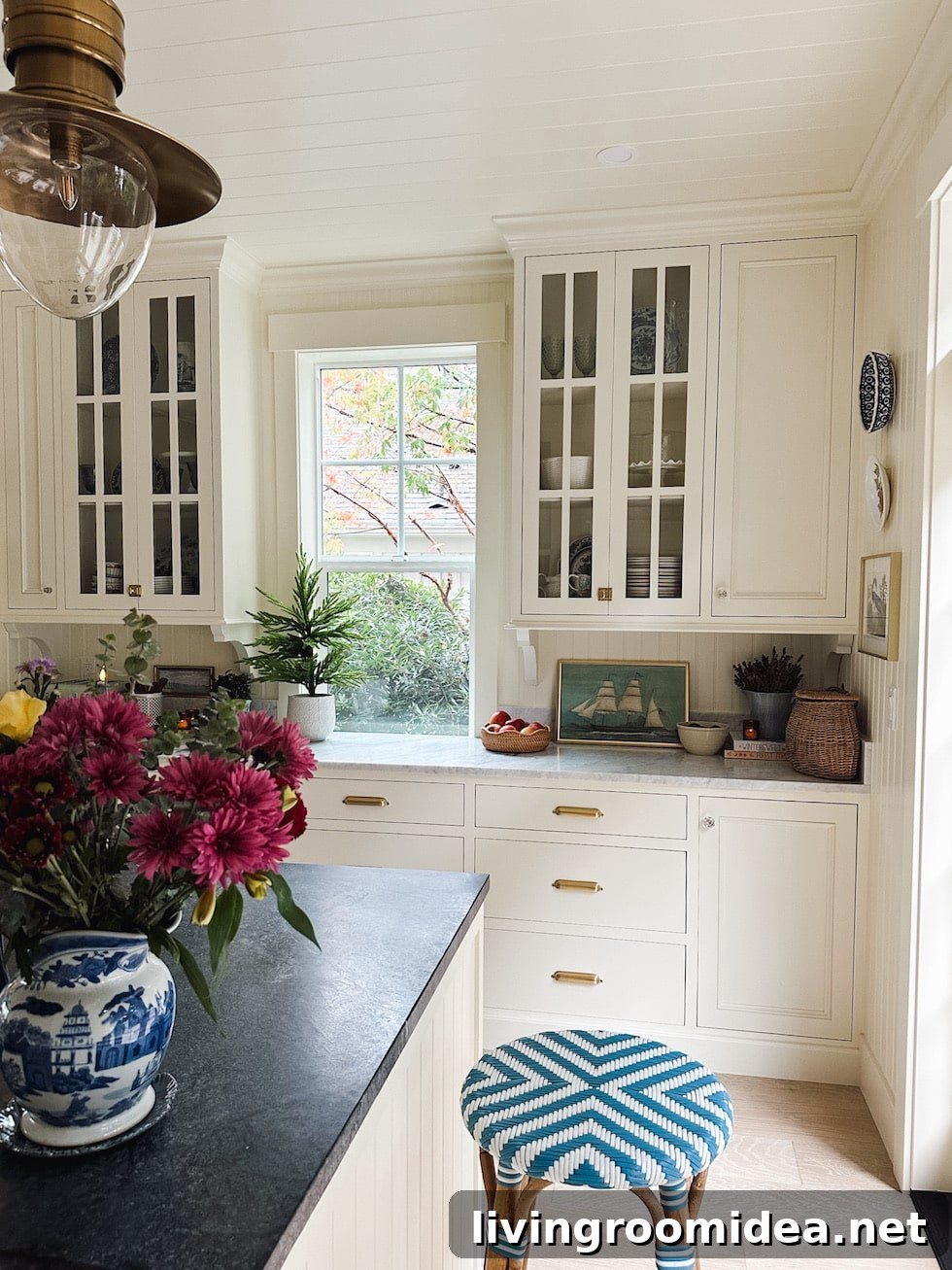
Planning a kitchen renovation or moving a kitchen within existing walls — as we did — can make it hard to picture how measurements and floor plans will translate into real life.
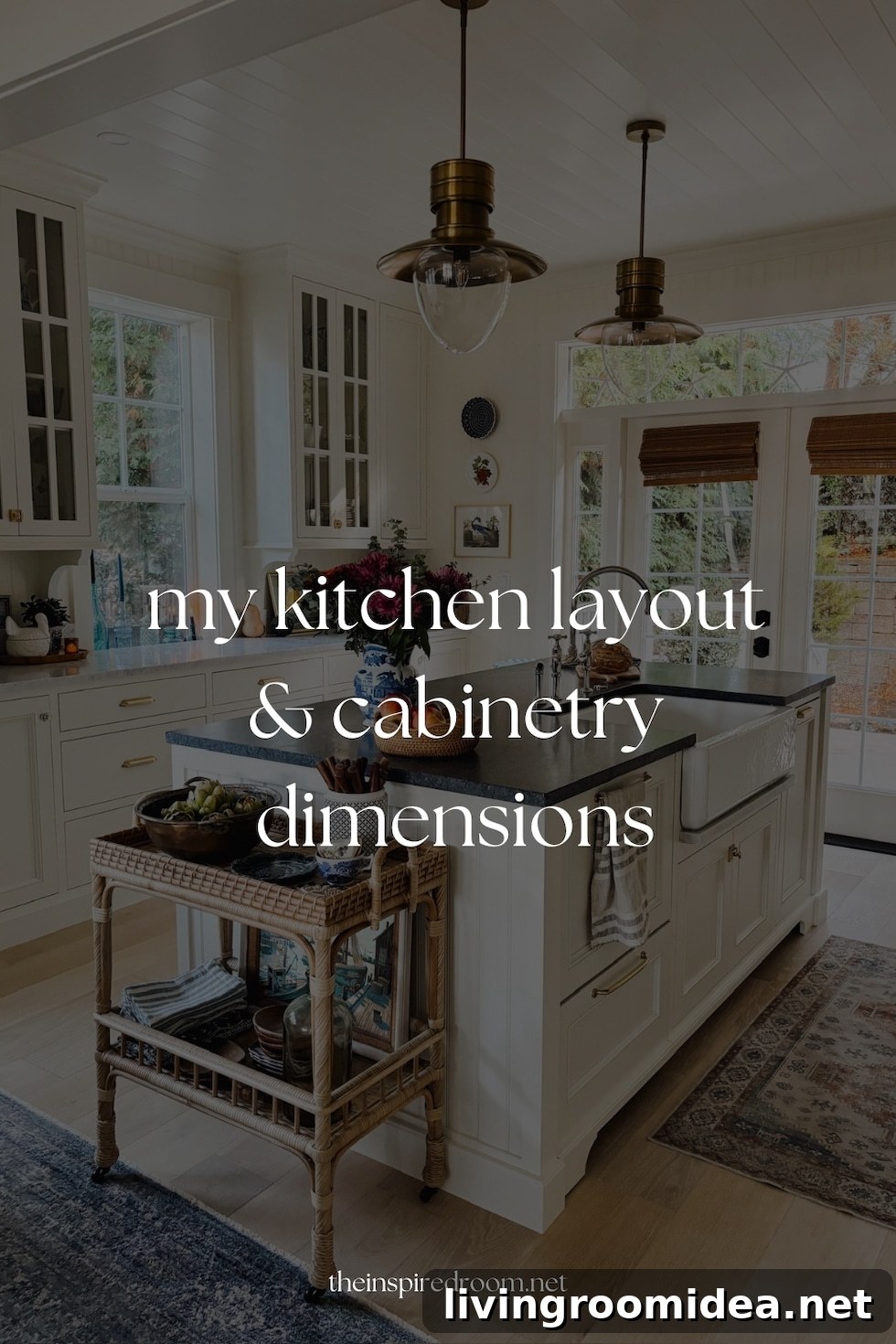
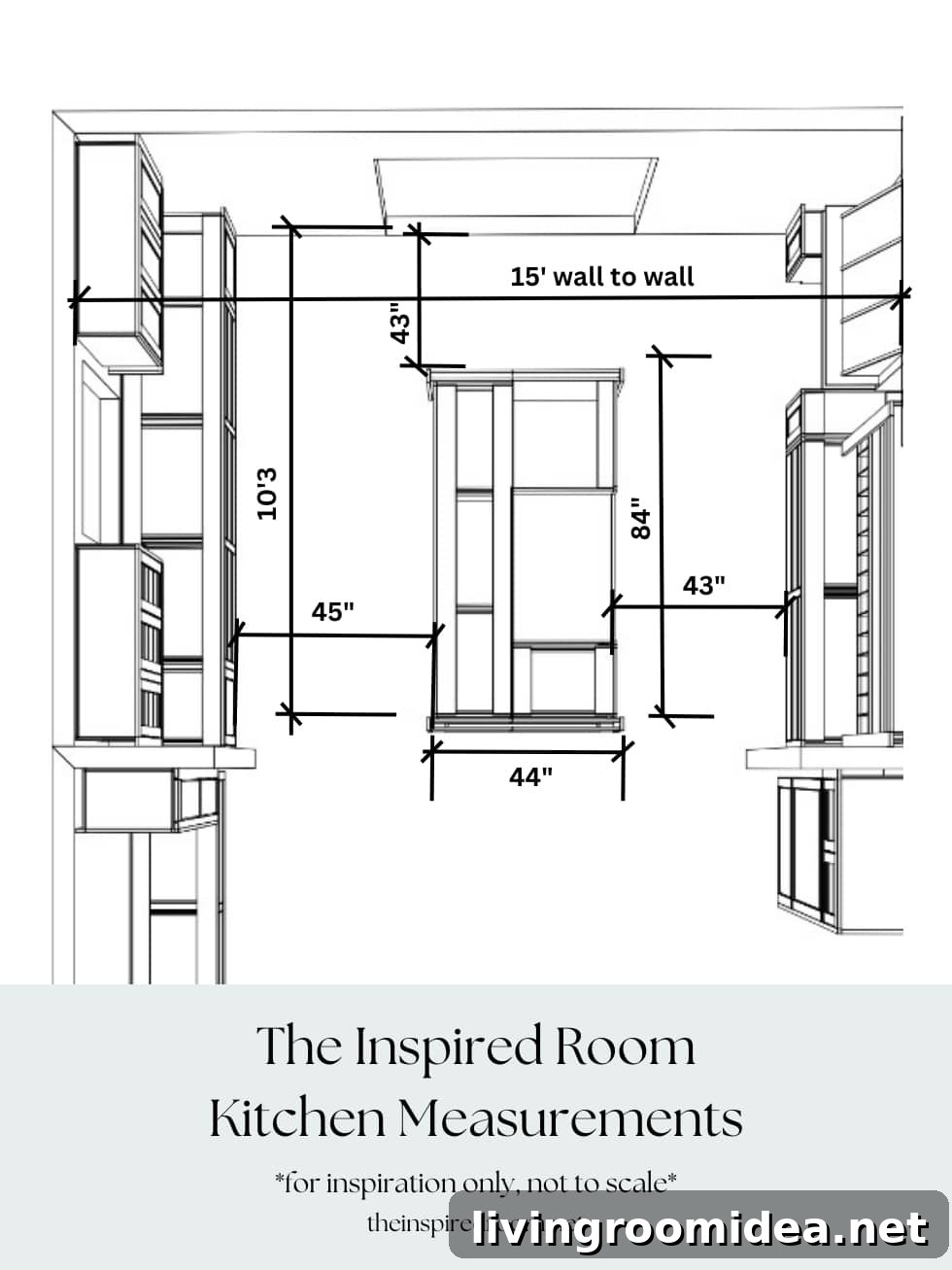
Below I share the dimensions of our kitchen and cabinetry so you can compare the numbers we used on paper with photos of the finished space in our home.
A quick disclaimer: I strongly recommend consulting your cabinet supplier or a kitchen designer to confirm that your layout and selections will work in your home. You don’t want to miss something important or make a choice you’ll regret.
These measurements are approximate and the sketches are meant for inspiration rather than a final plan. Our drawings were made before the renovation and a few details changed during construction (for example, we swapped the dishwasher and trash drawer). Still, I hope this gives a realistic look at how we fit a kitchen into a space that had previously been a dining room.
Everyone has a different idea of an ideal kitchen size or layout. We worked within fixed walls and other immovable elements but were able to create a plan that feels right for our family. It’s comfortable and welcoming, large enough for cooking and gathering, but not so vast that a few people feel lost in it. The flow and scale work for our daily life.
I’ll explain why we chose this layout and share the space planning decisions behind it. Later I’ll cover the adjoining dining area in more detail.
Since the renovation reveal I’ve received so many thoughtful messages from readers using our kitchen as inspiration. I’ve designed several kitchens over the years, and it means a lot when others find ideas here helpful.
Our kitchen layout and space planning
One of our main priorities was maximizing efficiency across the entire main floor, not just the kitchen.
Our main floor is compact and open to adjacent rooms, so every decision affects the feel of the whole area. We moved the kitchen to the back of the house into the former dining room to improve traffic flow, function, and sightlines, while still working within the existing wall structure. This move created a better visual and practical flow through the home.
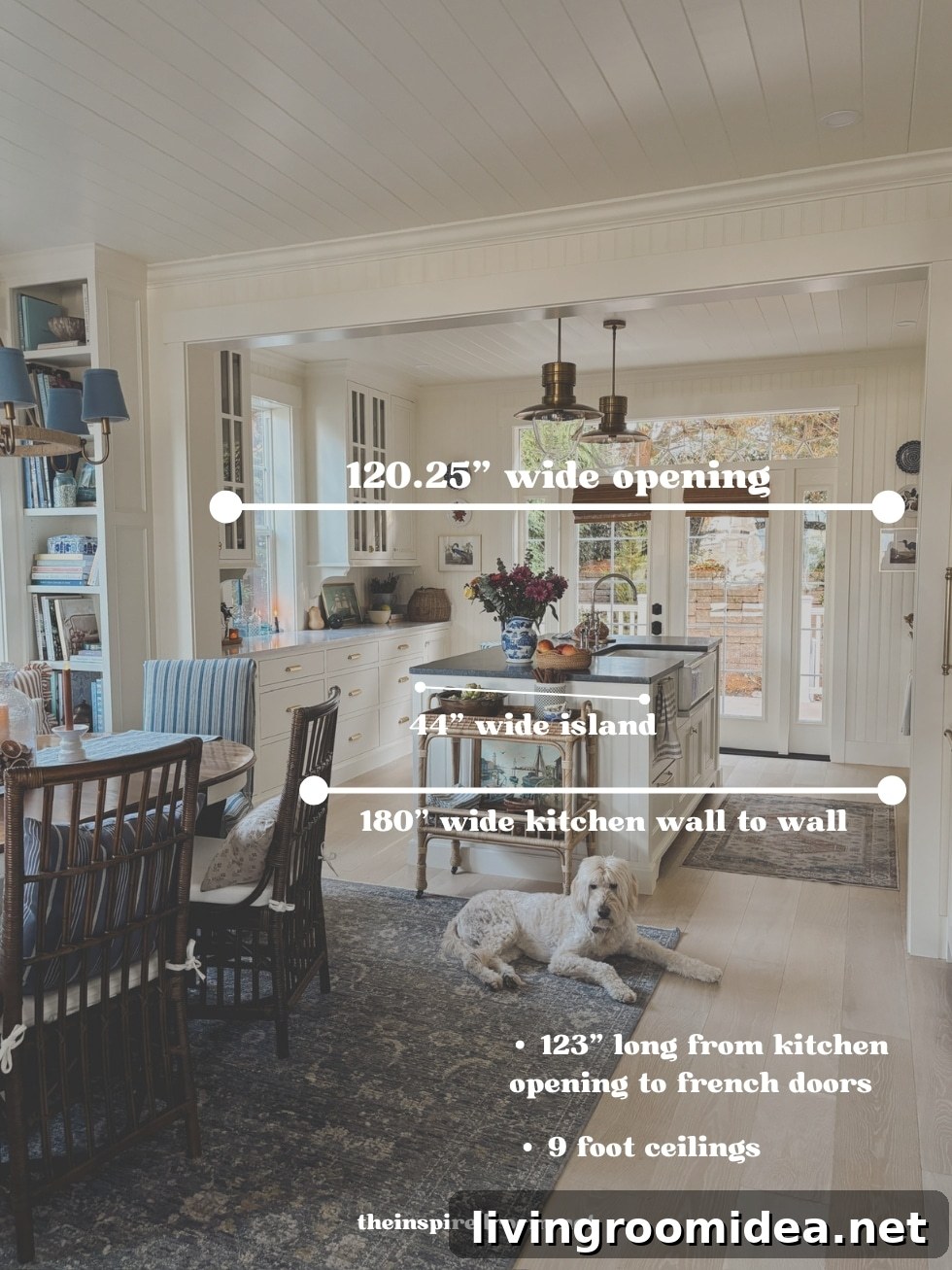
We avoided layouts that would create barriers or bottlenecks and paid attention to small details such as leaving clearance for tongue-and-groove beadboard, cabinet and appliance door swings, and working space in front of appliances.
The kitchen is 180″ wide from wall to wall, but once cabinets and wall treatments were added, the usable floor width narrowed. Precision in measurements was essential because we had limited wiggle room. Ask lots of questions before contractors start and monitor the work so you can address issues early.
I hope these numbers and observations help if you’re working in a compact space where every inch matters. Large, generously sized kitchens allow for many layout options, but those suggestions don’t always translate to smaller or unusual room shapes.
Our main cooking zone functions like a galley kitchen. It would still work well with half the width, but we’re grateful to have the opposite counter run for additional storage, prep, and serving space. Making the work-triangle side efficient for the cook while keeping it comfortable for helpers and guests was important.
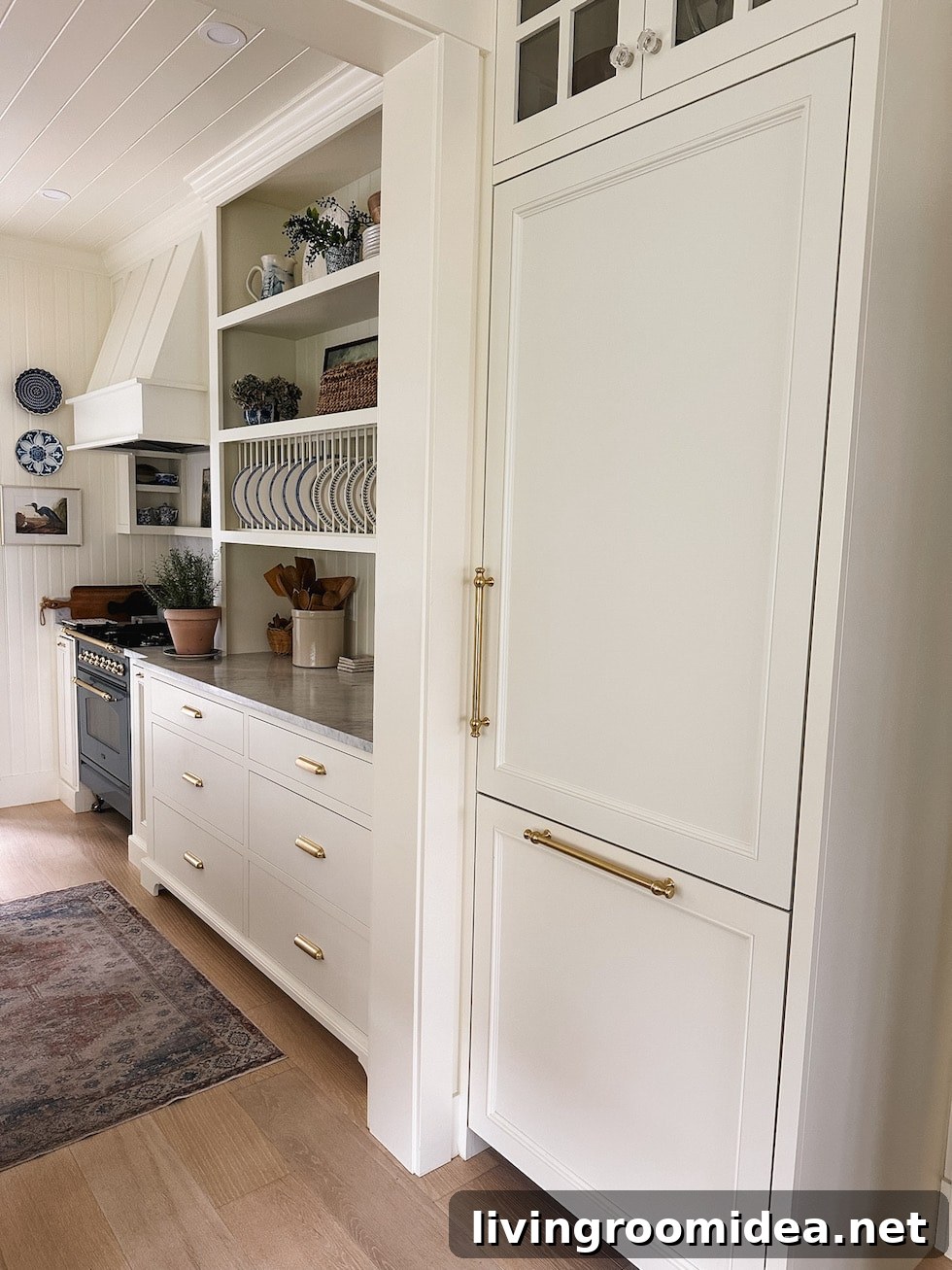
We arranged the stove, sink, and refrigerator so they’re a reasonable number of steps apart, yet separated enough to give each appliance clear floor space. The fridge sits just outside the main kitchen area on the dining room wall, which helps reduce congestion. Appliance and cabinet doors open freely, and multiple people can work—at the stove, sink, fridge, or unloading the dishwasher—without constantly bumping into each other.
Because storage is limited in our home overall, we prioritized abundant cabinetry and as much counter space as possible so multiple people can prep, chop, and lay out serving dishes comfortably.
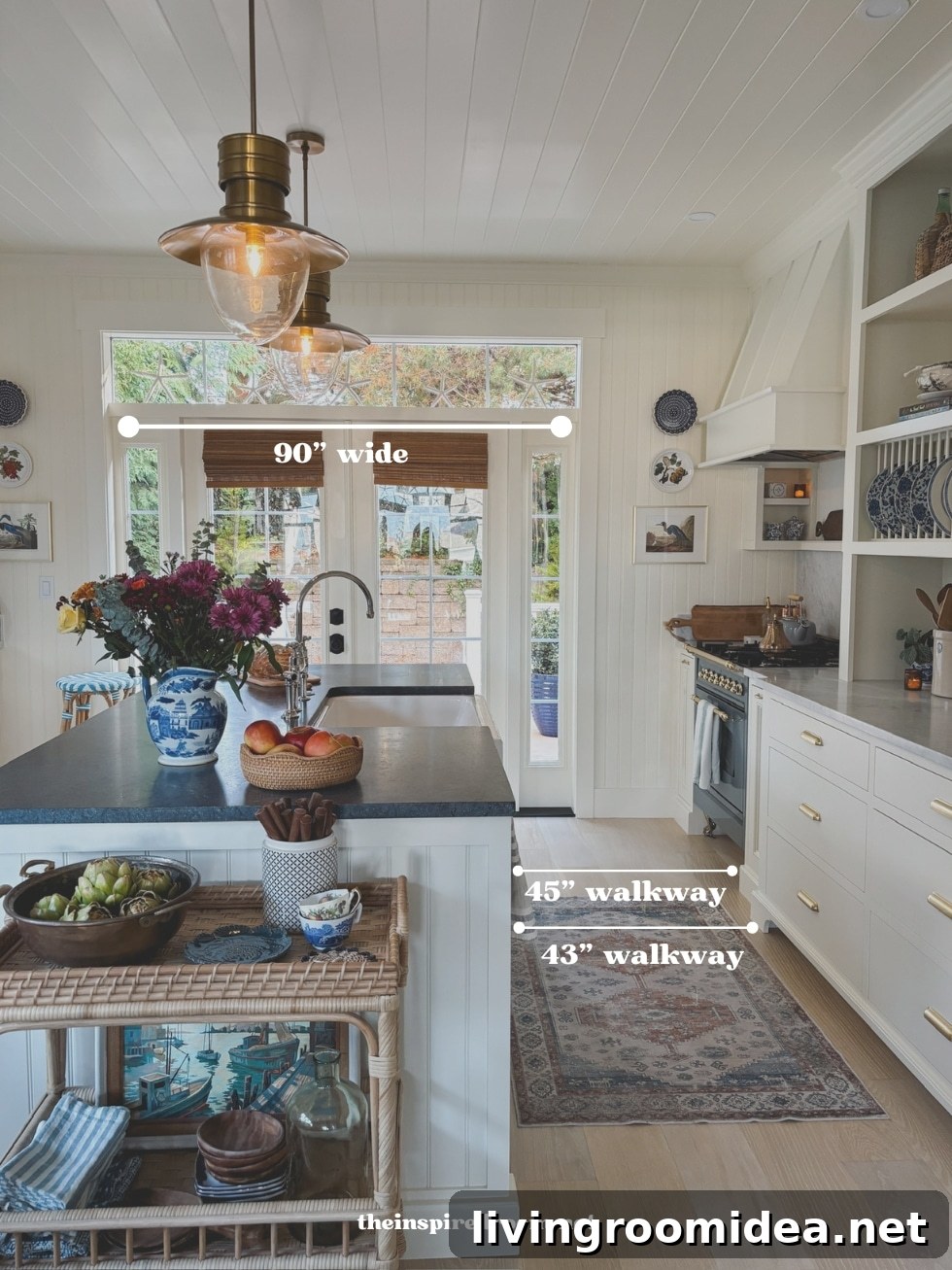
The island is central to the layout’s success. It provides storage, counter space, houses the dishwasher and sink, and accommodates a trash drawer. The island helps traffic flow and creates a separation between the cook zone and an area for guests to stand or sit without getting in the way. We included a small cubby for a stool so someone can chat or eat breakfast at the island.
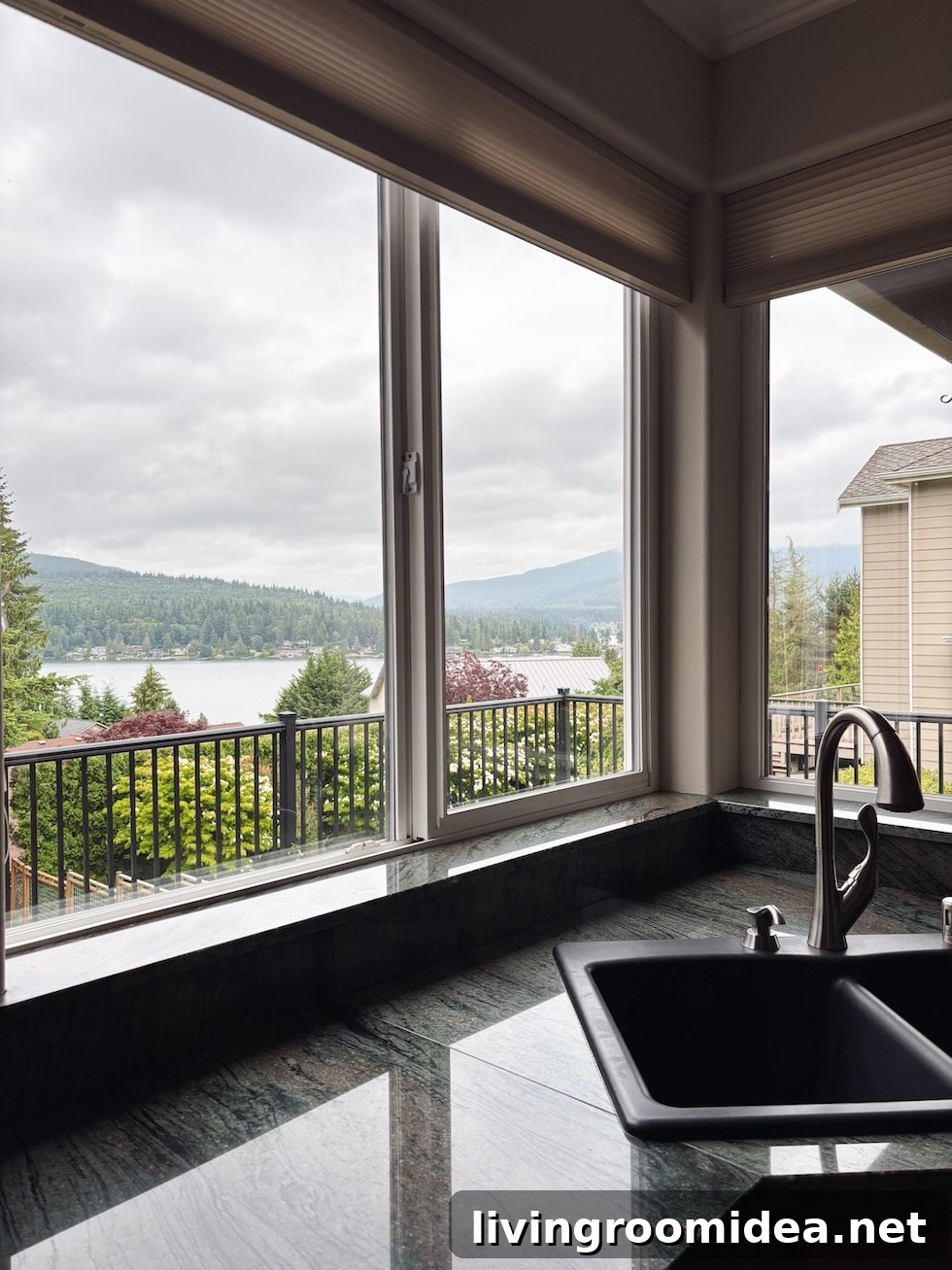
We also designed for natural light and views by allowing space for multiple windows and French doors so the kitchen feels bright and connected to the outdoors.
Although many people prefer a sink under a window, we placed ours in the island. It’s shielded from view of the front door, enjoys water and garden views from the surrounding windows, and sits in an efficient spot within the workflow.
The island sink helps the kitchen feel open yet cozy. It gives ample prep space and room to chat with guests while working. If you’re concerned about mess in an open plan, cleaning as you go helps—emptying the dishwasher before cooking, using double dishwasher drawers, and keeping a deeper sink make cleanup manageable. We also have a small mudroom off the kitchen to hide anything that gets behind during a busy meal.
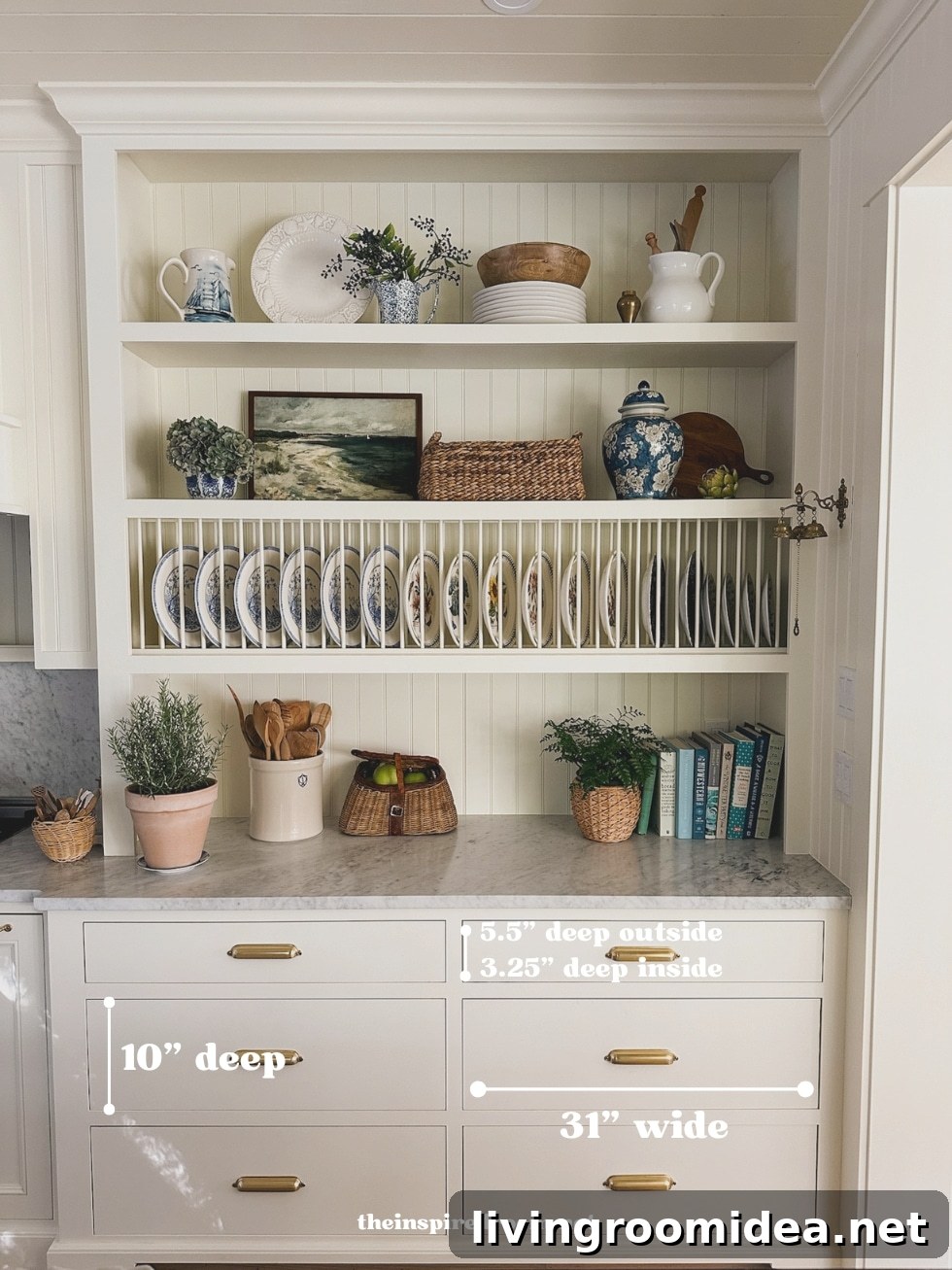
We chose inset drawers that sit flush inside the cabinet frame. They offer a classic look though they provide slightly less internal depth than overlay styles—but we still have more than enough storage. We also varied baseboard and toe-kick styles in different areas. These finishing details affect cabinet selection and installation, so consider them early in planning.
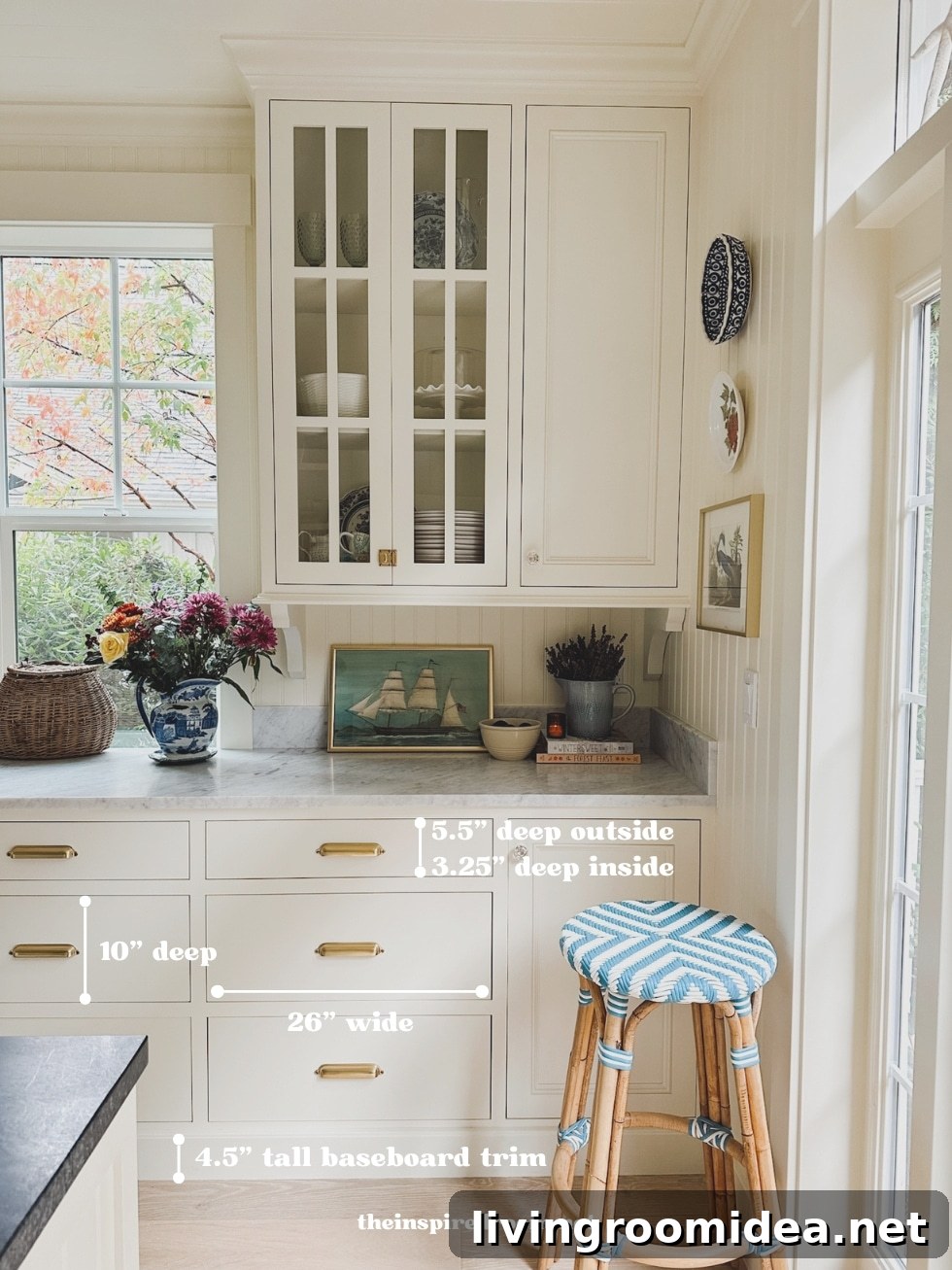
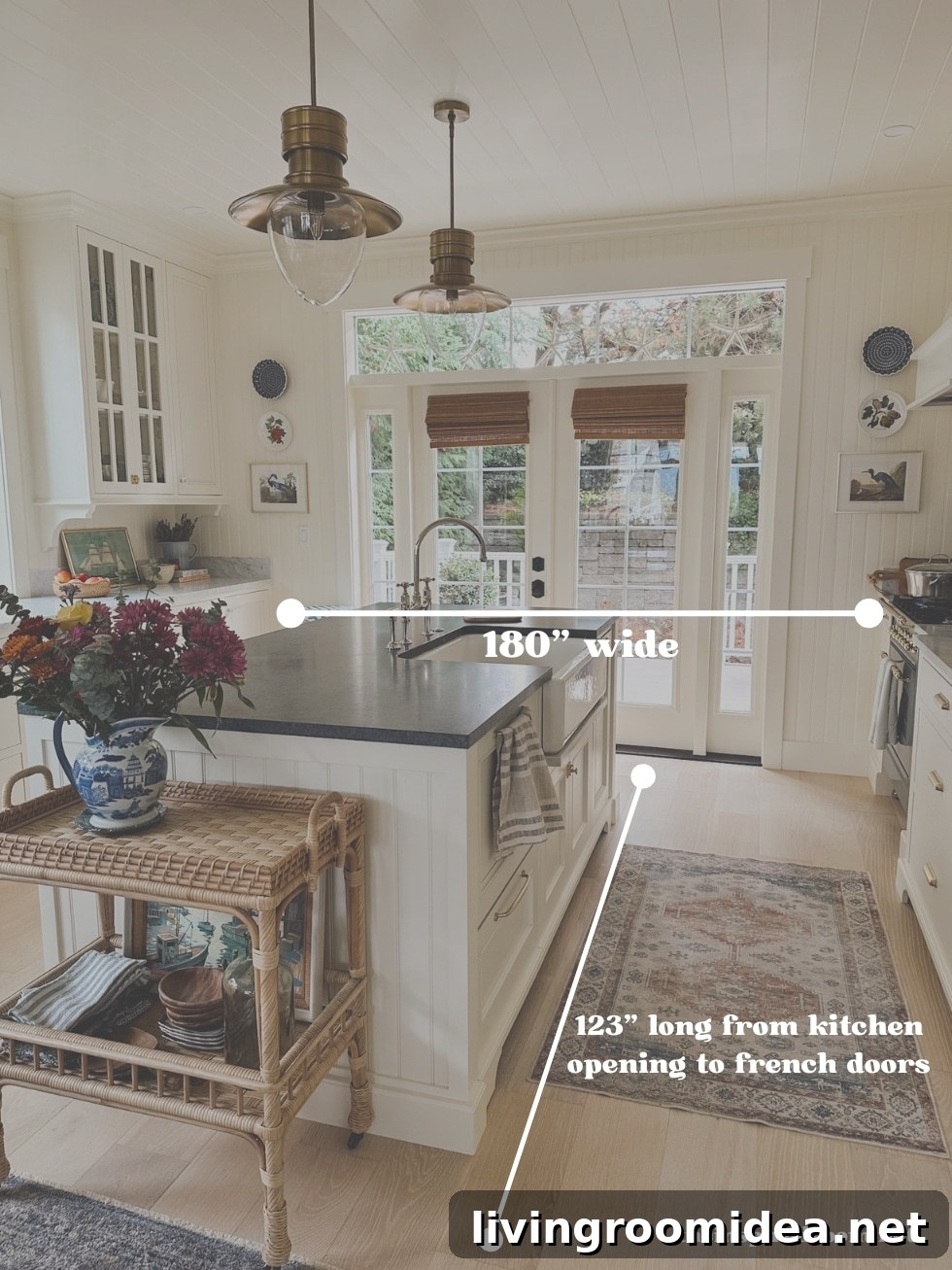
Remember: the room started at 180″ wall to wall, but with cabinet faces and thick tongue-and-groove wall treatments, the practical width is measured backsplash to backsplash. The space feels cozy yet open, and you can move around the room without feeling confined.
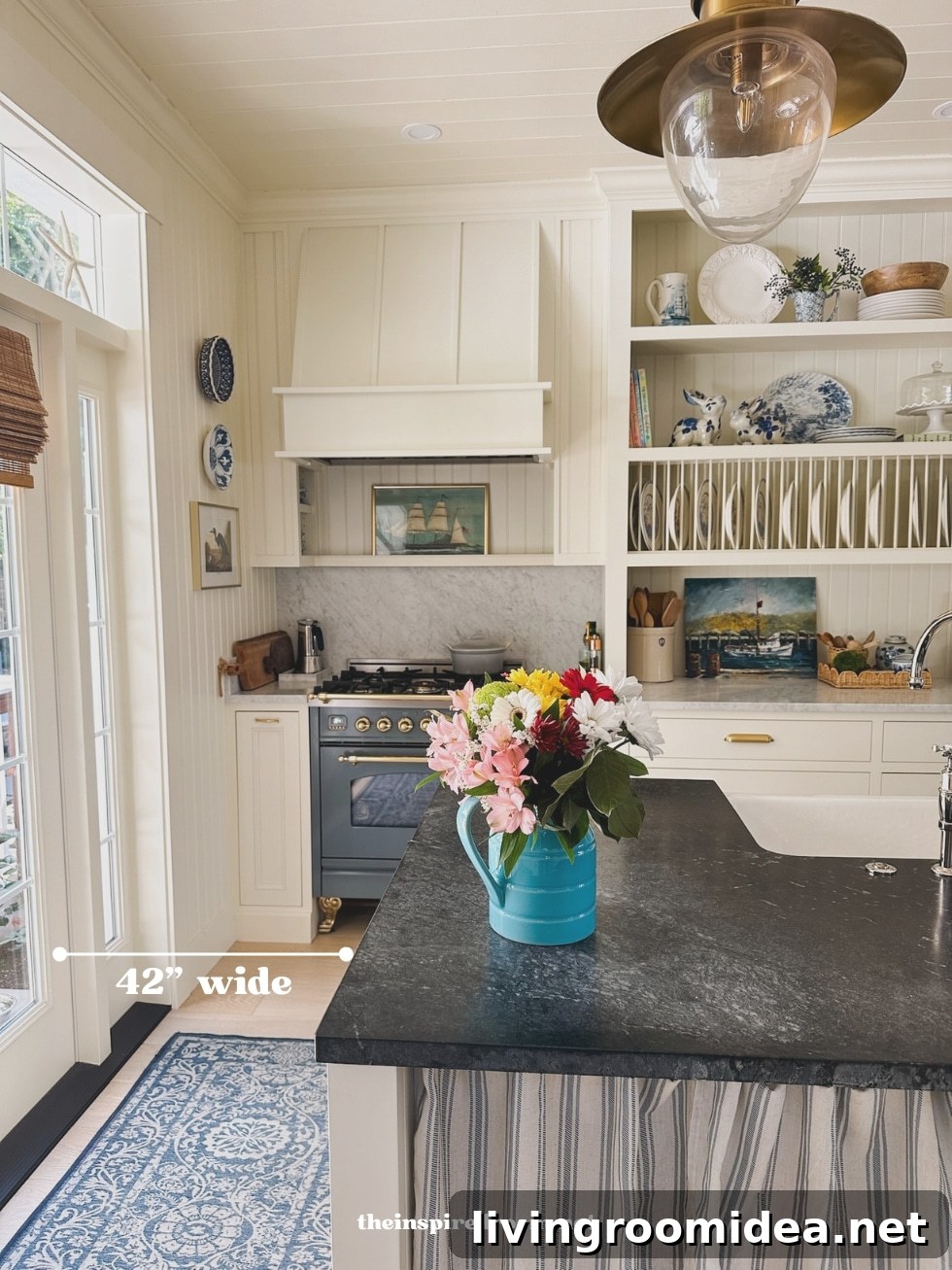
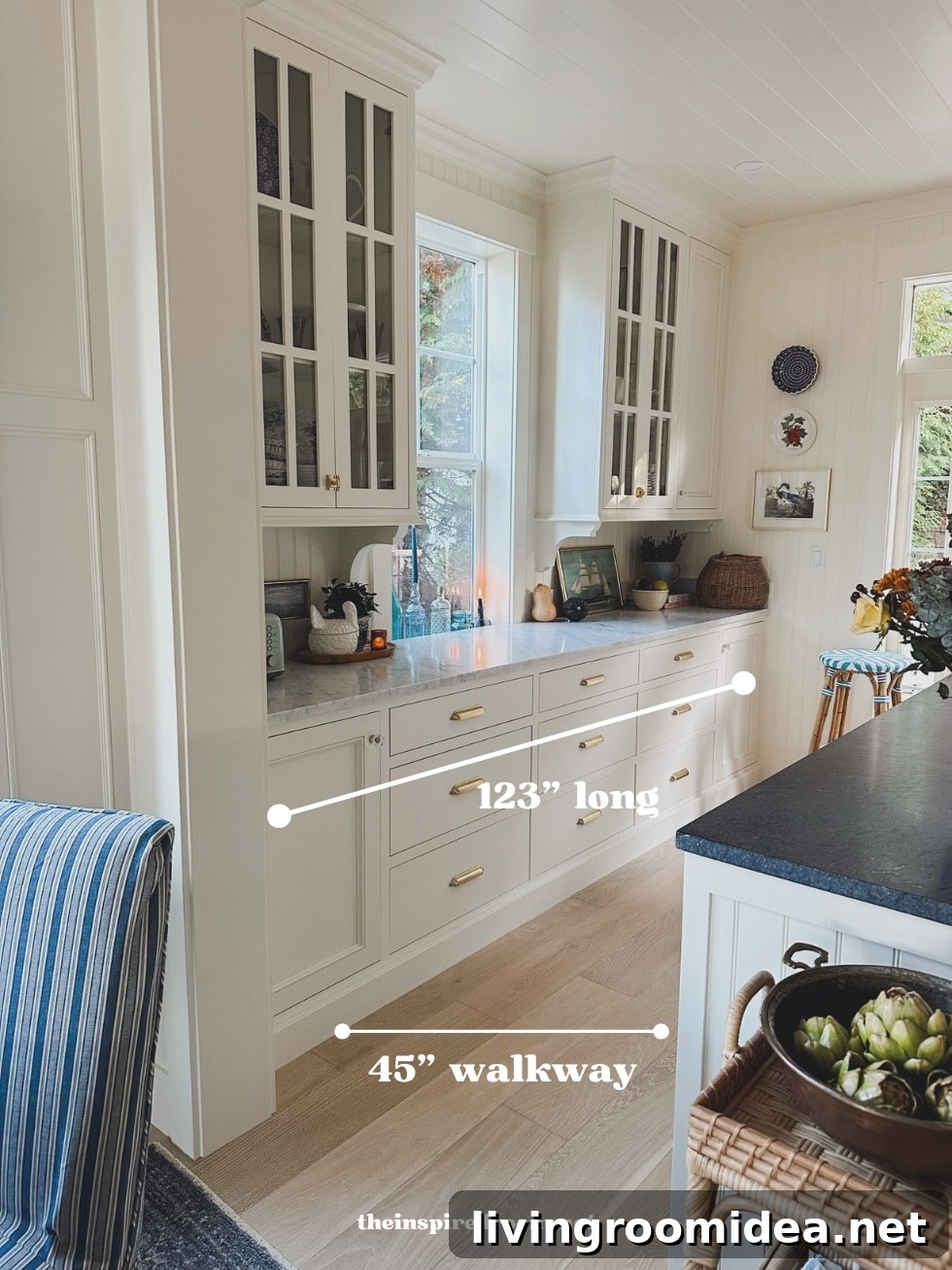
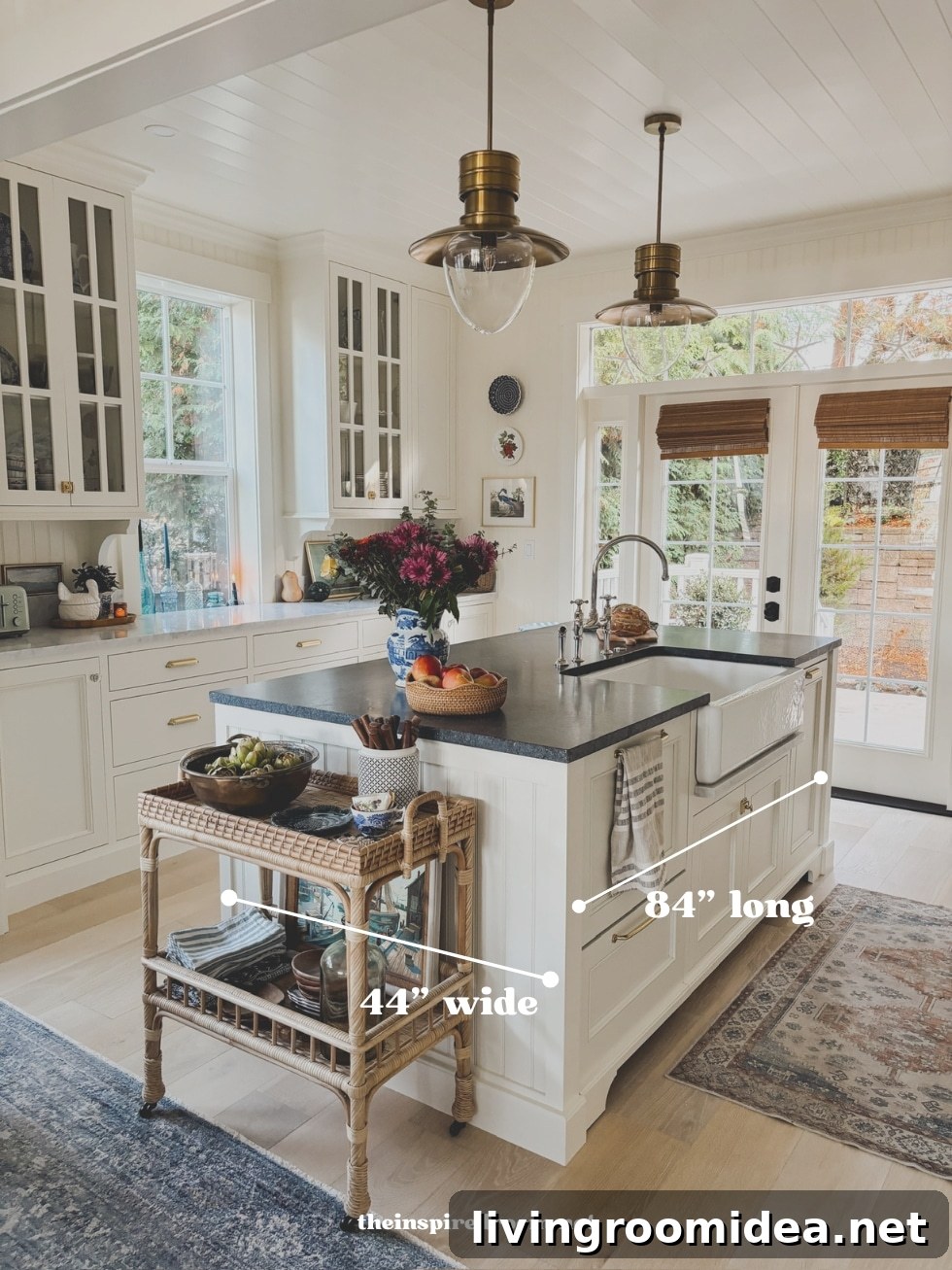
I hope this overview was helpful. If you have questions about anything I shared or want clarification on the layout, ask away!
I’m often asked for design advice and consultations. Although I no longer offer private design services, I do help people in other ways—see below to learn how I can assist with design questions.
More Kitchen Posts:
You can find our Coastal Cottage kitchen tour, reveal, and sources, as well as before-and-after photos and the full collection of kitchen posts on the blog.
How I Can Help You With Your Home
While I receive many messages about renovations and design, I no longer take personal design clients. Instead, I created a membership community where I can devote time each week to teaching decorating concepts and homemaking principles and where members can post questions, photos, and design dilemmas.
Last year I launched the HomeBody Gathering Place, an affordable community where members can connect, learn, and receive feedback on projects. It’s been a joy to help people there, and members often share ideas and progress with one another.

This summer I included AI-generated design boards for members as part of a teaching series so they could visualize new ideas for their homes — it’s been fun and well received.
JOIN US!
We’re starting our fall session in the HomeBody Gathering Place community and I’d love to have you join. Come ask questions, get inspired, and learn alongside us.