
How to Paint Stripes
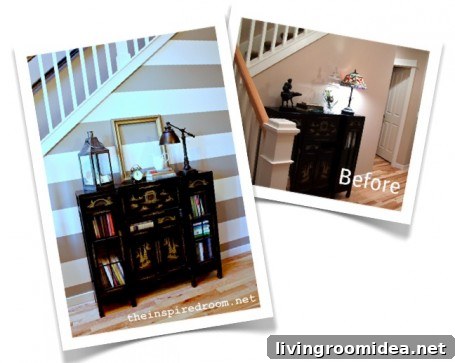
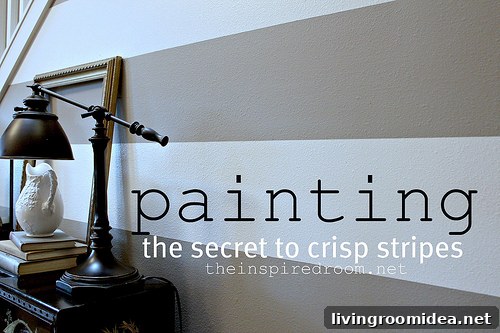
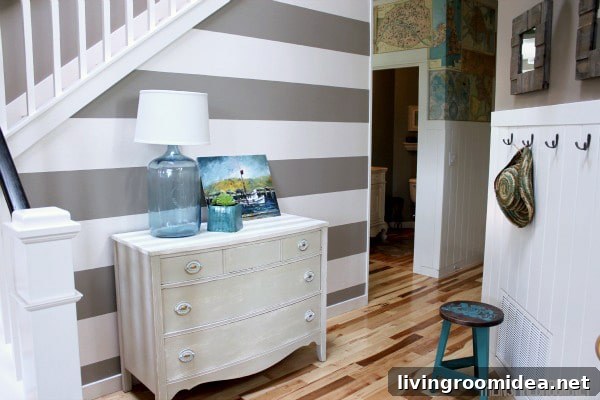
Hello! I finally put together a proper post about my striped wall. You may have seen glimpses of it before, but with the holidays and everything, I hadn’t shared a full write-up with photos, tips and before-and-after details. So here it is — a concise, practical guide to help you paint clean, crisp stripes.
If you’ve never painted stripes before, here’s a simple secret that helps achieve sharp paint lines.
The basics are straightforward: measure carefully, mark and level your stripes, and account for walls that might not be perfectly straight. Misaligned stripes are easy to notice and can be frustrating, so take your time with layout and measurements.
Beyond accurate measuring, two other steps are essential.
First, use a quality painter’s tape — I recommend Frog Tape. It’s designed to seal tightly and reduce bleeding. The key with any tape is to press it down firmly along the edges so it bonds to the wall surface.
Second, seal the tape with the base color before applying the contrasting stripe color. This extra step makes a big difference in getting truly crisp edges.
Painting Stripes: A Quick How-To
Start by painting the entire wall in your chosen base color and allow it to dry completely. For example, I used a brown-gray like Studio Taupe from Behr for my base so it coordinated with the rest of my space.
Next, measure and mark your stripe locations. Check them with a level and adjust for any slight variations in the wall so the final result reads straight to the eye.
Apply Frog Tape (or another high-quality tape) along the measured lines, pressing it down thoroughly. Then, before painting your stripe color, paint the base color over the tape edge where the stripe will meet the base color. This “sealing” coat fills gaps and prevents the stripe color from seeping under the tape.
Once the seal coat has dried, paint the stripe color — for example, a semi-gloss white if you want a crisp contrast. When the stripe paint is dry to the touch, remove the tape carefully to reveal clean, sharp lines. Removing the tape before the stripe paint fully cures helps prevent peeling and ensures a neat edge.
There are many detailed tutorials online with additional tips, such as how to space multiple stripes, when to use different finishes, and how to handle corners or textured surfaces. Researching a few methods before you start can help you decide what will work best for your wall.
In short: measure carefully, press your tape firmly, seal with the base color, then paint your stripes. Follow those steps and you’ll be able to paint crisp, professional-looking stripes with confidence.