
Wallpaper via Graham Brown – Kelly Hoppen
WWhile waiting for the new cabinets that would go to the right of the dishwasher, kitchen progress was slow. We kept busy watching our wood floors being installed, but one small problem had been bothering me since we moved in. When the cabinet installer finally returned with the new units, he also fixed that nagging issue in the kitchen that I’d been wanting to solve.
What bugged me?
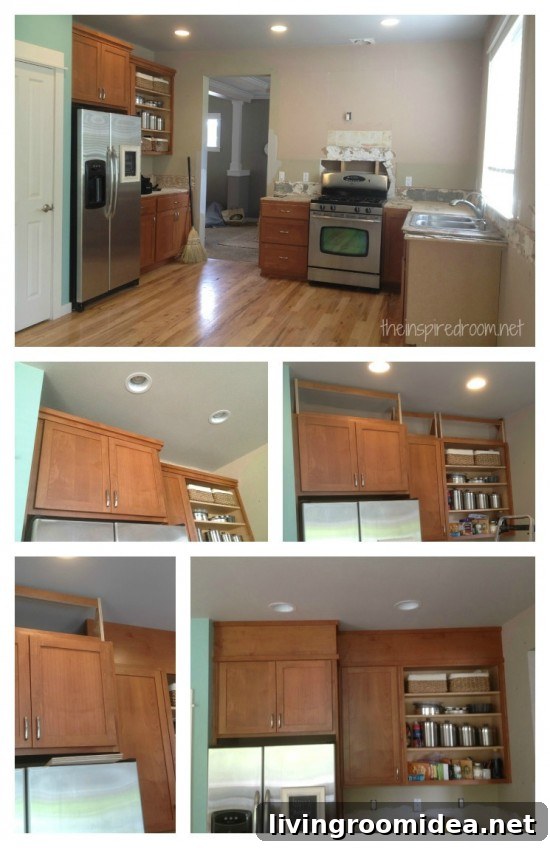
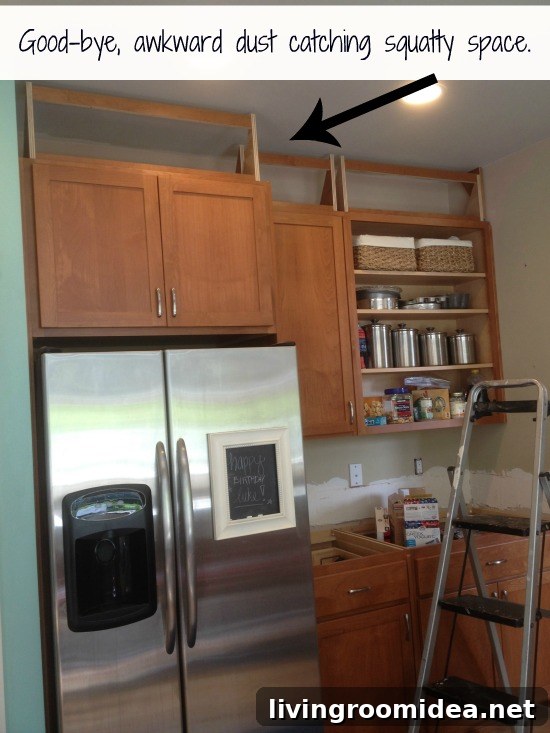
Dun…dun…dun… That awkward space above the cabinets.
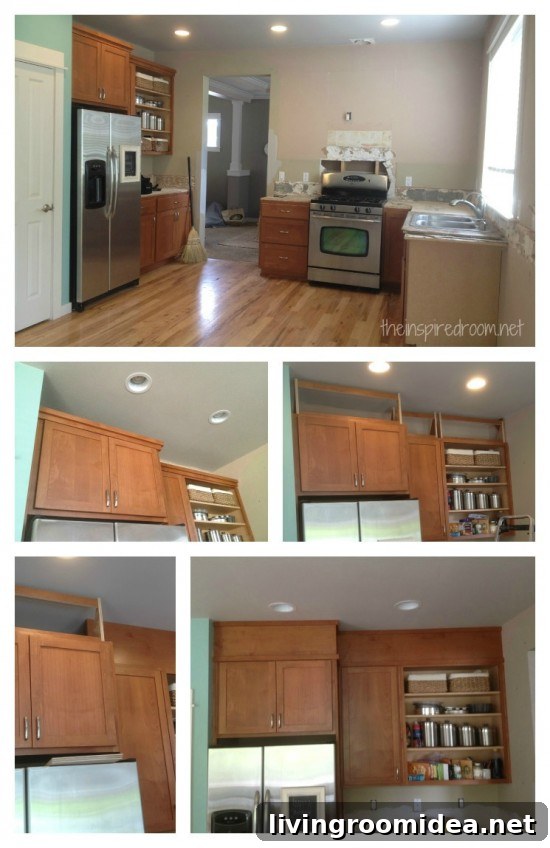
You know the spot I mean: too shallow to use for practical storage, too low to display anything without climbing a ladder, and awkward enough that it makes the cabinets look short and unfinished. It’s also tricky to paint the wall up there and not tall enough to justify installing another row of cabinets. Maybe your kitchen doesn’t have this problem, but mine certainly did.
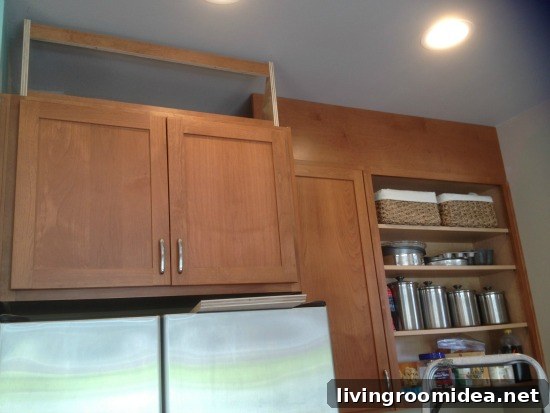
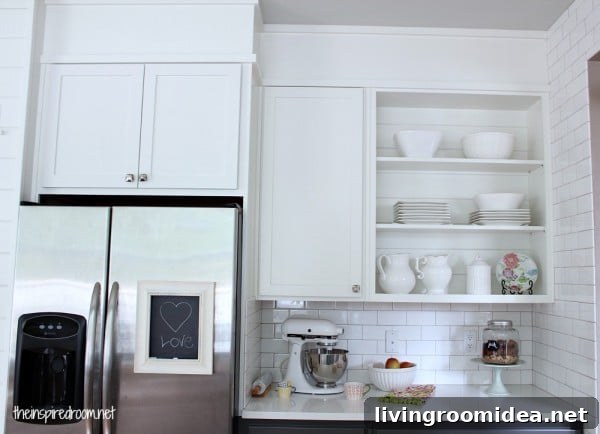
We decided to box in that awkward gap so it would stop bothering me. This post shows progress — the cabinets will be painted, so this is not the finished look but a mid-renovation update on what we did.
There were many options to address the gap above the cabinets. We considered installing taller cabinets, raising the existing ones, adding open shelving, fitting small doors, or using elaborate crown molding. In the end, we wanted a practical, affordable solution that didn’t add unreachable storage or a lot of extra cost. New cabinet doors and custom cabinetry can be expensive, and I don’t want to store things where I’ll forget them. A simple boxed-in finish with modest trim felt like the best choice.
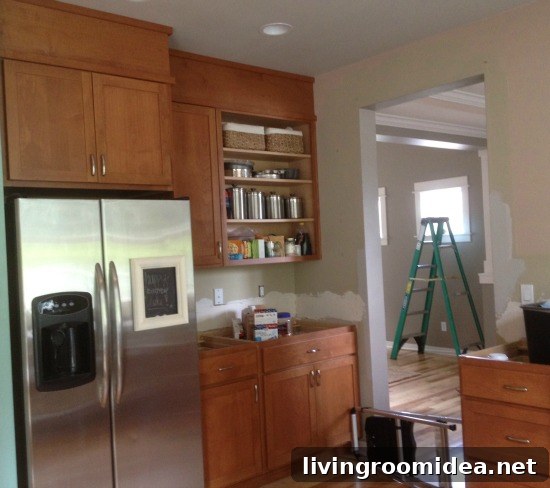
Our home is a northwest craftsman style—subtle and fairly simple, with mostly straight, flat moldings. Only the dining room and powder room have crown molding. Because the house maintains a modest level of detail, we didn’t want to overdo the kitchen trim and risk clashing with the rest of the home (or blowing out the budget). The boxed-in solution with a modest finishing detail suited the style perfectly.
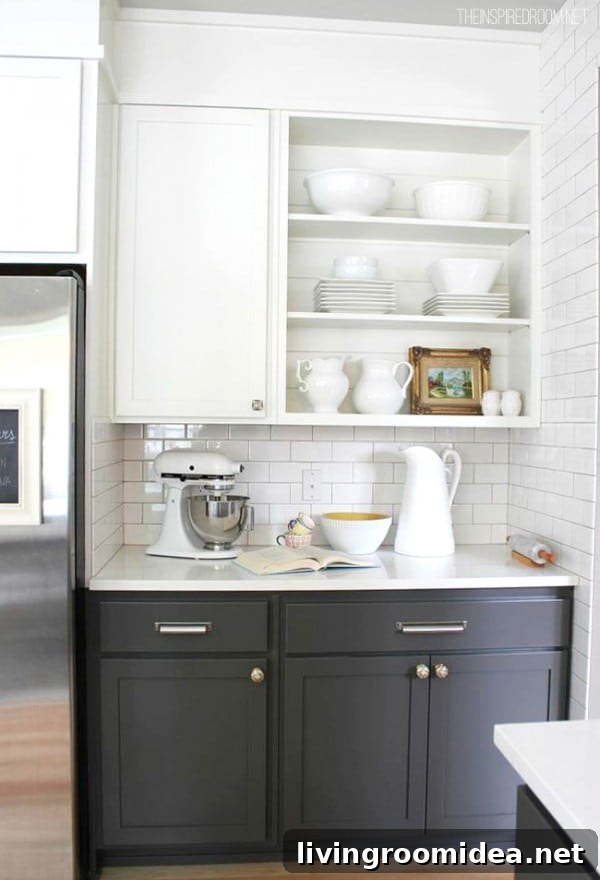
We plan to paint the upper cabinets white and install white subway tile on the backsplash, so wrapping and boxing that upper cabinet run helps the whole wall read as a cohesive, finished unit. The boxed-in top makes the cabinets appear more substantial and less like the short builder-grade units they were before—an inexpensive upgrade that adds visual weight and a cleaner silhouette.
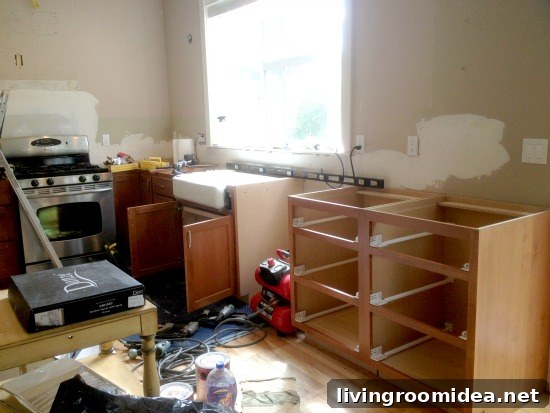
On the opposite side of the kitchen we also installed the new sink base and drawers, so progress is visible everywhere. Even though we’ll paint all the cabinets, the new units were installed with the same finish as the existing ones to ensure the paint will adhere and appear consistent when the time comes. The area where the red compressor sits is for the dishwasher; I’m glad to have that open counter space to the right of the sink without upper cabinets crowding it. We’ll add a simple open shelf above that run for easy access and a light display.
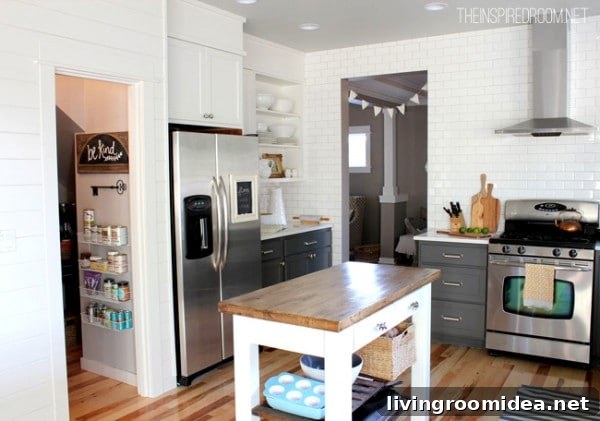
A temporary table is serving as a place to set tools and fixtures during the install, and we’re planning a movable island for the center of the room to provide extra prep space—though that’s not finalized yet. Next up are the counters (which will be measured, fabricated, and installed), followed by subway tile on the backsplash, and finally plumbing the sink and hooking up the dishwasher.
Do you have an awkward space above your kitchen cabinets?
For those following along on the full renovation timeline, this project is part of a broader kitchen update and the boxed-in cabinet solution is one of several steps that helped transform the space. The boxed top is a modest, cost-effective way to make upper cabinets look intentional and finished.
UPDATE: A later post documents what that boxed space looks like after the cabinets were painted and the remodel completed. The boxed-in detail blends with the finished kitchen, creating a cleaner, more cohesive look.