
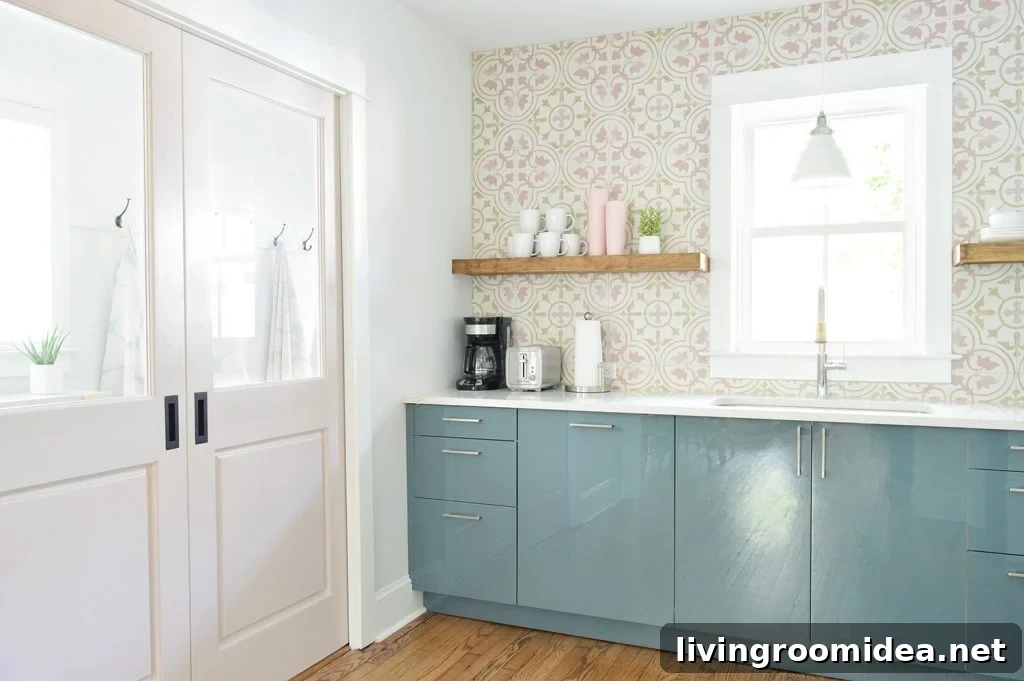
One challenge when building the floating shelves in our duplex kitchens was drilling through the tile backsplash. After spending time and money installing this beautiful tile, we didn’t want to damage it. Yes, it felt a little nerve-wracking, but it’s completely doable with the right approach. Here’s how we tackled it.
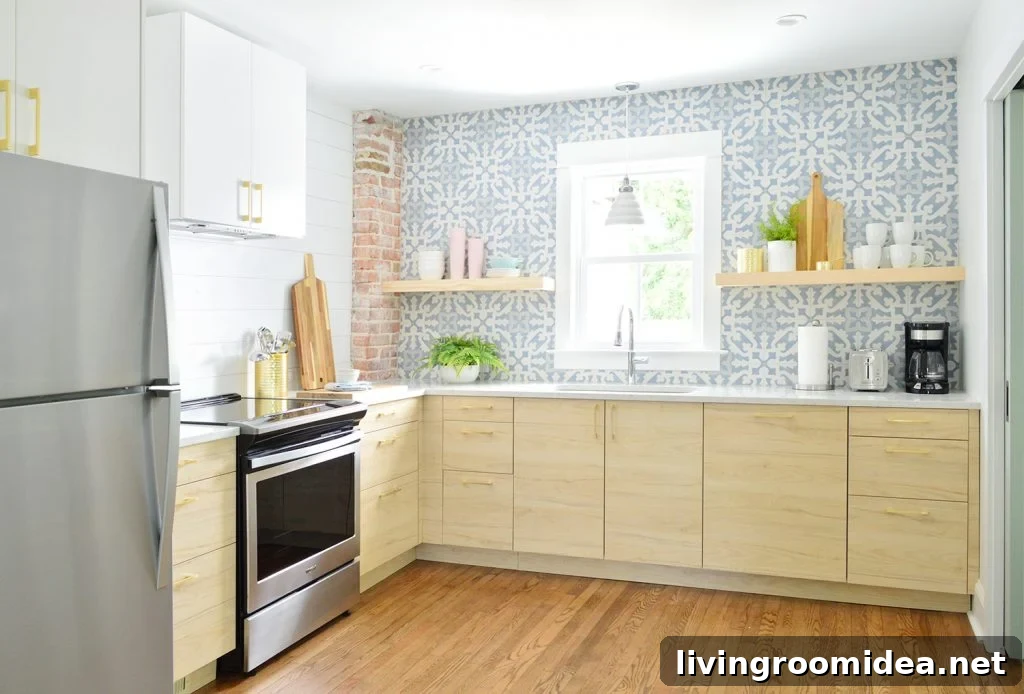
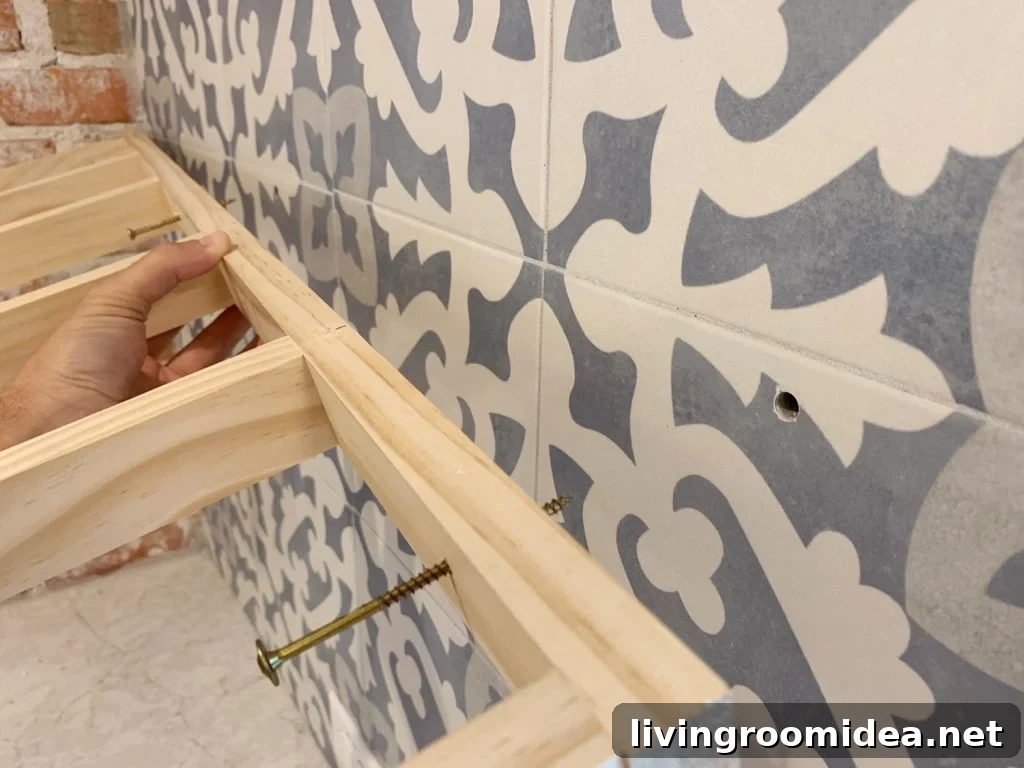
Ideally, we would have installed the shelf supports before tiling. We weren’t on the same page about where—or even whether—to add shelves, so the tile went up first. We eventually agreed on a chunkier version of the DIY floating shelves we’d built for another room and set out to drill through the finished backsplash.
Tools Need To Drill Through Tile
Drilling through tile requires some specific tools to avoid cracking or chipping. Gather these items before you start:
- Power drill
- Various sizes of tile drill bits (diamond or carbide bits designed for tile)
- Optional water delivery guide or drip system
- Small cup of water for cooling the bit
- Painter’s tape
- Paper towels
- Spare tile for practice (optional)
And our top tip: take your time. This is a slow process that benefits from patience.
Step 1: Mark Your Drilling Locations
Before drilling, confirm the exact locations where you’ll need holes. Drilling through tile is slow—it took about 5–7 minutes per hole for us—so you want to be precise. For shelves, finding studs was essential.
Our stud finder didn’t read through the thick porcelain, so we relied on renovation photos, careful measuring, outlet locations, and drywall marks to approximate stud placement. Once we settled on a general height for the shelves, we checked for level and marked precise drilling spots.
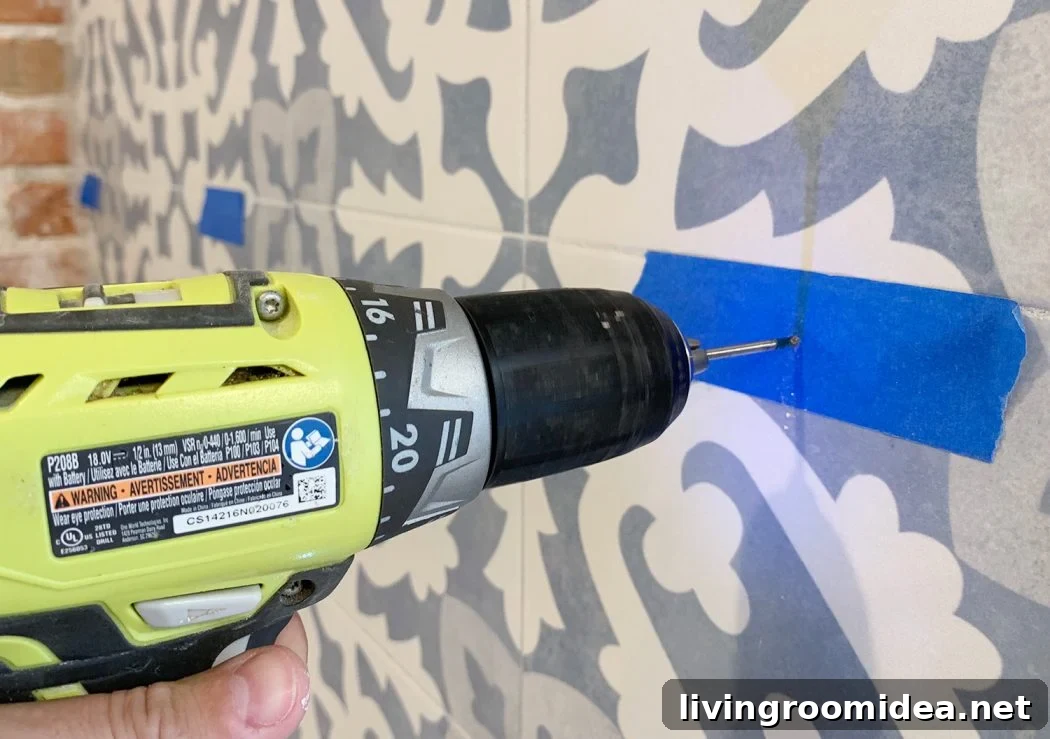
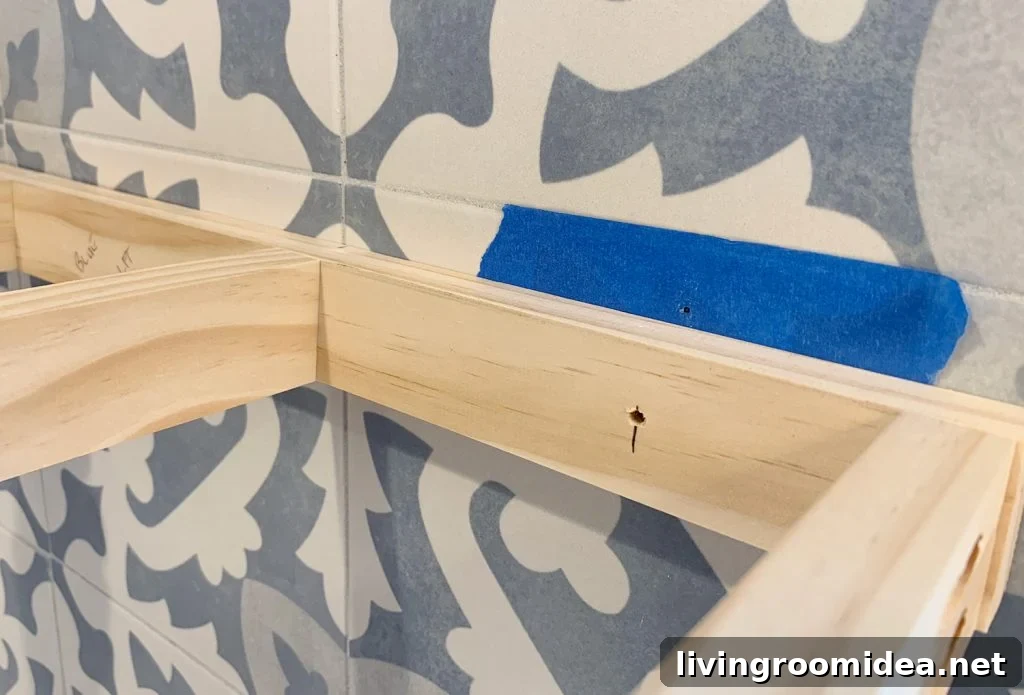
To create a clear target, we placed painter’s tape over each stud location and held the bracket in place while drilling a small pilot hole through the bracket with a standard bit. That left a mark on the tape to guide the next steps.
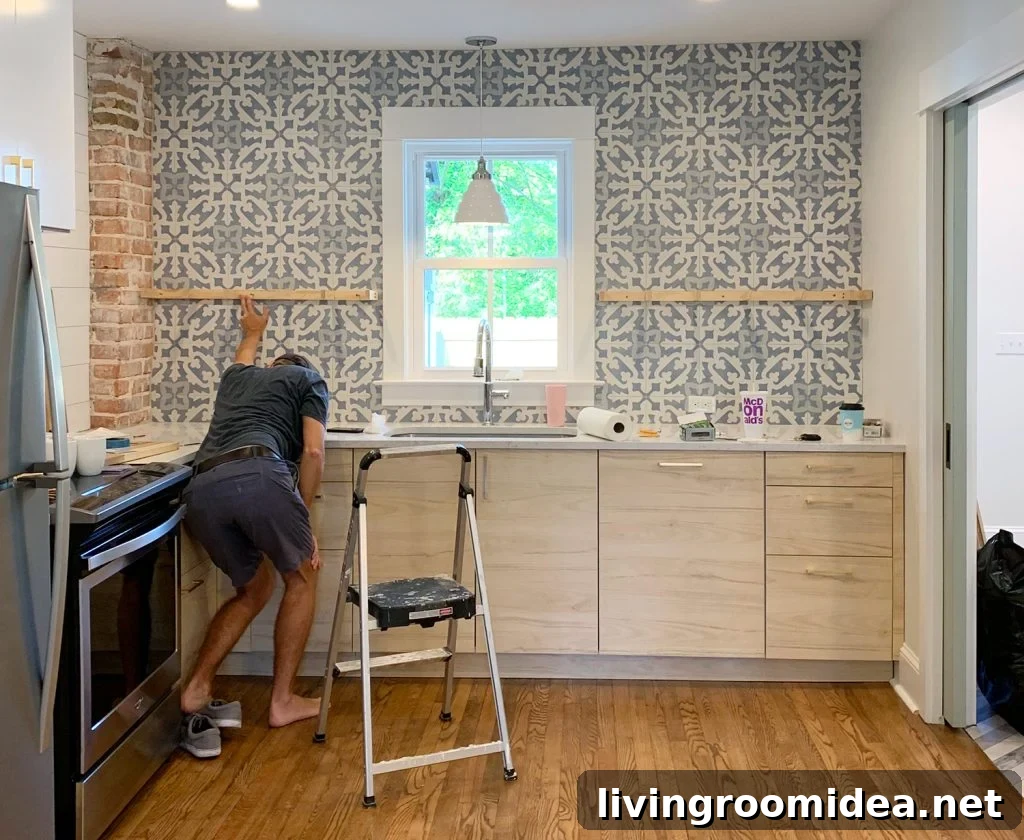
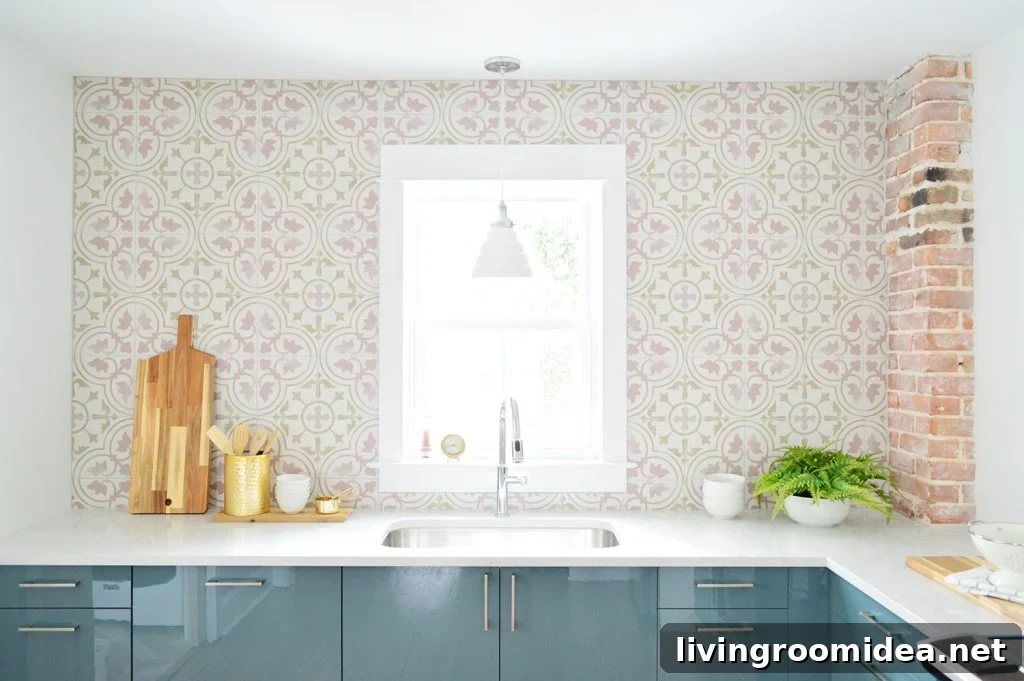
After marking and leveling, we removed the bracket and were ready to drill the tile. (Note: some images alternate between both kitchens in our duplex.)
Step 2: Buy The Right Bit
Use a drill bit specifically made for tile. Diamond bits grind through tile slowly instead of aggressively cutting, which helps prevent cracks. These bits work on porcelain, ceramic, cement, and glass—check the packaging for compatibility. We used a combination of diamond and carbide bits and found having both helpful.
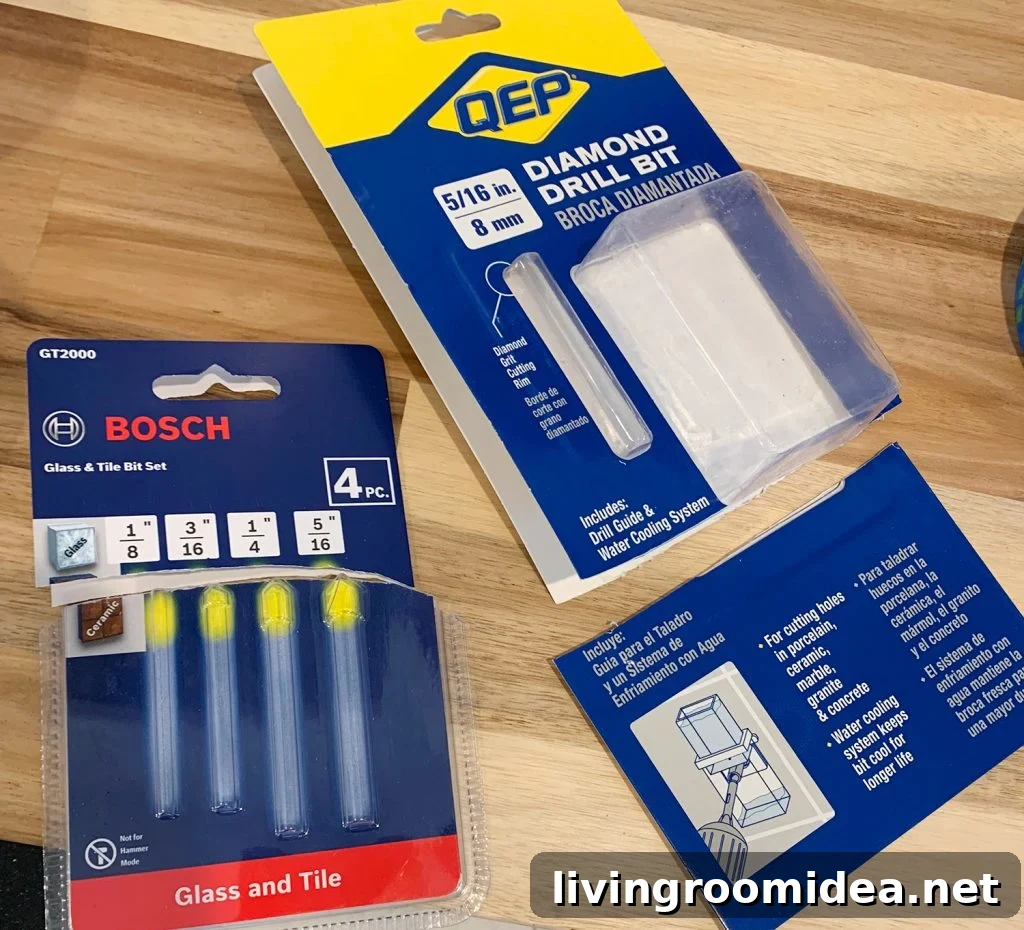
Diamond bits wear down faster than standard bits, so consider extras if you’re drilling many holes.
Step 3: Make A Practice Hole (Optional)
Test your bits on a spare tile before working on your backsplash. We drilled into an extra tile to confirm nothing would crack. If you don’t have a spare, pickup one at a home center—matching the material is ideal.
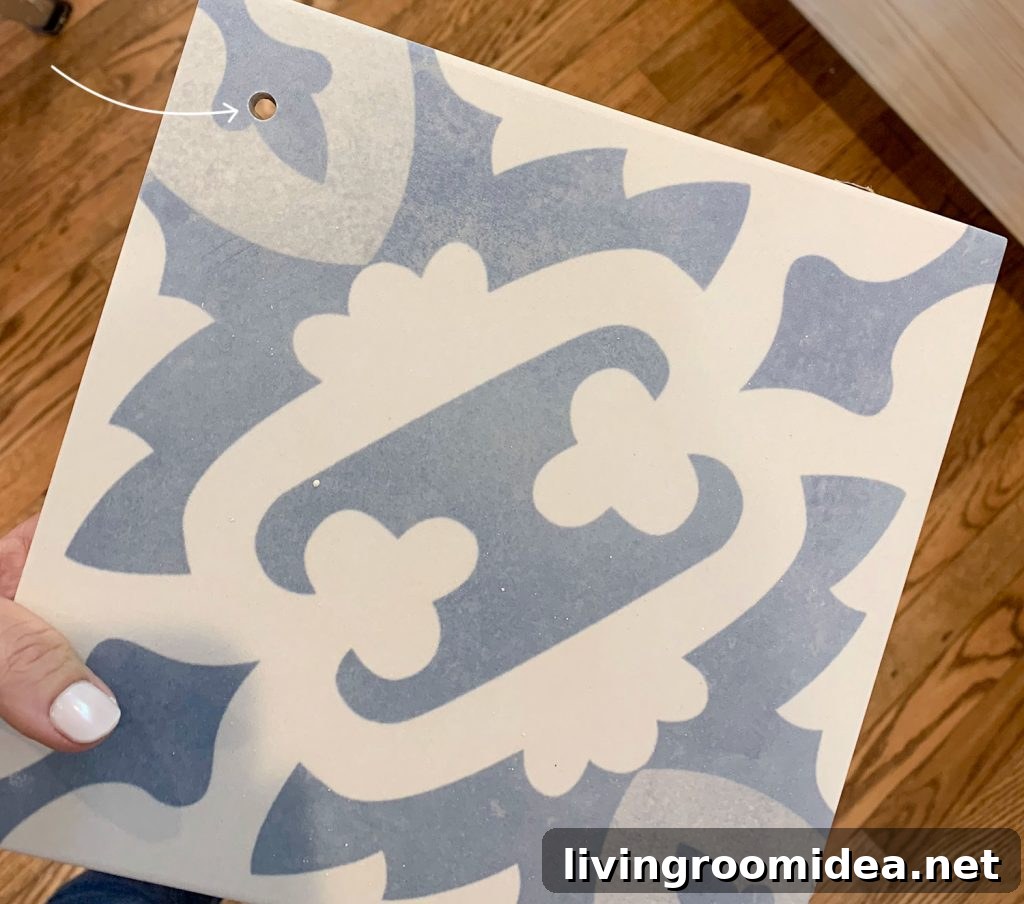
Step 4: Make A Marking Hole
Start with a small carbide bit and carefully create a shallow dent through the painter’s tape at each marked spot. Apply minimal pressure—this is just to keep the bit from wandering when you switch to a larger tile bit.
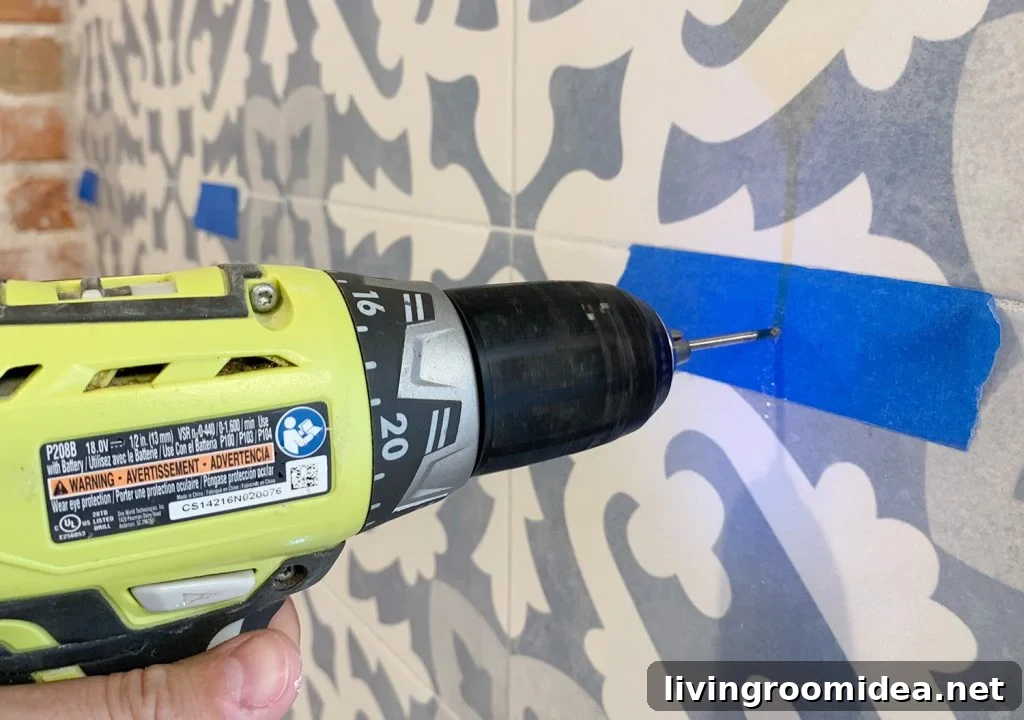
The small pilot dent is barely noticeable but sufficient to guide the bigger bit.
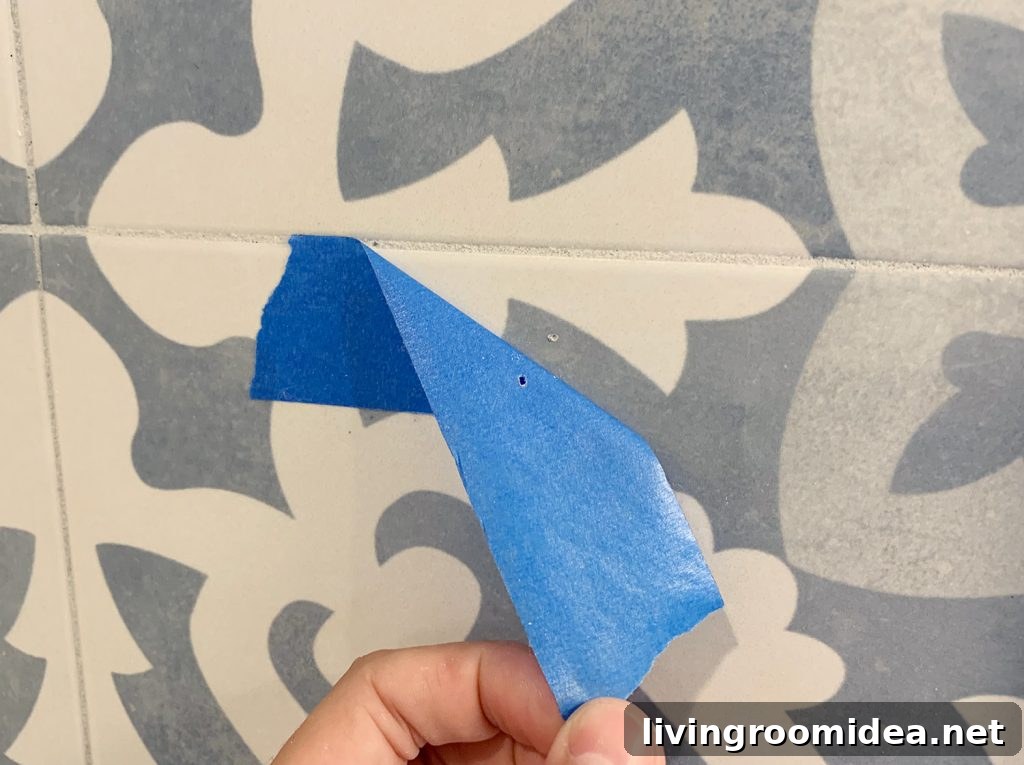
Step 5: Use A Water Delivery System
Water cools the bit and controls dust. A cooled bit reduces the risk of stress fractures and prolongs bit life. We tried a plastic water delivery box designed to sit against the tile and drip water onto the bit. It worked as a guide but didn’t provide the slow drip as advertised, so we switched to manual cooling.
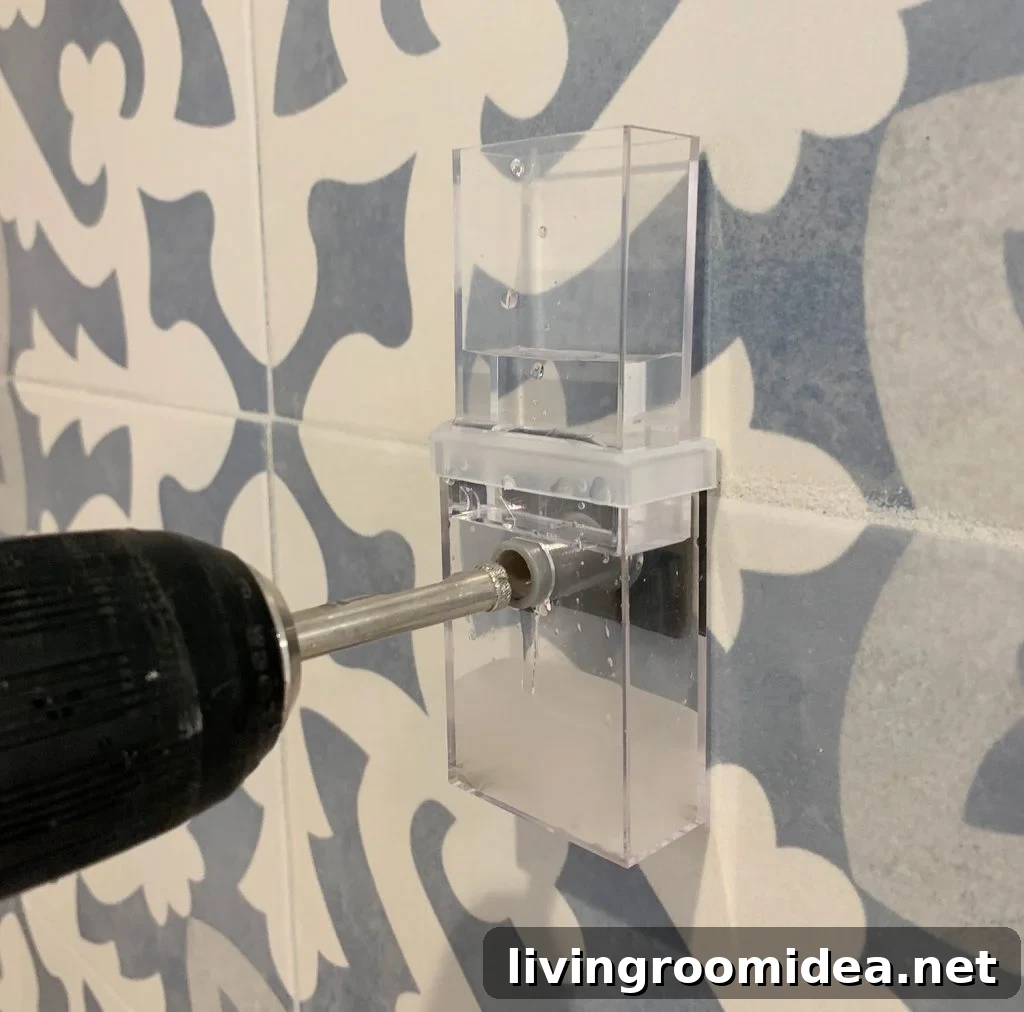
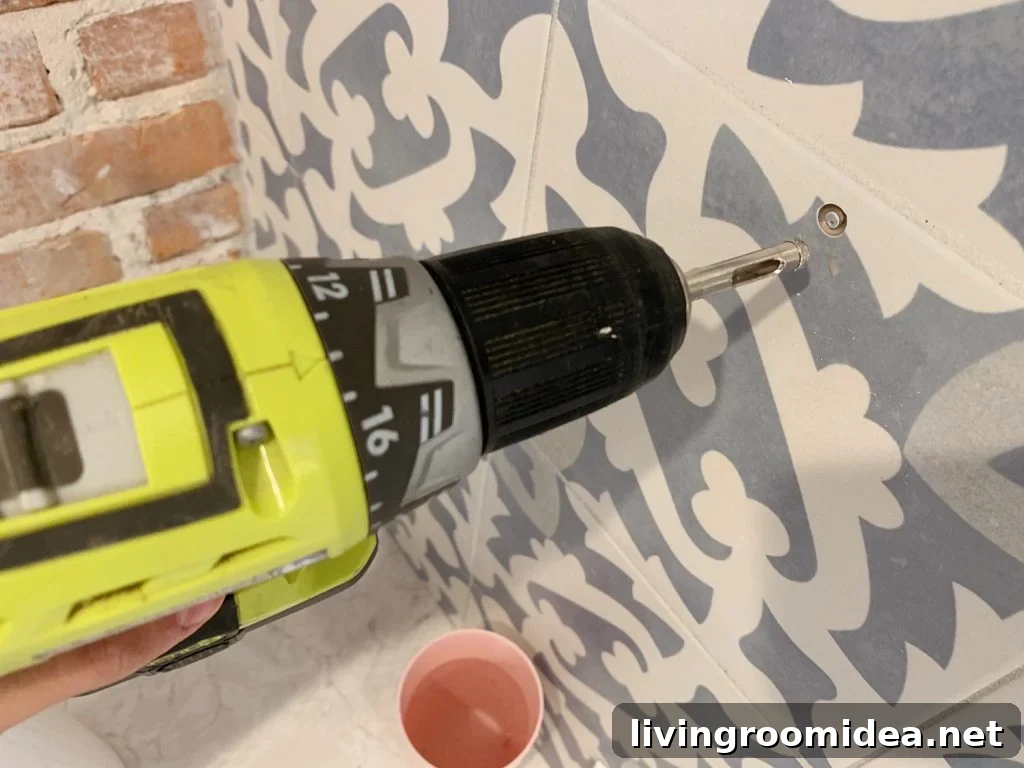
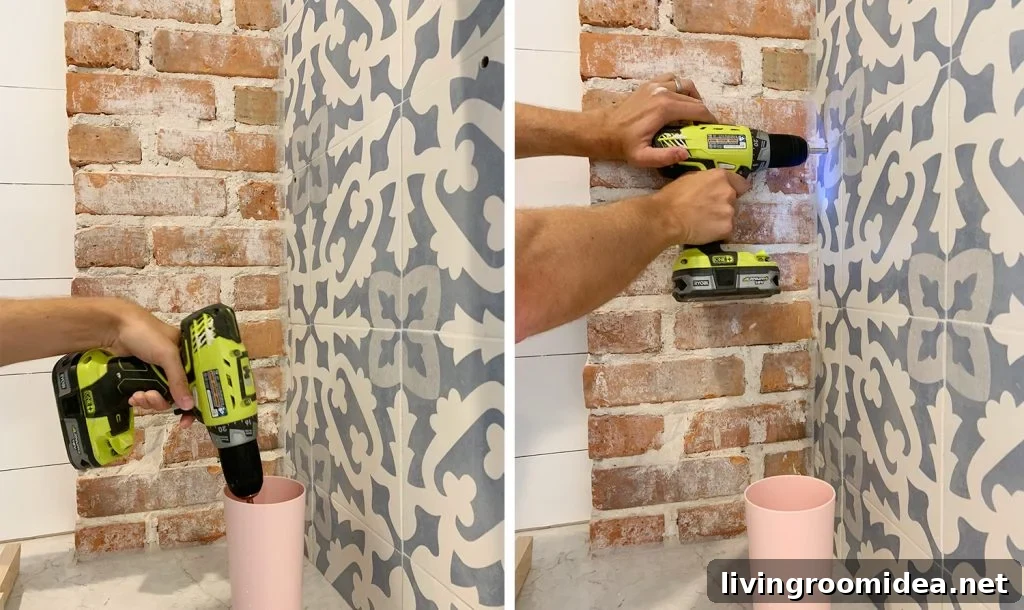
We ended up using a simple cup of cool water, dipping the bit into it every 15–20 seconds while drilling. Not fancy, but effective.
Step 6: Take Your Time
Patience is crucial. Use light, steady pressure and let the bit grind through the tile. For us, each hole took around 5–7 minutes, and the entire job required over an hour of drilling. Moving slowly minimized the risk of cracking tiles and was far preferable to replacing a damaged backsplash.
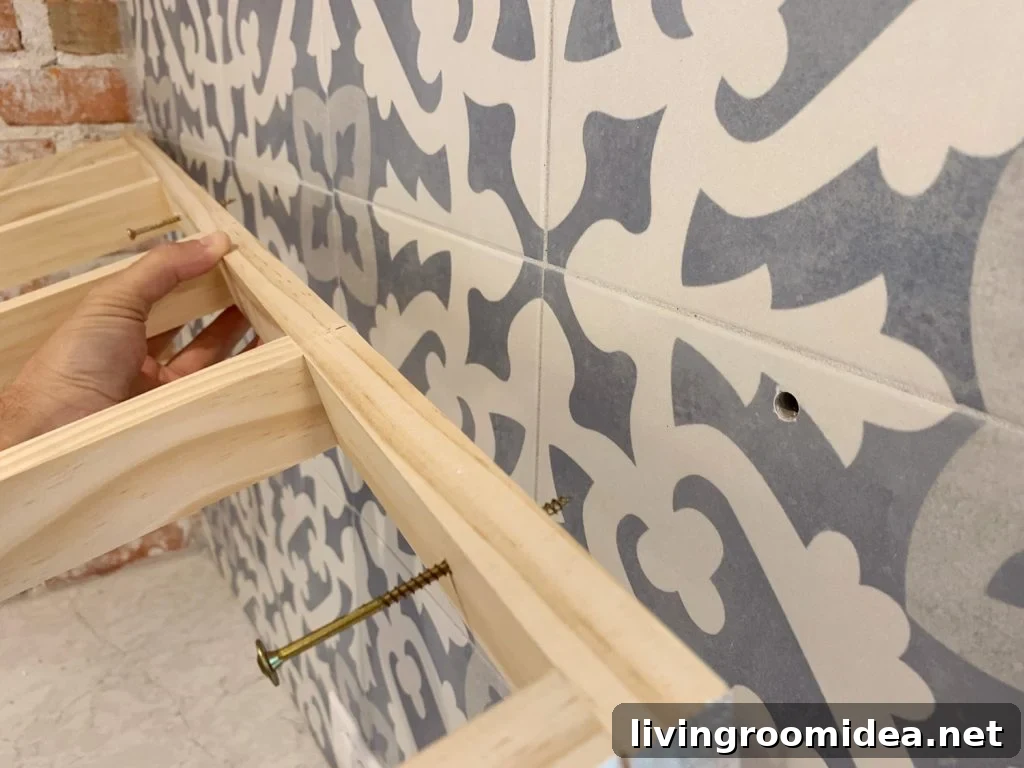
We successfully hung our floating kitchen shelves without breaking any tiles and felt confident that the careful approach paid off.
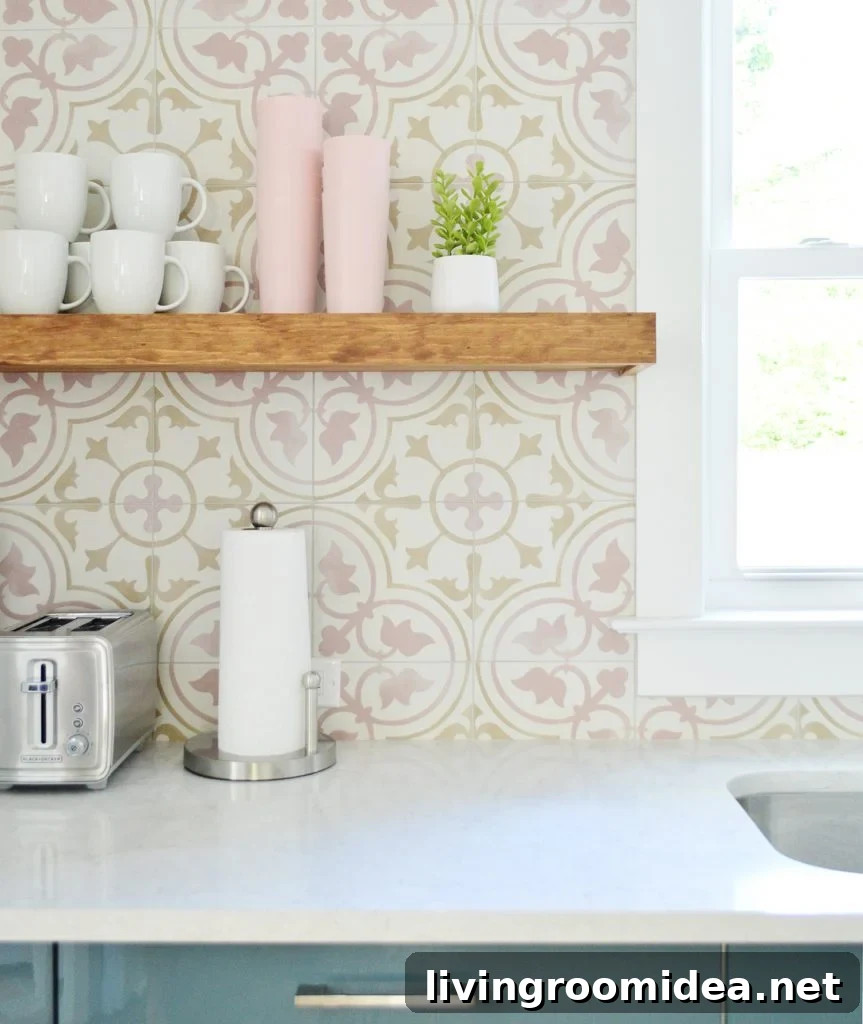
We drilled 5/16″ holes for shelf screws, but the same careful method applies to larger holes—such as those needed for plumbing fixtures. For larger work, select an appropriately sized tile bit (many larger bits include water delivery options). And remember: take your time.
*This post contains affiliate links, so we may earn a small commission when you make a purchase through links on our site at no additional cost to you.