
 Reef Cape Cod’s Home Builder
Thank you all for your enthusiasm and for sharing ideas as we plan our remodel. I read every suggestion and then head right over to see how each one might work in the space, so it truly feels like you’re right here with me.
If you’re not into before photos and floor-plan dreaming, you might want to come back another day — this is PART TWO of a two-part tour of the before photos and floor plans. If you missed part one, you can find the kitchen plans and photos there. This post is a bit long, but I hope it helps anyone following along to understand the layout and the changes we’re considering as we move toward design and execution.
Now that you have a general idea of the new kitchen plan, today I’ll take you on a short tour of the rest of the main living areas — the entry, living and dining spaces — to show where doors and walls might be opened or removed. My hope is to give you a clearer sense of how the space could flow with a few modest adjustments.
As I mentioned before, my aim is to preserve the house’s footprint as much as possible and make the most of the space we already have.
Below are the before and proposed floor plans so you can follow along. If you want to revisit the kitchen plans and photos, see the earlier post.
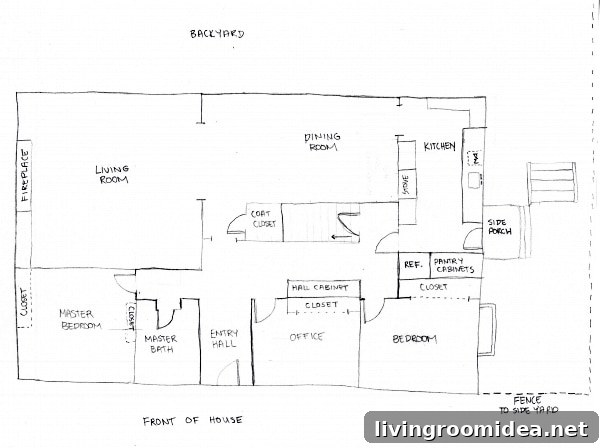
Before Floor Plan (above)
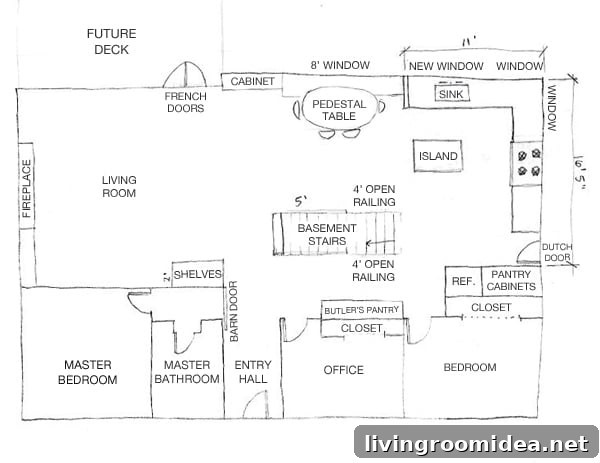
Proposed floor plan (above)
Before we walk through the rooms, a few notes from yesterday:
- We haven’t committed to a specific island shape or size on the plan because I prefer to see the opened space first. What looks right on paper can feel cramped or too big once the room is complete, so the island’s final dimensions will be decided later.
- I want the kitchen — stove, sink and island — to look balanced and attractive even when viewed from the living room. I’ll refine placement and styling so the space is both functional and visually appealing, and I’ll share those ideas in future posts.
- At this point I think keeping the fridge where it is makes sense because it can be recessed and kept less visible from the main rooms. It will be about eight steps from the sink, which I tested and found acceptable. This is a compact kitchen, so organizing cabinets and task zones will be key; if moving the fridge and creating a mudroom entrance proves better, we’ll explore that option.
- I’m also considering changes to the master bedroom and bathroom and possibly adding a powder room. I’ll draw those ideas up and share them in another post so I don’t overwhelm everyone with details all at once.
Imagine we’re standing just inside the new Dutch door in the kitchen, facing the hallway and basement staircase, with the fridge on our left.
In this view, the kitchen and basement doorways would be removed and the staircase partially opened with about four feet of railing to bring more light into the hall and improve flow between the hall and the new kitchen/dining area.
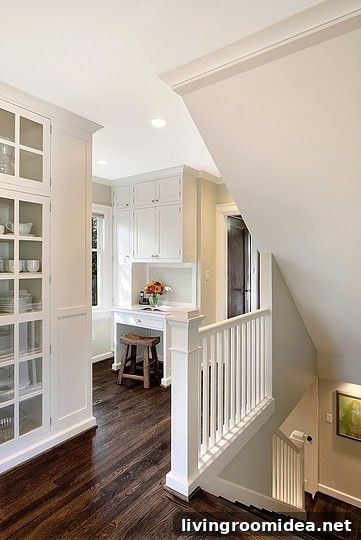
Inspiration for the open staircase design.
Here’s how the stairs might look as viewed from the Dutch door. We may be able to open the staircase at the bottom as well — I’ll show the basement in a future post.
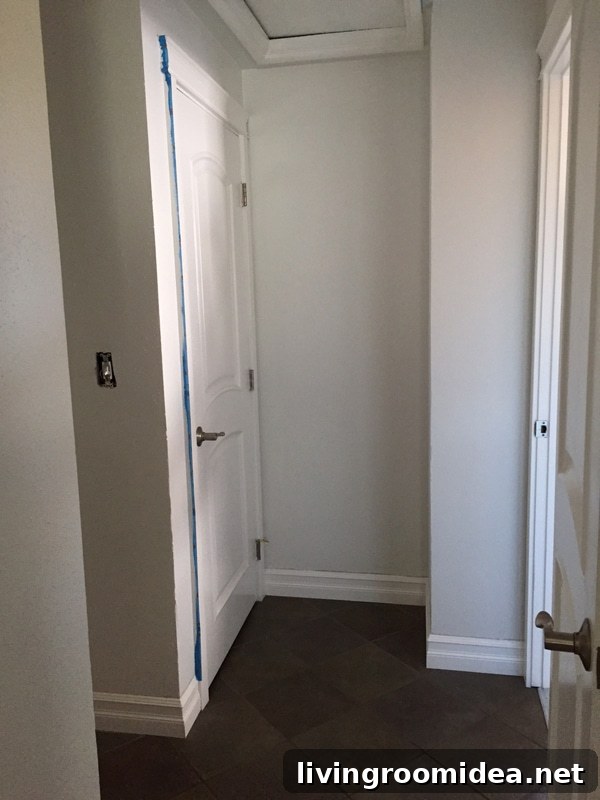
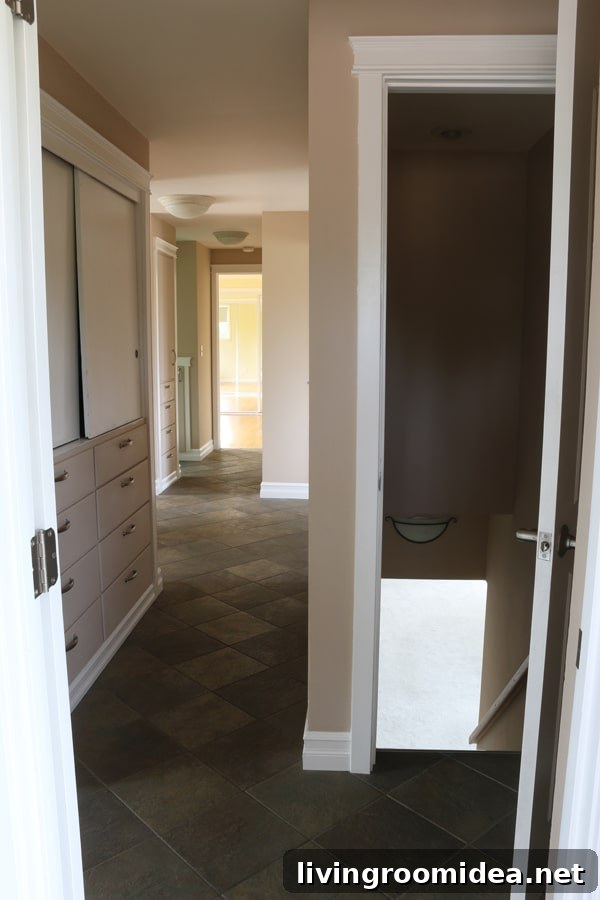
Standing here in the hall (the blue tape was from painting), the kitchen is to the right, the basement staircase to the left, my son’s room behind us, and hallway built-ins to the left. The staircase would be opened with railings, and the wall straight ahead removed to give direct access to the dining room and kitchen.
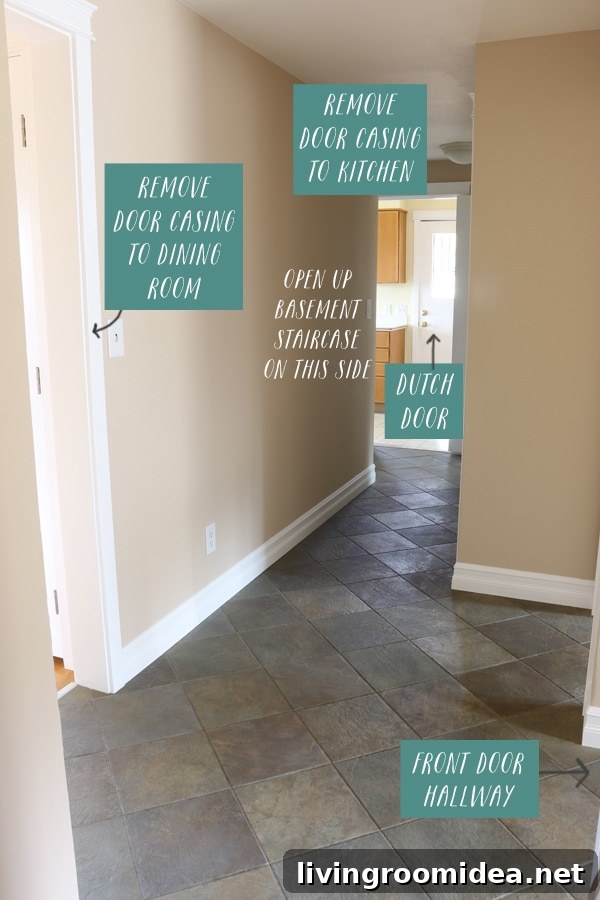
Another view in the entry hall, looking toward the kitchen with the dining room entrance on the left.
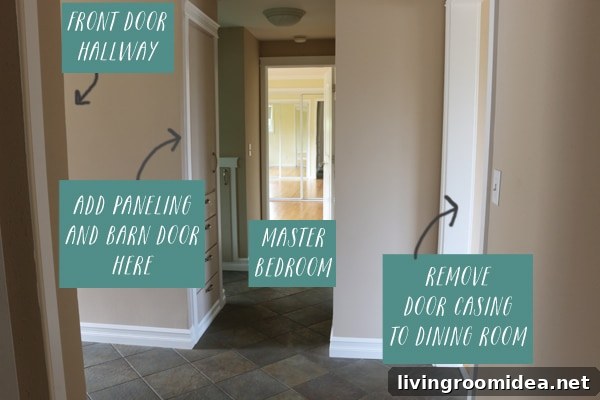
Facing the other direction in the same hallway, with the basement stairs to your right, you can picture where we might close off the master bedroom and bathroom (more on that later) and remove the door casing between the entry and dining room on the right to widen that opening.
This is the current view from the front door. My plan would be to remove the door frame to create a wider entrance into the dining room.
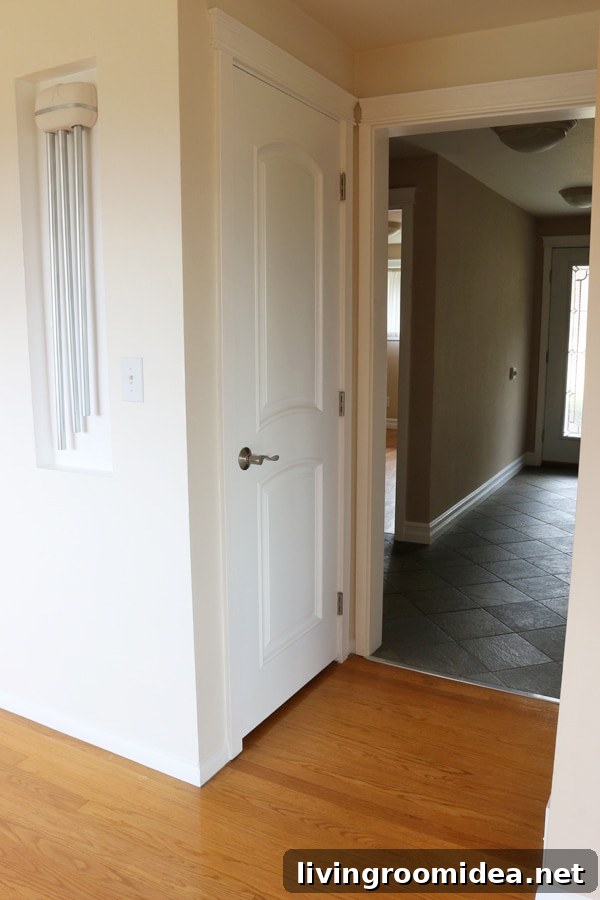
The coat closet by the entry and dining room likely cannot be fully removed because of headroom to the staircase below. However, removing the closet door casing and trimming it back could allow us to transform the space into built-in bookcases. That would visually widen the passage to the main living areas and add character.
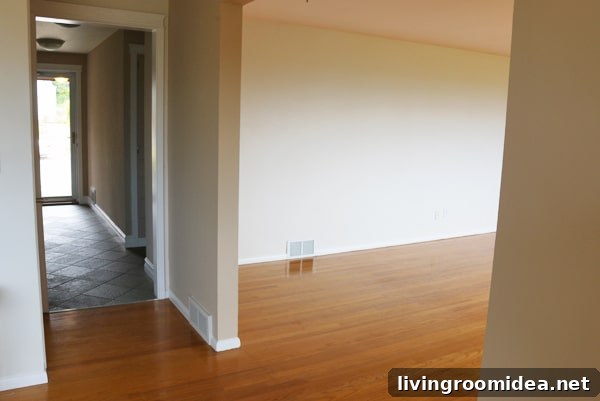
From the dining room looking toward the front door (which could become a Dutch door), the short walls between the living and dining rooms are candidates for removal to open the floor plan further.
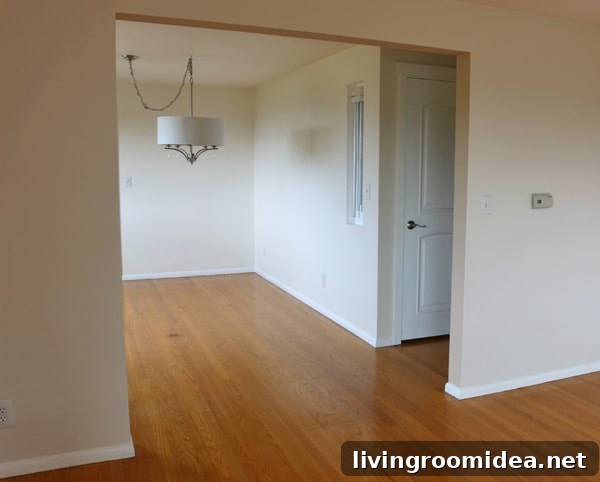
The wall with the doorbell chimes in the dining room marks the basement stair wall. Midway down that wall, on the kitchen side, is where the new open railing would meet the staircase down to the lower level. You would be able to access the stairs from either the entry hall or the kitchen.
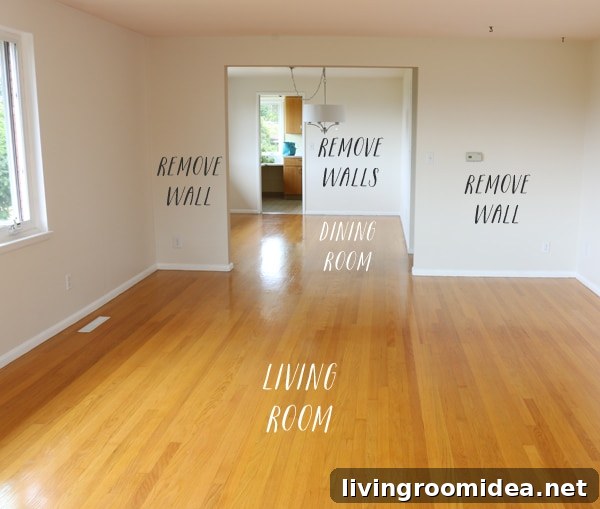
This photo shows the walls between the living room, dining room and kitchen. Opening these walls would give the whole area more breathing room. We’d feather in new flooring where needed in the kitchen and then refinish all the floors to unify the space.
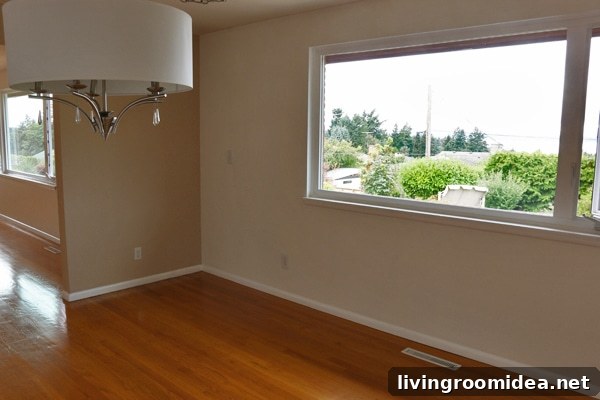
With the new layout, the room will still serve as the dining room, but updated. We plan to add a built-in cabinet to the left of the dining-room window — the first thing you see when you enter. We can’t add a French door there because of the basement exterior entrance below, but we will install a banquette beneath the window between the new cabinet and the kitchen for comfortable, space-saving seating.
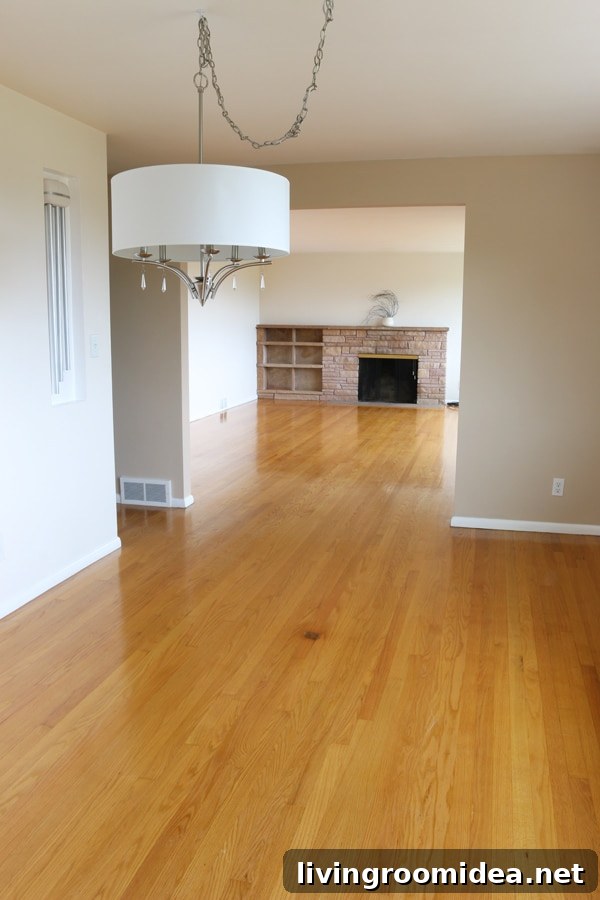
Looking from the kitchen and dining area toward the living room, you can see the walls we plan to remove. Once opened, you’ll be able to see the living-room windows from this vantage, which will brighten and visually expand the connected spaces. We’ll also make cosmetic updates such as refreshing the fireplace and refinishing the floors.
That’s the latest update. Now that you’ve walked through the before condition and seen how the rooms connect, it should be easier to visualize the changes as we develop design ideas and make decisions. This is the detailed, practical phase of the project, and I’m happy we’re moving in a good direction.