
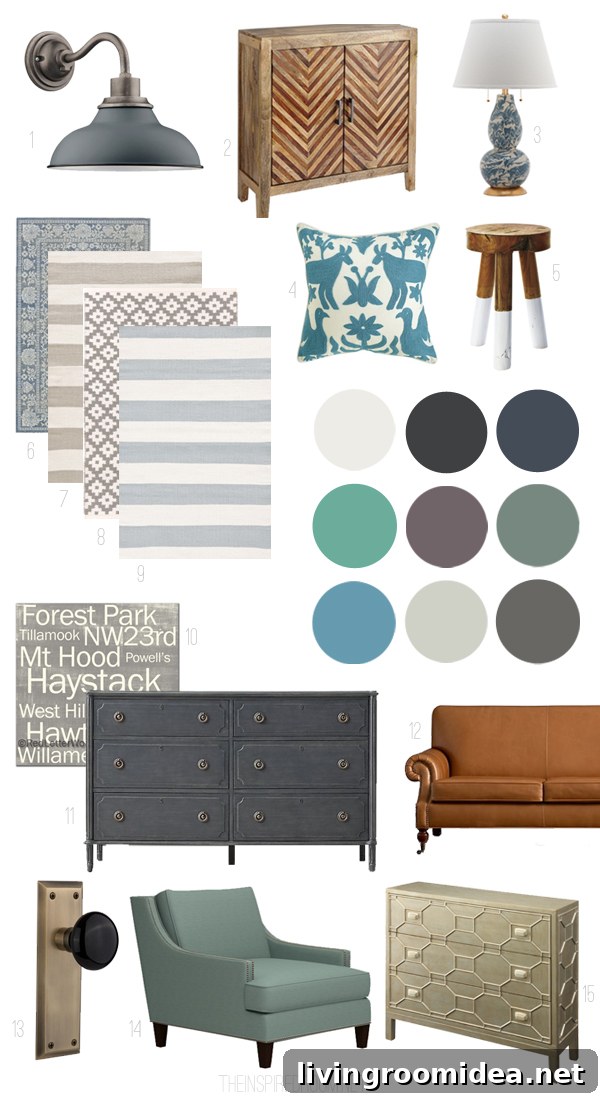
Creating a mood board is one of the most useful steps when planning a room. Whether you assemble it digitally, as we did with Photoshop for the example above, or build one on a physical bulletin board, a mood board clarifies the mood, colors, and mix of pieces you want in your home.
A mood board helps you see how existing furniture will fit into a new layout, and how new items—like lighting or textiles—will blend with what you already own. It’s a practical way to test combinations before making purchases.
Playing with a color palette on a board allows you to try different tones and intensities until you find the right feeling for a space. Sometimes subtle shifts in hue or contrast change a room from cozy to airy, or from relaxed to dramatic.
Working away from the actual room—on paper or the computer—lets you focus on individual elements: texture, scale, pattern, and color family. Once these pieces feel right together, it’s easier to bring them into the room with confidence.
Do you ever make mood boards for your home?
PS. Yesterday we kicked off The Love Your Home Challenge! See the list of week one’s challenges on the original announcement.
Mood Board Sources: 1 (Carson Wall Sconce) // 2 // 3 // 4 (sold out) // 5 // 6 // 7 // 8 // 9 // 10 // 11 // 12 // 13 // 14 // 15