
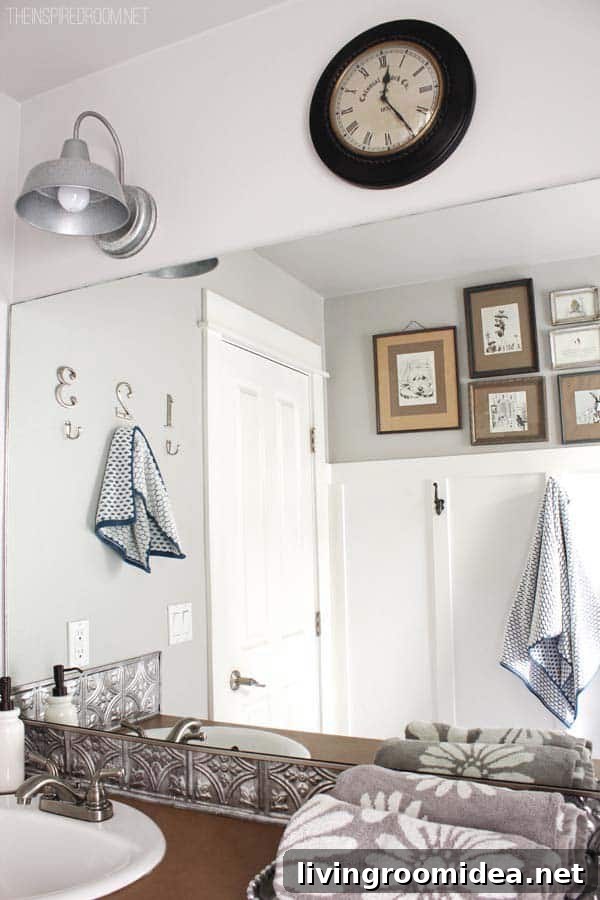
Easy DIY: Installing Faux Tin Ceiling Tiles as a Backsplash
Thanks for the encouraging comments on the boys’ bathroom makeover and the faux tin tile backsplash idea. If you missed the full before-and-after and the project explanation, check the original bathroom makeover post for details. This project was meant to be an affordable, quick update — not a perfect, professional installation — and that’s part of its appeal. You can transform a small space quickly, with little skill and minimal tools.
If I managed it, you can too.
Supplies you’ll need:
Let’s get started with the backsplash tutorial!
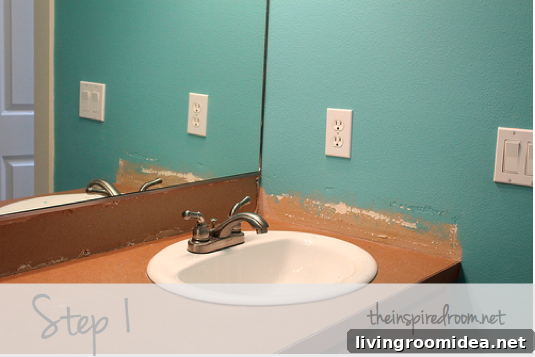
Step 1:
Remove the existing backsplash and any metal trim. Clean the wall and countertop of dust and debris so the new tiles will stick well. In many cases you can install faux tin tiles directly over formica, but bulky metal trim may need to be removed first.
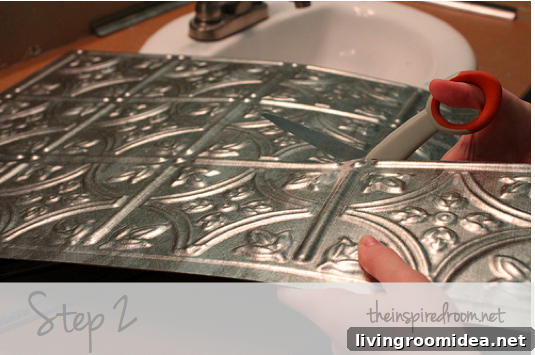
Step 2:
Measure the backsplash area and cut the faux tin squares to size. These tiles can usually be trimmed with sharp scissors. Cove molding and edge trim are thicker and trickier to cut, so use very sharp scissors, a fine-tooth saw or the cutting tool you’re comfortable with. It helped to have someone assist for those pieces.
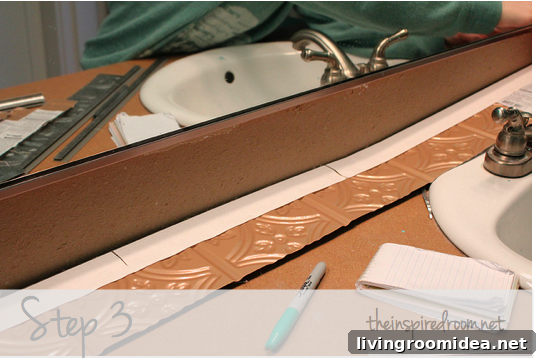
Step 3:
Apply double-sided adhesive tape to the backs of the tiles, leaving the paper protective layer on until you’re ready to stick them. Place tape around the edges and across the center of each tile and on the cove molding to ensure a strong hold.
Step 4:
If you have a tight gap — for example between a mirror and the countertop — you may be able to tuck the tile slightly under the mirror so the top edge is concealed and no upper trim is needed. Fitting tiles into narrow spaces can be fiddly. Trim and adjust the tile until it sits flush in the lower cove molding. An extra pair of hands is helpful for this step.
The trim snaps over exposed tile edges to create a finished look; it’s similar to the plastic binding strips used on report covers. The cove molding sits along the bottom where the tile meets the countertop, giving a smooth transition.
Step 5:
Remove the paper backing from the double-sided tape and press each tile firmly to the wall, holding briefly to secure adhesion. The tape allows repositioning if a tile needs adjusting, unlike permanent glue. For larger installations or ceiling applications, a construction adhesive may be more appropriate.
Assembling the backsplash is like piecing a puzzle together. Minor gaps or imperfect alignment are easy to fix — add tape where needed or trim tiles slightly for a better fit. After nearly a year in a boys’ bathroom, the faux tin tiles remained securely in place and were easy to remove when we eventually changed the counters. They’re great for backsplashes, walls, or ceilings, but not suitable for direct shower use.
The faux tin tiles lasted for years in this bathroom and held up well to daily use. They’re an effective, lower-cost alternative to more involved backsplash projects, especially when you want a fast, attractive update without hiring professionals.
If you’re after a simple, impactful makeover for a wall or backsplash, faux tin tiles are worth considering. They’re not the absolute cheapest option, but compared to the cost, mess, and potential complications of a full tile installation, they offer a sensible balance of style, cost and convenience.
If you try faux tin tiles in your home, I’d love to see a photo of the result.
Have a great day!
More bathroom design inspiration:
Beautiful Bathroom Remodeling Ideas
Pretty & Functional Bathroom Storage Ideas
5 Navy & White Bathrooms
Beautiful Bathroom Vanities
Lovely Bathroom Storage Solutions
Bathrooms with Trough Sinks
Inspiration: Repurpose Furniture Into Bathroom Vanity
Divided Master Bathrooms: Jack & Jill Style
7 Inspiring Bathroom Designs
Inspired By: Clawfoot Tubs
Wallpapered Powder Bathrooms
Cottage Style Bathrooms
DIY Faux Tin Ceiling Tile Backsplash