
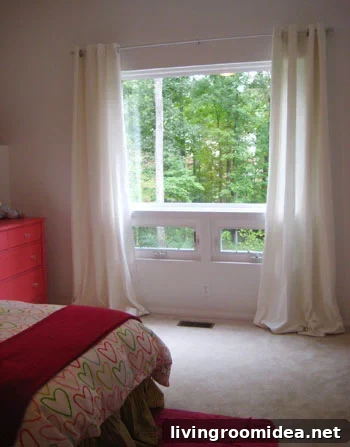
When it comes to hanging curtains, we always recommend going high and wide to make windows appear larger and to add height and drama to a room. Much like paint, curtains can transform a space; a few floor-to-ceiling panels instantly give a room a finished, polished look. Below is a simple, effective method for hanging curtains that has worked well for us—there are of course other approaches, but this one is fast and reliable.
Here’s our eight-year-old’s window before curtains. You can see how stark the rectangular frame looks and how bare the wall feels. A pair of inexpensive curtains from Ikea made a big difference.
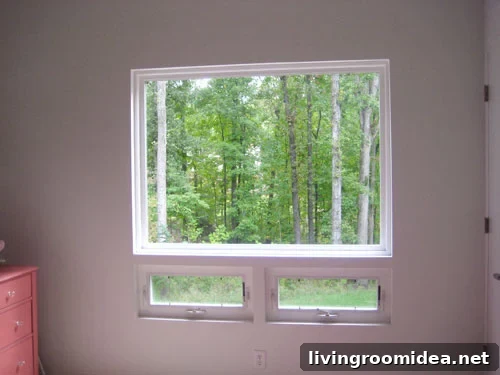
The first step is deciding how high and wide to place the rod. In this room, with 9-foot ceilings, we set the rod 12 inches above the top of the window and extended it 12 inches beyond each side of the frame. That extra height draws the eye upward, and the extra width makes the window feel larger and lets the curtains fully clear the glass when open.
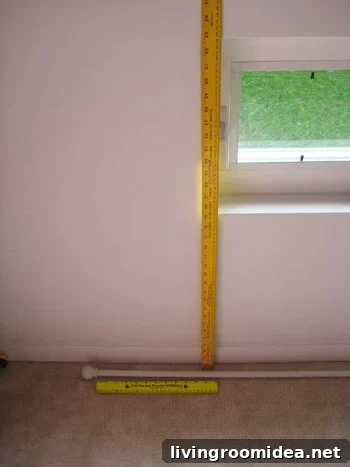
A quick way to confirm the rod will reach the desired width is to lay it on the floor in front of the window and measure from the window edge to the end of the rod, making sure you have at least the extra 12 inches on each side. Once you’ve confirmed the length, use a level to mark the mounting points—12 inches above the top of the window and 12 inches to the right (and left) of the frame. Mark each spot lightly with a pencil.
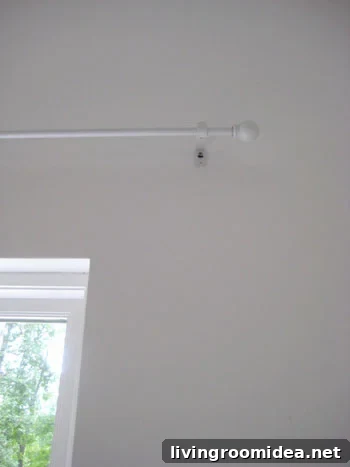
Predrill a small hole for a plastic anchor at each marked spot, tap the anchor into place, then drive the screw into the anchor to secure the rod bracket. This method ensures a solid mount, especially if you’re drilling into drywall rather than directly into a stud.
For longer rods, add a center support bracket to prevent sagging. We installed a middle hook by measuring 12 inches above the window’s center, then using another plastic anchor and screw. That extra support keeps the rod straight and the curtains hanging smoothly.
Here’s the finished result: soft, floor-length panels that skim the floor (although our daughter prefers the slightly pooled look). White-on-white curtains create a calm, seamless backdrop that lengthens the wall visually, but colored or patterned curtains would add more personality if you prefer a bolder look. Hanging curtains in a shade close to the wall color is a popular trend because it creates a continuous visual flow that draws the eye outward toward the window.
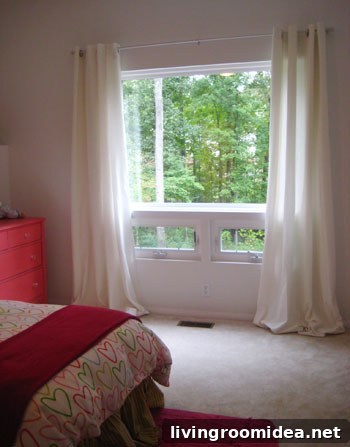
Many people worry about the gap between the top of the window and the rod, but when done correctly it looks balanced and intentional. Mounting the rod directly on top of the window frame can make the window feel cramped. If you want to visually hide a larger gap, consider layering with a shade or blind behind the curtains for a more finished look.
We hope this short curtain tutorial feels encouraging—hanging these panels took about half an hour with a ruler, level, and drill. It’s an easy way to make a room feel more complete. If you have curtain-hanging tips or tricks you’ve learned over the years, we’d love to hear them!