
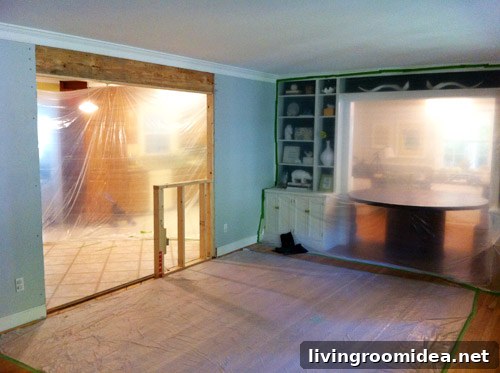
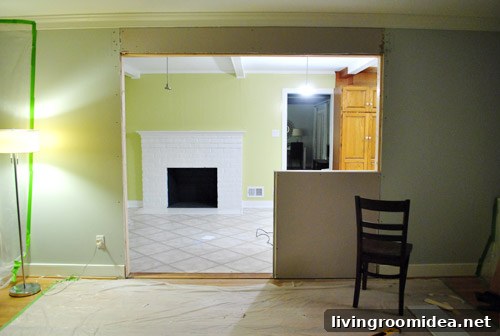
Removing that section of wall (and the contractor) was an exciting milestone, but there’s still quite a bit to do before the opening feels finished. Unless, of course, this is your idea of a beautiful dining room:
Quick note about the contractor: neighbors have asked for Steve’s contact information, and since we were very happy with his work, we’ll share it. He’s a licensed Class A contractor—more suited to structural projects like removing walls or building additions than handy jobs like hanging doors or making furniture. If you need major work, his email is [email protected].
Back to the opening. We left the protective plastic up because drywall work was next, and sanding can get dusty. We’re not drywall experts (it was my least favorite part of our bathroom renovation two years ago), but this felt like a manageable, small job to tackle ourselves. We needed one span of drywall across the top of the doorway on the dining room side to cover the exposed header, plus a few sections around the half-wall.
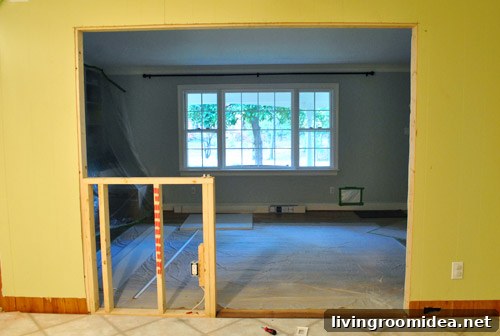
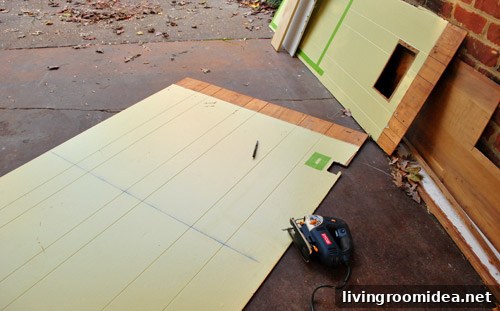
The kitchen side of the half-wall will be finished with paneling, which is why we had Steve leave the demolition scraps. I measured, marked, and cut pieces with a small jigsaw—quick and easy work.
It was so straightforward that I set a cabinet against the half-wall before finishing the rest. Steve suggested doing that before drywalling the back so I could see the studs and drill more accurately. Note: there will be a 12″ countertop overhang behind the peninsula with stools tucked underneath, so the half-wall won’t be very visible from this angle once complete. We’ll also top the half-wall with a chunky wooden ledge for added function and balance.
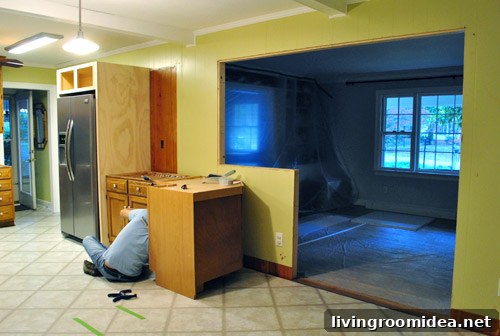
Already looking a little more finished, right?
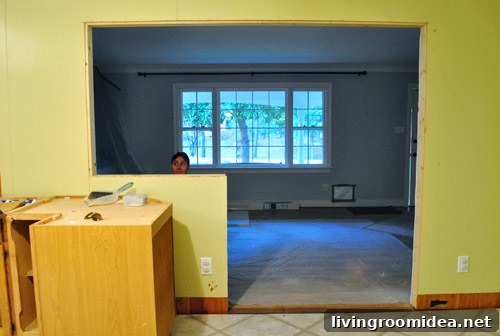
Okay, not quite.
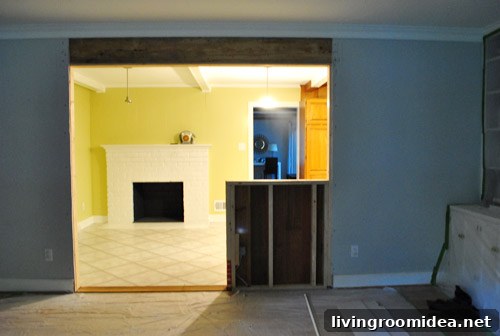
I was procrastinating on the next task: getting drywall home. A full 4′ x 8′ sheet won’t fit in our Altima, and renting a truck for $19 to transport $14 worth of drywall felt silly. Steve suggested cutting drywall to size before bringing it home, so I set up in the Lowe’s parking lot with a tape measure, chalk line, razor blade, yardstick, and a towel to keep the car somewhat clean. After about 45 minutes of careful measuring and snapping, I had pieces that would fit in the trunk.
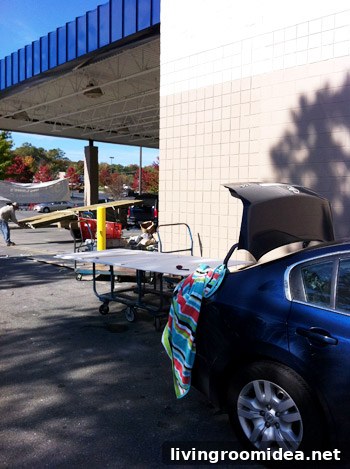
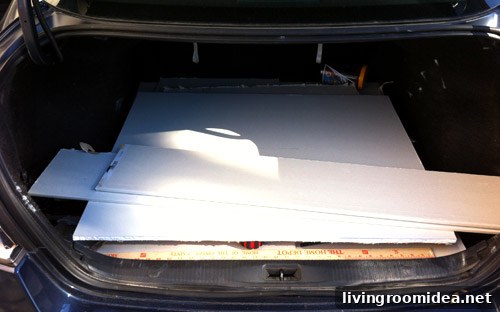
The dining room drywall is two panels thick in places, so I had to cut two of each size to match the existing wall build-up. I fit the half-wall pieces and a few scraps in the trunk…
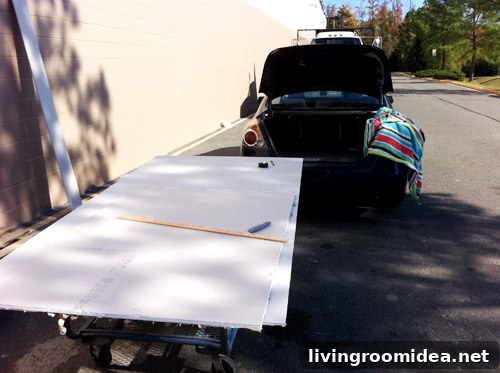
…and the long pieces for the doorway header barely fit through the car’s center, along with the door jamb kit. Booyah.
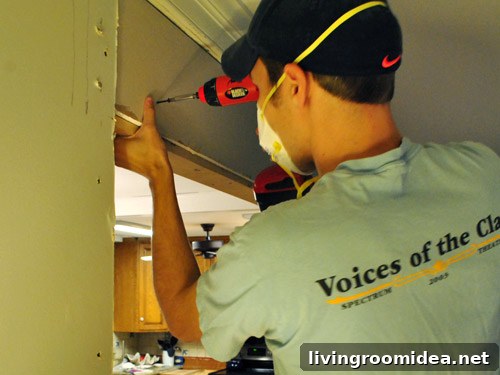
Working in a parking lot felt a little awkward, but it sped things up at home since the pieces were ready to screw into place. Sherry held one edge while I drove a few holding screws—then she hopped down to take flattering photos.
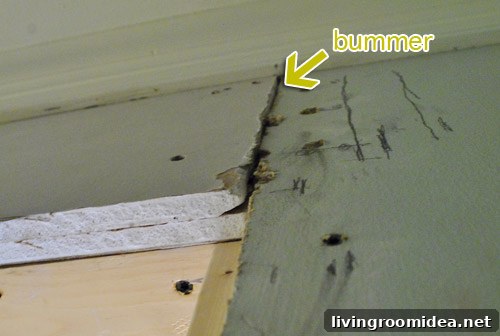
Then reality struck: despite careful measuring, my new double-layer drywall was slightly thicker than the existing double-layer wall. Even a small difference shows when light hits it, so I removed one panel and used shims to get the new drywall flush. We didn’t have enough proper shims or furring strips, so we improvised with paint stir sticks screwed together. They proved dense enough when combined, and because the header is solid wood and steel, the assembly held firmly. Any protruding pieces will be covered by trim later.
I repeated the same shimming method for the large panel on the half-wall, making sure everything was as flush as possible before drilling. Yes, we have a growing collection of stir sticks accumulated from paint cans over the years—turns out they come in handy for more than mixing paint.
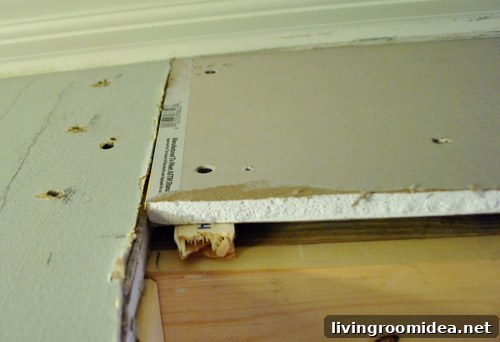
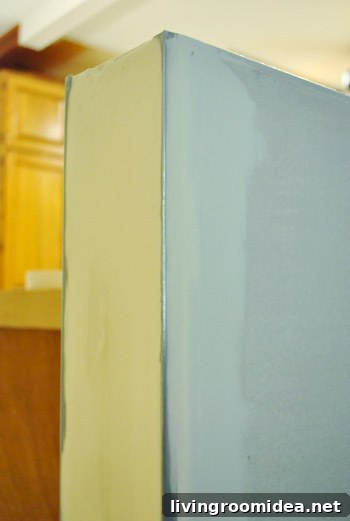
The small end cap didn’t need to match existing drywall thickness since it’s on a new plane, so a single sheet went straight into the wood frame. We added metal drywall corner strips to sharpen the edge where drywall meets paneling—an improvisation that worked well. You’ll see the finished look soon.
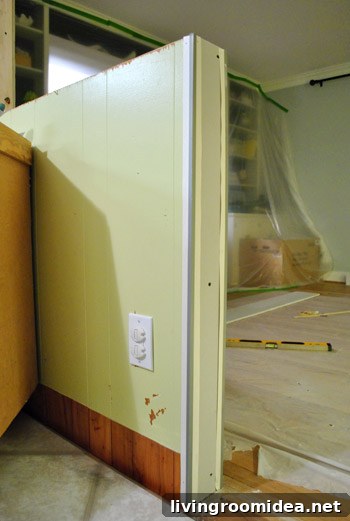
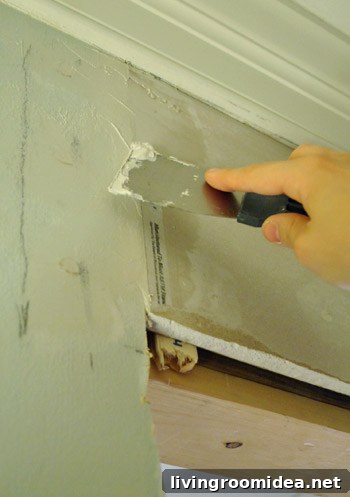
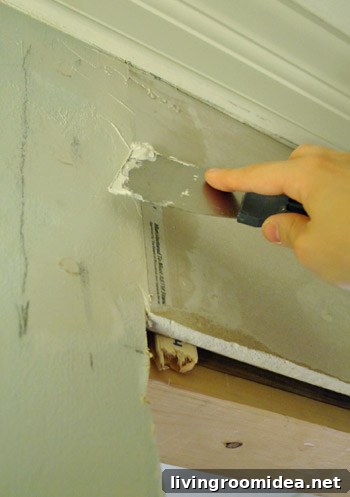
With the hanging complete (and only one minor hiccup), the next step was mudding. I left that to Sherry since she has the finesse for it. She used her spackle knives to tape, apply drywall mud, smooth it, let it dry, sand, and repeat until seams were seamless. For one especially tight crack she opted to caulk near the crown molding rather than force mud into a tiny gap.
She did multiple passes in many spots to achieve a smooth finish. The corner pieces around the half-wall turned out better than expected; once primed and painted, they’ll provide a durable, straight-looking edge that blends well with the wood paneling.
It’s definitely more finished than it was this morning, but still far from done.
The opening still looks unfinished because:
- there’s no trim to match the nearby doorways,
- baseboards stop at the half-wall and aren’t completed on either side,
- the wooden ledge for the half-wall isn’t installed yet,
- the peninsula countertop and stools that will give the space context aren’t in place,
- many surfaces still need primer and paint, which makes everything look rough for now.
We chose a half-wall instead of a full opening with a floating peninsula for several reasons:
- we didn’t want the peninsula to feel tacked on or like an afterthought,
- a half-wall will ground the peninsula and make it feel supported rather than floating between rooms,
- the dining room already has built-in base cabinets, so extra cabinetry wasn’t necessary,
- another built-in near the existing large bank of built-ins would have felt redundant,
- a half-wall makes the threshold cleaner—without it, there would be an awkward strip of cork flooring between the peninsula and the dining room floor.
Next steps: install the door jamb, build the ledge on top of the half-wall, add trim and baseboards, then prime and paint. Once we build the peninsula and add a countertop, the space will start to feel finished. We still have a countertop-less kitchen to sort out, but we’re treating that as a separate detail for now.
Sherry also joined a conversation about design trends over on Centsational Girl today, sharing different takes on what’s in and what’s out—an interesting read if you’re curious about design opinions.