
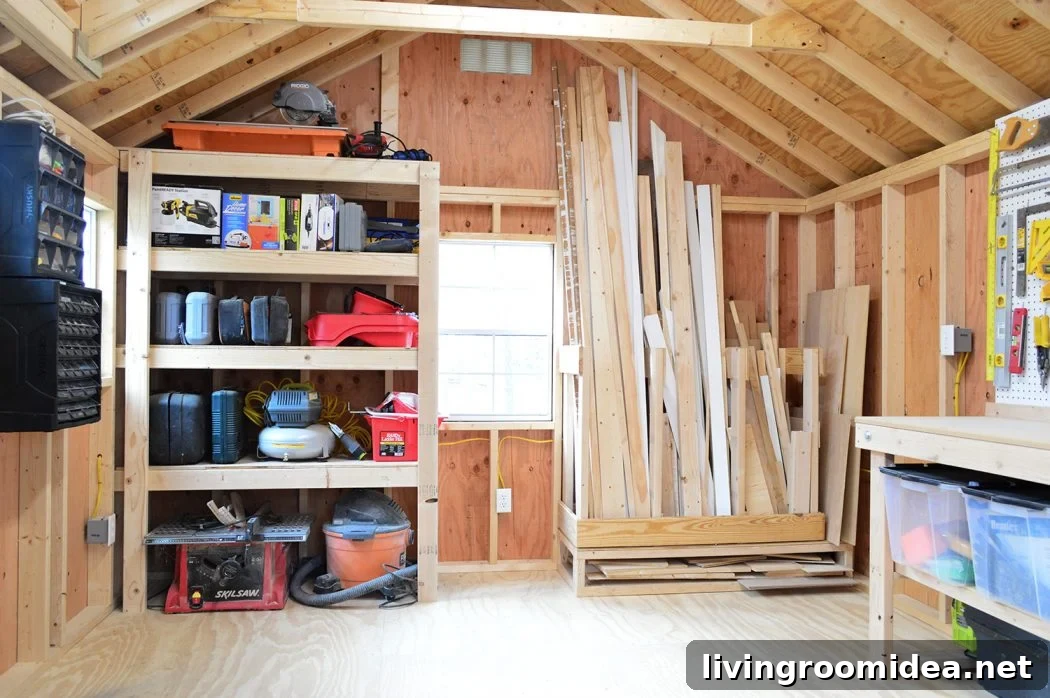
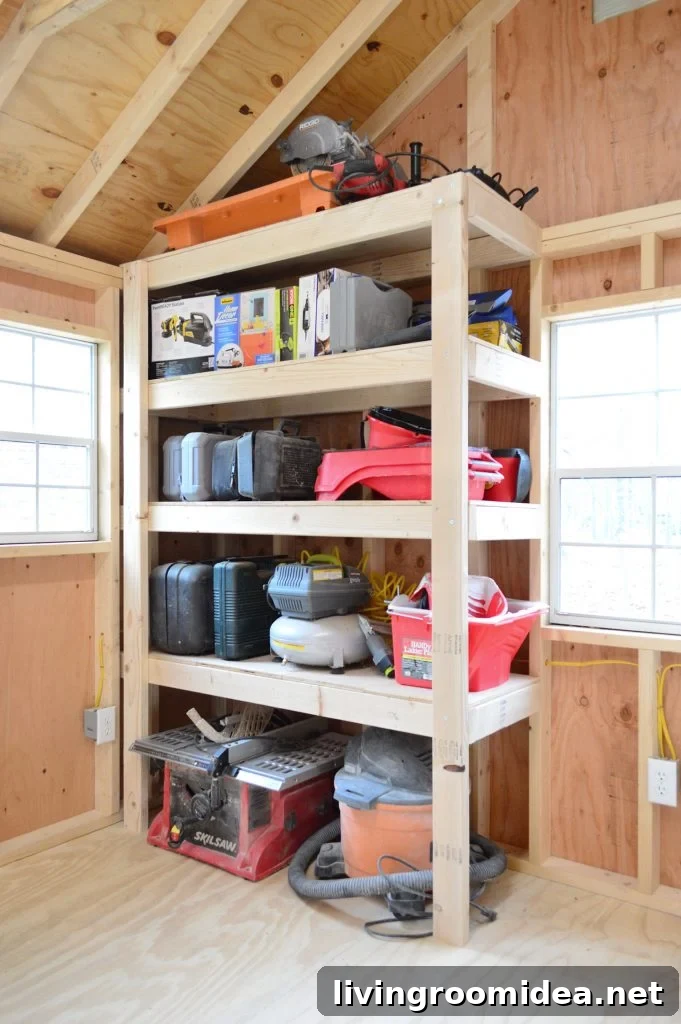
When we needed heavy-duty shelving for our new shed, we followed a clear and reliable DIY plan from Ana White. These shelves support heavier items like power tools and paint cans, and they’re straightforward to build — even for beginners.
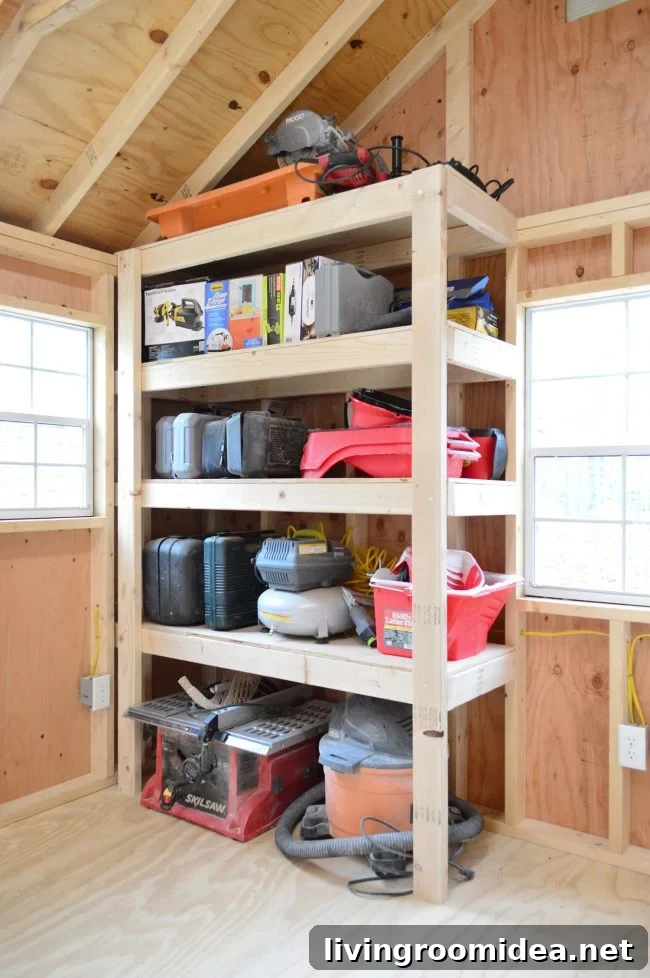
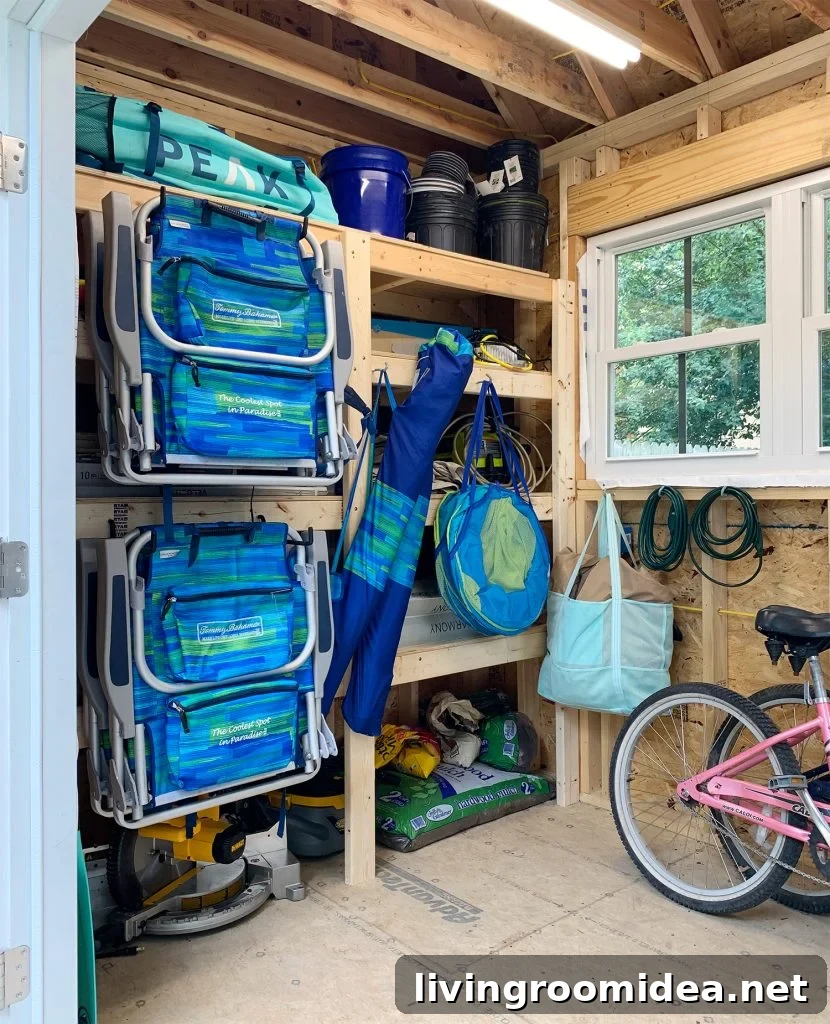
We liked this method so much that we repeated it in the beach house shed and the small shed at our current house. These DIY shelves are simple, adaptable, and far more robust than most store-bought units. Building long shelves with generous spacing creates flexible storage and easy access to bulky items.
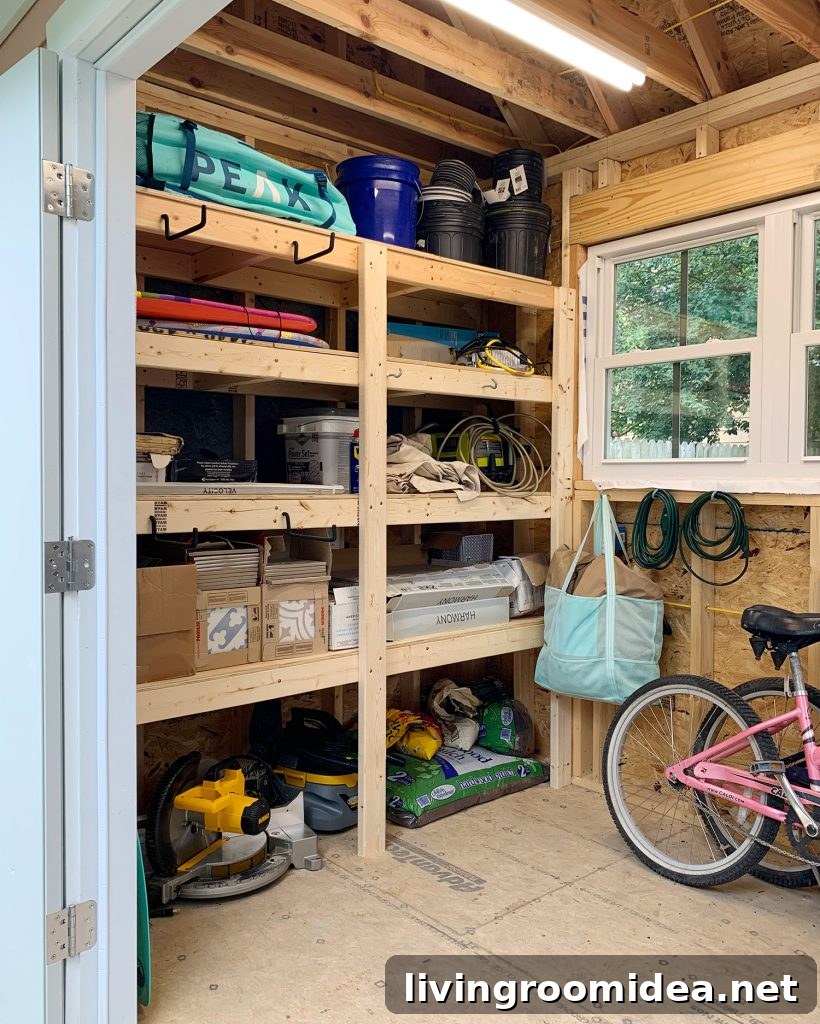
They adapt to almost any space and are especially easy to install when you can drill directly into exposed wall studs.
Tools & Materials Needed
The materials list is short, which makes this a great option for anyone who needs quick, sturdy shelving for a garage or shed.
- 2×4 boards
- 1/2″ plywood, MDF, or scrap wood
- Miter saw
- Table saw or circular saw
- Pocket hole jig
- Tape measure
- Long level
- Nail gun
- Drill and wood screws
- Stud finder (optional)
The amount of lumber depends on your wall length and how many shelves you want. We usually build from the floor to about 18″ below the ceiling so the top shelf still accommodates large items.
DIY Garage Shelves Tutorial
Below is an overview of the steps to construct the shelving.
- Step 1: Cut pairs of 2×4 shelf supports
- Step 2: Hang one 2×4 from each pair
- Step 3: Temporarily screw the other 2×4 into the first
- Step 4: Attach vertical supports
- Step 5: Remove temporary screws
- Step 6: Add side pieces to connect front and back supports
- Step 7: Nail or glue plywood tops
This method simplifies alignment and leveling, and produces very sturdy shelves.
Step 1: Cut Pairs Of 2×4 Shelf Supports
We built ours on the same wall as our scrap wood organizer, cutting four pairs of matching 2×4 boards to fit between the corner and the window (53″ in our case). Each pair becomes the bottom frame of a shelf: one board against the wall and one at the front edge.
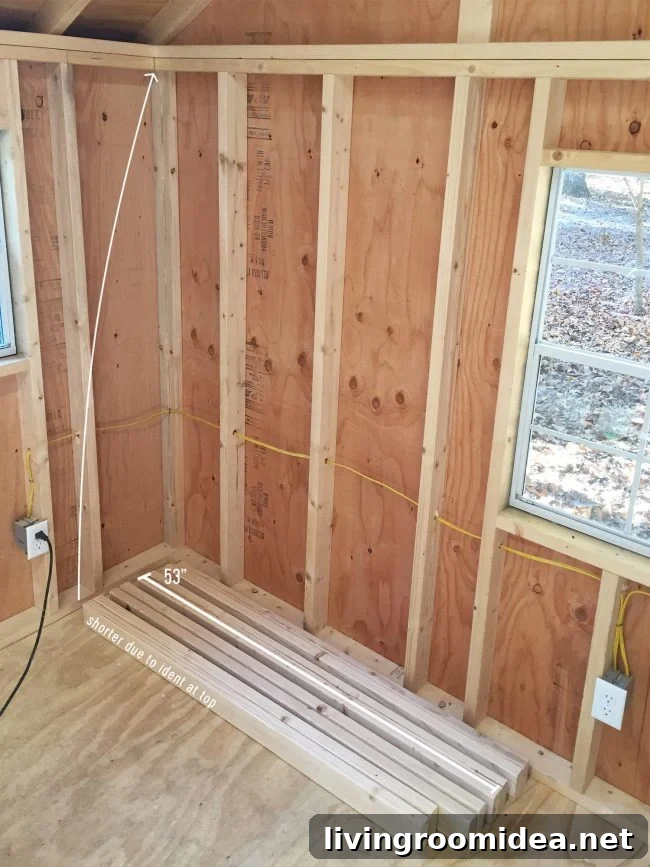
Step 2: Hang One 2×4 From Each Pair
Using a level and tape measure, fasten one board from each pair to the wall with long screws into studs. These wall-mounted boards will support the shelves. Space them to suit the items you’ll store — for example, leave more height for tall bins or bulky tools.
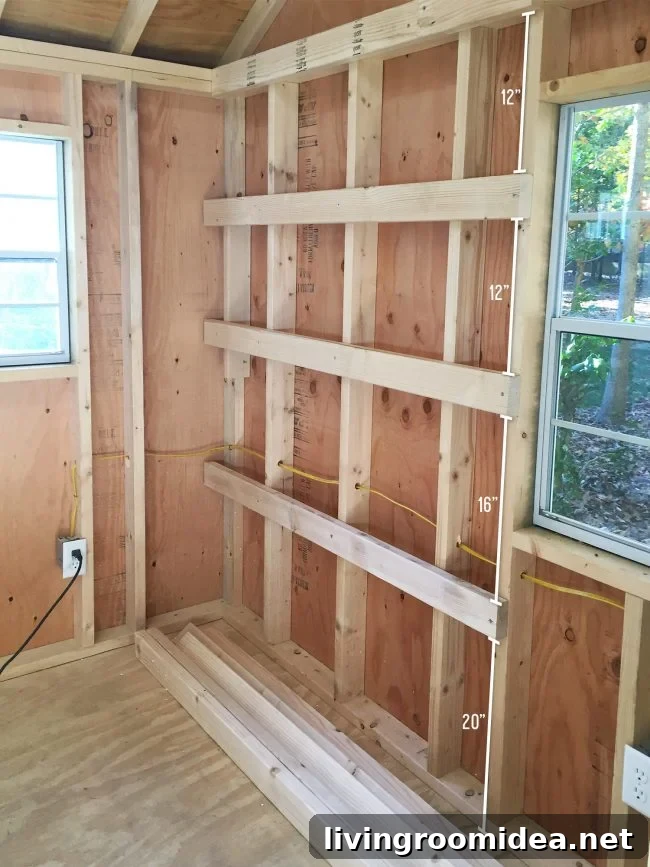
Make the bottom shelf taller than the others for large or heavy items, and leave enough space between the top shelf and ceiling for anything you expect to store there.
Step 3: Screw The Other 2×4 Into The First (Temporarily)
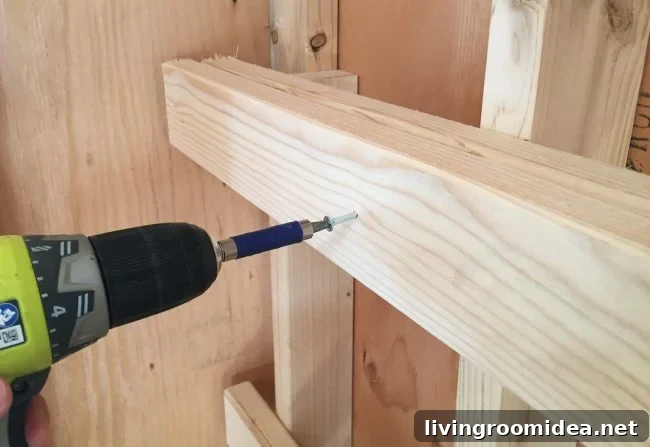
Loosely attach the matching front boards over the wall-mounted boards so everything lines up perfectly. Use two screws per board and don’t tighten them all the way — these are temporary fasteners to hold the frame while you add the vertical supports.
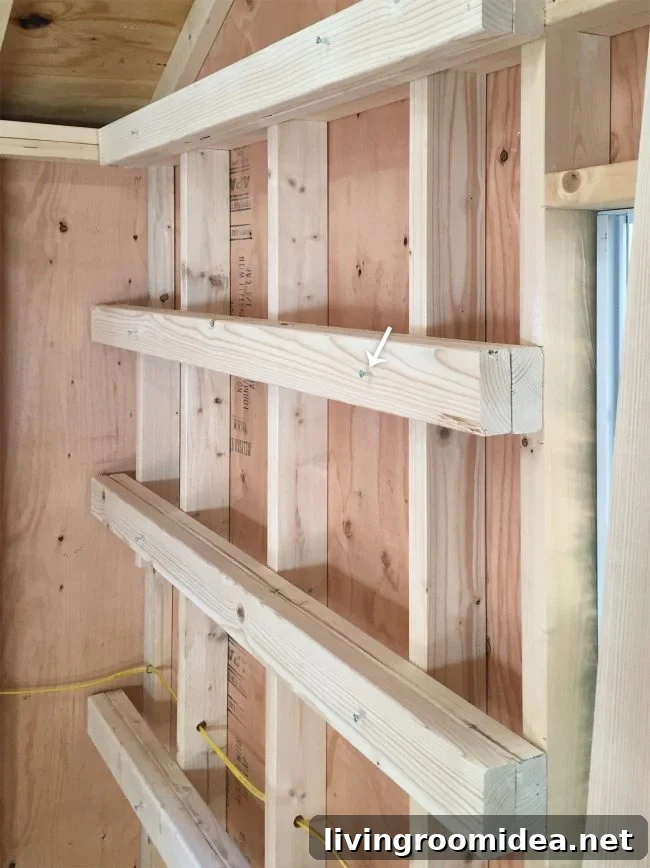
Step 4: Attach 2×4 Vertical Supports
Add vertical 2×4 supports that rest on the floor and reach up to the top horizontal board. We started with three posts but removed the center post later because the frame was already very sturdy. Screw the verticals tightly into the outer horizontal pieces and use a level to keep everything plumb. Avoid screws that are so long they penetrate the back boards.
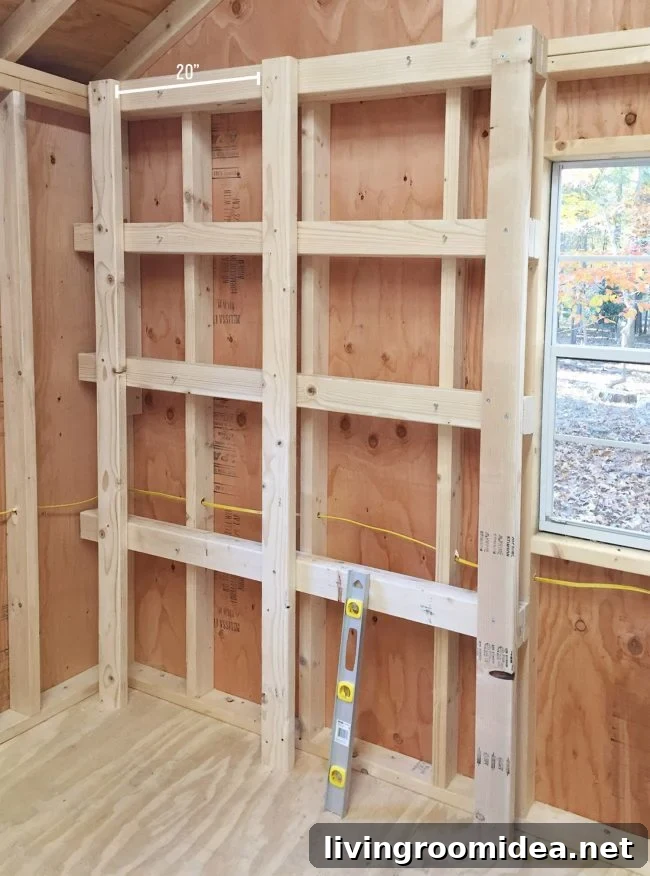
Step 5: Remove Your Temporary Screws
Remove the temporary screws and pull the front portion of the frame away from the wall. Because you cloned the back frame exactly, the front and back horizontal supports remain perfectly aligned.
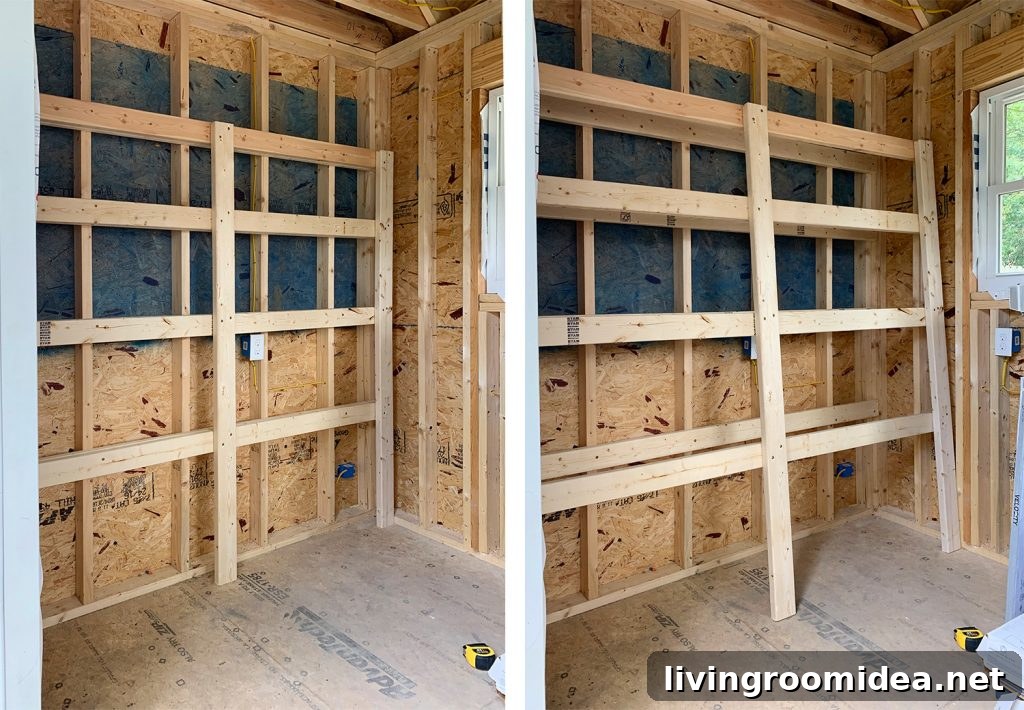
With the front section detached, you can finish assembling the full frame on the floor before reattaching it as a complete unit if you prefer.
Step 6: Add Side Pieces
Add side pieces to connect the front and back horizontal supports and define shelf depth. We cut 12″ side pieces and used pocket holes to fasten them, creating roughly 15″ deep shelves. Adjust the depth to fit your needs, but avoid depths much greater than 18″ without adding extra support or using thicker plywood to prevent sagging.
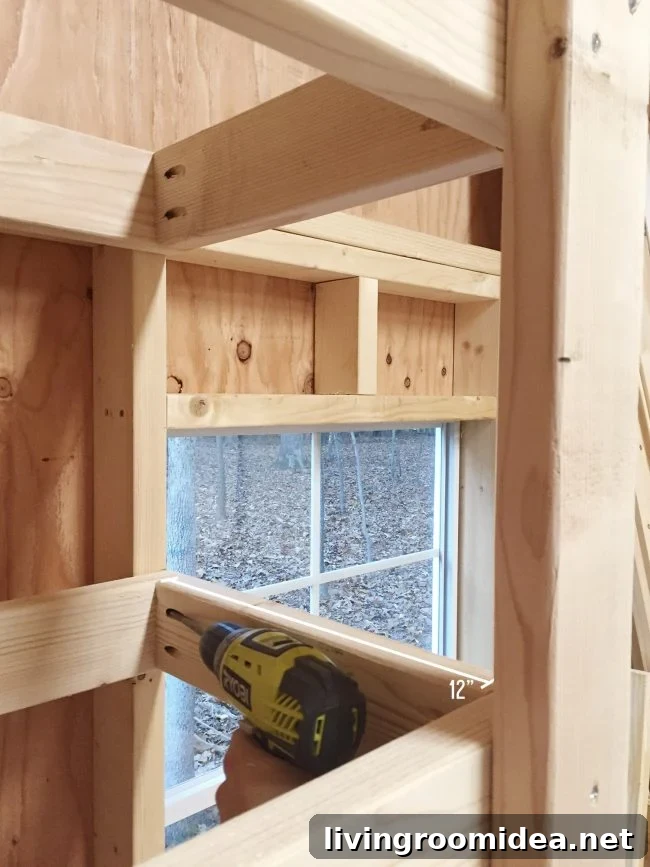
After adding the side pieces, the shelf frame should resemble the image below.
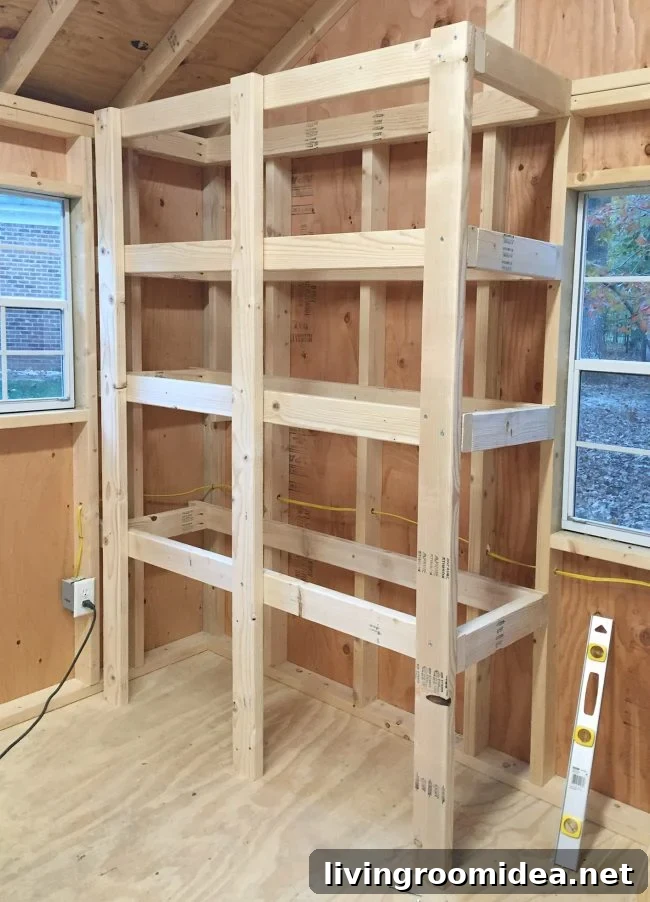
Step 7: Nail In Shelf Tops
Attach 1/2″ plywood to the top of the frames with nails or wood glue. Cut the panels to size with a table saw or circular saw, or have the store cut them for you. Once the tops are installed, the shelves become very rigid — we were able to remove the middle post and still have a strong, usable shelf.
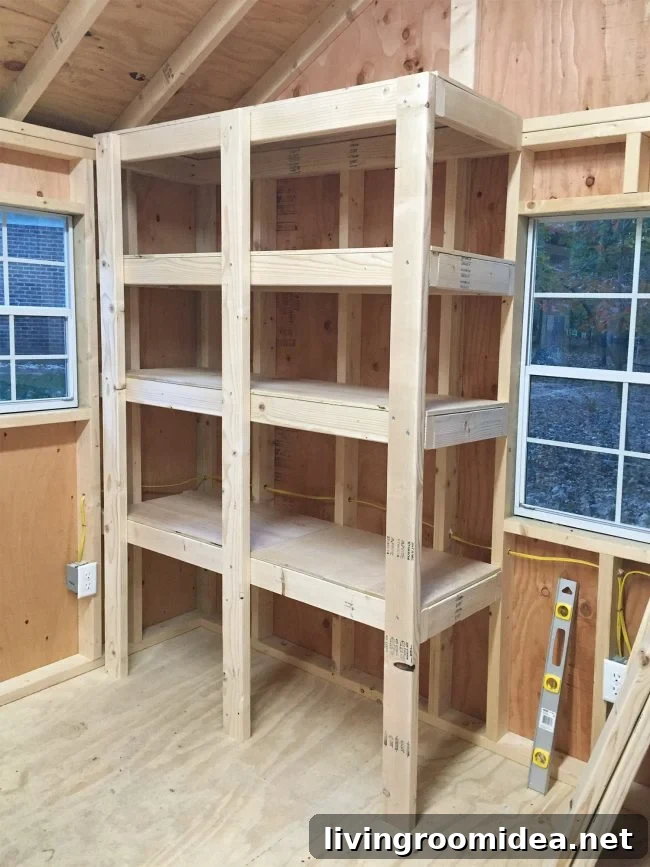
The finished shelving held boxed tools, paint supplies, and saws without any issues. It’s sturdy enough for heavy loads and provides easy access to stored items.
We also customized the same shelving in our beach house by hanging storage hooks on the front for beach chairs and umbrellas, and using the shelves for spare tile and paint that don’t require frequent access.
Thanks to the simple, effective approach that inspired this design, you can build heavy-duty shelving that’s customizable, economical, and long-lasting. These shelves are a practical solution for organizing a garage, shed, or workshop.
More DIY Garage Storage Ideas
If you want additional ideas for garage and shed organization, consider exploring other DIY shelving and storage projects to find approaches that suit your space and storage needs.