
Hello! It’s been a while since I shared a dedicated update on our dining room, so today I’m rounding up everything we’ve done since moving in. I’ve posted small updates along the way, but this piece pulls it all together and highlights the changes that made the biggest impact.
We still have plans for future tweaks, but I’m so pleased with how much more comfortable and inviting this room feels now. Let’s take a look back at where we started and what has changed.
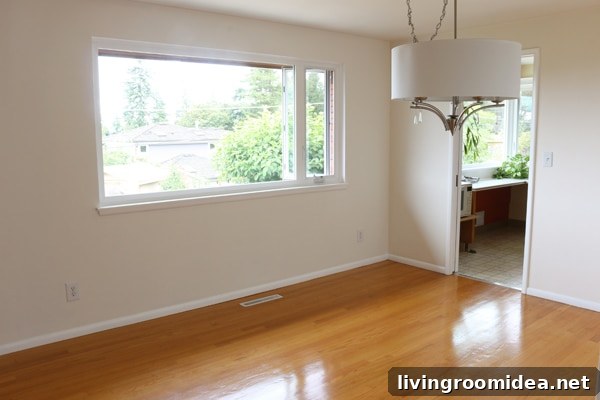
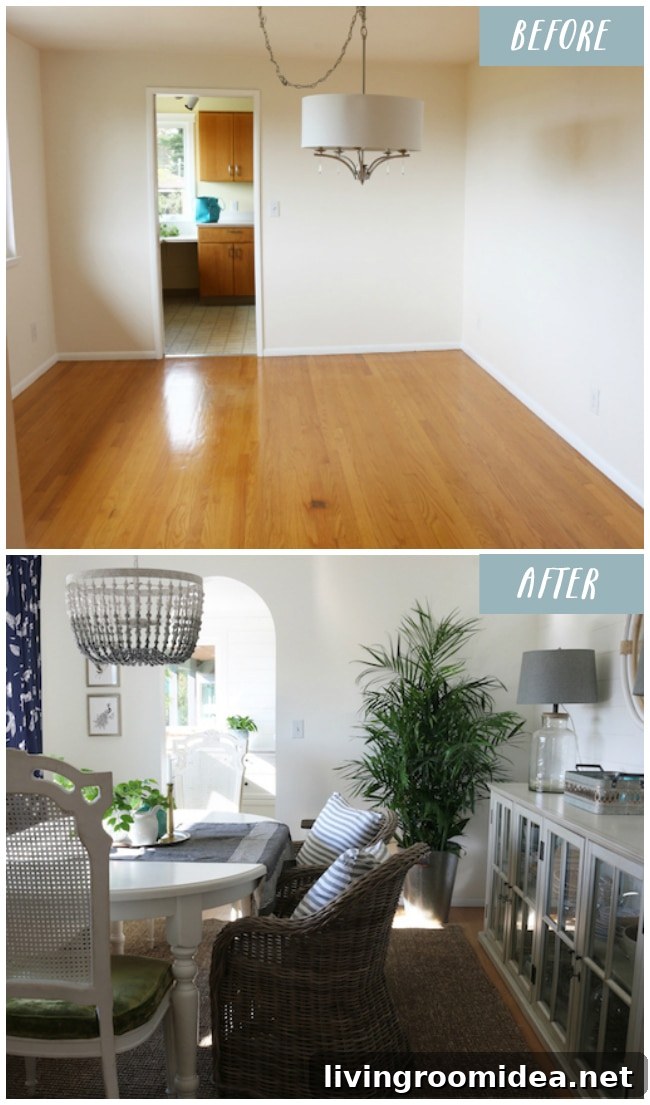
When we first moved in, the room had great natural light and a nice window view, but it didn’t feel cohesive. The window and light were off-center, the doorway to the kitchen was a small, awkward opening, and the floors had an orange, very glossy finish that made the space feel dated. The floor finish has mellowed somewhat, though we’re still considering refinishing down the line.
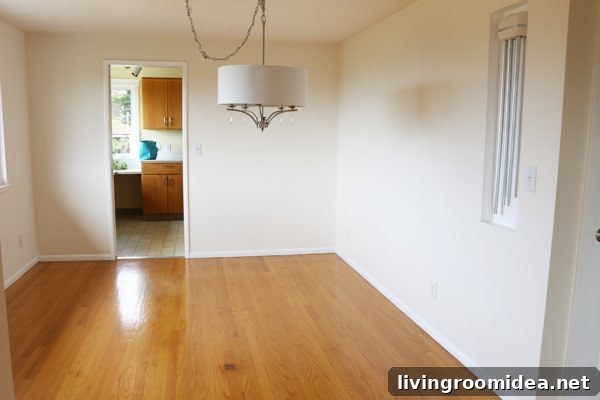
Recognizing that this isn’t a grand formal dining room, we embraced a cozy breakfast-room vibe instead. That informed many of our choices: smaller-scale furniture, comfortable seating, and layered textures to make the room feel warm and lived-in.
We painted the entire room Simply White by Benjamin Moore. We sampled a range of neutrals and colors, but Simply White complemented the architecture and the natural light best, keeping the space bright and fresh without competing with the other elements.
To add architectural interest, we installed a planked wood wall on one side. The planking gives the room texture and visual weight and conveniently covered an old doorbell we didn’t plan to use. We’ll add taller baseboards later for a more finished look, but the planked wall was an immediate improvement.
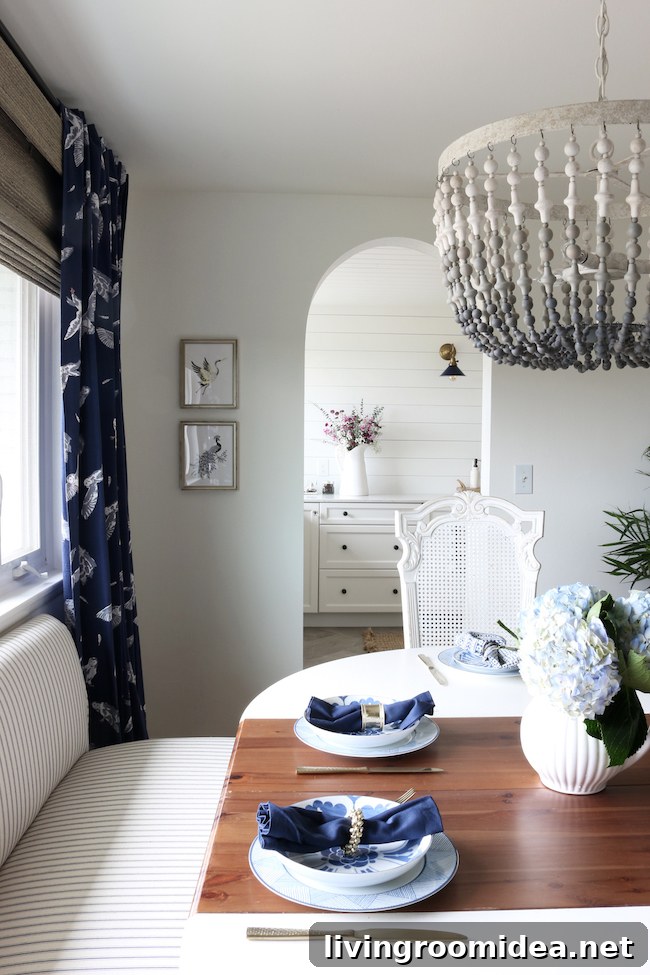
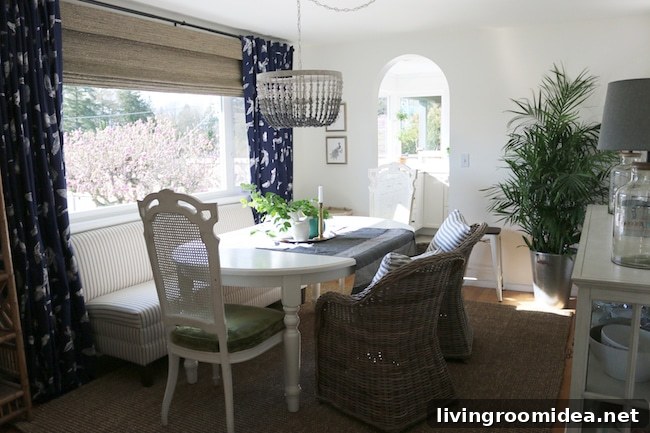
Because our table didn’t work well centered in the room — it crowded the walkway — we shifted it under the window and created a banquette-style arrangement. That positioning opened up the circulation path and made the nook feel like a purposeful, inviting place to gather for meals.
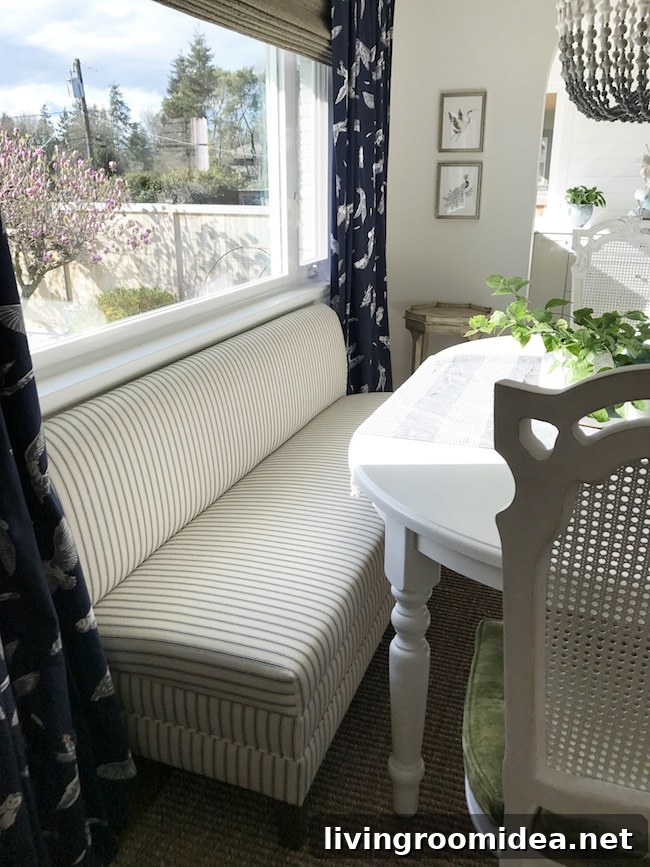
For the banquette we chose an upholstered bench that fit perfectly under the window sill and seats several people comfortably. The bench is firm enough for proper table seating yet cushioned enough to be cozy. Its pinstriped fabric gives a nod to classic textures while staying casual enough for everyday use.
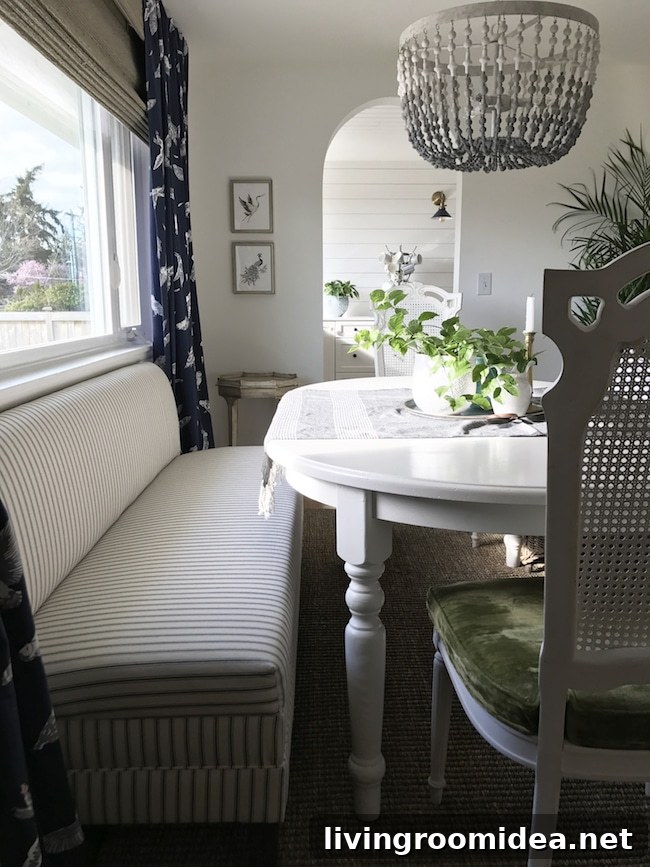
To control glare during bright afternoons we installed cordless, lined woven shades. They offer excellent texture and, when fully raised, don’t obstruct the window at all. We mounted them outside the frame for a clean, tailored look. The shades are sturdy and easy to operate, and we often lower them partially to reduce direct sun while still keeping natural light.
The woven shades pair well with a long black curtain rod and patterned panels. The curtain panels give the window a finished, substantial look and are an easy way to change the room’s mood simply by swapping fabrics later on.
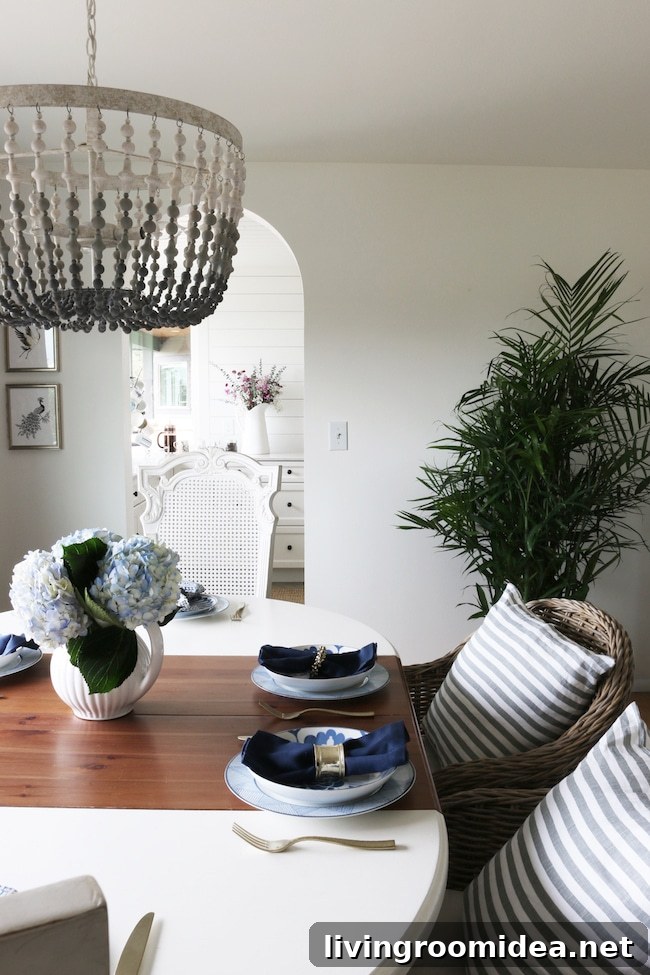
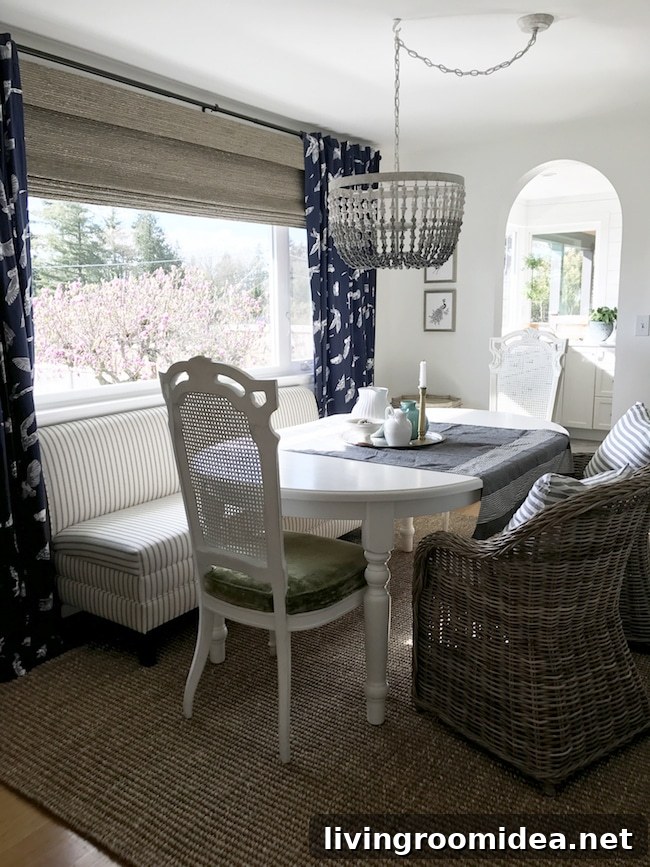
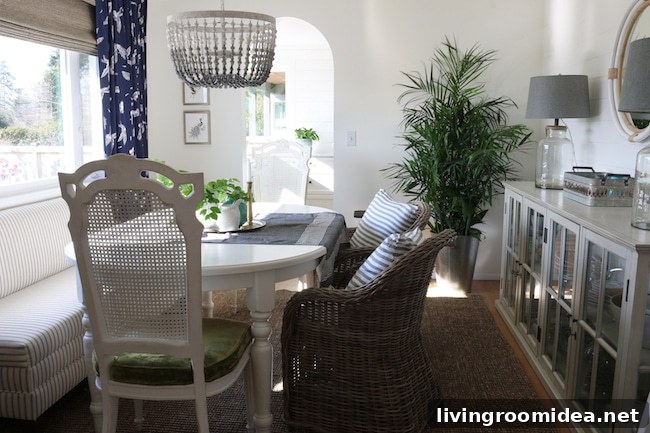
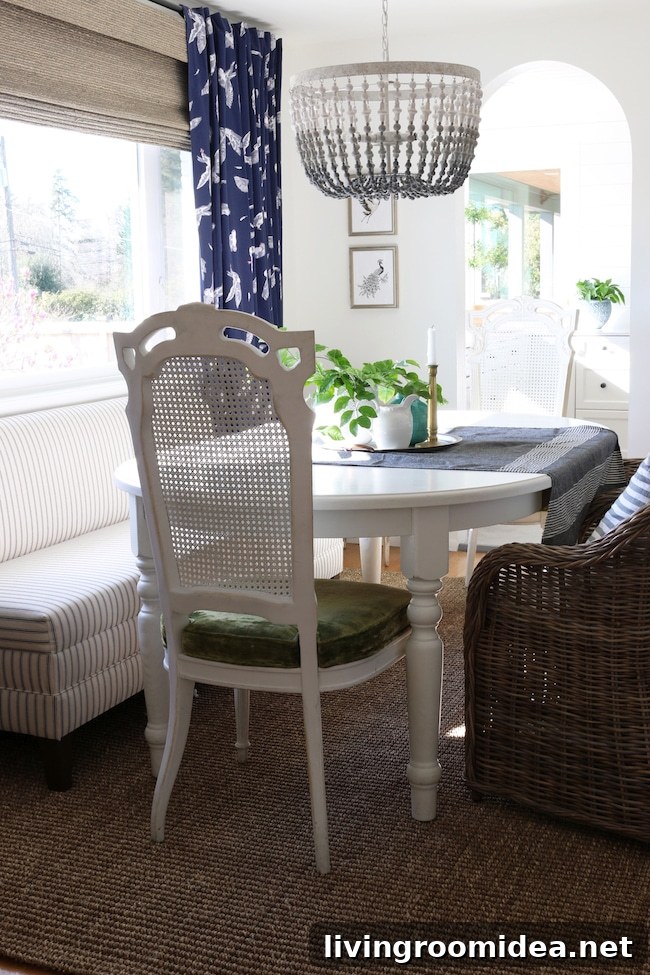
We worked with a modest budget, so the room is a mix of existing pieces and a few new additions. Our dining table is an older piece full of family memories; it’s a practical oval that adapts with leaves when needed. The low-backed rattan chairs we used previously stayed in rotation and suit the banquette side well because they keep sightlines open.
The vintage cane end chairs are currently on loan from my daughter and add a charming, collected feel. We considered using our parsons chairs but decided to keep those downstairs for now.
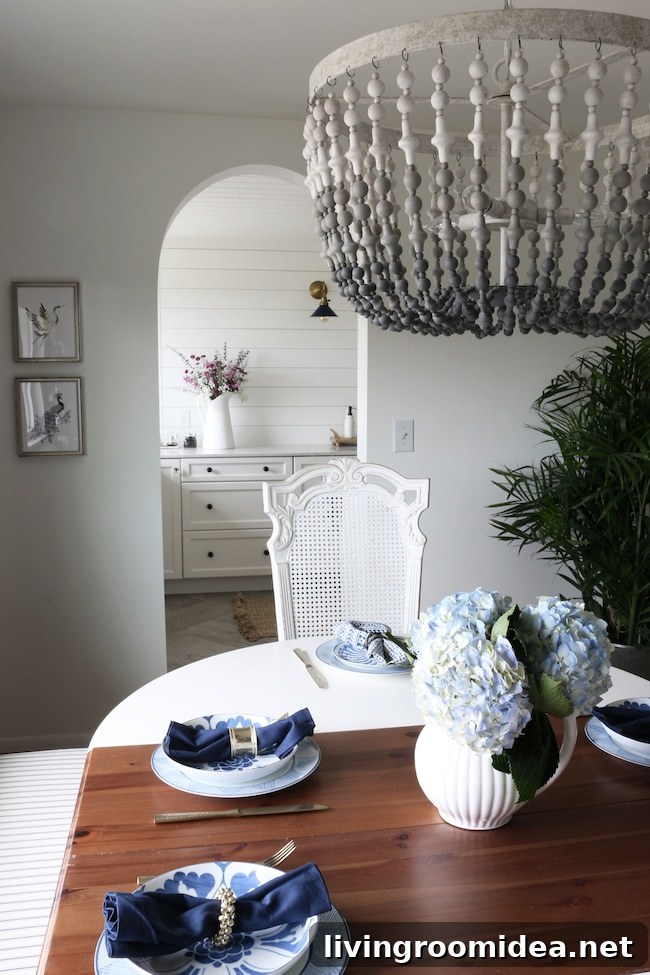
Another new element is the ombre beaded light fixture above the table. Its coastal-inspired color palette introduces subtle drama and texture. To avoid costly electrical changes and to keep the installation flexible, we hung the fixture from a simple ceiling hook and looped the cord for a relaxed, intentional look.
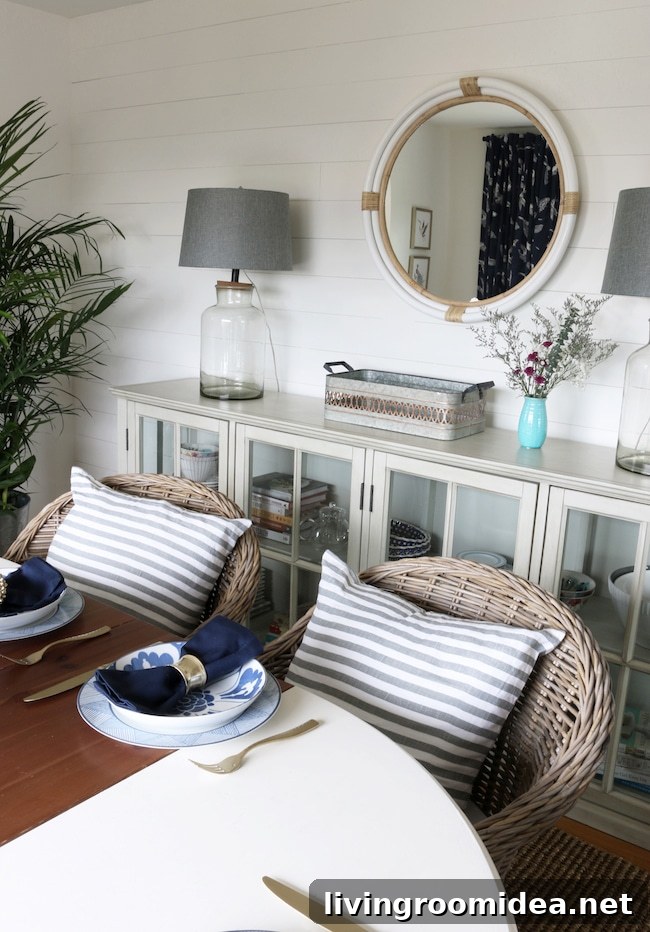
On the planked wall opposite the banquette, a buffet cabinet provides balance and storage. A seagrass rug grounds the seating area and introduces natural texture that ties the room together.
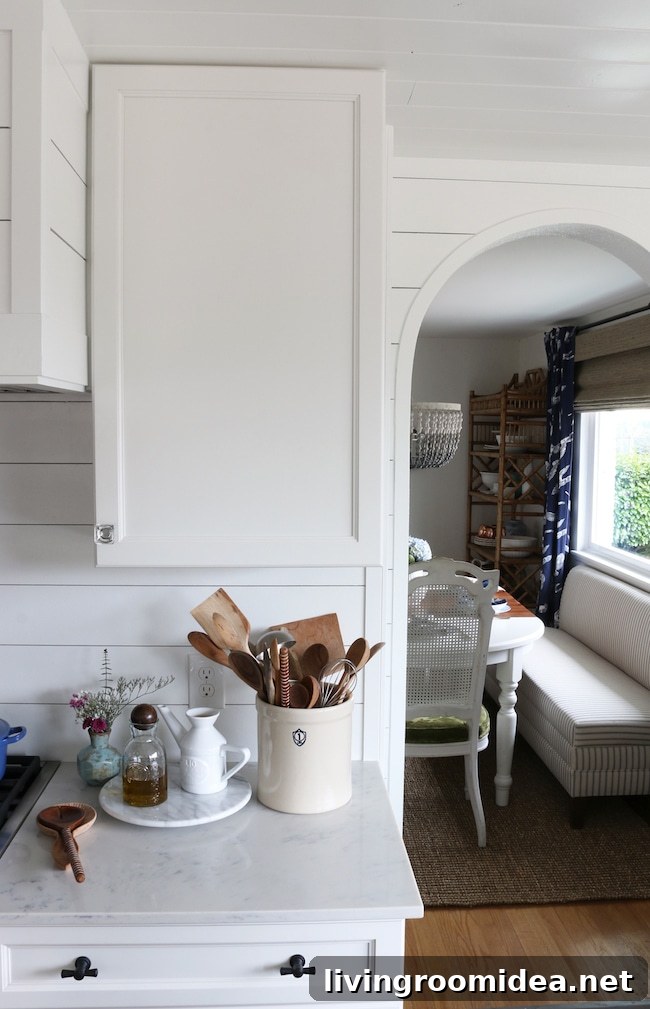
One of the most transformative changes was rounding the doorway to the kitchen into an arch. The kitchen remodel didn’t allow for widening the opening, but easing the corner into a soft curve changed the flow and feeling of both rooms. We left the dining-room side untrimmed for a simple, consistent look with other openings in the house. The arch adds personality and repeats a similar shape already present in the kitchen, creating a pleasing visual link between the spaces.
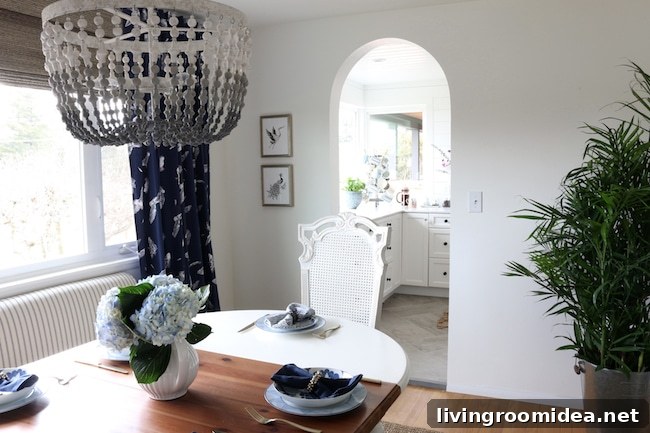
Overall, these thoughtful, low-cost updates have made a notable difference. It’s a room that now feels intentional and comfortable while still being flexible enough for future changes.
I enjoy decorating in phases — my home is always evolving — and I love the feeling when a room reaches the point of “done enough” to enjoy day to day, even if more changes are likely later.
Room sources:
Bristol bench in striped upholstery — available in multiple sizes and fabrics.
Blue and white dinnerware from a classic dinnerware collection.
Seagrass rug to anchor the seating area.
Beaded light fixture in ombre tones (available in multiple sizes).
Antique-style glass door cabinet in a soft neutral finish.
Rattan dining chairs (similar styles are often available).
Gray-and-white striped pillow covers for casual, coastal-inspired accenting.
Framed botanical prints and a rattan shelf (flea market and vintage finds add character).
Navy curtain panels to frame the window and add depth.
Wall color: Simply White by Benjamin Moore.
Woven shades in a natural fiber to add texture and control light.