
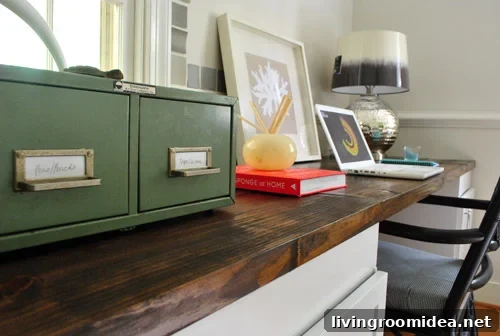
Our built-in wall-to-wall desk made solid progress this week after we painted and extended the cabinets, but it still lacked one important element: a proper countertop.
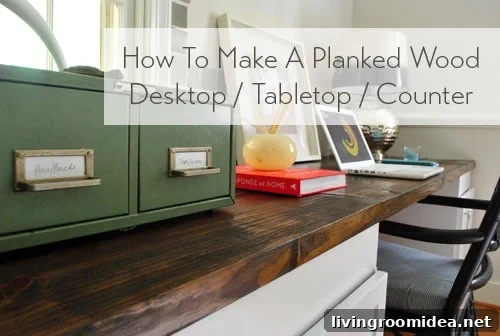
We needed a desktop about thirteen feet long, which narrowed down our options since most kitchen countertop suppliers stop at twelve feet before a seam becomes unavoidable. At first we considered ordering a commercial countertop—maybe butcher block, silestone, or an Ikea top—but any of those options would have required seams and cost considerably more than we wanted to spend after scoring the cabinets for just $6.
We also debated color: I favored white to keep the space light and to coordinate with nearby built-ins, while John worried about too much white and the possibility of mismatched white tones. After seeing a DIY wood desk built by Aubrey and Lindsay, we both agreed that a warm wood top would be the best choice to tie the office to the adjacent dining room furniture.
We wanted the desktop to look substantial enough to match the chunky cabinets, so instead of thin pre-made tops we bought 2×10″ untreated framing lumber. It felt as thick and solid as a jumbo cutting board—and at Home Depot we had the lumber cut so the pieces fit in the car. The total cost for the boards was $27.30, which is far cheaper than most countertop alternatives.
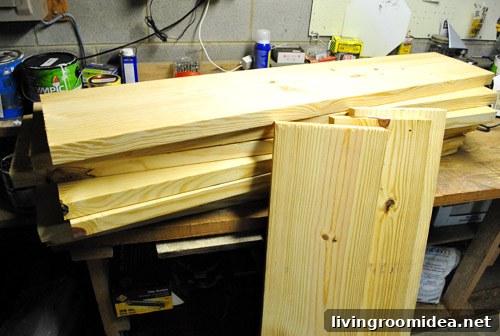
At home we laid the boards out in the basement workshop to pick the best edges for the front lip and the cleanest faces for the visible surface. Since we didn’t have thirteen feet of uninterrupted floor space, the boards overlapped as we worked.
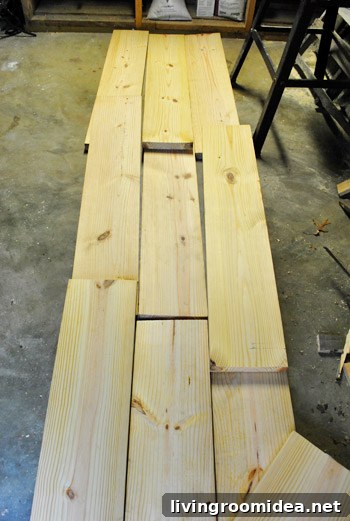
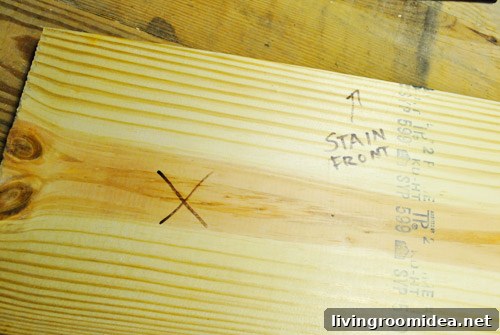
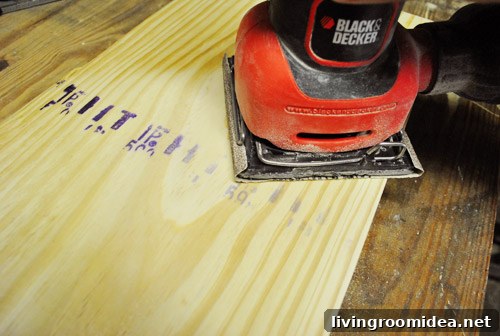
To avoid mistakes while staining, John labeled the backs of the boards—X for “don’t stain this side” and STAIN FRONT where the front edge would be visible. He also handled sanding: first with 60-grit to level any rough spots, then 150-grit for a smooth finish.
We avoided boards with stamps and ink marks on the faces, but if needed those marks could be sanded away. Once sanded, we moved the boards into the sealed sunroom for staining.
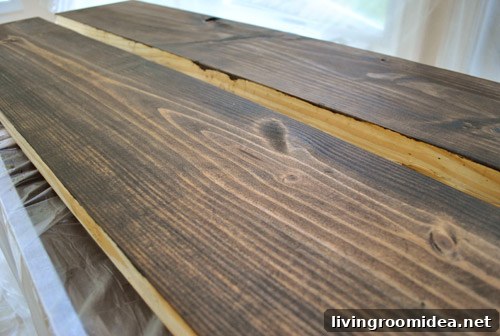
We used leftover dark walnut stain (opting not to mix in ebony), aiming for a deep, rich finish to complement our dining table rather than a weathered look. I brushed on stain, let it sit briefly, then wiped it off with a rag. After drying overnight the boards had a lovely, deep tone.
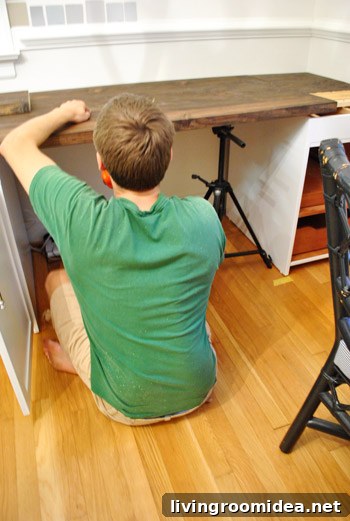
John initially planned to use a Kreg jig to join the boards into larger panels like he did for a console top, but the thicker framing lumber didn’t cooperate with that method—especially over cabinet seams. Instead he attached the boards directly to the base cabinets and added screws between boards where extra support was needed. That approach required a lot of contorting to drill from inside the cabinets while I steadied the boards from above.
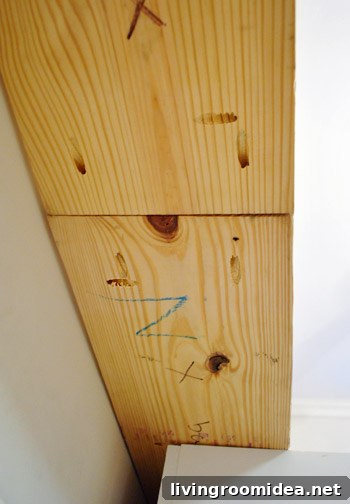
Where possible, John used pocket holes to reinforce joins. A camera tripod even doubled as a handy jack to hold boards level while he worked. The install wasn’t quick or easy—the evening took several hours and required patience to compensate for slightly warped boards—but once screwed down the top leveled out and felt solid.
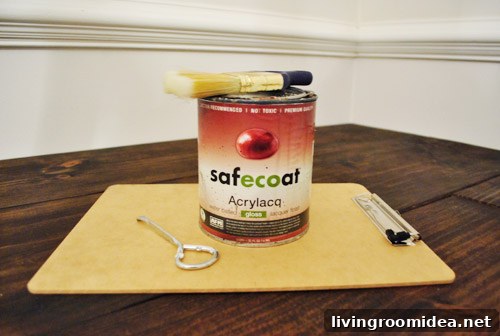
After the counter was installed we noticed tiny unstained slivers in seams where boards met, so I did some careful touch-ups with a small brush and blended them with a rag. Once dry I applied three thin coats of a low-VOC acrylic finish (Safecoat Acrylacq) to protect the surface and deepen the sheen to match our dining table.
After a 24-hour cure the desktop was ready. Empty it already looked substantial, and once we styled it with lamps and accessories it felt like a finished feature—even though the styling was intentionally temporary while we decide on art and other details.
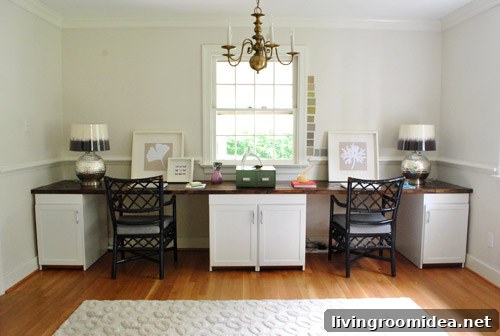
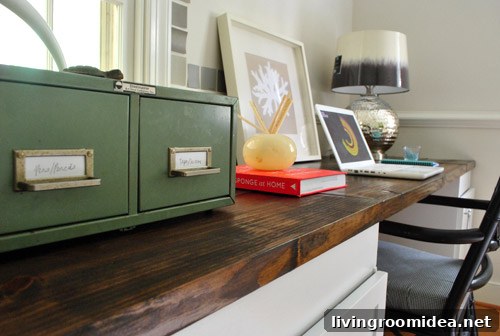
The chunky wood top pairs beautifully with the painted white cabinets and ties visually to our dining table. We repurposed a vintage green library box as an organizer for pens and small supplies so the file cabinets can store bulkier items like a shredder and boxes. Functionally, the seams in the desktop fall about four feet apart and the boards are thick enough that writing on pads and notebooks isn’t an issue—luckily the seams ended up positioned away from the primary work zones.
We still have a few finishing touches to complete—adding trim to give the cabinets a built-in look, and deciding whether to swap the hardware finish—but the budget so far looks great:
- Cabinets (Habitat For Humanity ReStore): $6.30
- Kilz Clean Start No-VOC Primer: $0 (leftover; approx. $20 if purchased)
- Electric sander & sandpaper: $0 (owned; approx. $25 if purchased)
- Benjamin Moore Advance paint (Decorators White, satin): $40
- Pre-primed & unprimed wood to build up cabinets: $51
- Framing lumber for counter: $27.30
- Stain & poly for top: $0 (owned; approx. $8 and $20 if purchased)
- TOTAL: $124.60
For roughly the price of a single 13′ laminate countertop from Ikea, we built a warm, substantial wood top that feels custom and ties the room together. There’s still more to do—paint the walls, add window treatments, update chairs, hang art, and sort lighting—but the desk is a big step forward. We’re delighted with how it turned out and how well the wood pairs with the white cabinets.
Have you installed a wood-topped desk, dresser, or counter? Did you run into similar challenges with board straightness, staining, or installation? We’d love to hear about your experience.