
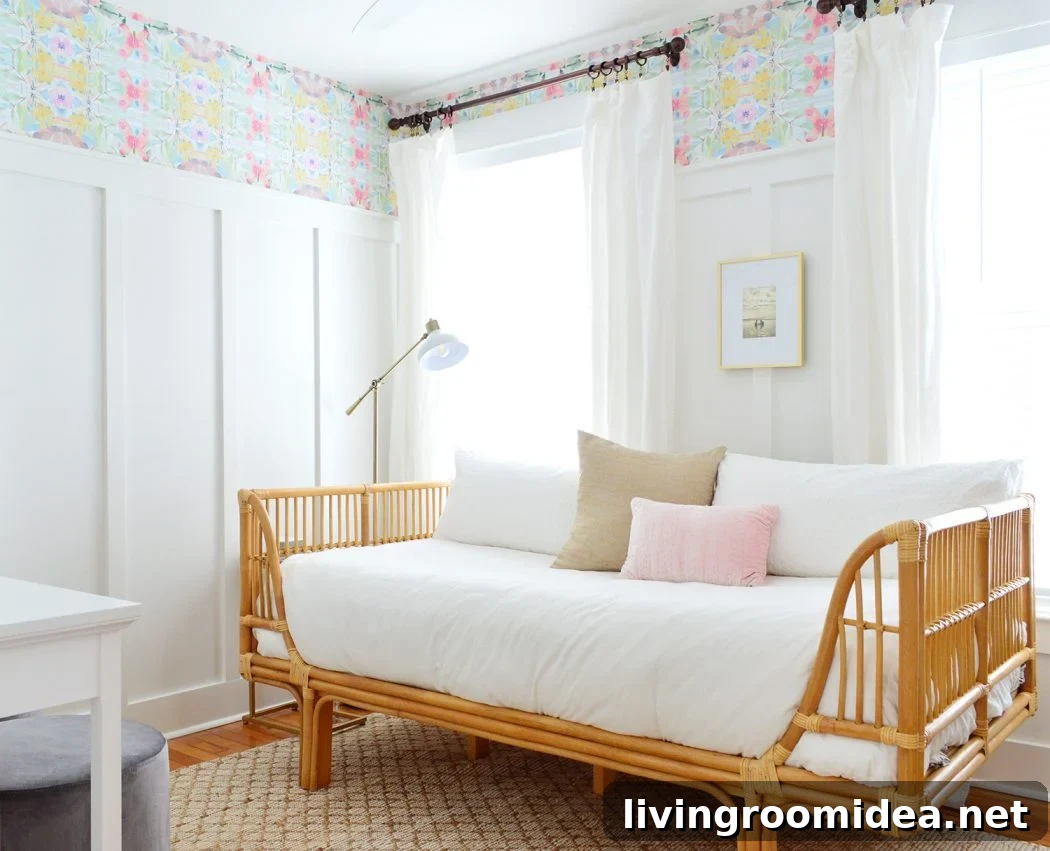
Board and batten is one of our favorite easy DIY projects. It’s beginner-friendly and makes a big impact in any room, entry, or hallway. This is the third house where we’ve installed this type of wainscoting, so below we share our approach that makes the project faster, simpler, and less expensive than traditional board and batten.
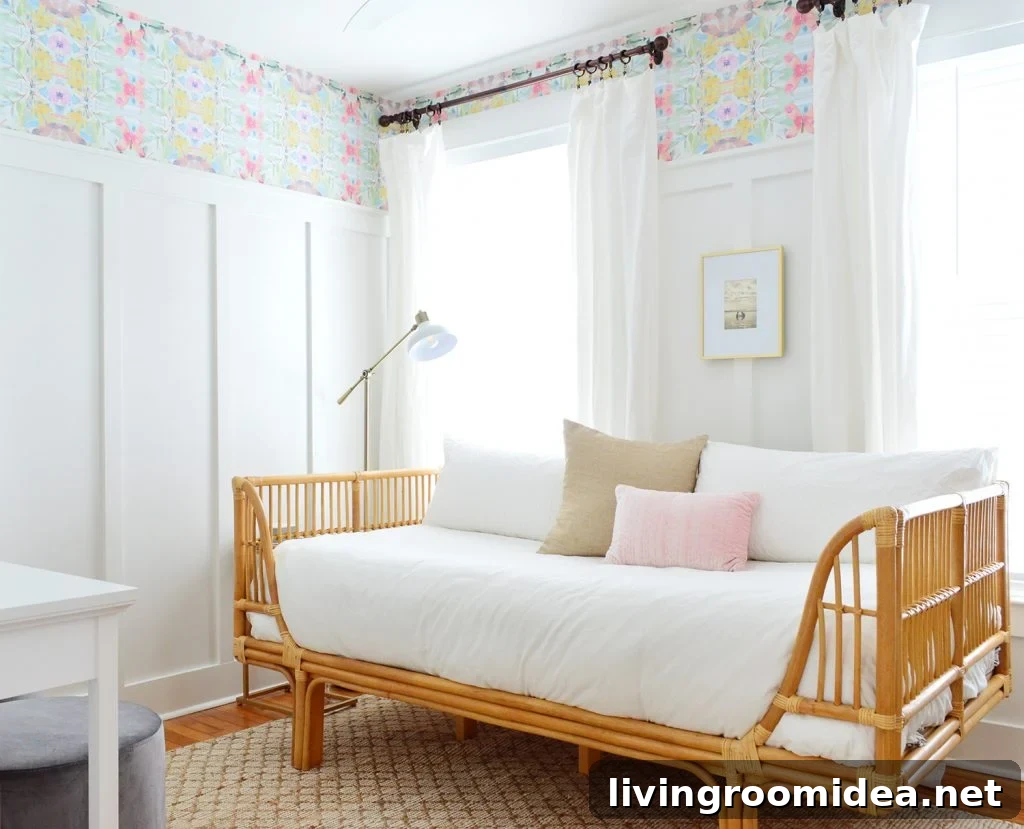
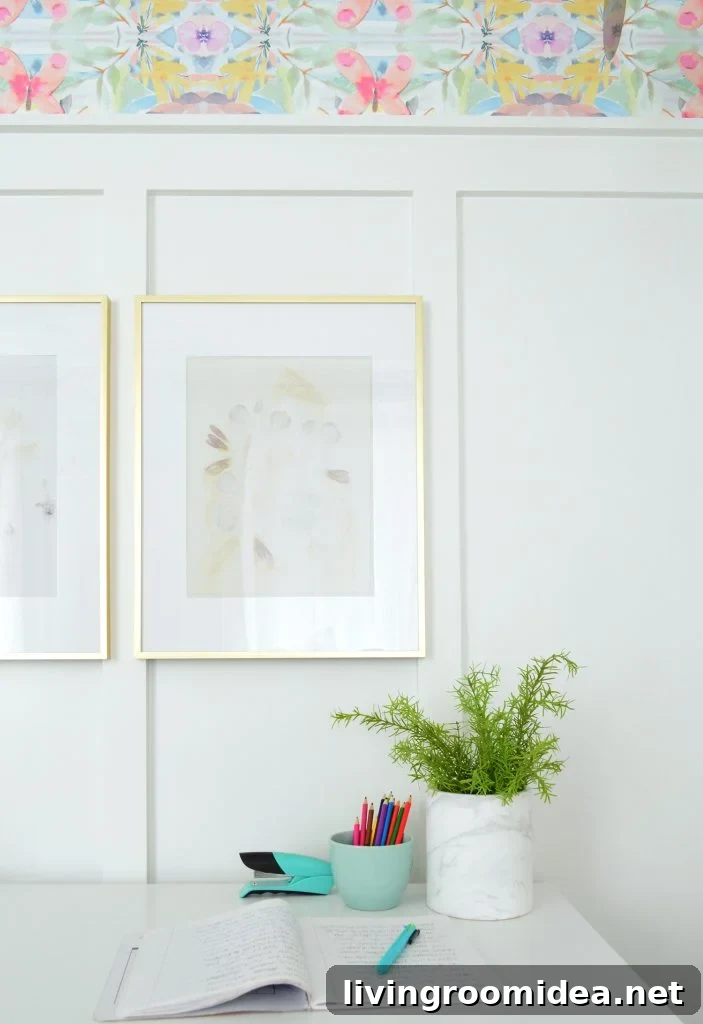
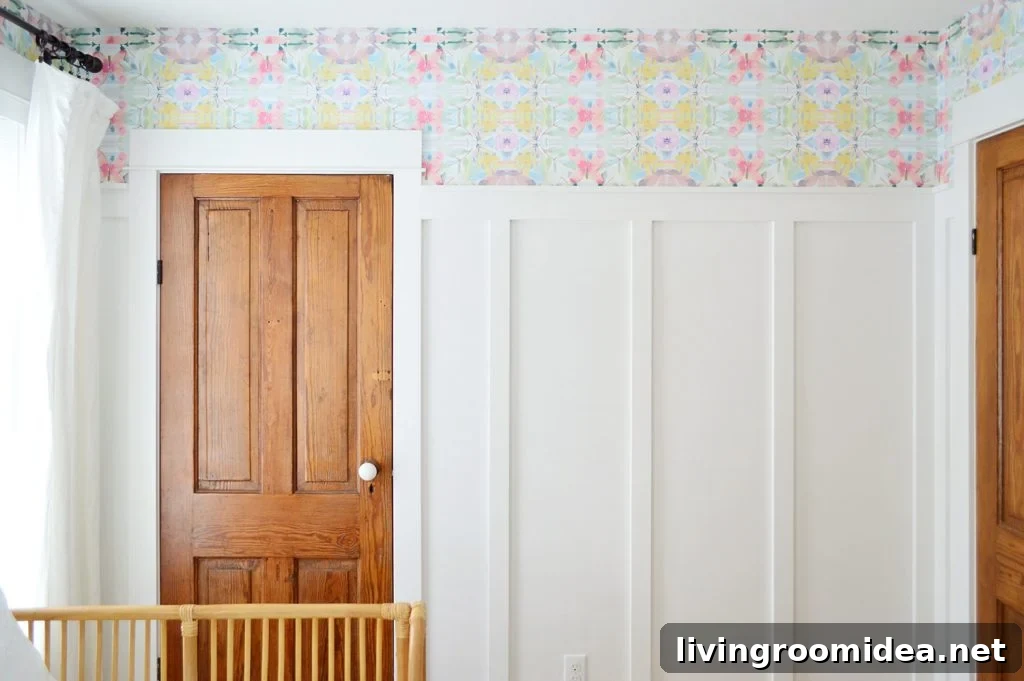
In this beach house we installed a taller board and batten and applied peel-and-stick wallpaper above it. The combination of classic molding and colorful wallpaper created the relaxed but polished guest bedroom we wanted.
Table of Contents
What is Board & Batten?
Board and batten began as an exterior siding technique and is now commonly used as interior paneling. Thin strips of molding, called battens, are placed over the seams between wider boards or directly over drywall. It can run floor-to-ceiling or partway up the wall, and battens can be arranged vertically, horizontally, or in boxed patterns. The style is versatile and can read traditional, cottage, modern, or transitional depending on materials and paint.
How Much Does Board & Batten Cost?
Costs vary by room size and materials. Our projects have ranged from roughly $50 to $650. A very simple version using existing baseboards and thin lattice battens cost about $57, while a more elaborate full-height box-style install with additional molding approached $650. The beach house project shown here was about $195. You can lower costs by keeping the treatment from running all the way up the wall or by using pre-primed, budget-friendly materials.
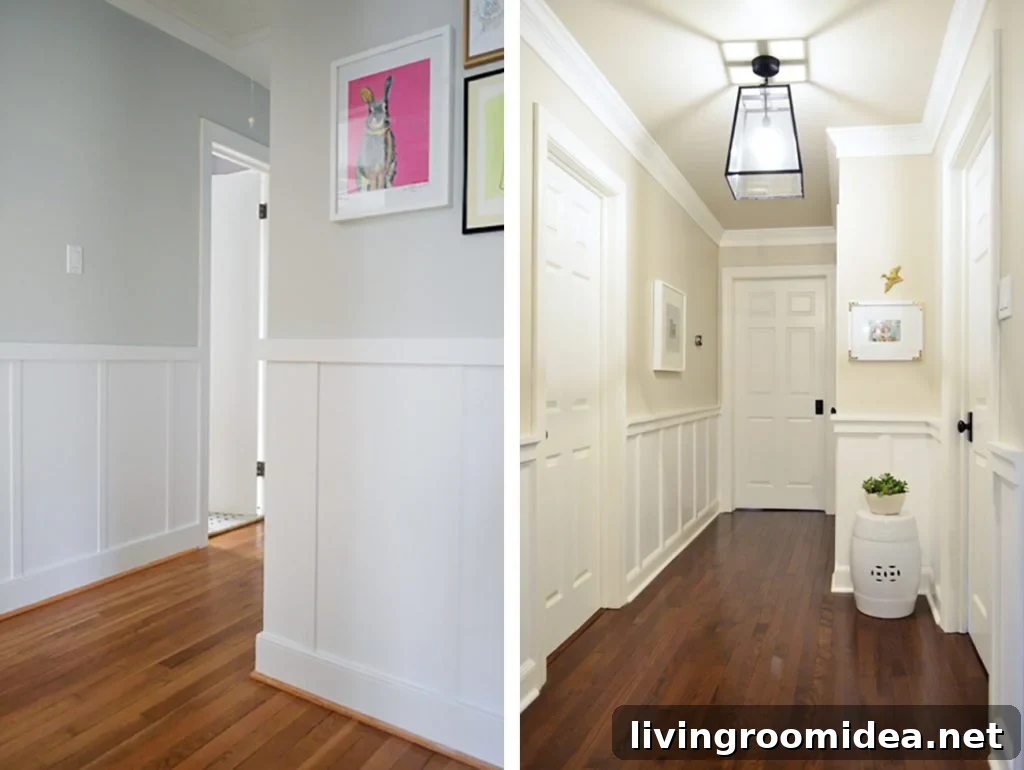
Board and batten can be expensive if you add lots of molding and detailed trim, but the pared-back method below keeps the look and cuts time and cost.
Tools & Materials
One cost-saving secret we use is skipping the full board layer and installing battens directly on drywall, then painting everything the same color. It saves time, materials, and money while achieving the same visual impact.
- 1″ x 4″ x 8′ primed boards for the top rail
- 1″ x 3″ x 8′ primed boards for vertical battens
- 1″ x 2″ x 8′ primed boards for the top lip
- Primer
- Paint (we used Sherwin-Williams Pure White in semi-gloss for trim)
- Spackle or wood filler
- Caulk and a caulk gun
- Nail gun
- Miter saw (or hand saw)
- 48″ level
- Tape measure
- Stud finder
- Spackle knife or painter’s tool
- High-grit sanding block
- Painter’s tape
- Pen or pencil
Installation took about half a day; drying times for caulk, spackle, primer, and paint usually pushed final completion to the next day. Plan for roughly six hours of work spread across two days.
Step 1: Plan Spacing
Decide on the height of your top rail and the spacing of your vertical battens. Mock up different options with painter’s tape to see what looks best in your room. For this project we chose 18″ spacing between battens and placed the top rail about 20″ down from the ceiling to minimize wallpaper needs and keep the proportion pleasing with doors and windows.
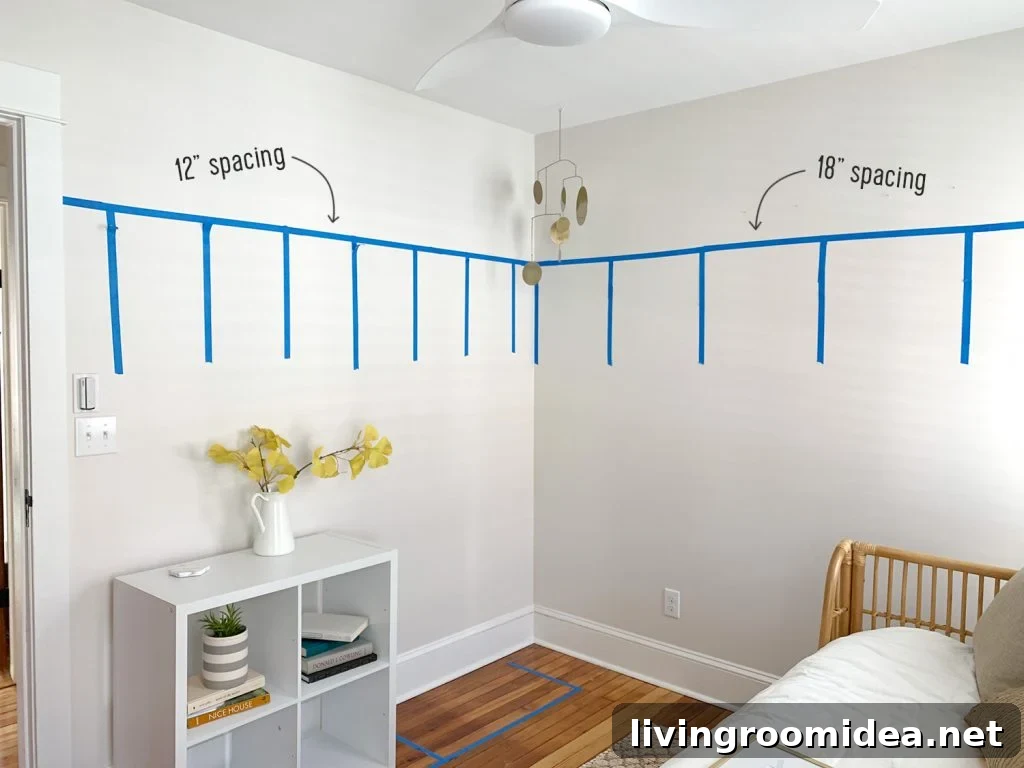
Step 2: Mark Studs
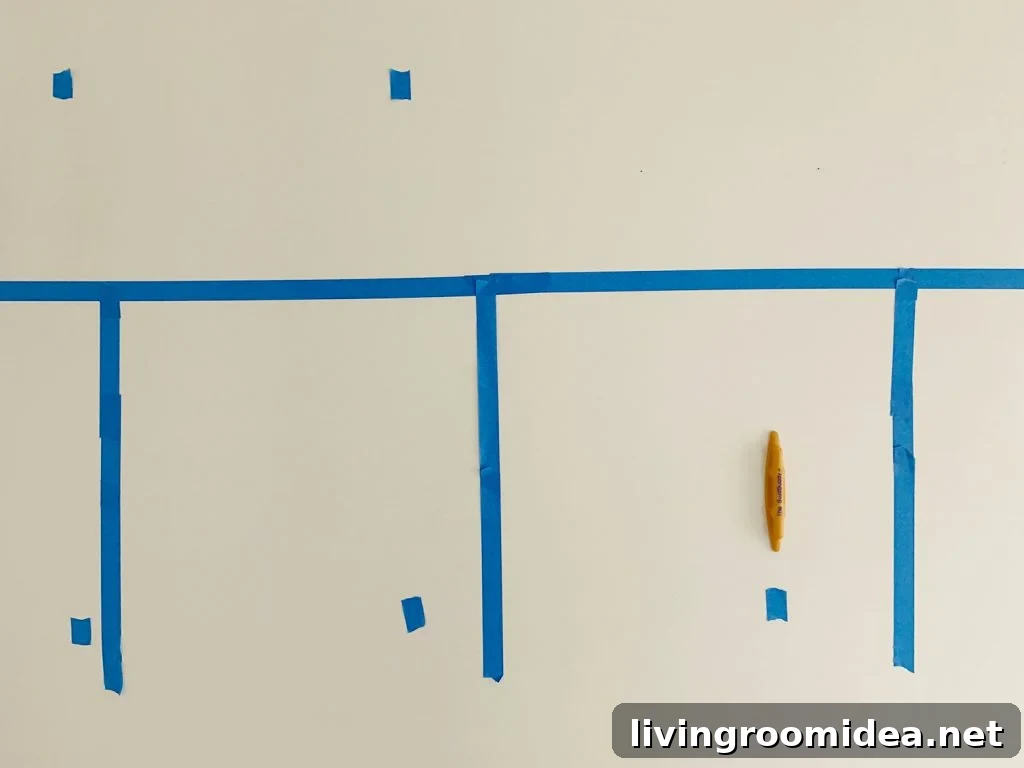
Use a stud finder to locate studs around the room and mark them with pencil or painter’s tape. Marking studs top and bottom helps ensure you can secure the top rail and battens where possible. This reduces reliance on adhesive and gives a sturdier finish.
Step 3: Prep Baseboards
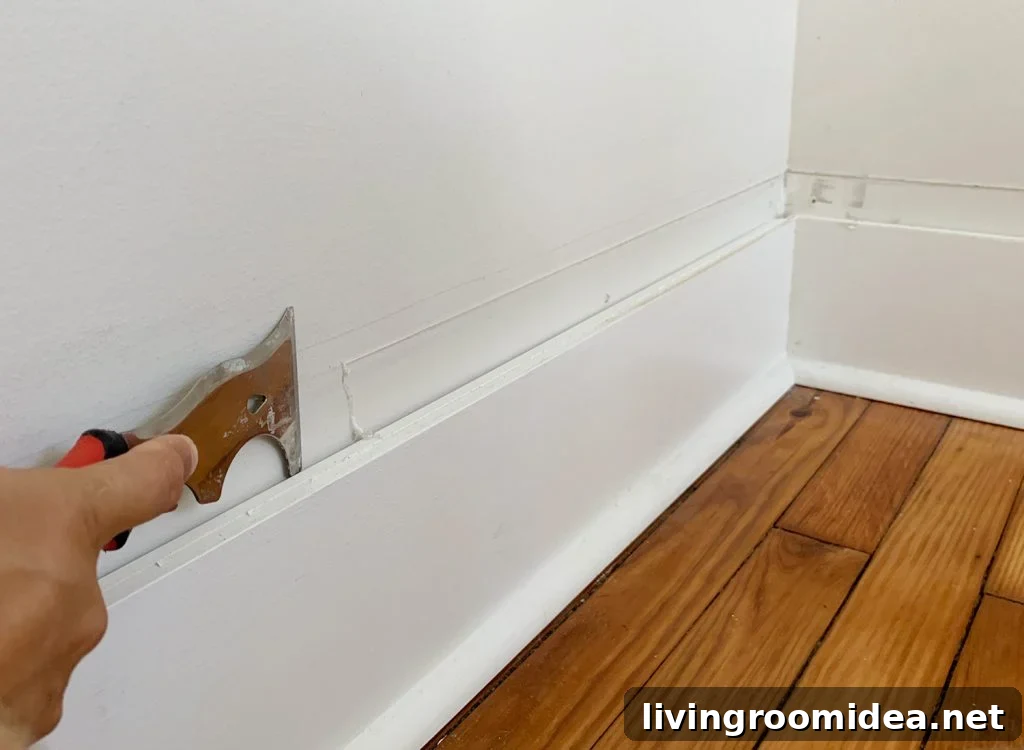
If your existing baseboard can act as the bottom rail, keep it and remove any thin decorative trim so battens sit flush. Score caulk lines before prying trim off to minimize drywall damage. After removal you may need to scrape caulk and patch nail holes so the wall is smooth for painting.
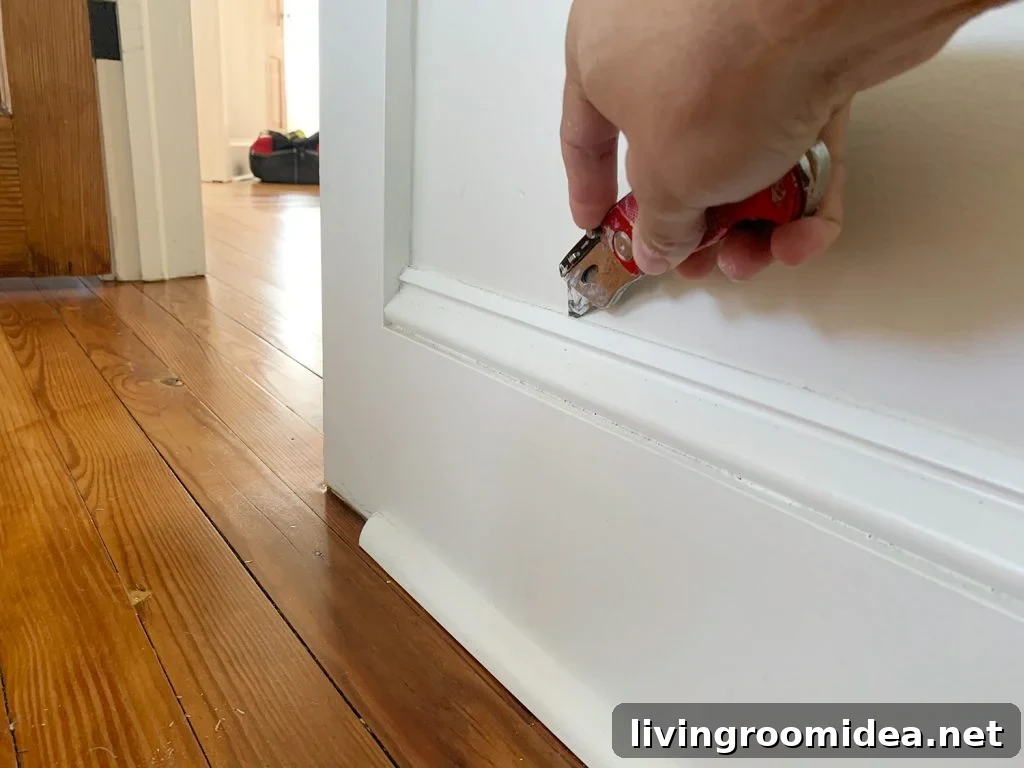
If you don’t have a suitable baseboard, consider installing a 1 x 6″ board to create a solid bottom edge for the battens. Thicker baseboards paired with thicker battens give a more substantial appearance.
Step 4: Install Top Rail
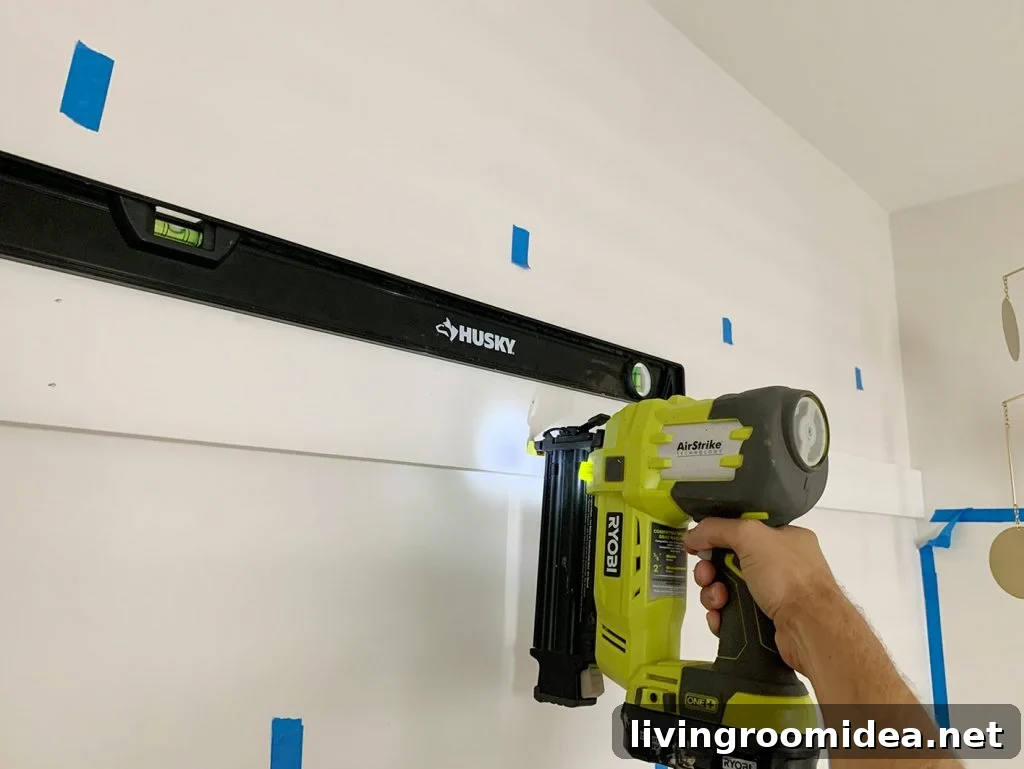
Install the top rail (1 x 4) horizontally at your chosen height. Use your stud marks and a long level to keep the rail aligned. In older homes, consider matching the slope of the ceiling so the rail reads visually level to the eye. Cut boards to length with a miter saw or have the store make the cuts for you. Nail the rail into studs where possible for a secure mount.
Step 5: Install Vertical Battens
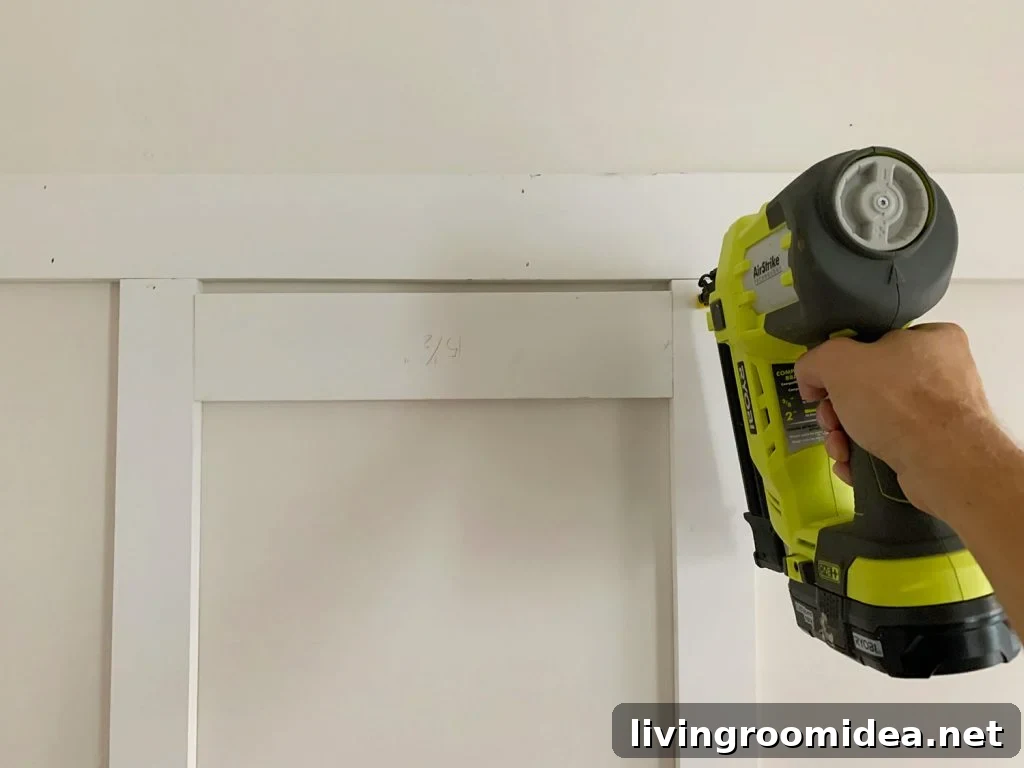
Measure and cut each vertical batten, especially on walls that aren’t perfectly straight. A simple scrap-wood spacer sized to your chosen center-to-center spacing speeds installation and ensures consistency. Nail battens into studs where possible; if not, several nails plus caulked seams and paint usually hold them well. Avoid hanging heavy items on battens unless anchored to a stud.
Step 6: Mind The Corners
Spacing near corners, doors, or windows may need adjustment. We like to center a batten in the room and work outward, accepting that corner pieces may be trimmed. For the cleanest corner appearance, allow two full battens to meet without overlapping so neither looks visually thinner. That often means floating the final battens slightly away from the corner.
Step 7: Add Top Ledge
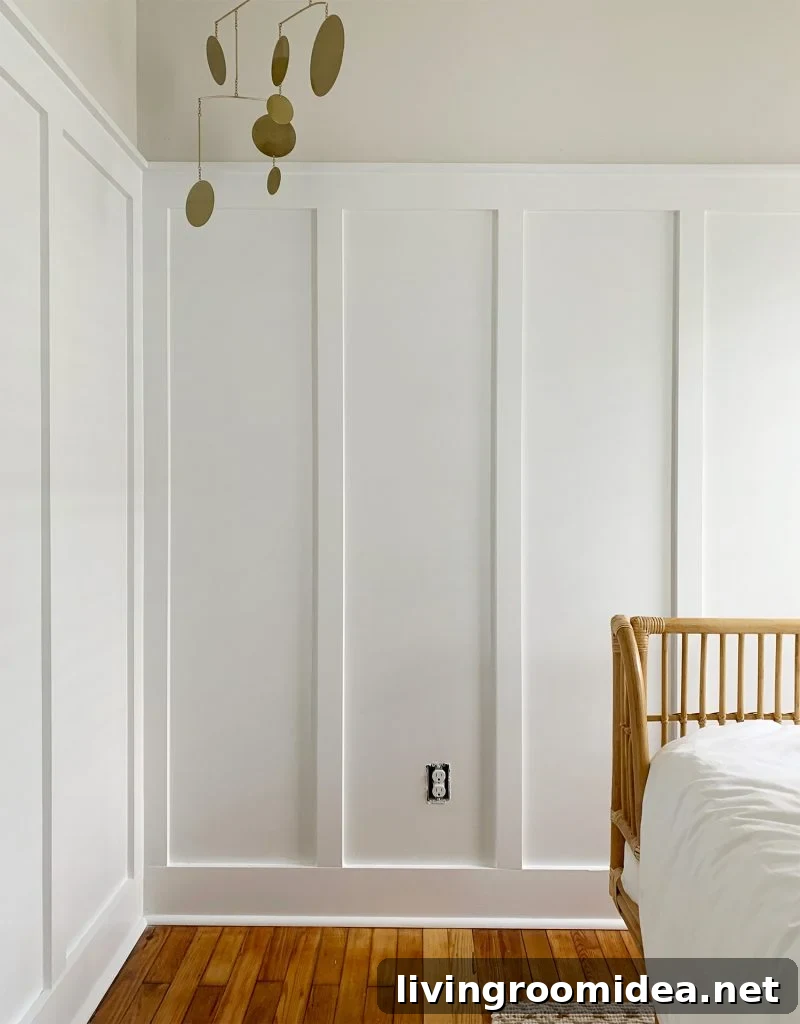
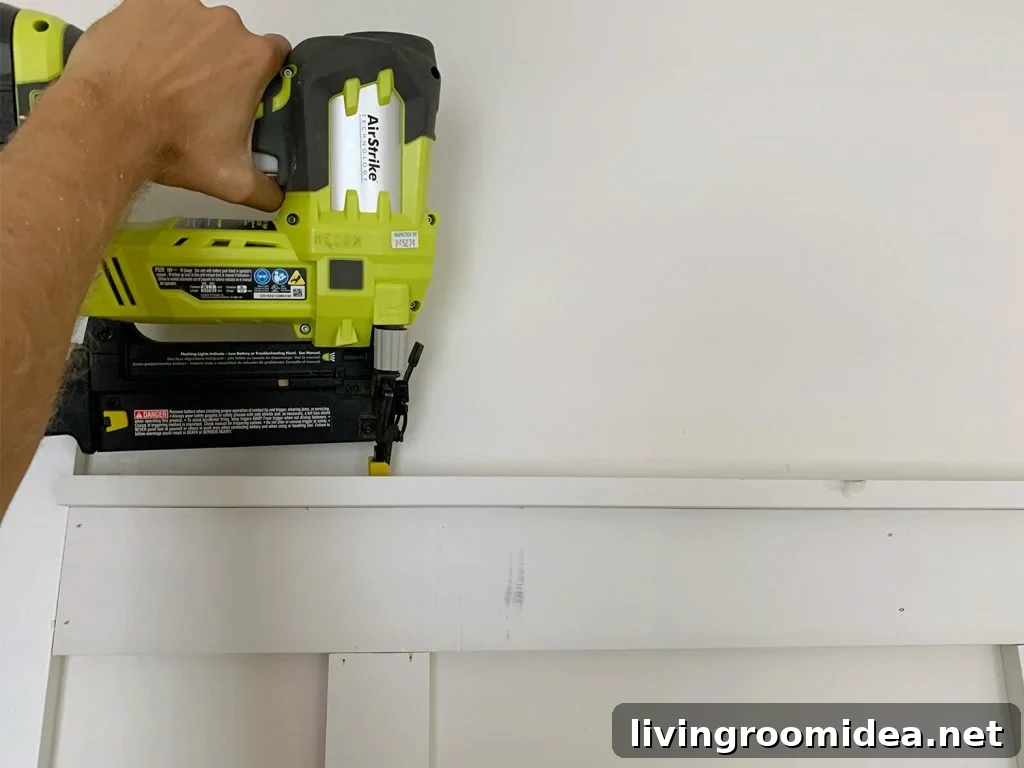
A top ledge gives the treatment a finished, substantial look and provides a place to lean light artwork. We add a 1 x 2″ ledge nailed along the top rail. If you plan to place heavier items on the ledge, consider using screws or additional fasteners for strength.
Step 8: Spackle & Sand Nail Holes
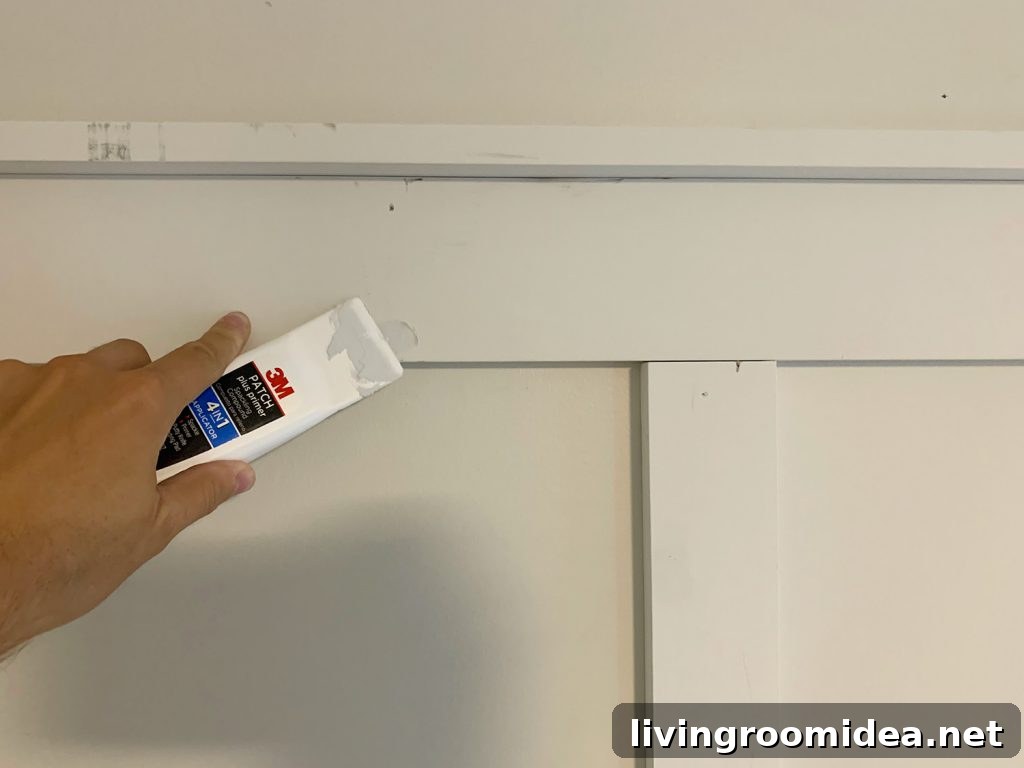
Fill nail holes and small imperfections with spackle or wood filler, then sand smooth. A compact spackle tool speeds the work, but a spatula works fine. Wipe dust away with a microfiber cloth or paper towel before priming and painting.
Step 9: Caulk Seams
Caulk all seams where boards meet the wall or each other to hide gaps and create a seamless look. Use a small bead and smooth it with a finger dipped in warm water for a clean finish. Working one box at a time and smoothing each seam before the caulk skins over is efficient and tidy.
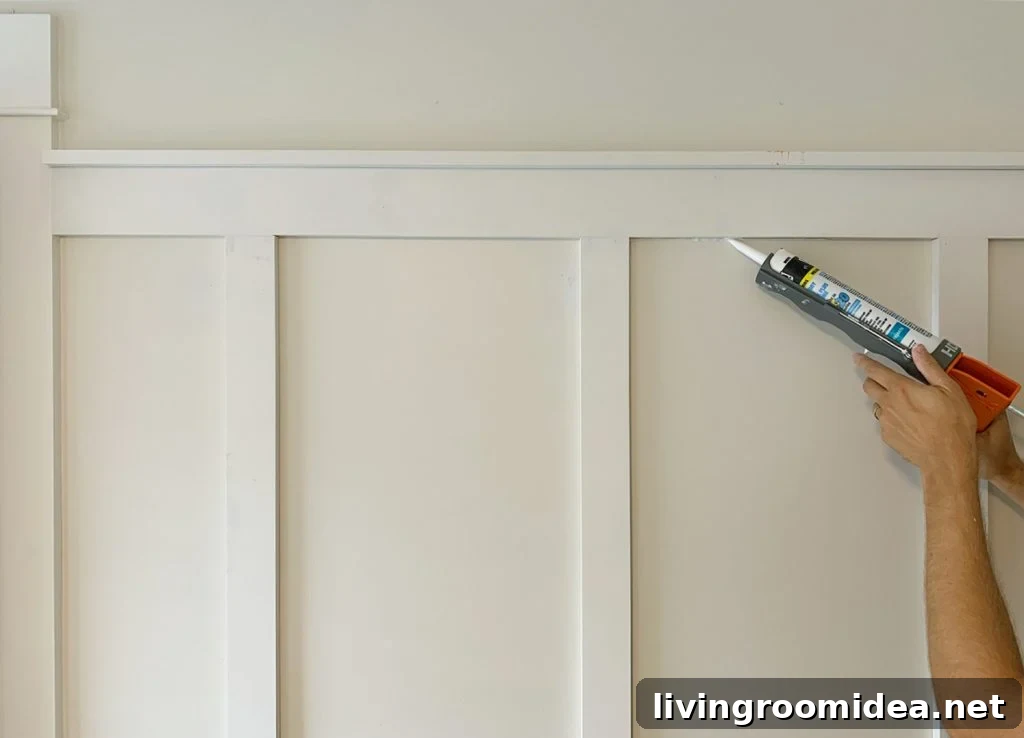
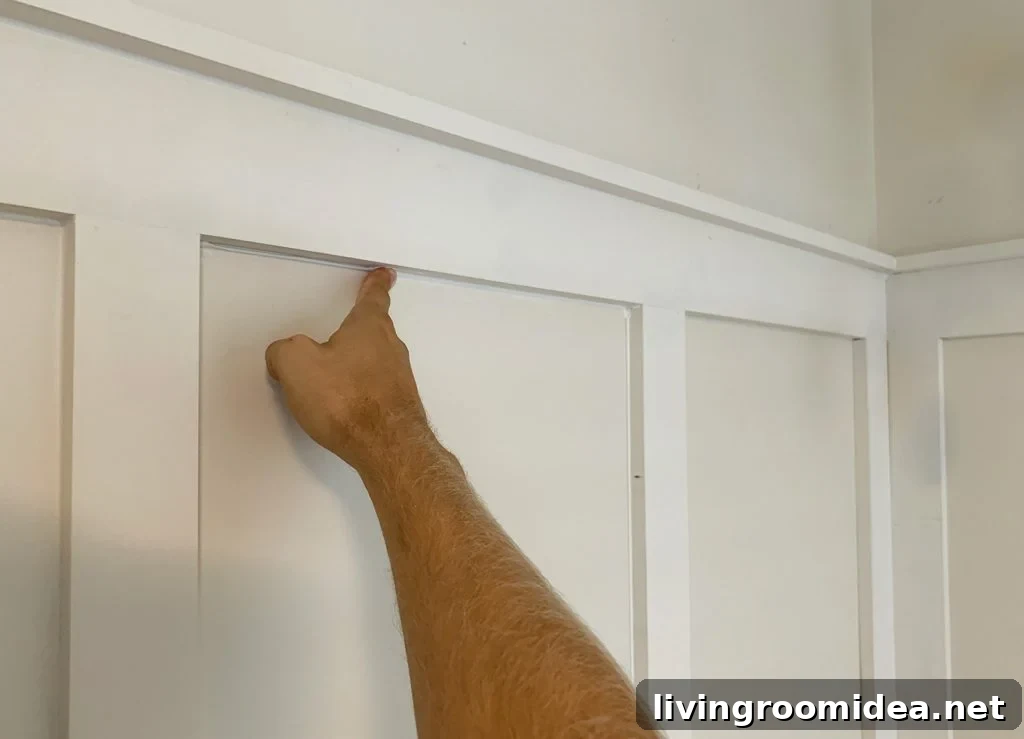
Keep the caulk tip small so you don’t over-apply; you can always enlarge the opening if needed. Smooth the bead with a wet finger for the best results.
Step 10: Prime & Paint
Prime any patched or caulked areas to prevent flashing—changes in sheen that can show after painting. One coat of primer over repairs helps ensure an even final finish. After priming, apply your trim paint. We used a semi-gloss white for a bright, coastal trim look, but this treatment works in many colors and sheens for different styles.
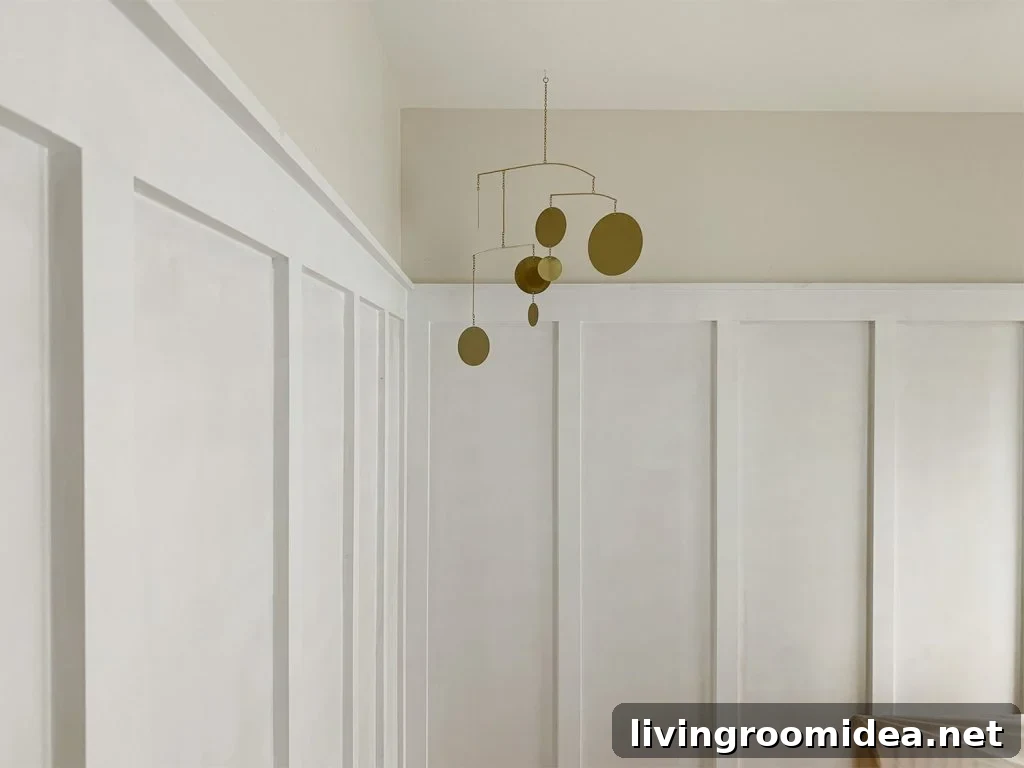
The Finished Board & Batten
After finishing the molding we added wallpaper above the top rail for a playful, finished bedroom. Peel-and-stick wallpaper is straightforward to install and pairs well with painted molding for a layered look.
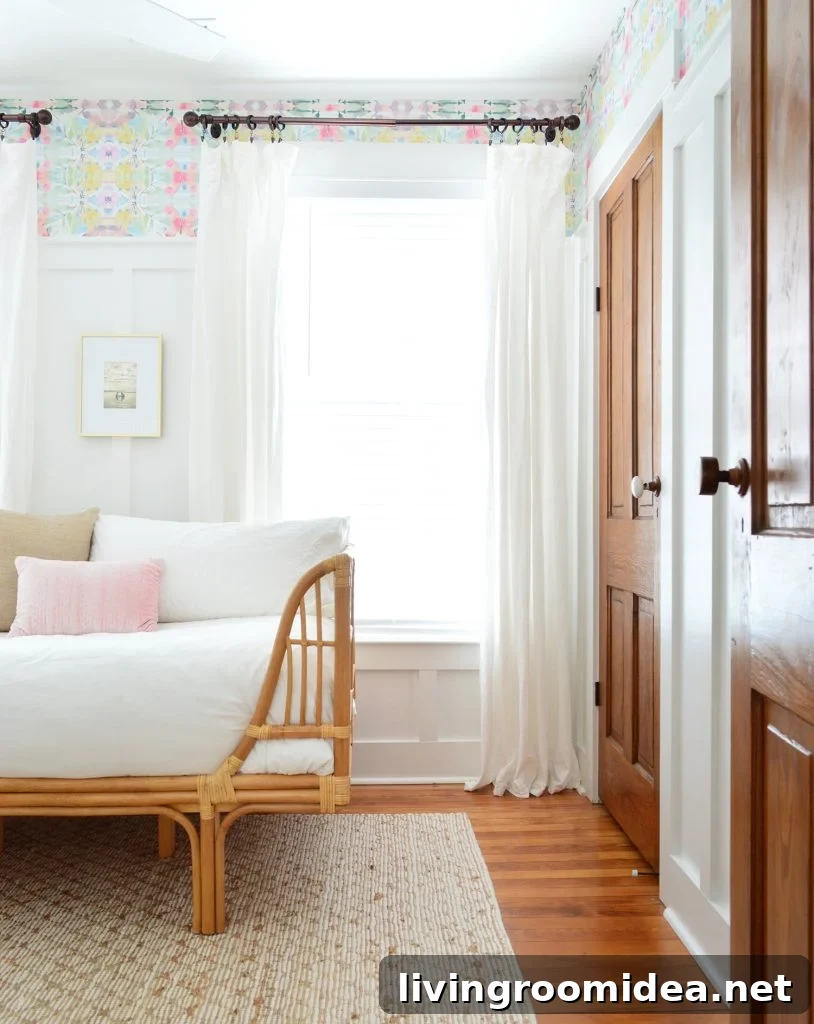
We’ll share more photos and a wallpaper tutorial separately. In the meantime, here are answers to common questions and other wall-treatment ideas below.
Below are frequently asked questions and quick tips to help you decide on spacing, materials, and placement.
Board & Batten FAQs
Is board & batten outdated?
No. Board and batten is timeless and adaptable. Choose crisp white or an on-trend color to keep the look fresh.
What kind of wood can you use for board & batten?
Pre-primed pine, MDF, or lattice strips work well. MDF gives a smooth look but avoid it in damp locations. For exterior use choose pressure-treated wood or rot-resistant species like cedar.
Where does board & batten look best?
It’s popular in hallways, entryways, bedrooms, and dining rooms. Aim to have at least three panels across a wall so the pattern reads intentional rather than cramped.
How high should board & batten be?
Usually between half and two-thirds up the wall looks best, though full-height is an option. Use painter’s tape to mock heights and favor slightly higher placement if you want the board to read substantial.
How far apart should battens be?
Spacing between 12″ and 20″ center-to-center is common. Larger rooms can accommodate wider spacing. Test with painter’s tape and adjust near corners to avoid tiny cut pieces.
Can you install board & batten on textured walls?
Yes, but you’ll likely need to add thin, smooth boards over the drywall before attaching battens. Thin MDF screwed into studs provides a smooth substrate, but avoid MDF in moist areas.
More DIY Wall Treatments
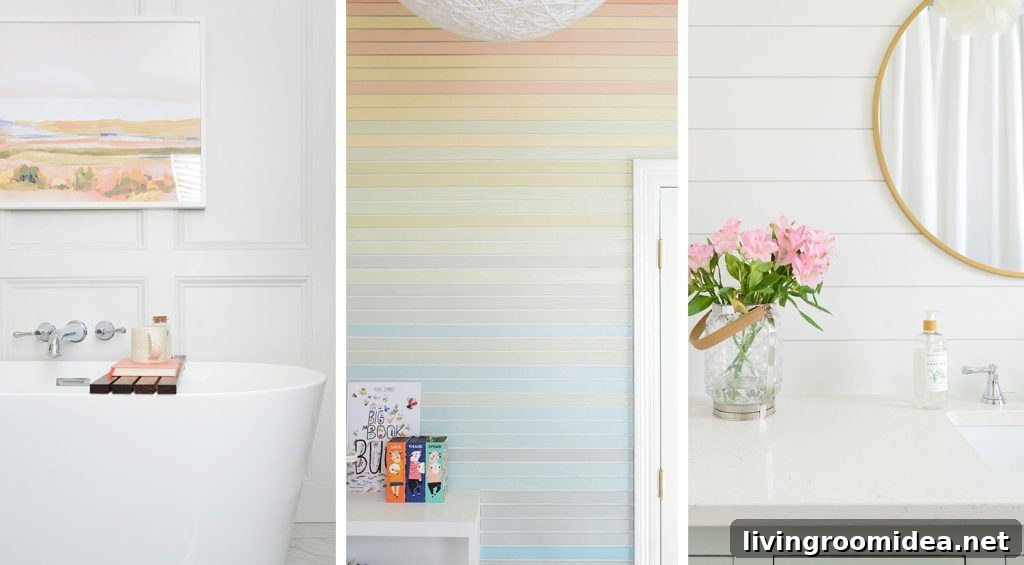
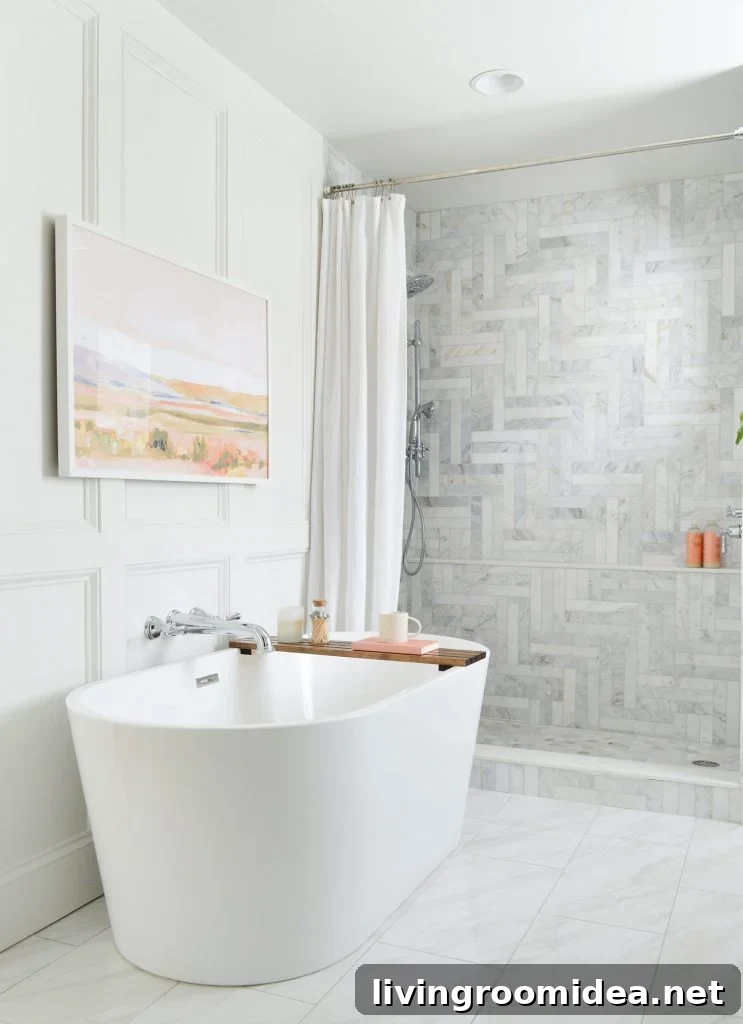
If you want more ideas for adding architectural interest to walls, consider simpler lattice versions, layered moldings for a classic look, boxed panels for bathrooms, or painted planked treatments. These variations let you tailor the style and cost to your space and skills.
*This post contains affiliate links*