
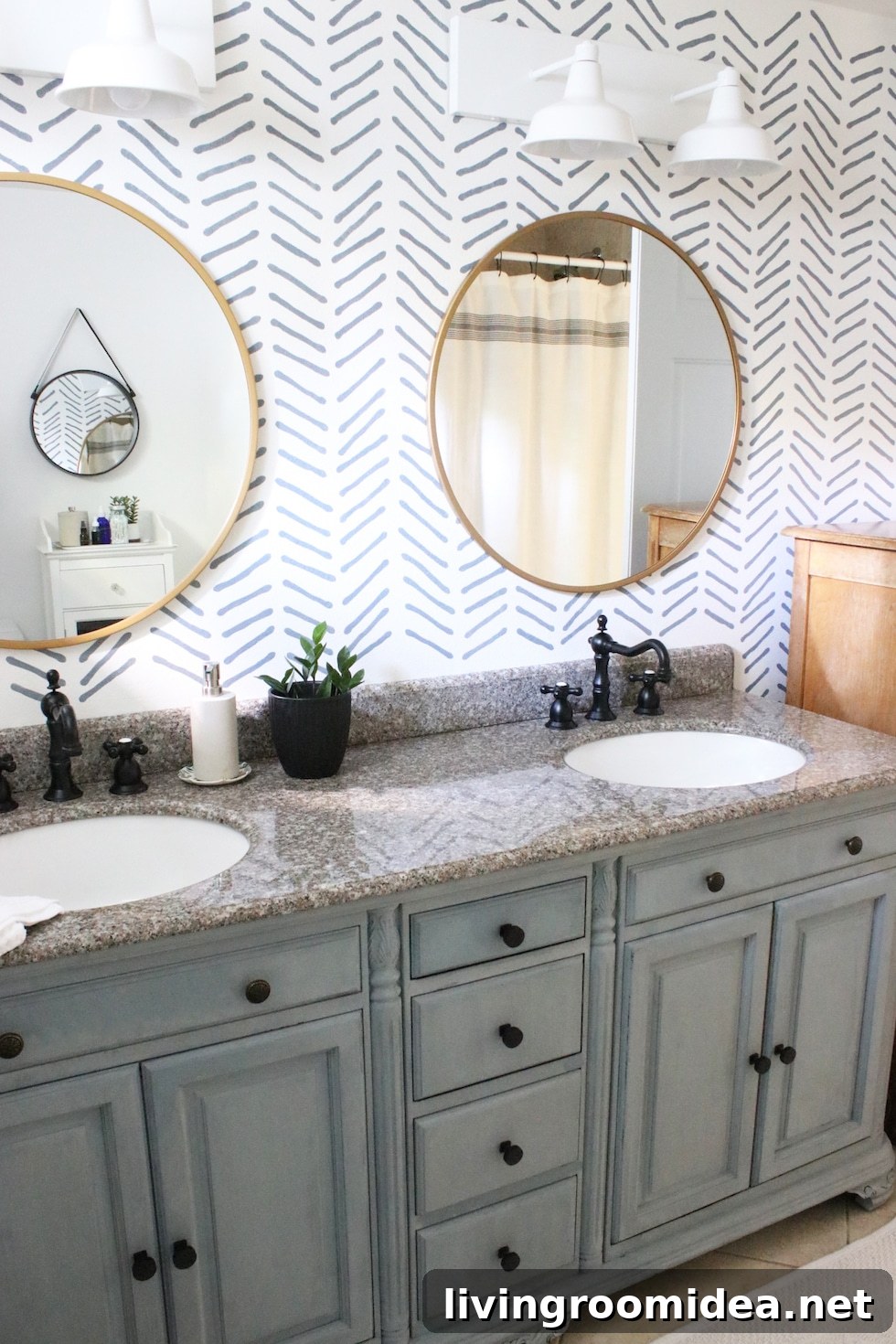
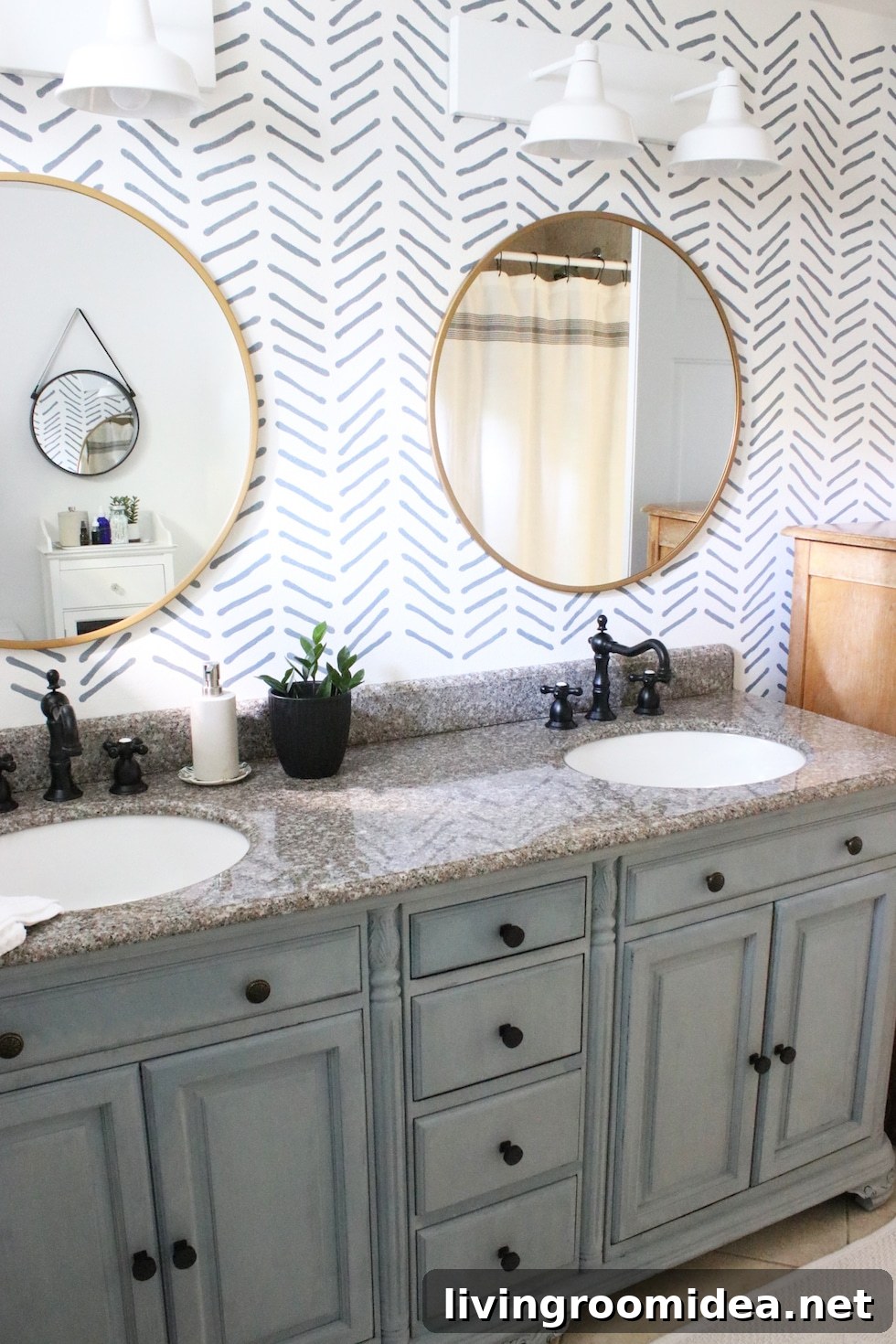
I appreciate all the kind comments about the recent simple makeovers around our home. Today I’m following up on the bathroom reveal to answer several specific questions readers asked.
If you missed the full reveal with all the makeover details, you can see that here.
Many readers asked about the vanity and the stencil, so I’ll share more details on those two elements.
First, here is the bathroom before we began.
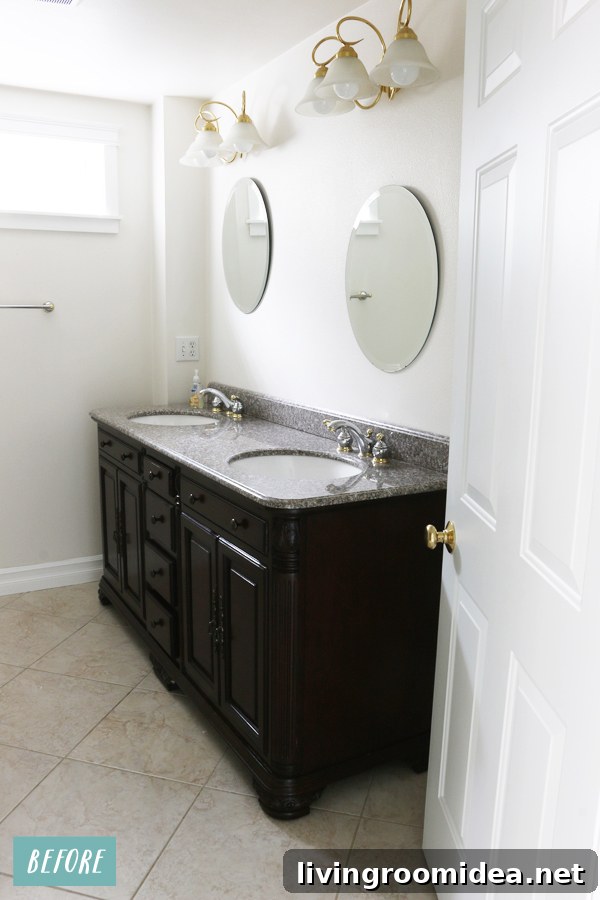
Painted vanity details
We painted the vanity with Miss Mustard Seed’s Milk Paint in the color Bergere. It’s not chalk paint, but it produced a cottage, slightly antique furniture look that suited the piece. Our preparation was minimal: we cleaned the cabinet, taped off the countertop, removed the hardware, and applied several coats of milk paint.
The vanity had a glossy finish and, ideally, a light sanding would have helped adhesion and a smoother result, but sanding would have been tedious because of the many ornate details. Instead we mixed in Miss Mustard Seed’s bonding agent to help the paint adhere. In a different project, Courtney used the same milk paint in Marzipan on a wood armoire without sanding or bonding agent and it adhered well, so results can depend on the original finish.
There are helpful manufacturer resources covering surface preparation, mixing, and finish options. We haven’t applied a protective finishing coat yet, but plan to add one soon to preserve the paint finish.
Stencil details
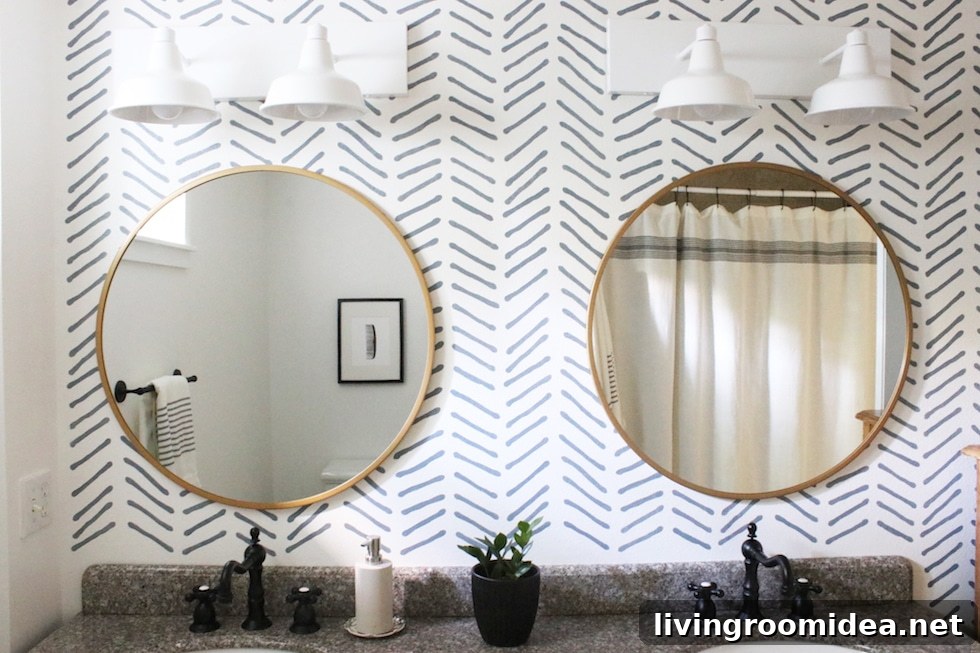
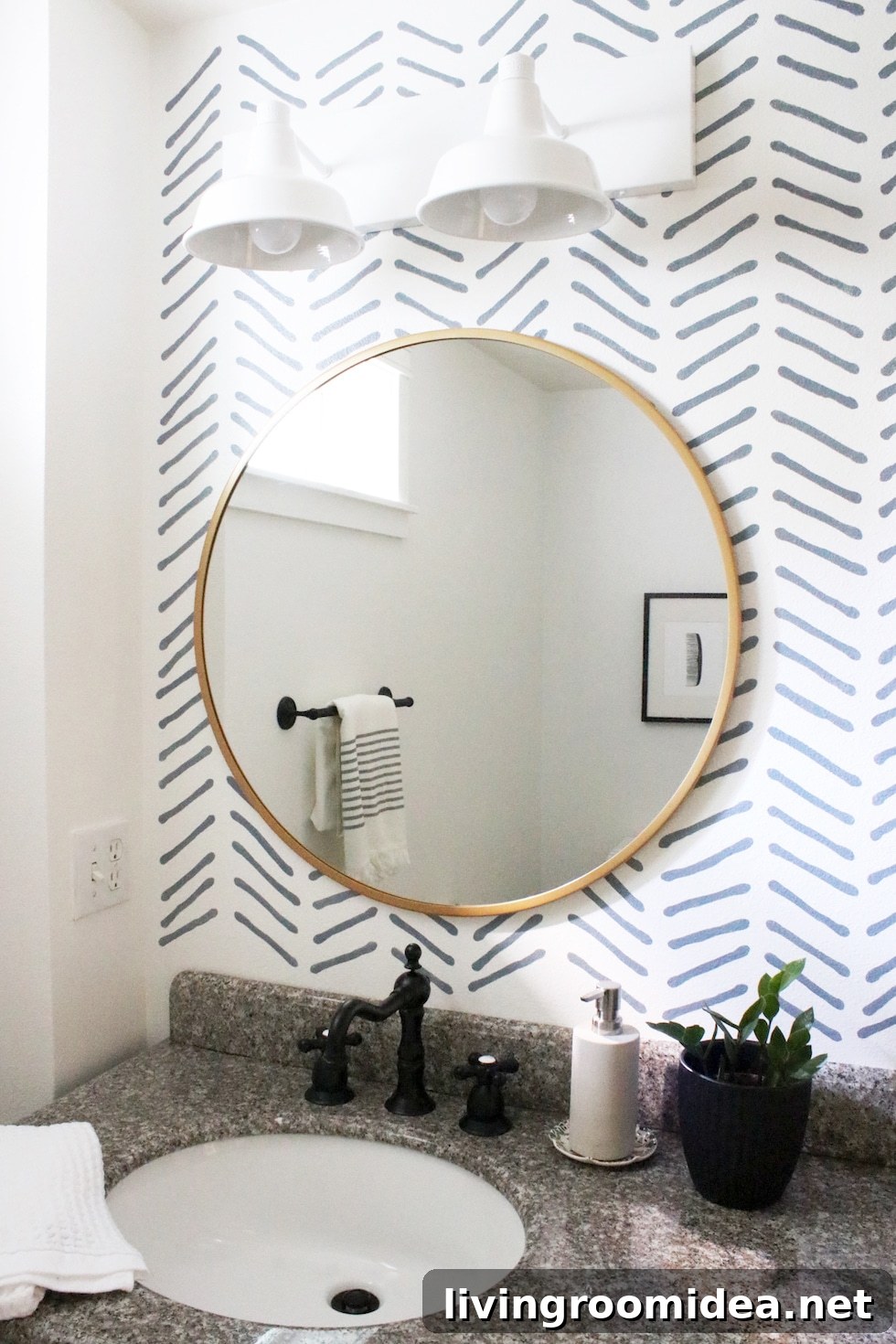
For the walls we used Benjamin Moore’s Simply White across most of the upstairs, then added a patterned accent using a stencil painted in Glidden’s Night Sky Grey. The stencil pattern gave a hand-drawn, slightly imperfect look that felt relaxed and forgiving—exactly what we wanted. We used stencil brushes for application.
My husband handled the stenciling. He had never used a stencil before and found it quite straightforward; the stencil included clear instructions which helped. Because the pattern intentionally includes imperfections, it was easy to align and repeat to create a continuous design. For tight spots such as around outlets, he hand-painted a few small sections rather than trying to force the stencil into awkward corners.
We stenciled only the focal wall to give the feel of wallpaper without the cost or hassle of full-wall papering. The result adds depth and interest without requiring perfectly smooth walls, and it’s easy to paint over later if we want a different look.
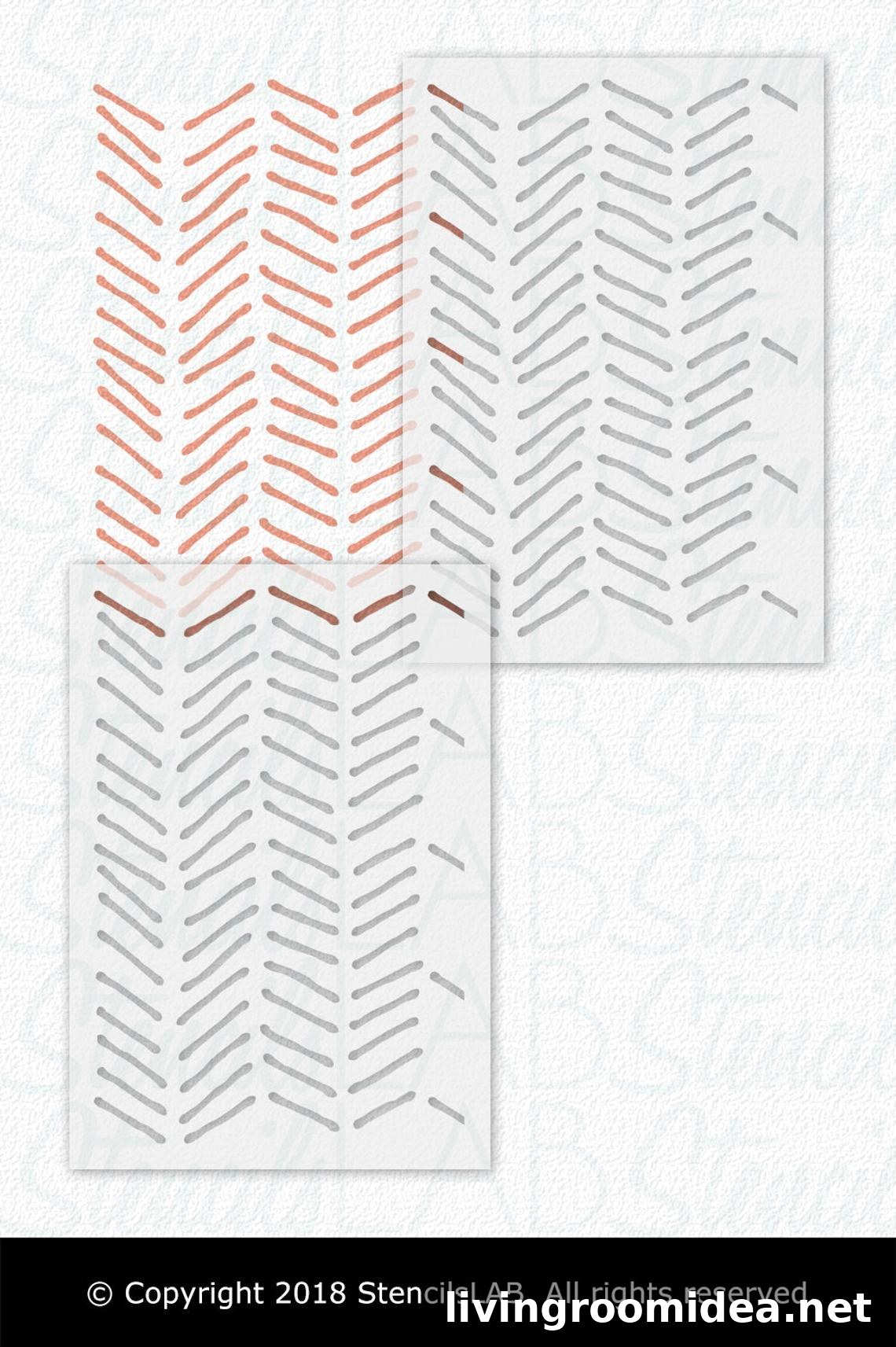
The stencil approach gave the appearance of wallpaper at a fraction of the cost and with more flexibility. If you like the idea, you could stencil additional walls for a bolder effect, or keep it to one wall as we did for a focal point.
I gathered a selection of stencils and wall decals that work well for similar projects.
If you missed the full bathroom makeover reveal with all the details, click HERE.