
We’re back with our weekly basement update. Since we’re inching closer to the best word ever — finished — this week’s project is quick and practical. It ties into that built-in cabinet to the right of the IKEA workstation that we painted white last week. Remember it was bare and we said we had a storage solution lined up? Here it is.
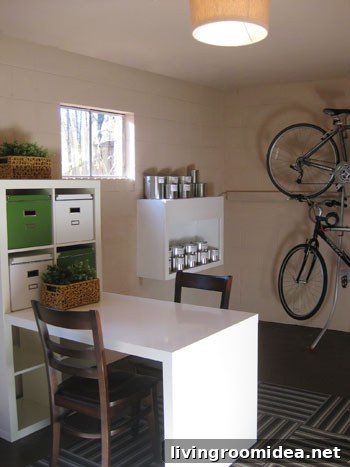
Yes, those are matching paint cans. Call us nerds — we’ll own it. We’d been meaning to move paint from the garage to the basement for a while. The basement stays more temperate thanks to its underground location, which helps paints last longer: cooler in summer, warmer in winter. Paint can freeze, dry out, or otherwise degrade when exposed to extremes, so a lesser-used basement or garage is a smarter long-term storage choice. We used to keep cans inside the house until we learned paint can off-gas and affect indoor air quality, so a low-traffic space is preferable.
We could have dragged our old mismatched, crusted cans down and called it a day, but we love the fresh, organized look of our updated basement and wanted storage to match. New empty cans give a cohesive, tidy feel, and they seal better than battered originals — helping preserve pricey paint rather than letting it dry out and become a wasted gallon. For a few dollars each, fresh cans felt like good insurance to keep those $25+ purchases usable.
We found empty gallon and quart cans at True Value that were ideal for unifying the open shelf and keeping paint fresh for years. (Full disclosure: True Value invited us to their DIY Blog Squad and gave us a generous gift card, which we appreciated.)

Transferring paint into uniform cans also gave us a chance to sort through our collection and purge colors we no longer need — the old living-room green, the front-door yellow — which we like to donate when possible. Don’t toss paint in regular trash: take it to a recycling center or donate usable cans to a local reuse program.
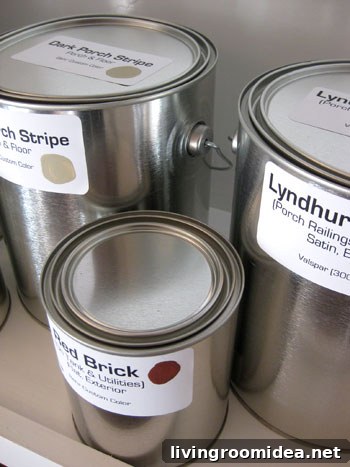
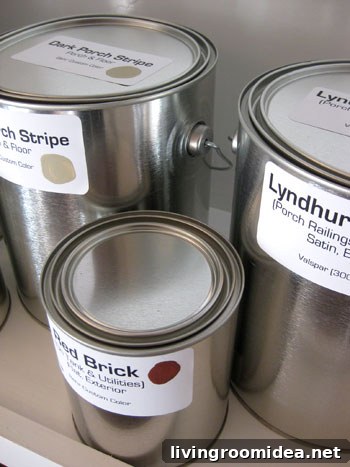
Before buying new cans we counted how many gallons and quarts we’d need and grabbed a few extras for future use. Then John’s inner accountant suggested printable labels from an office store so we could transfer name, brand, finish, and tint formula to each new can. It felt a bit obsessive, but printing labels took only about 15 minutes and the organized result makes us smile. Even John got proud of his paint-labeling skills.
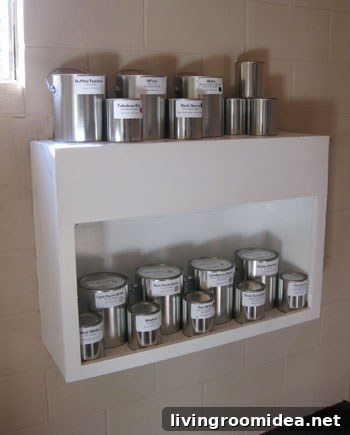
John even followed the pros’ trick and left a small thumbprint of each color on its label — a handy visual cue to avoid mix-ups when matching touch-up paint. The result is attractive open storage that suits the rest of our basement while protecting paint with fresh seals free of dried buildup around the can lip. A little paint maintenance goes a long way: you don’t want to reach for a tiny touch-up only to find the whole can ruined and forced to buy new paint.
What’s next in the basement? We still need to add privacy treatments to a few windows and build a DIY screen to conceal an unsightly water heater. Look for those details next week in the final chapter of our basement makeover. After that, we’re moving on to a big bathroom renovation that has us poring over tile options and even dreaming about layouts.
Are you tackling a major project before the holidays? Maybe you want the house guest-ready, or you’ll be traveling so timing a renovation works out better. We’d love to hear what’s on your list.
Update: A reader suggested a handy accessory — a latch-on pour spout that attaches to a gallon or quart lip. It helps pour without spilling paint around the rim, keeping cans cleaner and sealing tightly over time. We’ll pick one up for our new cans.