
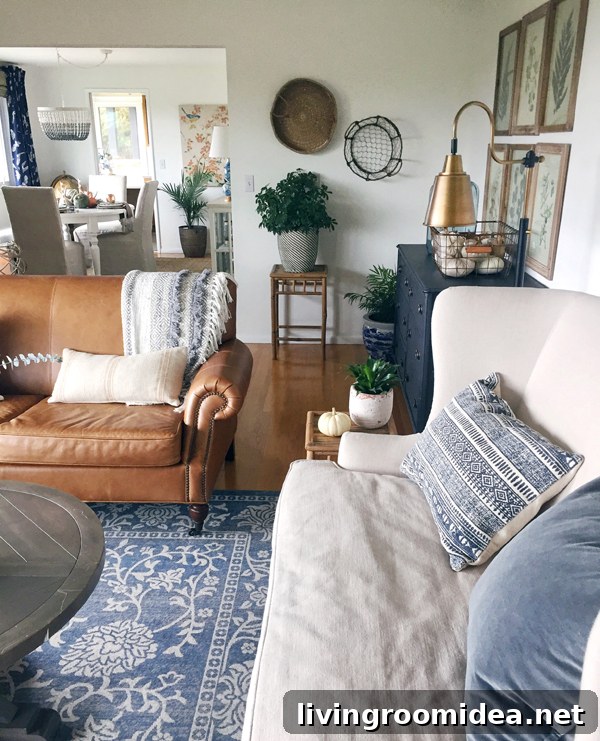
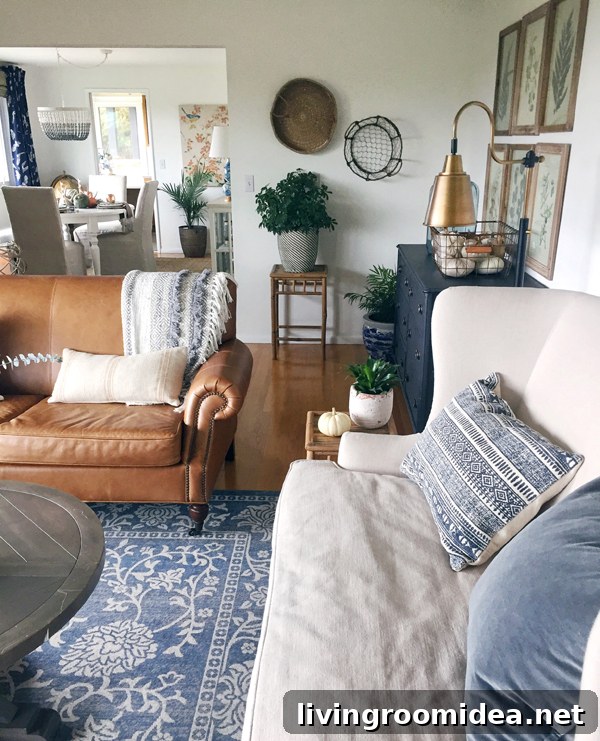
Rug source and similar rugs / Leather Couch / Linen Settee
Have you ever wondered what to hang on your walls and where to place it? A few readers recently asked about wall decorating, so I gathered my favorite guidelines into one clear, practical list to help you find the right balance for your home.
Reader question:
Hi! I love your blog and your design style! I have a question about how you decide to decorate the walls in your home. How do you decide which walls need something and which ones to leave blank? Your rooms seem to have the perfect balance. Is there a trick?
Thanks! – Tricia
Answer:
How much art feels overwhelming, what to hang where, and how much blank wall to leave are all matters of personal taste. Some people prefer very minimal walls, while others like a fuller, layered look. Every home has different needs based on its layout, furnishings, and natural light. Below are general guidelines I use to create balanced, thoughtful walls—adapt them to suit your style and space.
1. Vary the number of items on each wall. Avoid repeating the same arrangement on every wall. If one wall displays a grid of six frames or a busy gallery wall, choose only one or two pieces for a nearby wall to create visual contrast and prevent the room from feeling cluttered.
2. Mix shapes and types for interest. Combine framed art, mirrors, woven baskets, canvases, clocks, or found objects. Mixing round and rectangular shapes and different materials creates a layered, collected look that keeps the eye engaged.
3. Pay attention to scale. Large pieces or thoughtfully grouped artwork make more impact in a room than a tiny frame you can barely see from across the space. Scale art to the furniture and the room size so it reads comfortably from a distance.
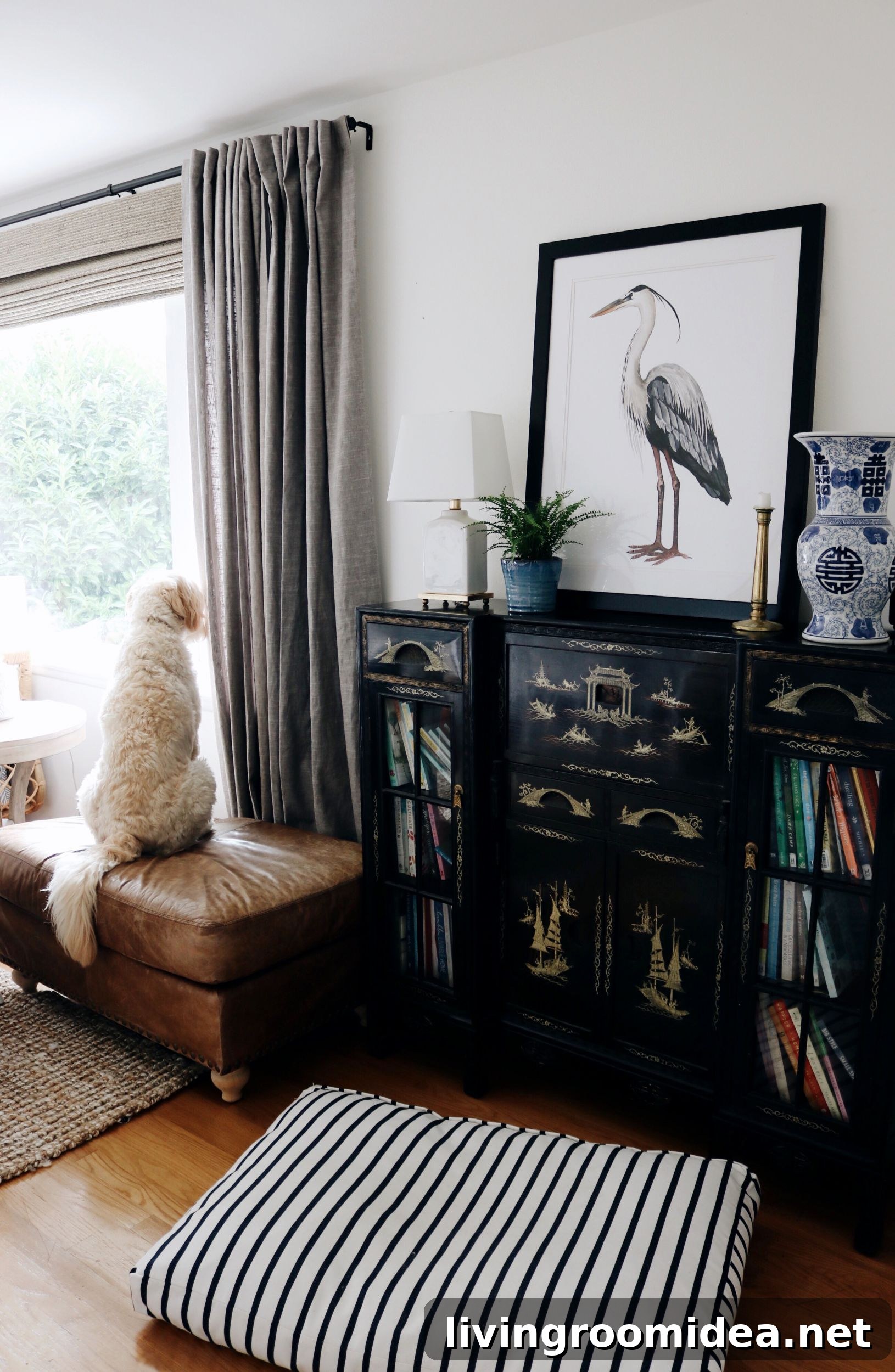
Crane Art
4. Limit large typographic pieces and quotes. One piece with words can be powerful; several competing text-based pieces can feel like the room is shouting. Keep text-based art to a minimum so it remains meaningful rather than overwhelming.
5. Aim for cohesion. Tie together color palette, mood, textures, wood tones and scale across the room. If one item clashes, adjust its placement or replace it so the overall look feels unified and calm.
6. Use mirrors intentionally. A single large mirror can serve as a statement piece. If you add more mirrors, vary their sizes or group smaller mirrors as a collection to avoid repetition and maintain balance.
7. Keep midpoints consistent. Hang wall groupings so their visual midpoints sit at a similar height around the room—usually slightly below eye level. Consistent midpoints help the arrangements read as a coordinated whole. Small adhesive putty is a useful trick to keep frames straight.
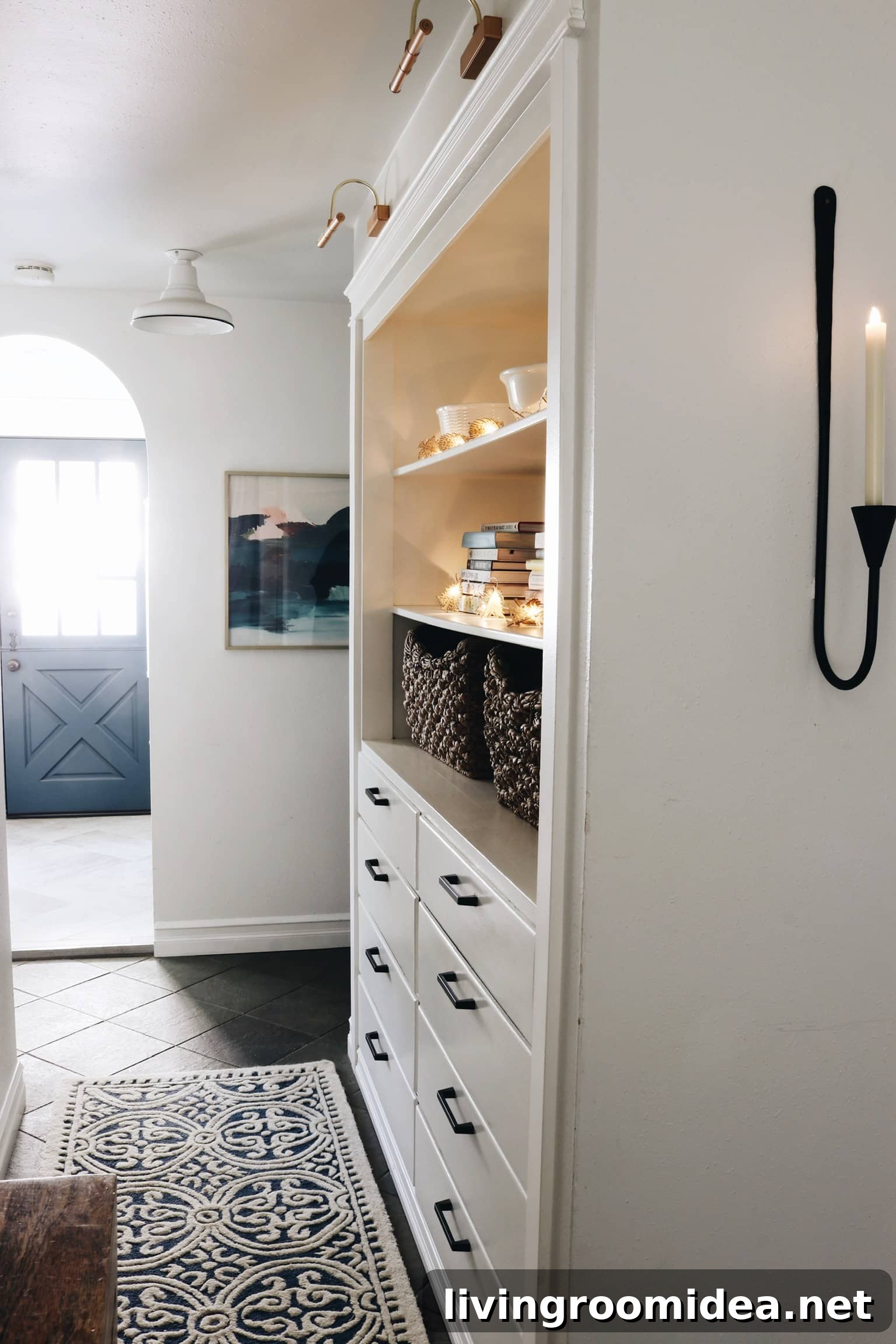
Wall Art // Rug // More Hallway Details
8. Leave room for the eye to rest. Blank space is as important as art. Consider wall color, furniture density, windows, doorways, and ceiling height when deciding how much to hang. A few open areas help the room breathe and prevent visual fatigue.
9. View art from likely angles. Ideally, hang pieces so they look pleasing from the main vantage points. Don’t obsess over perfection—minor imperfections or pieces that read better from one angle can add warmth and personality.
10. Step back and assess. Once artwork is in place, scan the room as a whole. If the space feels chaotic, simplify by removing or relocating pieces. Reassess seasonally or after rearranging furniture to keep the room feeling balanced and comfortable.
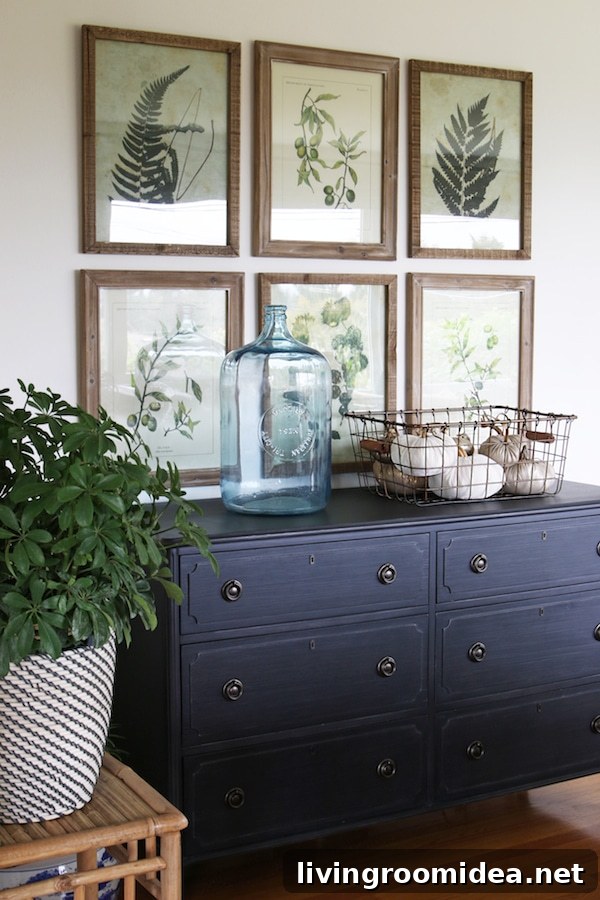
Tip: Take a photo
It’s easy to focus on each vignette separately and create walls that look great individually but feel too busy together. Step back as far as possible and take a photo of the entire room. A single image helps you see the overall balance and decide what to edit, add, or remove. If the photo feels balanced, you’re likely on the right track.
More Helpful Posts:
How to Choose Art for Your Home + Favorite Art Sources
Where to Find Coastal / Sailboat / Seascape Artwork: Favorite Sources
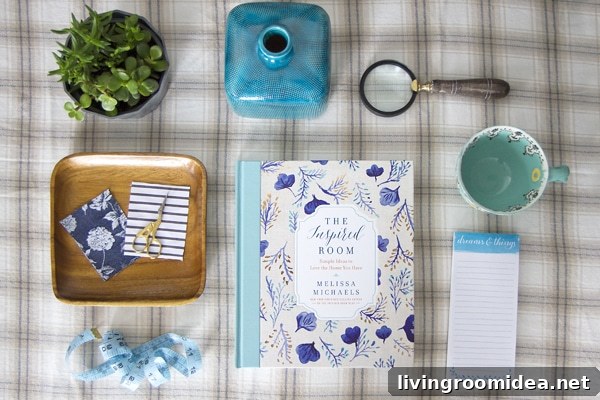
For further inspiration, you’ll find more decorating principles, simple how-to’s, and photo examples in my books, including The Inspired Room, But Where Do I Put the Couch, and Simple Decorating.
Pin this post for later with the graphic below!
See more reader questions I’ve answered on The Inspired Room in the decorating inspiration section.
Shop my house and latest decor finds here