
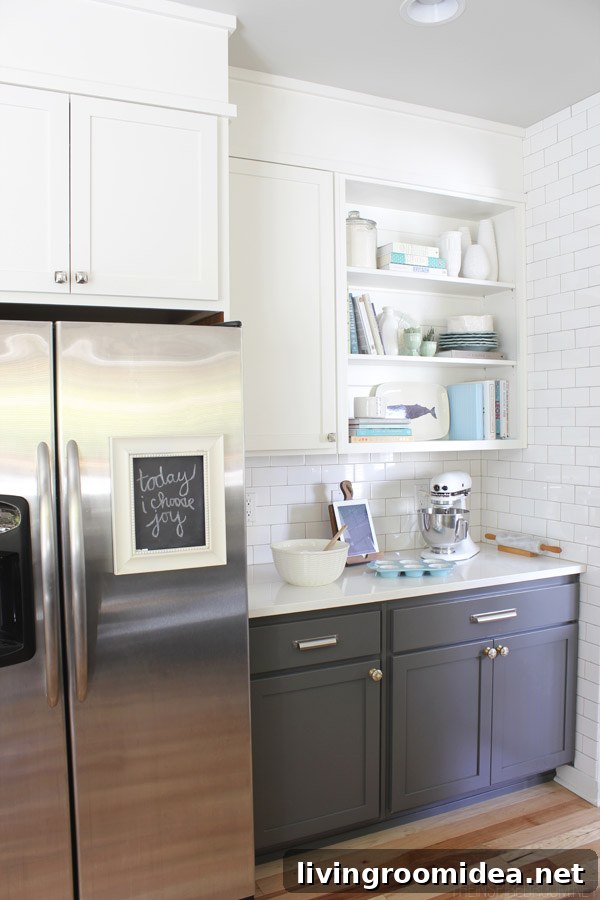
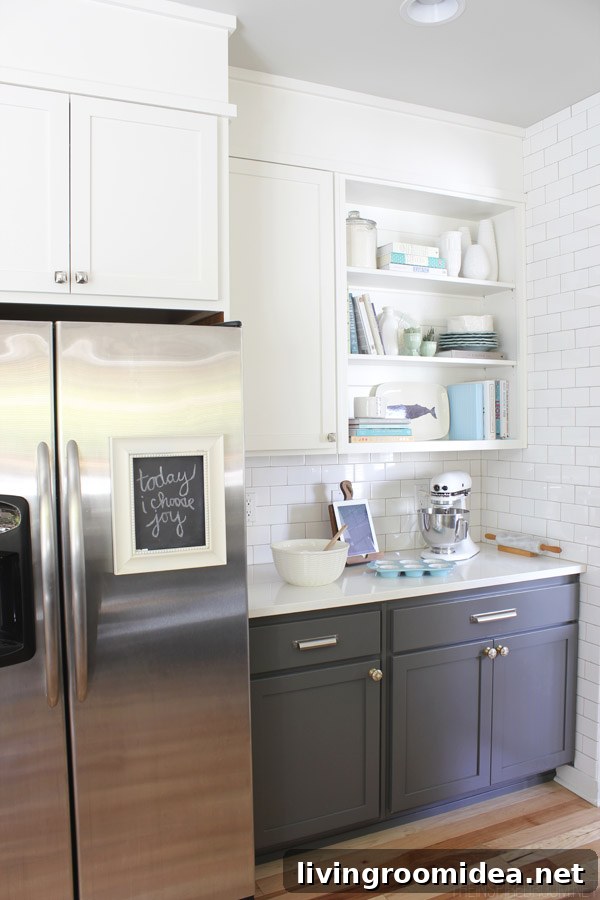
Do you love white cabinets, trim and tile? I do. White can feel fresh and beautiful, but sometimes it risks looking bland or clinical. If you want a welcoming, layered white interior, it helps to know how to use different whites together. I’m not a color scientist, but I’ll share what I’ve learned from decorating my own home and living with a variety of white finishes.
There are countless shades of white—everything from crisp bright white to soft cream—and that range can be overwhelming when you’re choosing paint, tiles and furnishings. A common question readers ask is whether I try to match every white in the house. The short answer is no. I don’t aim to match every white or color exactly; instead I intentionally use several shades of white for practical and aesthetic reasons.
First, trying to make every white match perfectly would be limiting. If everything had to match, my home couldn’t evolve slowly over time. I like to add accessories, thrifted finds and functional items without worrying they must be the exact same shade as the cabinets or tile. Using several whites makes it easier to collect and incorporate pieces you love without hesitation.
Second, mixing whites creates warmth and depth. Slight variations in tone—warm creams next to cool whites, linen-tinged whites near brighter options—bring subtle contrast and visual interest that a single flat white can’t provide. When you layer several whites together, the imperfections and differences feel intentional and organic rather than jarring.
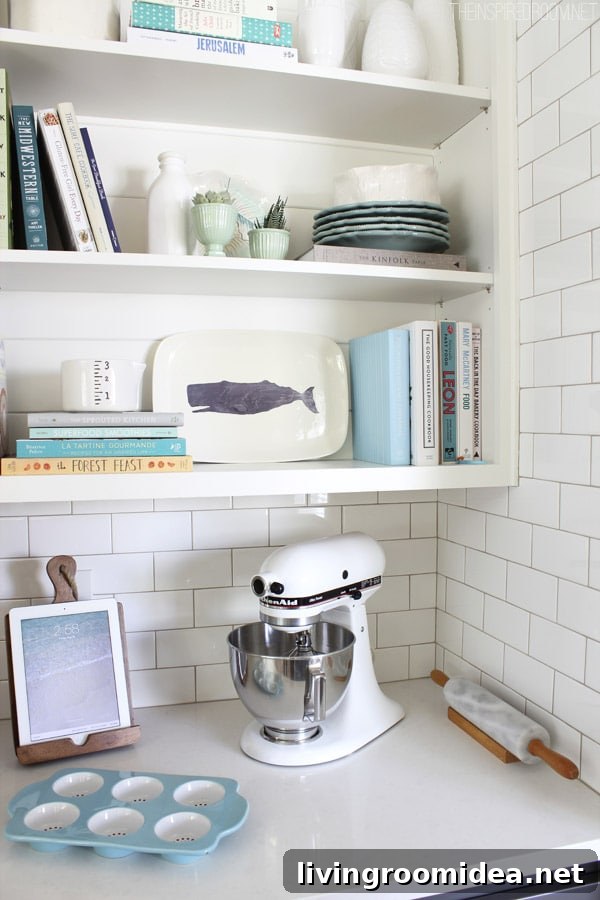
In my own kitchen, for example, the tile reads as a fairly bright white while the countertops are white quartz. The cabinets are Benjamin Moore Dove White, which next to the tile and counters reads a touch creamier. That means three different whites meet in one space—none of them an exact match. Then I add white dishes, a bright white mixer, linens, books and small accessories. Rather than looking inconsistent, the variety reads as layered and lived-in. If every single white matched perfectly, the space might actually feel more sterile and one-dimensional.
That said, there are limits. I typically avoid pairing very dark creams or deeply yellow-toned whites with bright cool whites because the warmer, darker creams can start to look dirty by comparison. Instead, stick to a palette of whites that share some similar undertones—soft creams, linen hues, cool grays and clean bright whites can all work together when balanced across surfaces and accessories.
One practical approach is to use a single paint color for major elements like cabinets, doors and trim to maintain consistency and flow throughout the house. Even so, it’s perfectly fine to introduce variety through tile, countertops, textiles and décor. Think of the paint as a unifying base and the other whites as accents that create dimension.
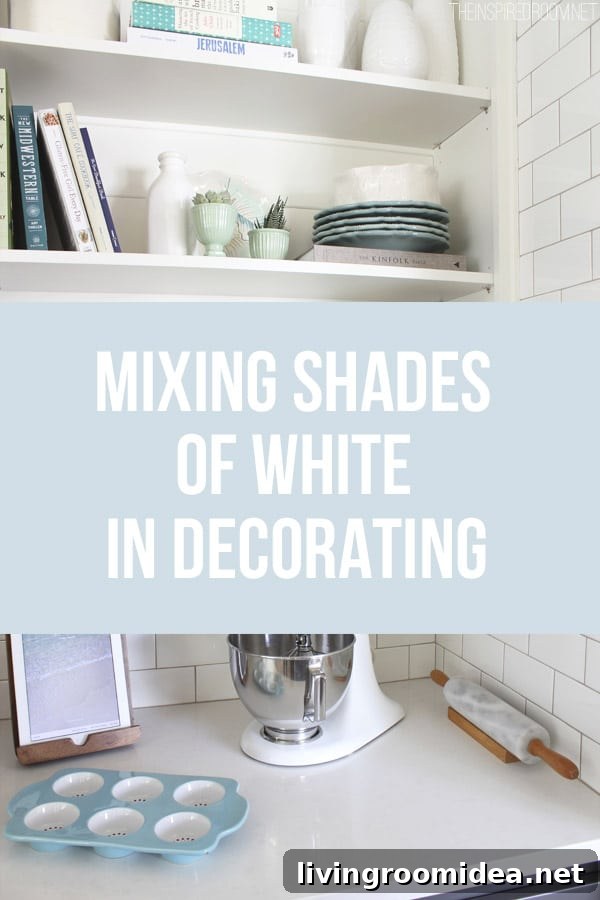
When mixing whites, a useful tip is to avoid dropping a single oddball creamy white into an otherwise bright white scheme. Instead, blend several tones across different elements so the variation feels intentional. Use countertops, tile, trim, textiles and accessories to distribute tones evenly. The result will be a cohesive, warm and inviting space with subtle depth.
Do you prefer exact matches or a mix of whites in your home?
Notes:
Lower cabinet paint color mentioned in my kitchen is Kendall Charcoal by Benjamin Moore. I recommend sampling paint and viewing options in the actual room lighting before committing, since light dramatically affects how a white reads. When in doubt, bring home fabric swatches, trim samples and small tiles to compare them together in different light throughout the day.
Related post suggestion:
Consider researching gray and white kitchen palettes and cabinet color choices to learn how different whites and neutrals work together when planning a cohesive design.