
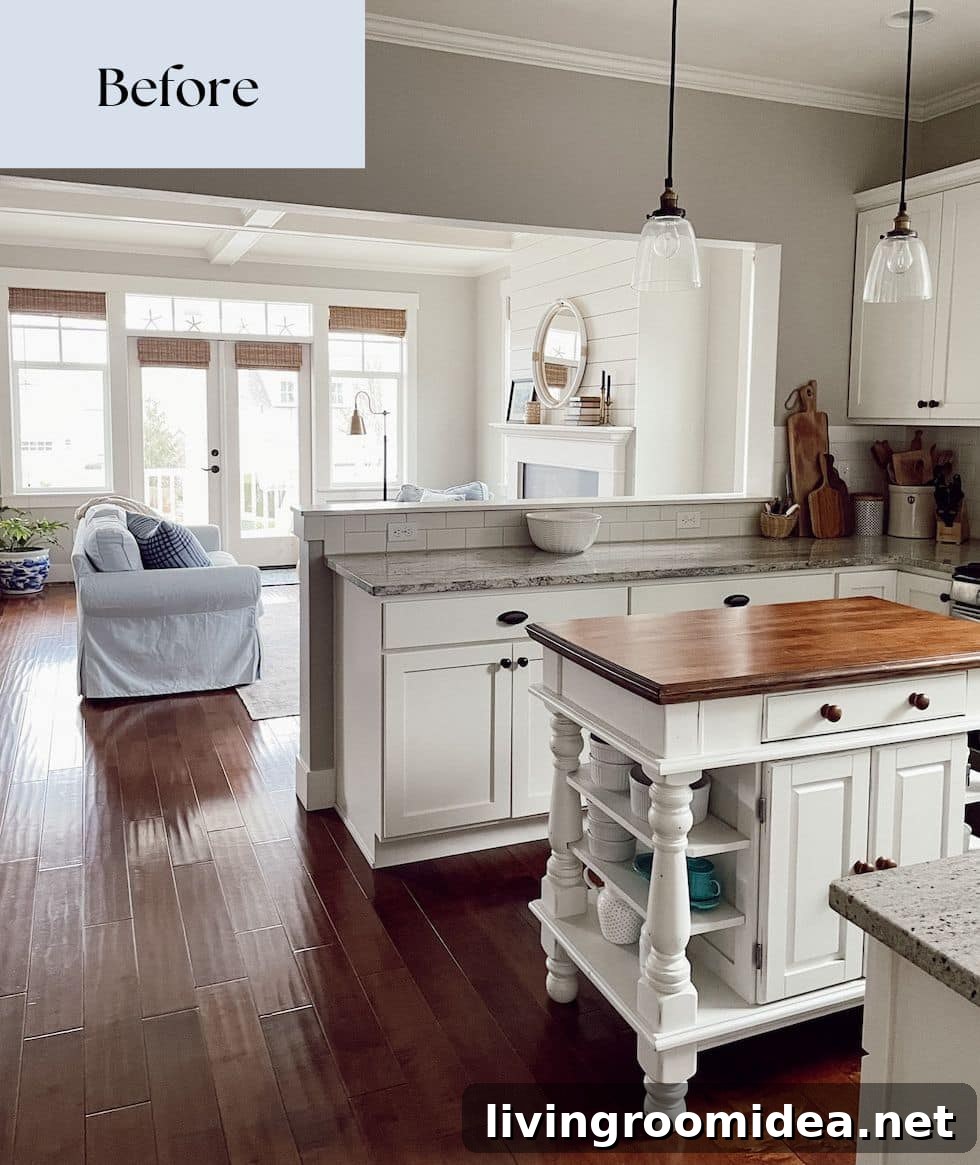
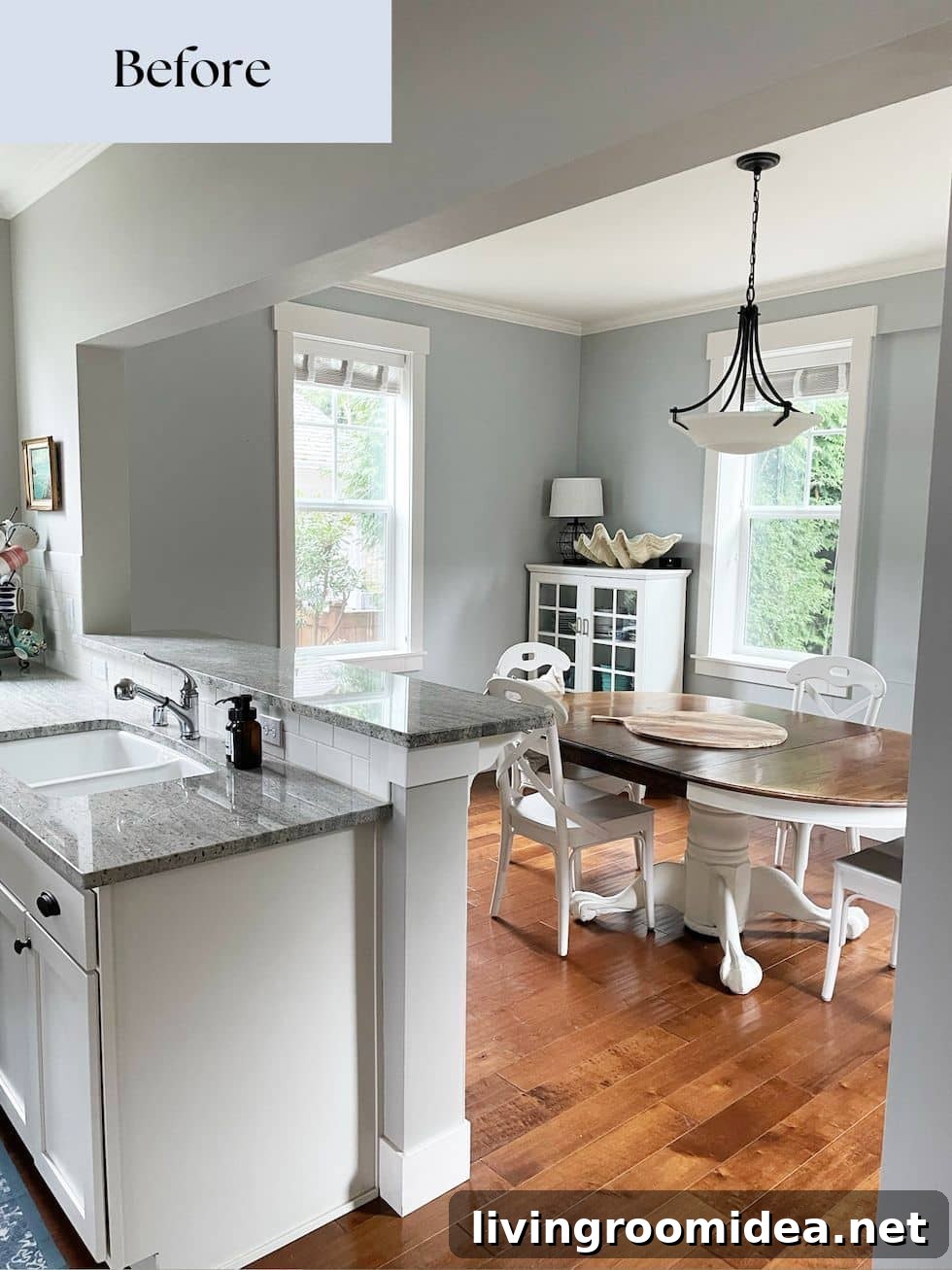
A new year brings a new kitchen—one of the most exciting projects we’ve planned since moving in. Last year I wrote about our remodeling ideas and shared before photos. I haven’t yet posted the floor plan, so here’s a clear look at the changes we’ll make. The remodel is set to begin in the coming weeks, and we couldn’t be more excited.
Note: I don’t always have comments open on the blog, but I love hearing from you. I’ve enabled comments for this post—no website required and emails remain private—so please share your thoughts if you’d like.
This project has been a long time coming. We moved in during the fall of 2021 with a few ideas for personalizing the house. About a year ago those plans evolved into a larger project that includes an addition and a completely new kitchen layout.
A bit of backstory: we invited my parents to move in with us when we bought the house, and they suggested adding a small suite at the back. Although the addition is modest in size, designing it was tricky. It required careful planning to fit everything into a limited footprint and to integrate the new structure with the existing architecture.
My parents sketched the initial plans, and then we worked with an architect, a structural engineer, and other professionals to finalize drawings and obtain the necessary permits.
Because the addition affects our layout, I began drafting floor plans for the main-level remodel. Our main floor is compact—around 800 square feet—and the rooms flow into each other, so altering one area changes the whole layout.
Taking into account the addition and our desire to make the most of the existing space so the house serves our family for years to come, we finalized the plans shown below.
Every decision was made with careful thought about how our family uses the home. In a smaller house, every square inch matters. Except for my parents’ addition, we’re not adding living area—we’re reconfiguring how the current space will be used.
Here is our CURRENT floor plan:
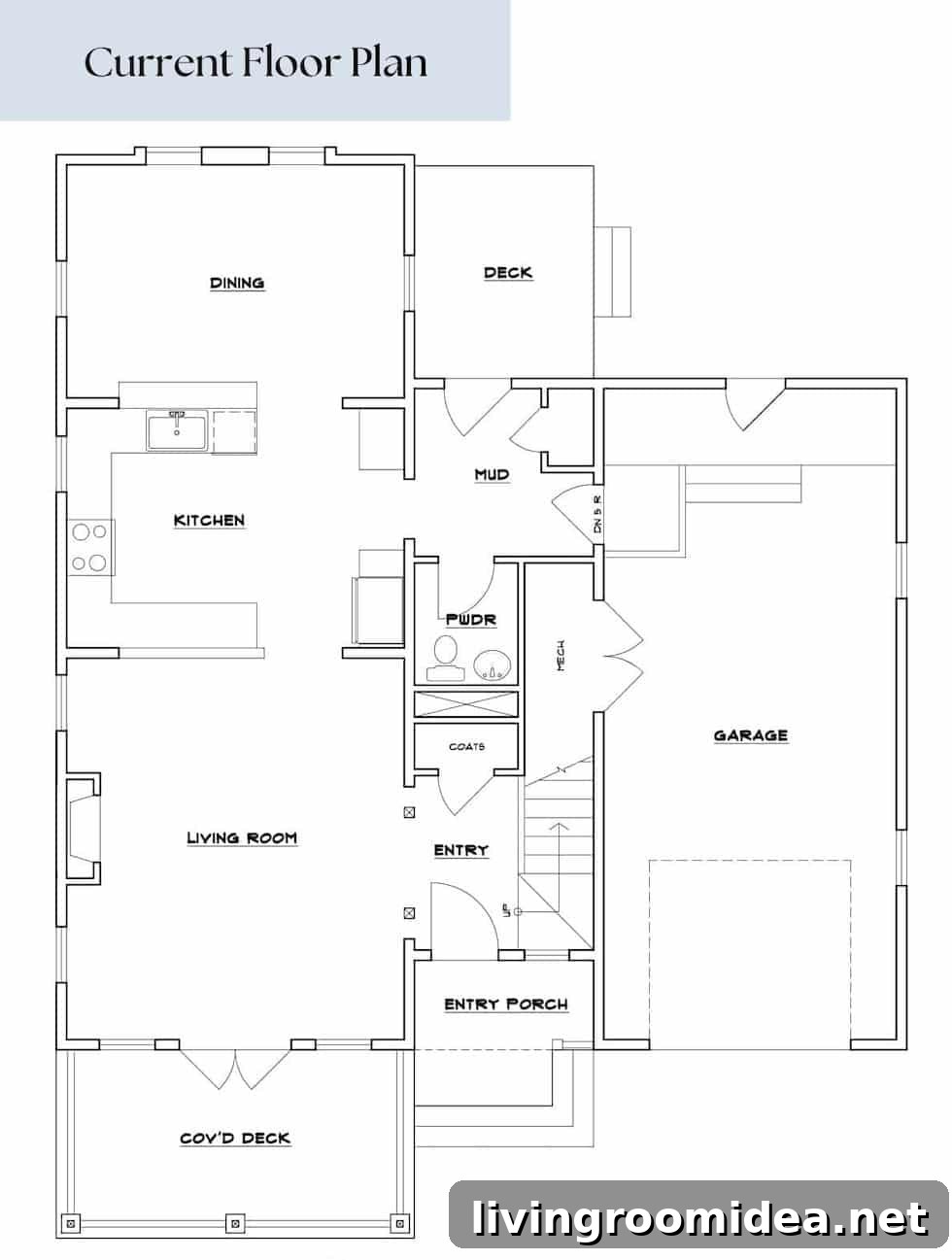
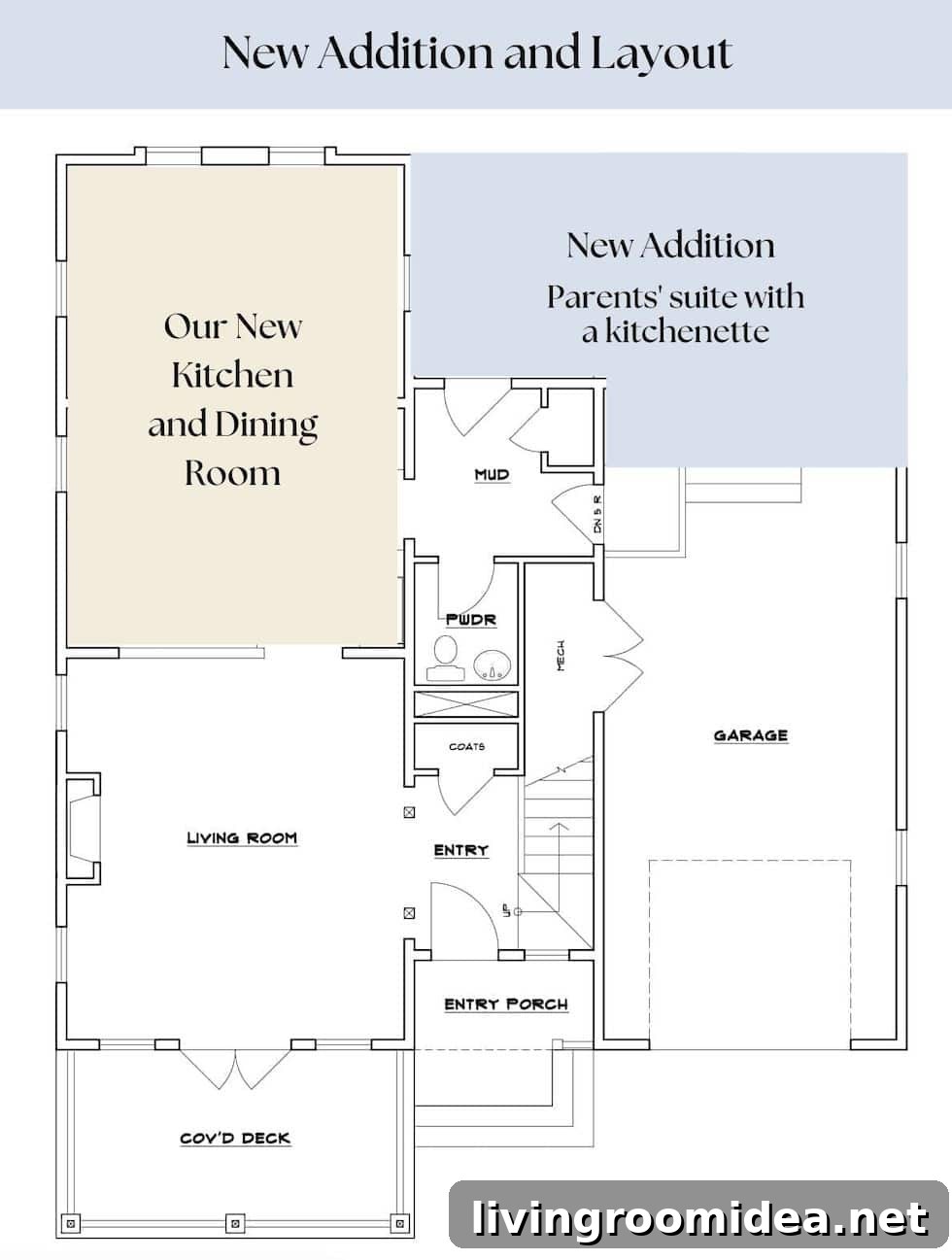
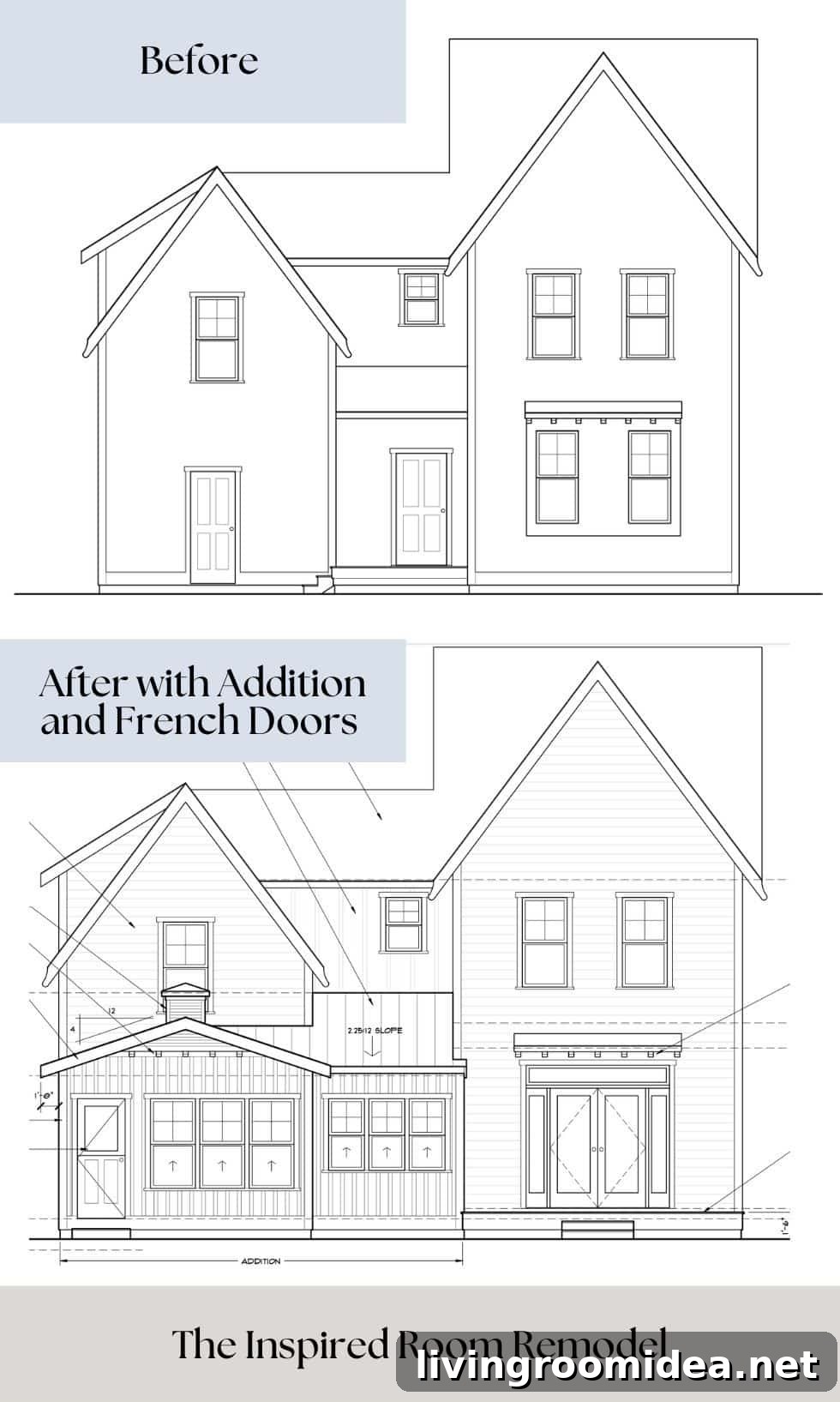
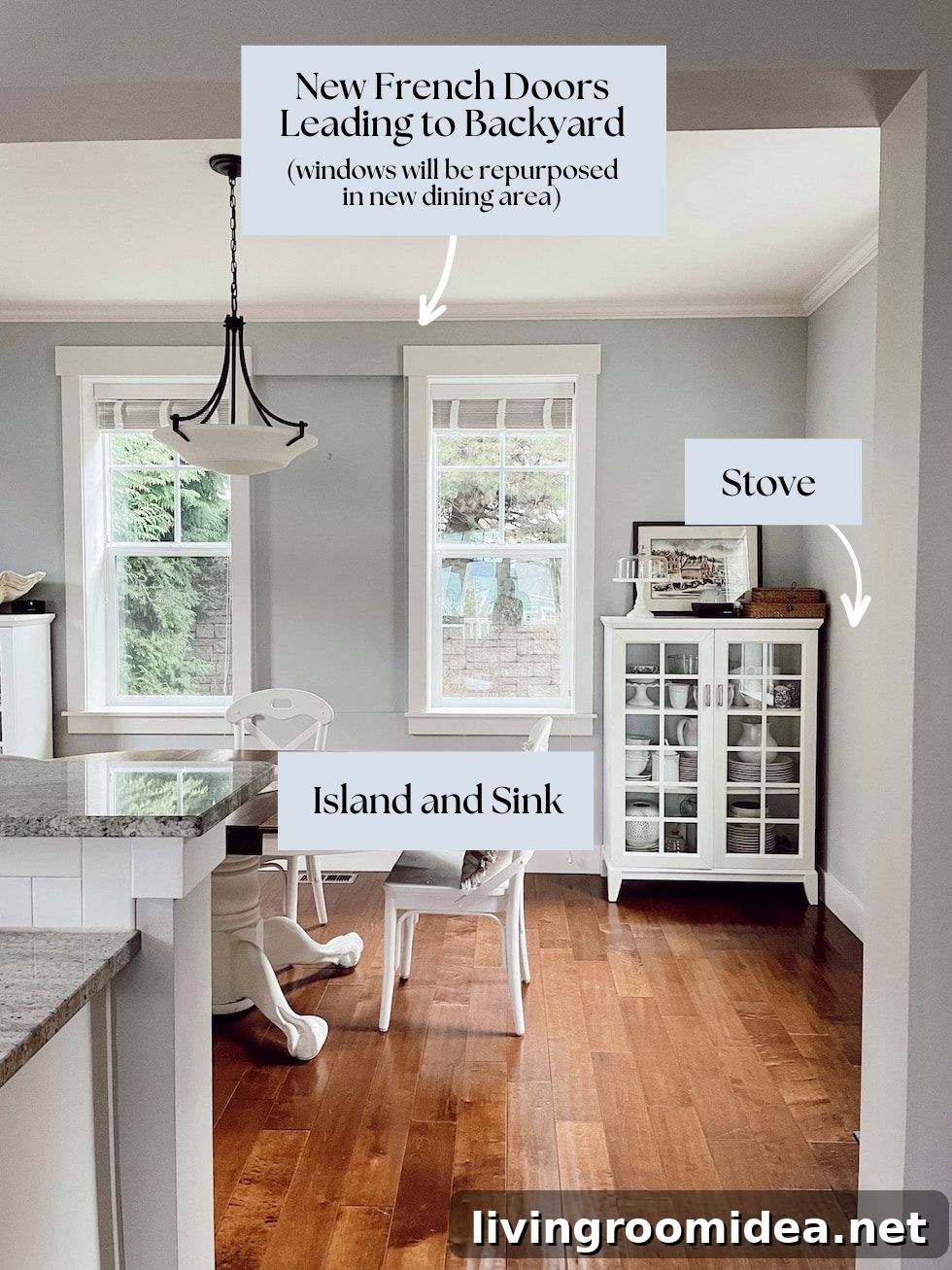
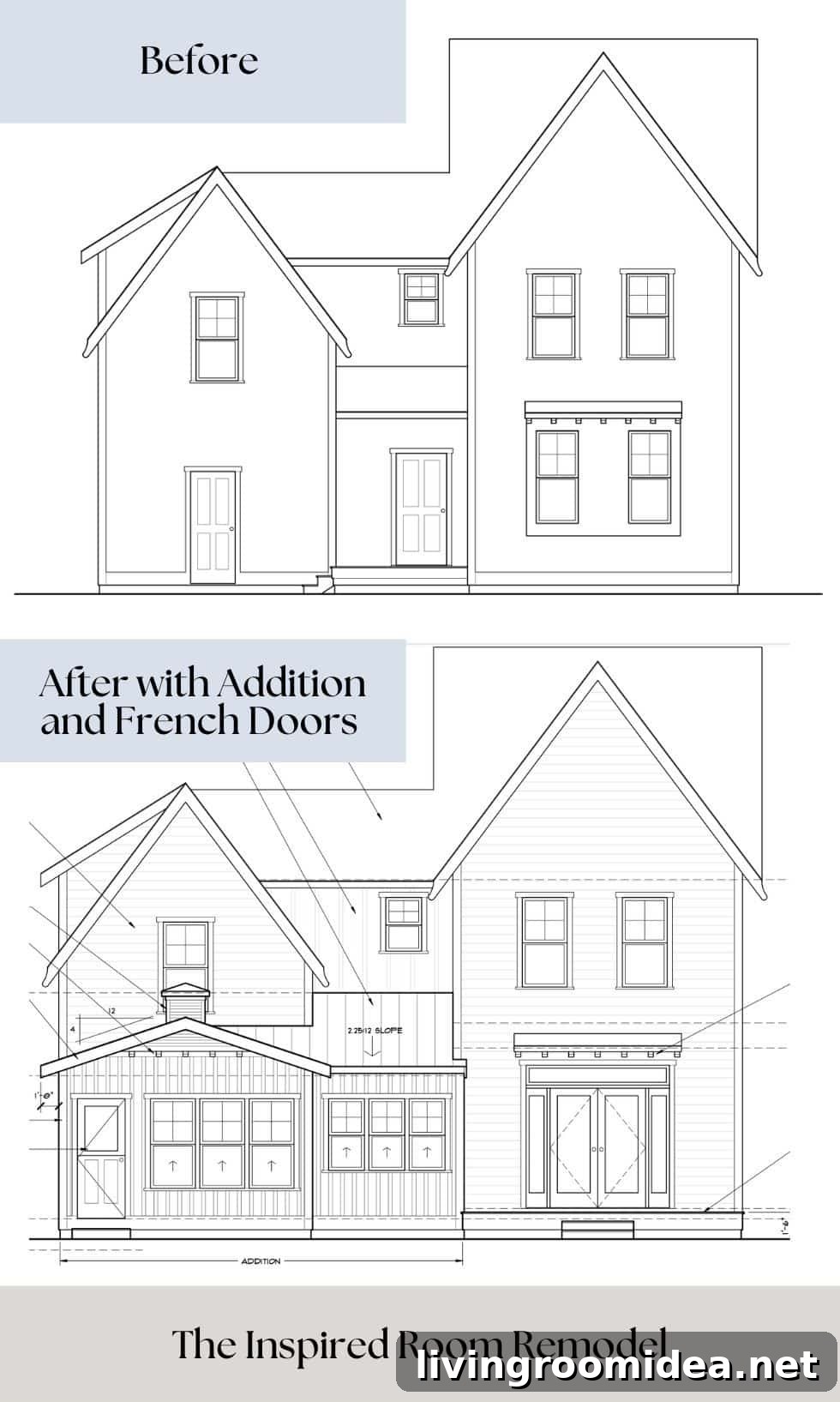
My parents’ suite will include a back door, which means the existing mudroom door will need to be removed. One early decision was how we would maintain access to the backyard. We had only one suitable location for a new exit, so we decided to replace the row of windows across the back (currently in the dining room) with French doors. Those doors will mirror the French doors at the front of the house. The original windows will be repurposed elsewhere in the remodel.
When we purchased the house we planned only minor updates and new appliances for the original kitchen. I had my eye on a beautiful range from the start (it’s now in my garage—more on that later). As the addition plans progressed, it became clear that the most practical long-term solution was to relocate the kitchen as part of the larger project rather than simply replace appliances in place.
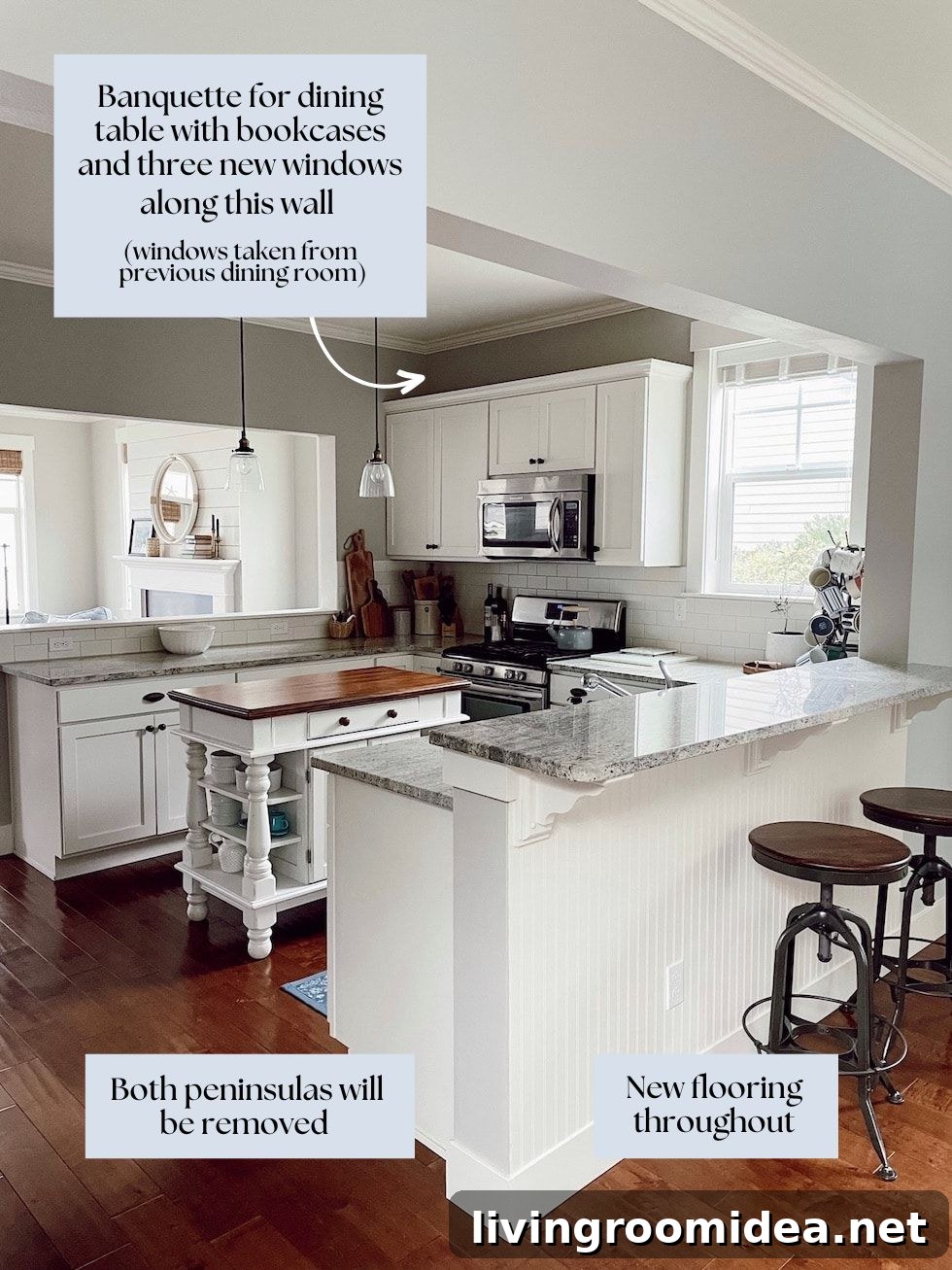
Swapping the kitchen and dining locations was the best choice for several reasons. Moving the kitchen into the former dining room connects the living area with the dining zone, improves traffic flow, and creates more flexible, useful space. The change also allows for additional storage and functional zones that were previously lacking.
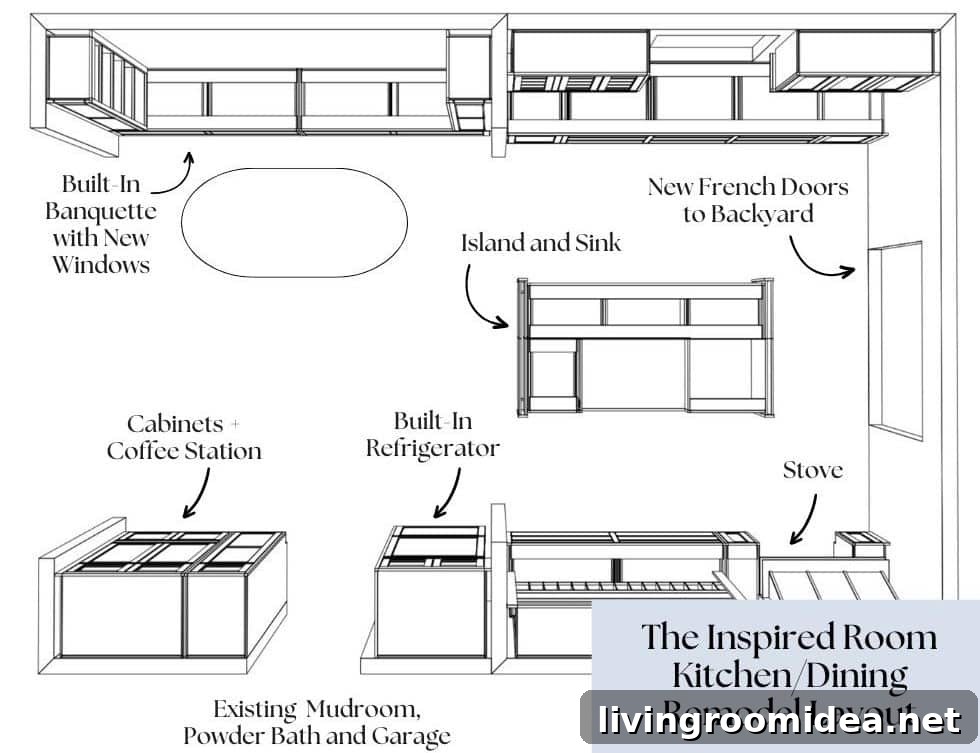
We’ll build a cozy dining nook with a banquette and built-in storage, and several windows will be relocated into the old kitchen area. These updates will produce a comfortable, multi-use space for day-to-day living while enabling larger family gatherings.
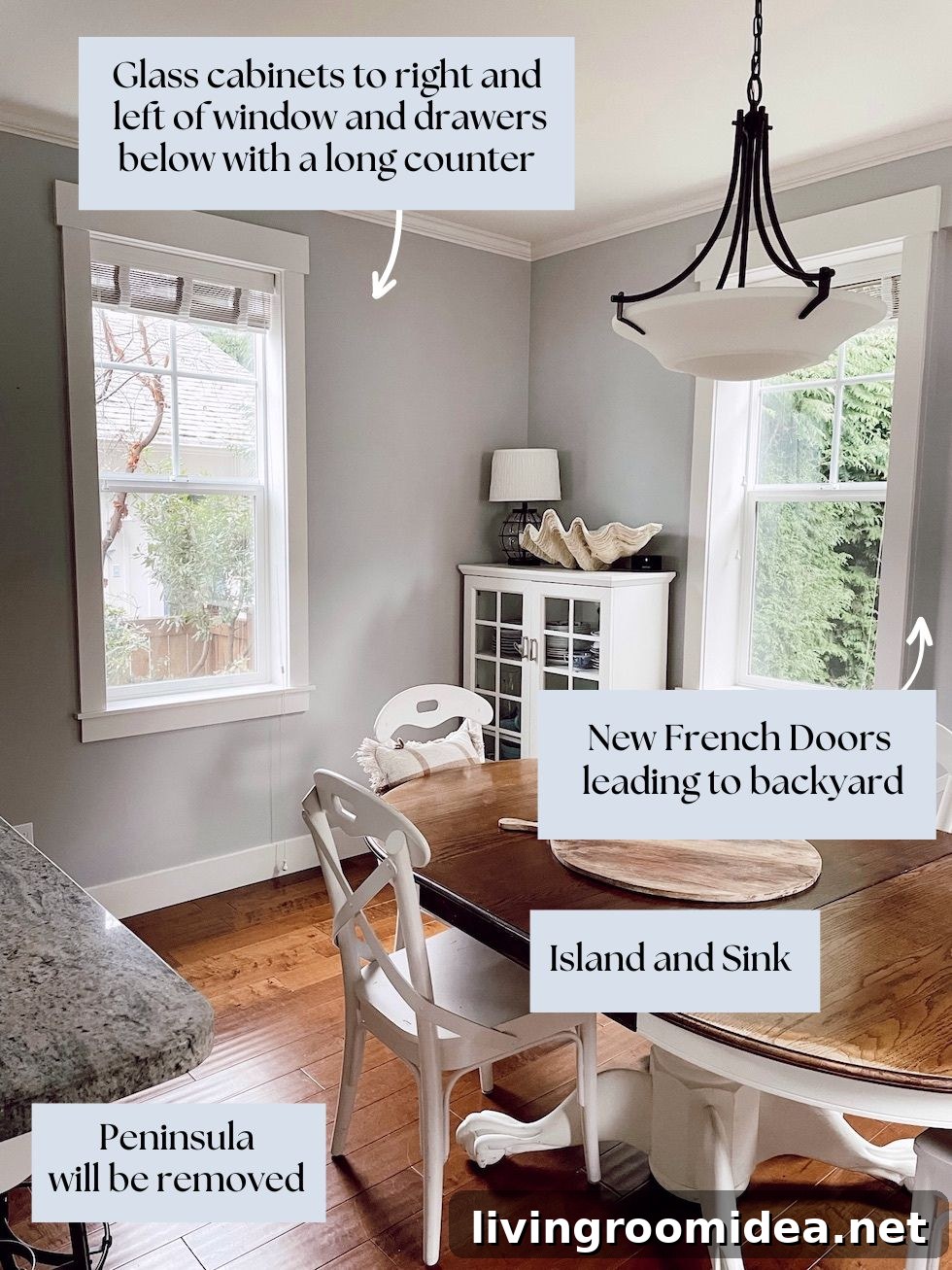
One of my favorite parts of the design is the island sink in the new kitchen. Positioned to face the windows and new French doors, it will make dish duty pleasant and allow me to keep an eye on the rest of the main floor. The kitchen sits toward the back of the house, so it will feel like a quieter, tucked-away corner while still being connected to daily life in the home.
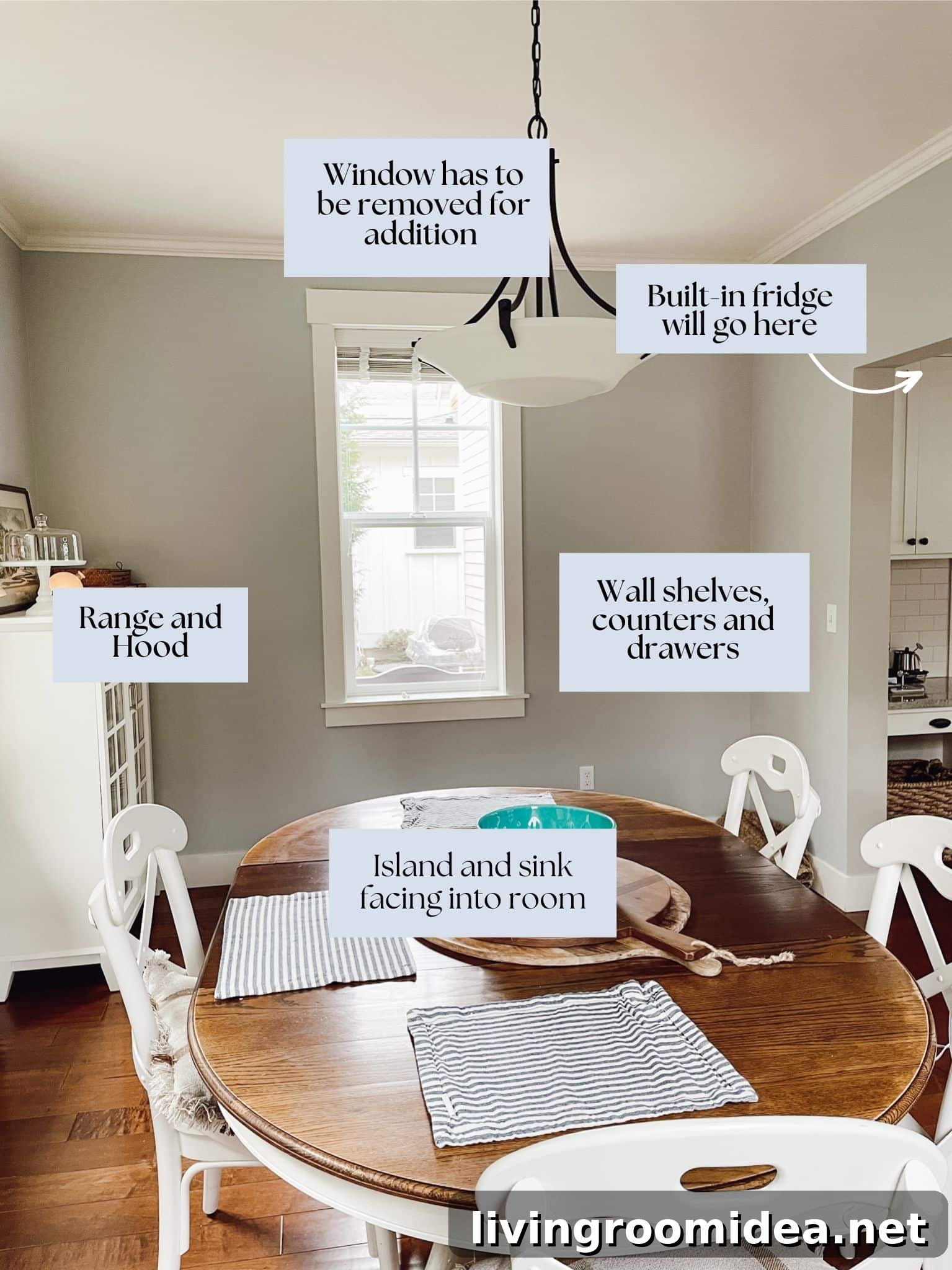
By reconfiguring the existing footprint rather than adding finished square footage (aside from my parents’ suite), we gain counter and storage space, improve natural light, and create more breathing room throughout the main level.
The new layout provides distinct zones for cooking, food prep, serving, and casual gathering. There will be room to prepare meals together, set up a buffet for guests, make coffee, and easily move between indoors and the backyard fire pit. Most importantly, the changes expand the space where our family can be together for holidays and everyday moments.
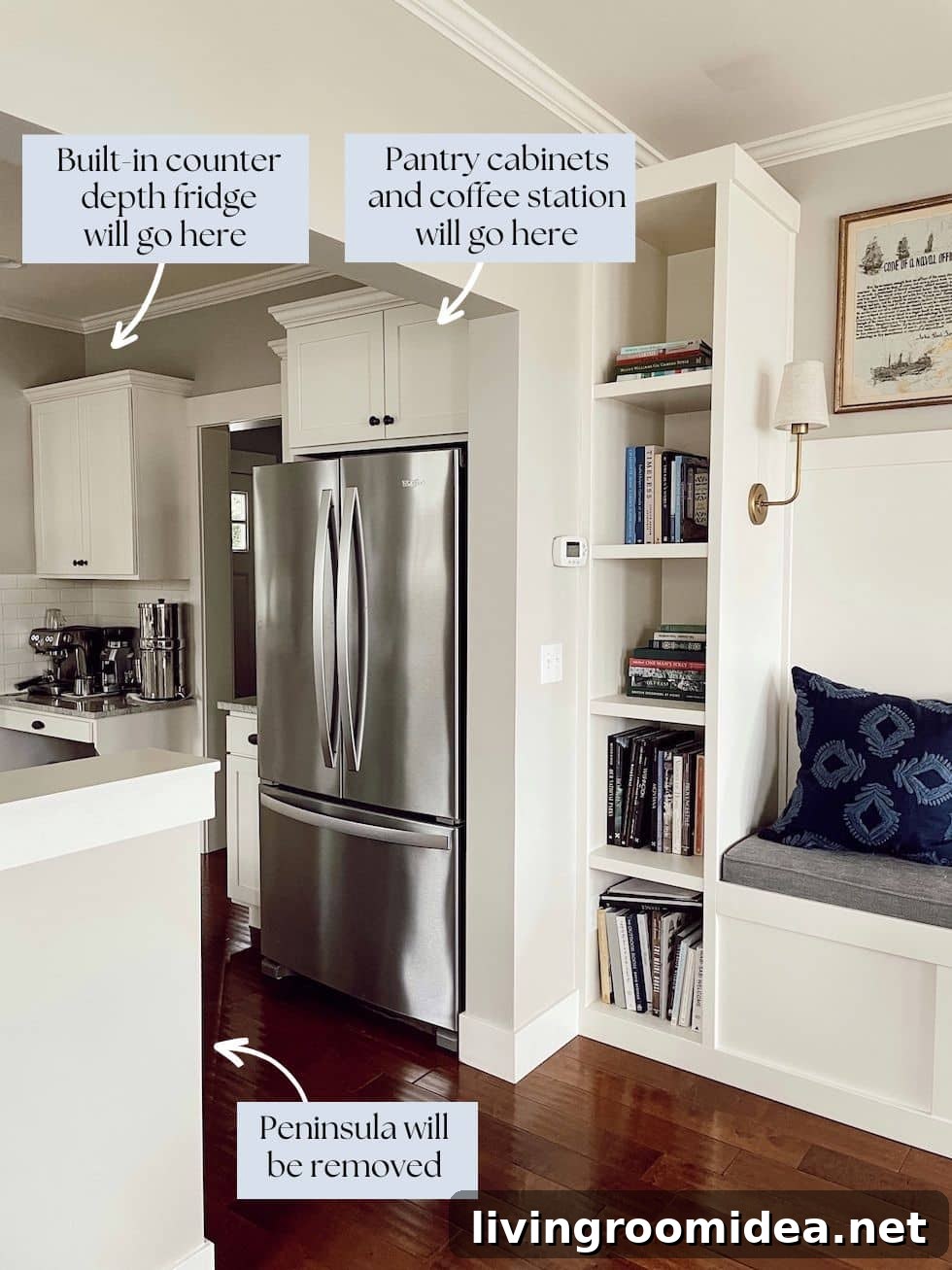
Below you’ll find a bird’s-eye view of the new kitchen and dining layout and exterior elevations showing how the back of the house will change. I’ll post more about the addition and construction progress in upcoming updates.
Next up: I’ll share photos of two style-setting pieces we ordered for the kitchen—the range (and its nickname) and our chosen faucet—along with design details like cabinet style and the new dining light fixture I just ordered. Subscribe to email updates to catch each new post.
Below is the plan for our updated kitchen and dining area so you can see the layout from above.
Below are the before-and-after views of the back exterior. In the after image you can see my parents’ addition on the left and the new French doors on the right, which will open from the new kitchen.
We’re thrilled to get started and look forward to sharing the process and progress with you.
Make sure you’re subscribed to email updates to receive future remodeling posts and details.