
In 2008, my friend and talented designer Joni from the Cote de Texas blog contributed this insightful post to The Inspired Room. It is with deep sadness that I share she passed away unexpectedly in October 2023. Her loss is felt profoundly by family, friends and the design community.
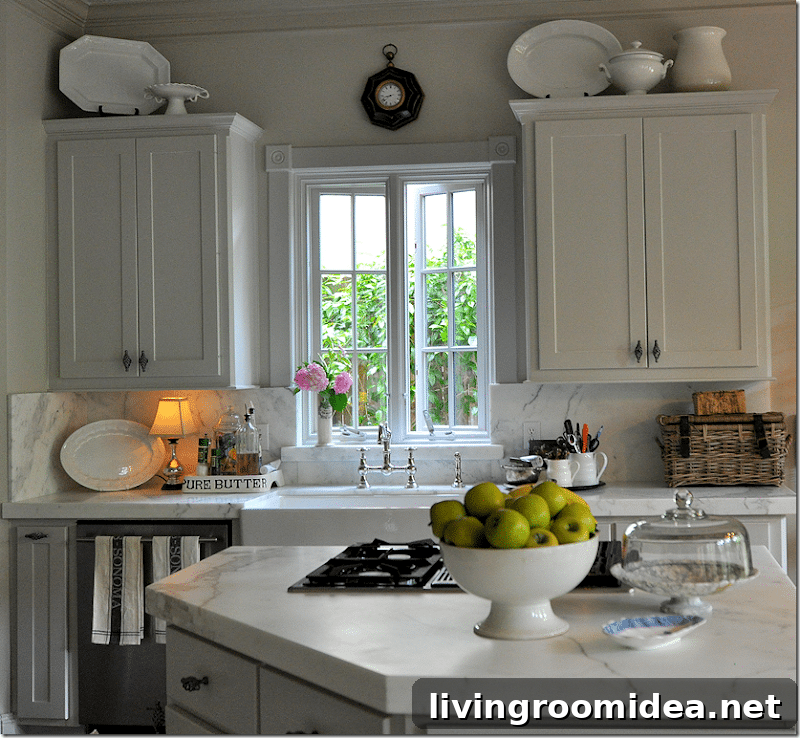
Although the original photos have since been removed from the post, Joni’s advice remains timeless and valuable. I’m re-publishing her words here for friends and family to read and remember her thoughtful perspective. I’ve placed a photograph of one of her beautiful kitchens at the top of this repost.
On a personal note, Joni and I stayed in touch up until recent weeks. We first connected over a post I wrote about Magazine Cover-itis — a shared affliction we laughed about often. I was honored when a respected designer took the time to comment on my blog; that genuine thoughtfulness is exactly who she was.
Over the years she would message me about my home or memories of design details she loved. I was always touched that she noticed and took the time to say so. Recently she wrote on Instagram about how similar our design tastes felt; she said she loved our home and that our aesthetics seemed so aligned. The feeling was mutual—I’ve long admired her keen eye and the beauty of her home.
Though we were different in many ways, she sought common ground and used it to nurture a real connection. That rare quality made her a true friend, and I will sorely miss her.
* * * * * * * * * * * * * * *
Below is a post written by Joni of Cote de Texas for The Inspired Room in 2008
I’ve loved interior design since childhood. I remember an older cousin bringing me design magazines when I was seven, so my family must have recognized my interest early on. The attraction to design has always been part of me. When I was eight, my parents bought a lot and we built a custom home. I was involved in the process and even helped design my bedroom—I chose a lilac sink and a lilac accent wall behind the beds. Back then, the most joyful experience was browsing furniture stores with my mother. That felt like nirvana.
As a child I thought I wanted to be an architect and drew endless floor plans of an imagined home. I once saw a house in a magazine—a DuPont-built home with a long center hall from which rooms flowed—and that plan inspired many of my drawings. Today I still admire center halls, though I don’t live in one myself.
My idea of a dream home is less fixed now; I love many architectural styles. A French chateau with enfilade rooms, a white stucco Spanish mission with black iron fixtures, a charming Cape Cod with dormers, a Texas Hill Country home with limestone and a tin roof, or an English country house built up over centuries—all have appeal. It’s hard to choose just one.
Choosing a favorite furniture style is easier: I’m drawn to French antiques, though Swedish painted pieces and heavily carved old Spanish furniture also captivate me. A single chinoiserie object can transform a room, and English furniture—softly upholstered and slipcovered—feels especially cozy. Ultimately I’m in love with great design, wherever it comes from.
I find it uncomfortable to sit in an ugly room—my mind immediately starts redesigning it. In contrast, a truly beautiful room brings exhilaration. My eye roams the space in delight: who designed it, where were those pieces found, is that fabric French or Swedish, is that antique or a reproduction? Beauty sparks curiosity and desire; I want to live in that space.
So what makes a room beautiful to me? Thoughtful furniture placement is essential: seating should converse with one another and the room must feel balanced, with eye-catching elements distributed so one side doesn’t feel heavy. Fresh, clean paint and well-maintained surfaces are basic but vital. I prefer soft, lamp-based lighting over harsh overhead fixtures; sconces add romance and atmosphere. Area rugs should relate to the main seating group—seagrass is an elegant, adaptable option, especially for formal rooms. Natural fabrics like cotton, linen and silk are preferred. Artwork should hang at eye level and relate proportionally to surrounding furniture; mirrors—especially older glass—are wonderful alternatives. Shelving should be neat and balanced, avoiding cluttered displays. Drapery adds polish and should be considered in any design. A simple vase of flowers or a lit candle completes a room, keeping it inviting and lived-in. These elements together create beauty regardless of style.
Working with clients can be a balance between honoring my sensibilities and respecting theirs. Some clients have no strong stylistic preferences and rely on me to guide them; others know exactly what they love, which makes for joyous collaboration. My favorite projects are those where client and designer share a love of beauty—shopping together becomes a pleasure. On one such job, as the installation neared completion, the room came together exactly as we’d envisioned. I told my client the room was so beautiful it made me want to cry. I truly meant it: the color of the walls, the texture of the linen, the richness of the chintz, the scent of new seagrass, the glow of an antique mirror, the curve of chair legs and the glaze of porcelain—all those details harmonized into something movingly beautiful.