
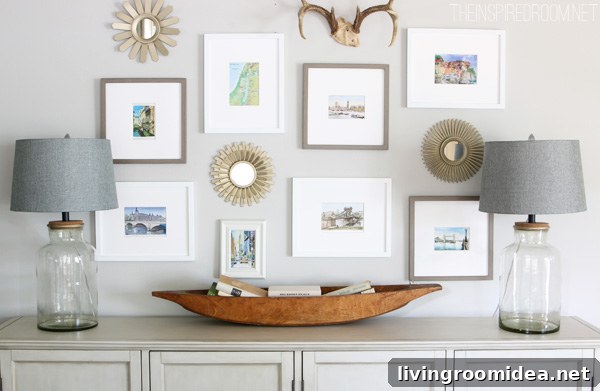
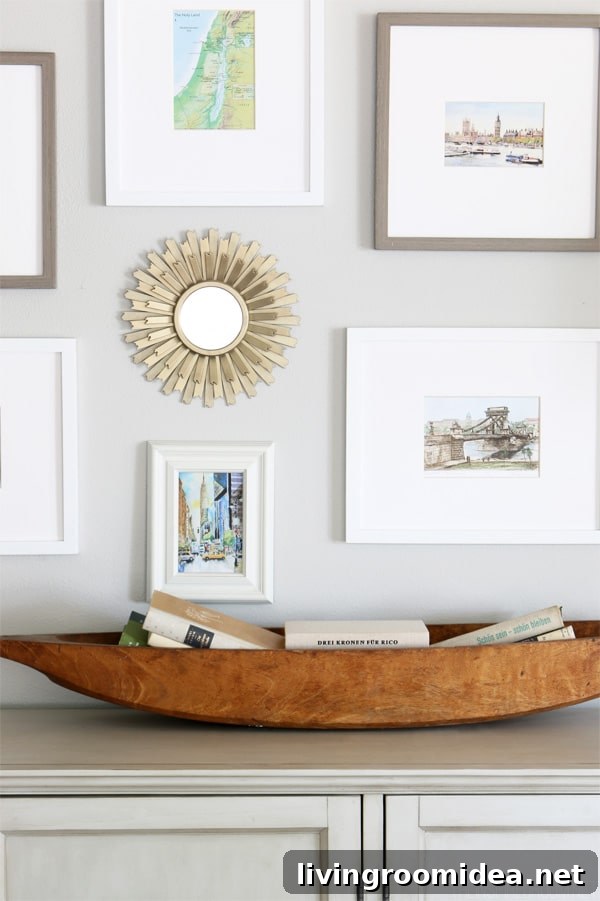
Recently my husband and I spent a relaxed afternoon window shopping in Poulsbo, wandering through the small shops we enjoy visiting from time to time. On our way out of an antique store we hadn’t been into for a while, we spotted a wonderful antique wooden bowl. Its elongated shape hints at a small boat, though it’s likely a classic dough bowl.
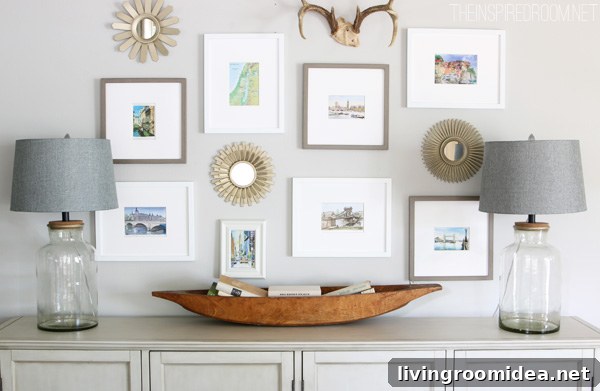
I’d been looking for something large and shallow to sit on top of our long, narrow console cabinets, and this bowl was exactly the right size and profile. The cabinets are quite long but not very deep, so a low, elongated piece would read well across the top without obstructing view or feeling bulky. The wooden bowl felt like the perfect fit.
This kind of piece is so versatile for decorating. It will be lovely as a seasonal display—filled with greenery and gourds in autumn, ornaments and pinecones for winter, or bright blooms and linens in spring and summer. It can also work as a dining table centerpiece, holding fruit, succulents, a collection of shells, or a rotating mix of objects that reflect the season or a current decorating mood.
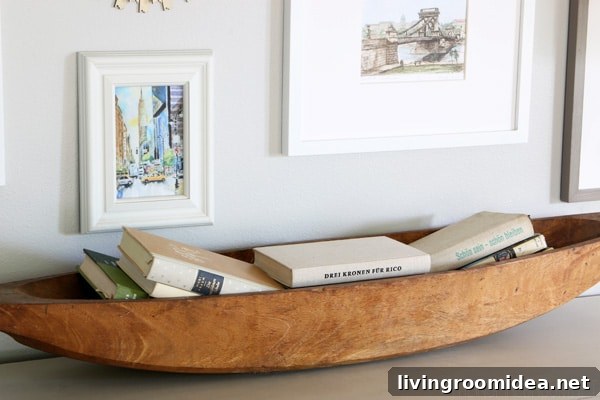
For my first try using the bowl on the console, I looked through what I already had and decided to experiment with a small stack of vintage books I’d recently picked up at a secondhand shop. They were a random find—charming old covers and varied sizes—and I wondered whether they would nestle nicely in the bowl. To my delight, they fit perfectly. The bowl now serves as a simple, rustic tray that corrals the books and adds texture and warmth to the console top.
There’s something satisfying about discovering an old treasure and immediately imagining the many ways it can be used around the home. Pieces like this wooden bowl have character—subtle wear, a patina from years of use, and a handcrafted feel—that brings depth and history to a modern room. They invite you to style them differently as tastes or seasons change, and they make everyday arrangements feel more considered and personal.
Using found objects in displays also encourages creativity. A bowl like this can anchor a vignette: add a small ceramic vase with a single stem, a stack of books, a candle, or a handful of decorative stones and the arrangement becomes intentionally curated rather than cluttered. Because it’s low and long, it doesn’t overwhelm the space but instead creates a gentle visual line along the console, guiding the eye and unifying other elements on the surface.
Whether you prefer a minimal look—a few well-chosen items and plenty of empty space—or a more layered, collected aesthetic, a simple antique bowl is an adaptable foundation. For now, I’m enjoying its role as a book tray, but I’m already imagining future iterations: a spring display with small potted herbs, a summer collection of shells and driftwood, or a cozy winter arrangement with cinnamon-sticked bundles and dried oranges.