
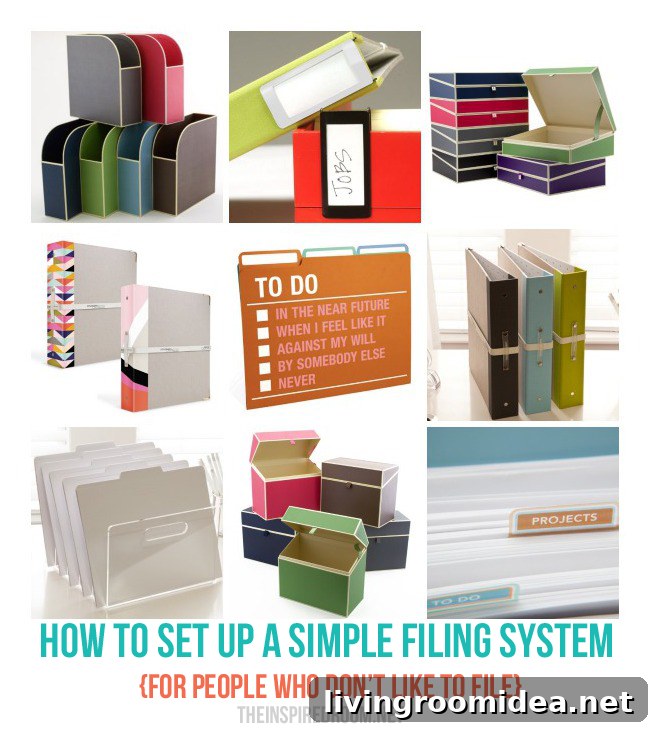
I love the idea of papers being super organized.
I drool over pretty organizers and colorful boxes. I adore patterned binders and color-coded files. I love stickers and labels. Still, I’ve struggled with an aversion to filing for as long as I can remember.
I’ve tried to be an organized, filing-kind-of-person my whole life. Filers seem so put together, and I assumed pretty folders and notebooks would solve my paperwork problem. But I’ve learned that attractive storage alone doesn’t make papers get filed.
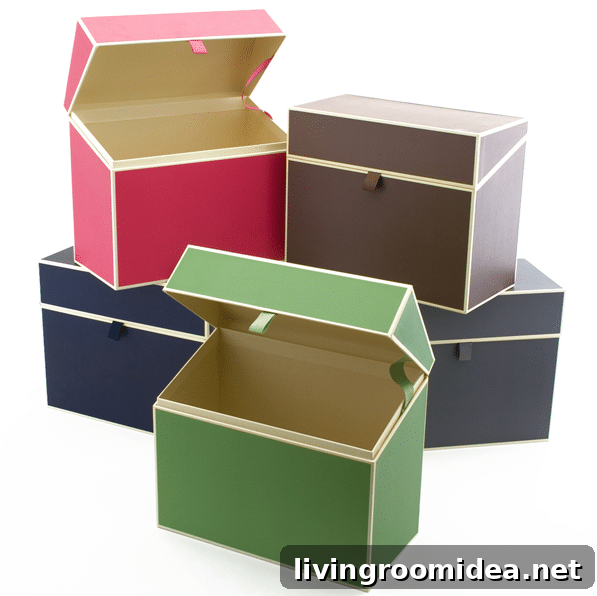
file boxes or organizers in this post via See Jane Work {not affiliate links}
I already use a couple of systems that help, like a hallway magnetic board for urgent papers. That board is still very useful and keeps immediate items visible and actionable.
Even with that in place, other important documents kept piling up and crowding the board. I’m an “out of sight, out of mind” person, and I don’t like overstuffed drawers or paper cuts—so I avoided filing.
Following elaborate filing advice left me overwhelmed. If you enjoy filing, your brain probably works differently than mine. Too many categories shut me down. I kept thinking I should hire someone who actually enjoys this task—maybe someday I will.
Determined to fix this, I finally sat down and mapped out the file drawers in my office, designing simple systems I could actually use. Baby steps became the strategy.
That small-step approach is the same principle I use for other routines around the house. The simpler the process and the fewer the steps, the more likely I am to keep it up long-term.
I’m excited to be tackling my filing aversion. Pretty boxes, notebooks, and files are still important to me—I want my space to look nice—but the system inside must be simple and practical.
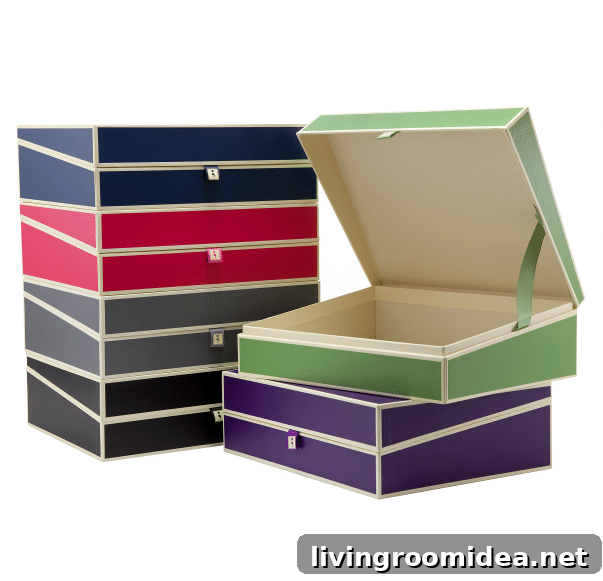
file boxes or organizers in this post via See Jane Work {not affiliate links}
Today I’m sharing a first baby-step plan to paper organization and filing. I started with one drawer focused on time-sensitive papers and built rules that make filing quick and intentional. The goal was not perfect categorization but a system so simple I’d actually use it.
My approach was to limit the number of folders, use clear, easy-to-read labels, and create one action-oriented spot for items that need attention soon. Instead of trying to file everything immediately, I established a short-term holding area and a quick weekly check to move items to their long-term home.
Key elements of this simple system include:
- One drawer dedicated to time-sensitive documents so urgent items don’t get lost.
- A small number of broad folders—think “Bills,” “Medical,” “Home,” and “Taxes”—to avoid decision paralysis.
- Visible labels and a consistent place for incoming paper so the process becomes habitual.
- Short, scheduled sessions (five to ten minutes) for quick sorting, minimizing the dread of long filing sessions.
If filing feels overwhelming to you, this pared-down method may help you get started. It’s less about creating the perfect archive right away and more about building a habit that prevents paper from piling up.
I’m happy to finally have a plan that works for a file-averse person like me. Once the first drawer was tamed, I felt motivated to tackle the next one using the same principles: keep it simple, reduce choices, and make filing quick.
I’ll be sharing more of these small, practical systems for organizing papers as I develop them. If you struggle with filing, try starting with a single drawer and a handful of folders—you might be surprised at how much easier it becomes.