
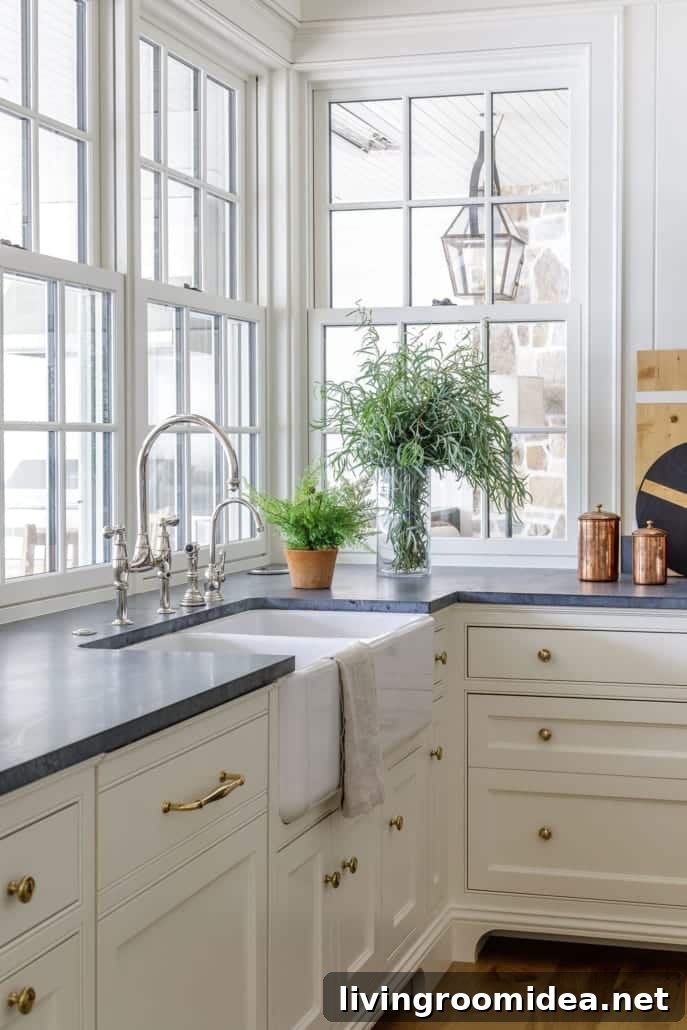
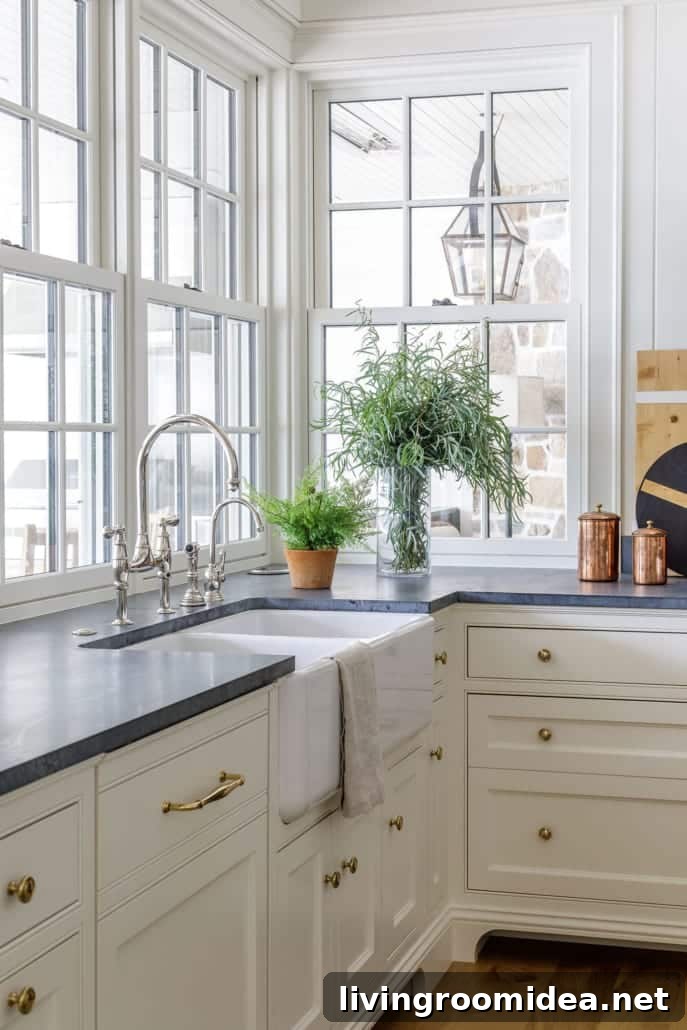
I have long been drawn to charming architecture and classic, natural materials, and soapstone has always held a special place in my heart. Early on, we used soapstone around the stove in our English Tudor, though we chose wood counters elsewhere to complement the existing tile floors. Those wood counters were gorgeous, and our bathroom’s marble also captured my imagination.
When planning the countertops for our current home remodel, I wanted to return to organic materials. This is our forever home, so choosing finishes that would still bring joy years from now was important. Natural stone won’t suit every taste, but for us it felt right.
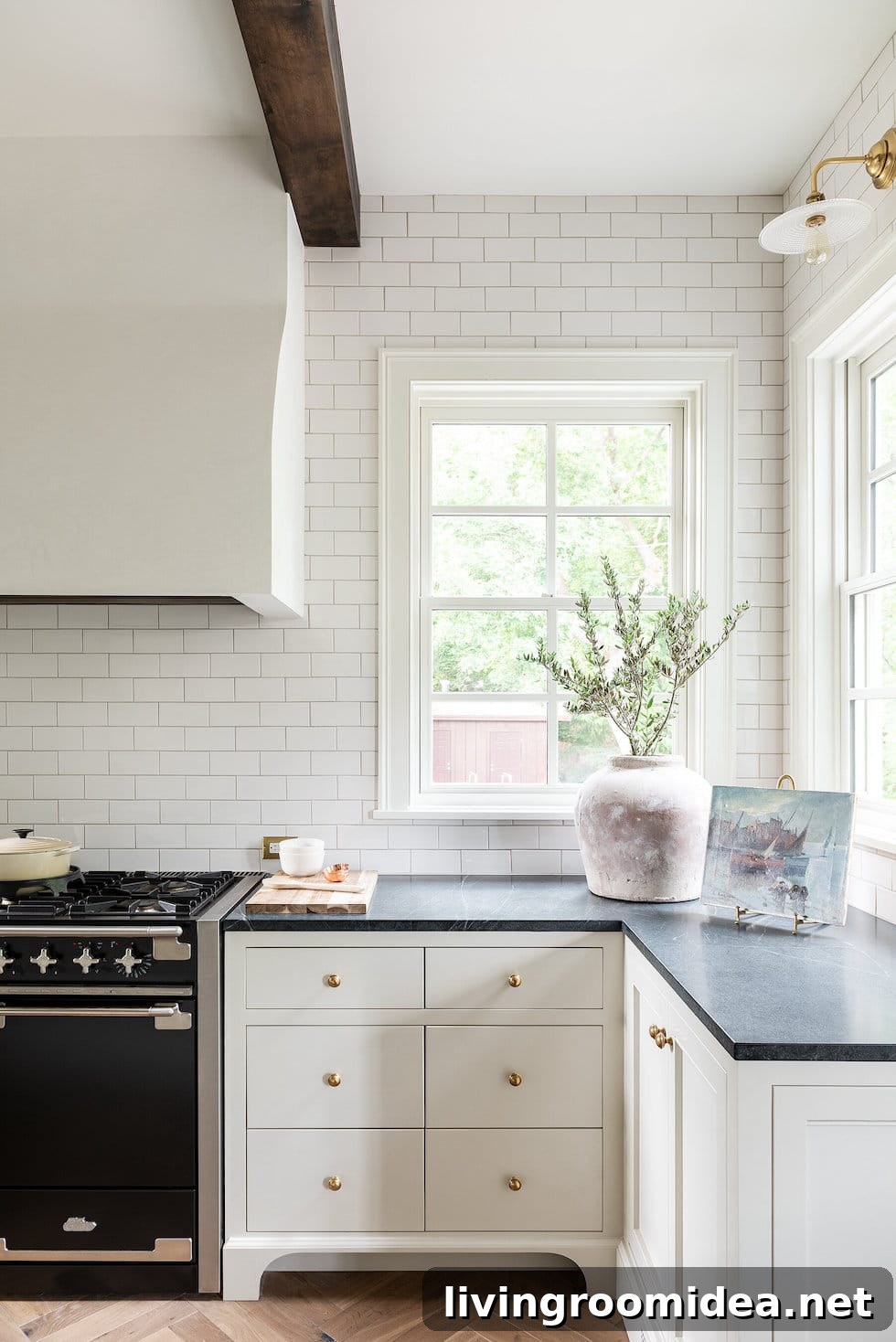
We decided on marble for the perimeter countertops months ago, but left the island undecided. At first we considered wood or butcher block for the island, then later revisited soapstone. Once our wood floors were installed and we realized they would serve as the home’s wood focal point, soapstone felt like the perfect complementary choice for the island. Choosing it made the kitchen feel like home to us. I’ve learned to be patient when unsure rather than rush into a decision.
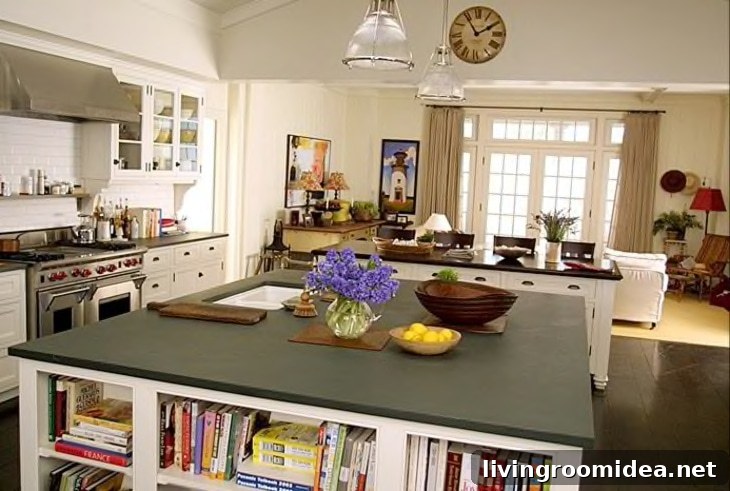
Who didn’t fall in love with this iconic beach house and classic kitchen? (These counters were likely faux, designed to mimic soapstone.)
Soapstone and marble both stand the test of time. Soapstone has a long history in New England homes, often used around fireplaces and in kitchens dating back generations. Marble is equally classic in Europe; the patina and worn beauty of marble in old cafés and buildings is unforgettable. That sense of history and slow-developing patina is exactly what we wanted for our home.
I prefer a home that feels like a lived-in sanctuary, one that tells stories and reflects family life. My aim isn’t to keep everything perfectly pristine. We’ll care for our stone deliberately, but we won’t live in fear of marks that show life being lived. The aging and patina of natural stone are part of its charm.
It’s common for stone yards, contractors, and designers to caution against soapstone or marble precisely because they change with use. Many homeowners expect materials to remain showroom-perfect, so professionals understandably warn clients about the evolving look. That said, if you appreciate natural aging, those cautions should not deter you.
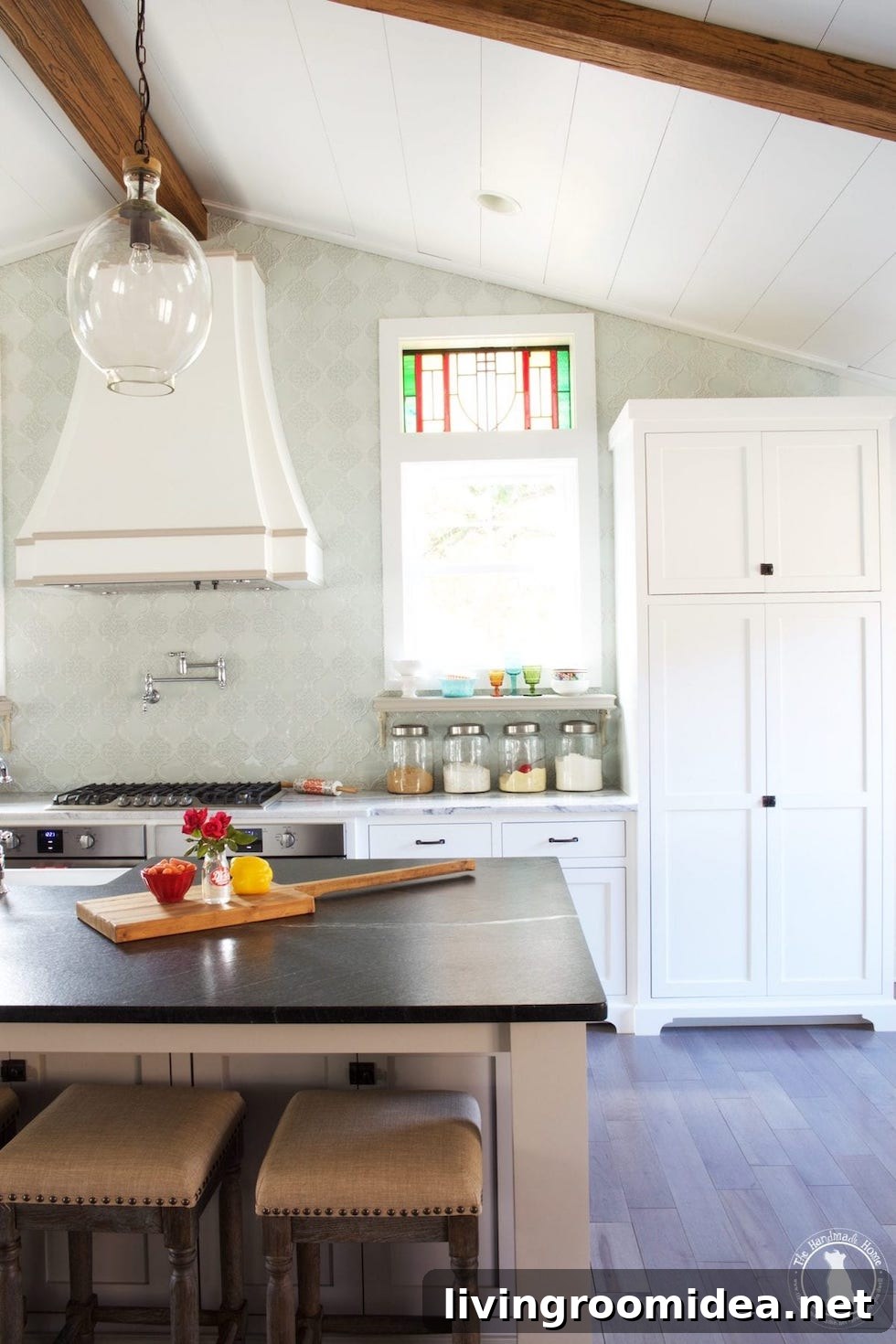
In the U.S., many people prefer materials that remain flawless, so marble and soapstone can be frustrating for those who want a pristine finish. Ask yourself what you truly want before making a choice you might regret. Some granites and engineered stones mimic soapstone’s aesthetic, but they won’t develop the same natural patina. I’m excited about the way our stone will age and the character it will gain over time.
In previous homes we used quartz, which has its advantages, but it never developed the same historic, organic look as marble or soapstone. Quartz also showed some staining and etching in our experience, which couldn’t be repaired the same way natural stone can. Soapstone is naturally heat resistant, another practical benefit over quartz.
We’re eagerly anticipating the installation of our new counters. The warmth and authenticity these natural materials bring have deepened our connection to the house, and we look forward to them becoming part of our family’s story. I’ll share more about living with and caring for the stone once it’s installed.
More Posts about Our Kitchen Remodel:
My New Kitchen Floor Plan + Parents’ Addition and Exterior Elevation
Our New Kitchen Design Mood Board (and five questions that helped me make decisions)
Adding Character in a Kitchen Remodel: The Tale of Our New Range and Faucet
Kitchen and Dining Room Renovation Update! Projects Have Begun!
Kitchen Renovation Update: Floors, Cabinets, Sink, Hardware and More