Once we decided to remodel our kitchen, I knew it wouldn’t be a project I could wing. I wasn’t hiring a full design or architectural team to make choices for me, and the budget was not unlimited. This wasn’t a quick fix and it wasn’t inexpensive, so I had one opportunity to get things right and keep costs under control.
That felt like a lot of pressure—I wanted to get it right the first time. Many friends were curious to see how the space would turn out, which added a bit of extra nervous excitement. Now that the kitchen is finished, I’m finally breathing easier.
Looking back, I’m happy with how it all came together, and I’d like to share several practical tips I used during the design process. I’ll share more details in future posts, but these guidelines helped me stay focused and intentional from start to finish.
1. Allow plenty of time for research—don’t rush a full remodel.
Unless you’ve hired a professional team and have the budget to lean on, plan for an extended research phase. The best results come when you explore many ideas, compare materials and finishes, and give yourself room to change your mind before committing to purchases or demolition. Rushing into decisions can lead to costly mistakes or compromises you’ll regret later.
2. Keep the kitchen footprint when possible.
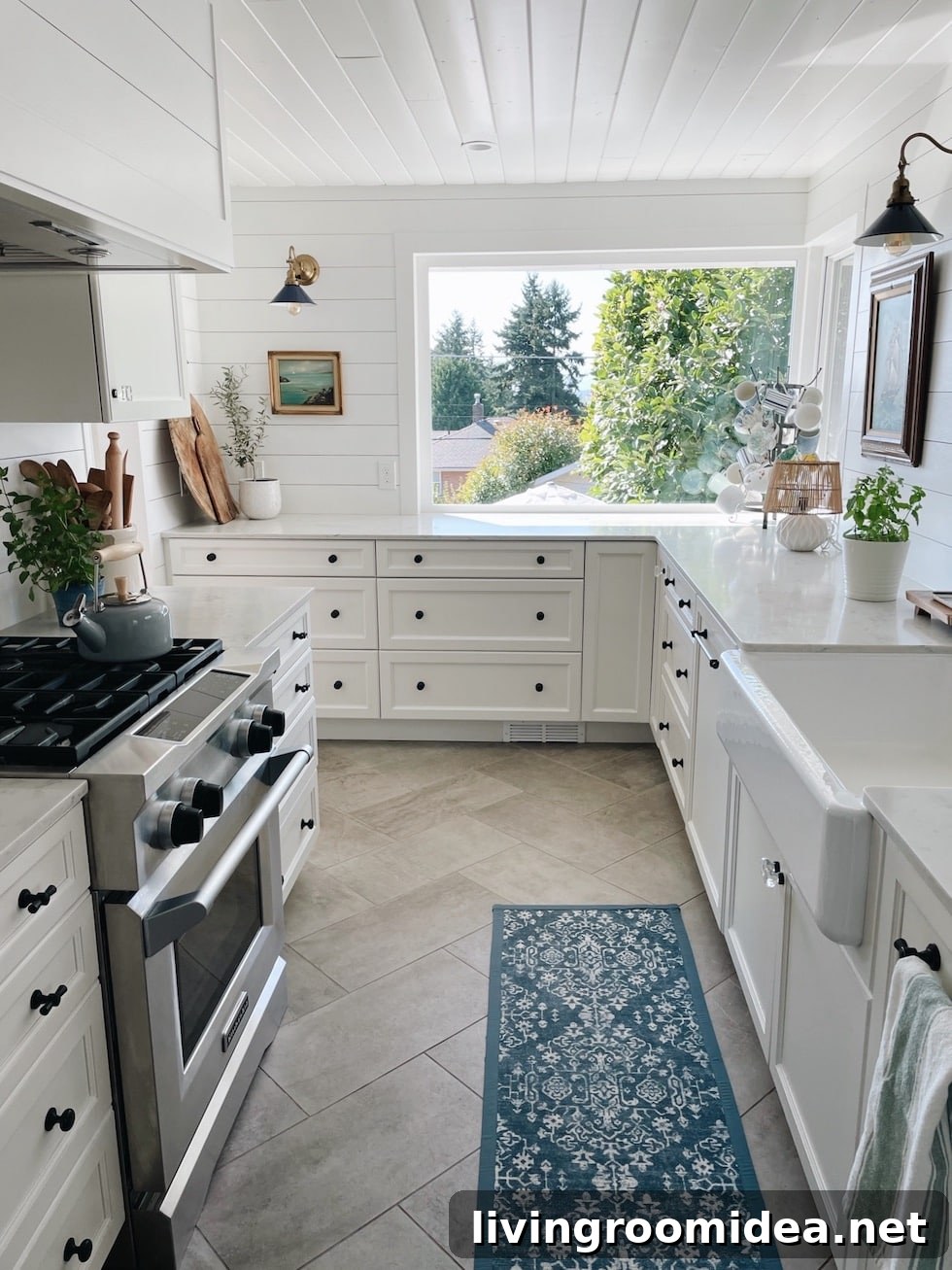
If budget is a concern, consider retaining the existing layout, especially elements like plumbing lines, walls, windows and appliance locations. Preserving the footprint reduces major structural changes and unexpected expenses, while still allowing you to achieve a fresh, thoughtful design within the existing space.
3. Choose one non-negotiable starting point.
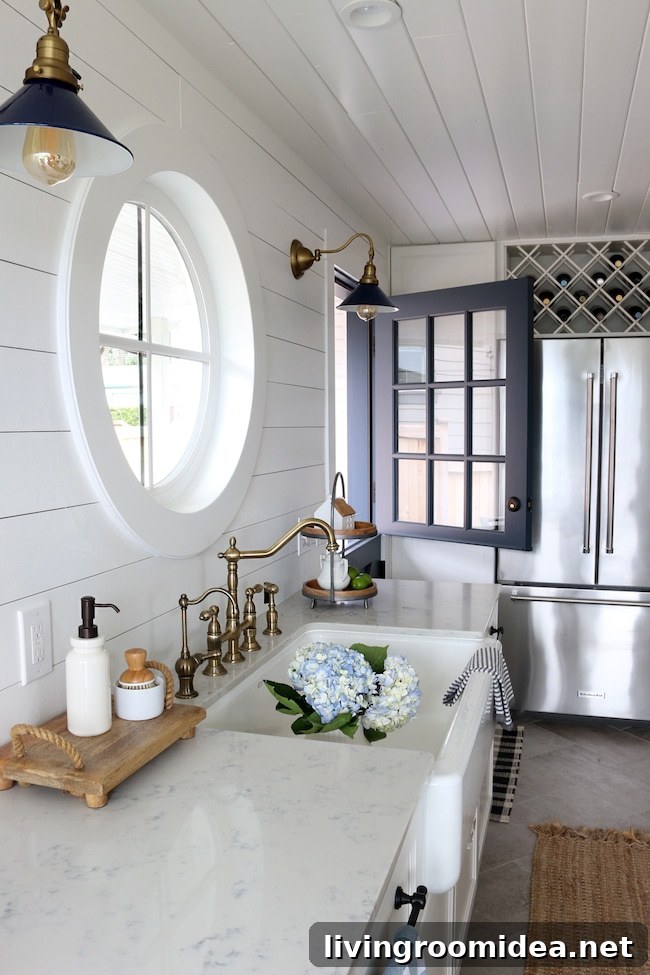
Identify the single feature that matters most to you and build the rest of the design around it. With a small kitchen, it’s easy to be overwhelmed by options that won’t all work together. I narrowed my choices by deciding the dark navy Dutch door would be the defining element. With that decided, other selections—colors, finishes, and fixtures—fell into place more easily and stayed within budget.
4. Design focal points as unified compositions.
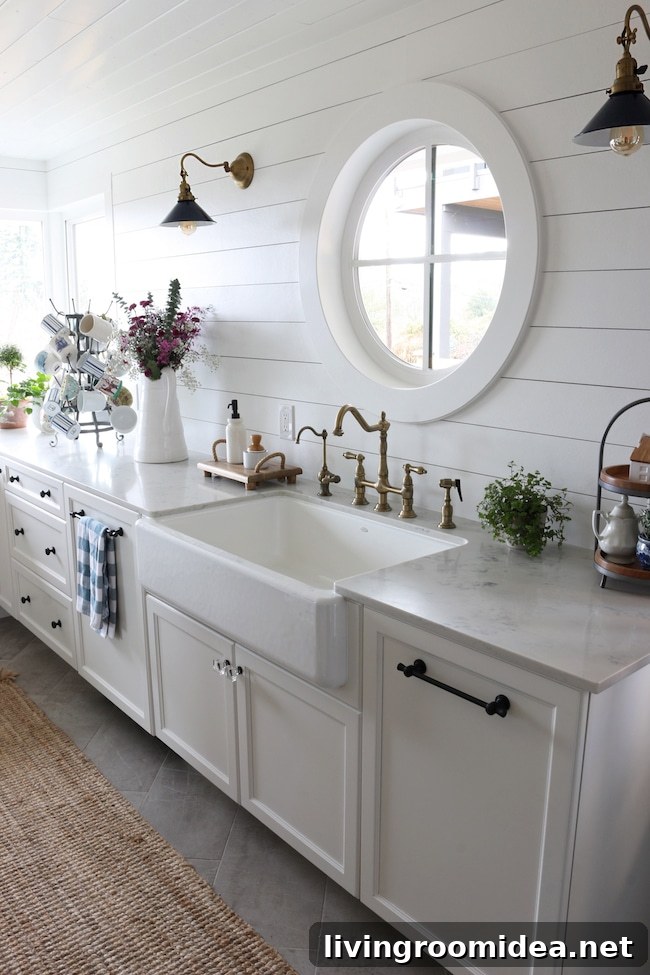
Rather than making isolated decisions about individual items, think about how clusters of elements create a focal point. For example, a sink area may include the sink itself, faucet, window, lighting, cabinet hardware and surrounding finishes. When these components are chosen to complement each other, the result feels intentional and harmonious instead of jumbled.
In my kitchen, the new round window was selected for its visual impact. It replaced a smaller rectangular opening but made a much bolder statement due to its shape. To keep the look balanced, I kept the trim white so the round form reads clearly without competing with other features. The view through the larger back window to the left and the dark navy door to the right are both important visual anchors, so the round window needed to sit comfortably between them.
Brass finishes on the faucets and light fixtures added warmth and repetition of material, while the darker shades on the lights provided balance and tied into the door and hardware. Thinking of these elements together ensured the focal point felt cohesive rather than accidental.
Are you remodeling or updating a kitchen this year? What decisions are most challenging for you?

Related Posts:
Click here for My Kitchen Reveal & Tour and Click here for my Kitchen Source List