
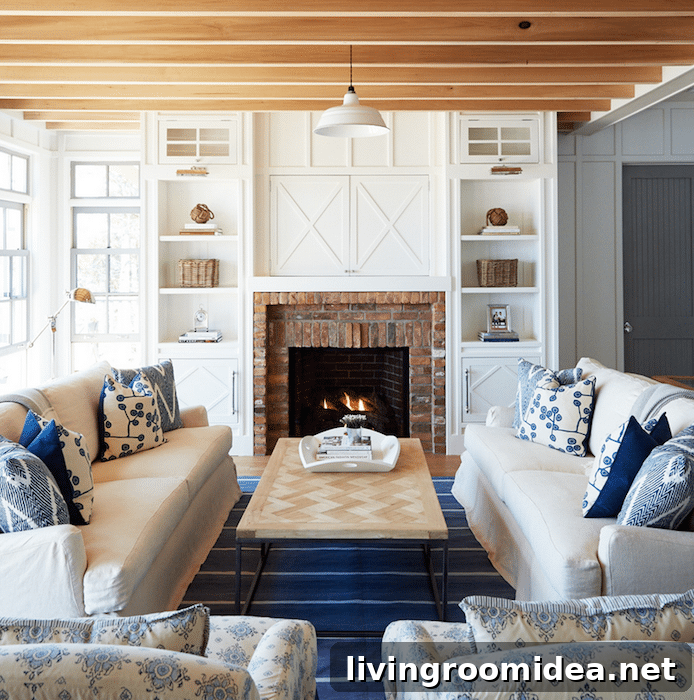
 Muskoka Living
IIf you read my last Life Lately post, you might have noticed that over the Christmas break our TV sat on a console in front of the living room fireplace. A few readers asked about that setup, so this post responds to those questions and shares what I learned from having the TV upstairs for the holidays.
In most of our homes we try to keep the television out of the main living room. For us, the living room is more of a conversation and gathering space than a full-time entertainment room, especially since it opens to other areas of the house. Still, when family visits we enjoy watching movies and playing games together. Normally we use the downstairs media area for that, but this year the basement was being used for projects, so we moved the TV upstairs for the season.
Having the television in the main living area during Christmas made me rethink the common idea of mounting a TV over a fireplace. I’ve typically avoided that arrangement because the screen can sit high and strain viewing comfort. In this house, however, the ceilings are lower and the scale feels more natural, so it could be a workable solution. I spent some time gathering inspiration images of living rooms with TVs integrated into the fireplace area, and I’m warming to the concept—especially when attractive built-ins are part of the design.
If the TV is positioned thoughtfully—at the right height and with built-ins or trim to balance the visual weight—it can feel intentional rather than an afterthought. Options like flanking cabinets, recessed niches, or a mantle wide enough to visually anchor the screen all help the TV feel like part of the room. Another approach is to conceal the television when it’s not in use, whether with a sliding panel, a framed artwork that lifts, or a piece of decor that disguises the screen.
There are trade-offs to consider. Mounting a TV above the fireplace may raise the viewing angle, which could be less comfortable for long movie sessions. Heat and soot are factors in some fireplaces, so it’s important to keep electronics at a safe distance and ensure proper ventilation. On the positive side, the fireplace wall is often the natural focal point of the room, and placing the TV there can avoid drawing attention to it elsewhere in an open-plan layout.
Design treatments can make a big difference. Built-ins that surround the fireplace and TV help integrate the screen into the room’s architecture and provide storage for components and media. A reclaimed wood mantle, shiplap, tile, or a painted surround can add texture and soften the TV’s presence. For those who value a clean aesthetic, concealing the television behind cabinet doors or art is an elegant solution.
After experimenting with the TV upstairs, I’m more open to the idea of having a television in the main living room—especially when the placement is planned so the space still reads as a comfortable, conversation-friendly area. What about you? Do you keep a TV in your living room, or do you prefer a separate media room?
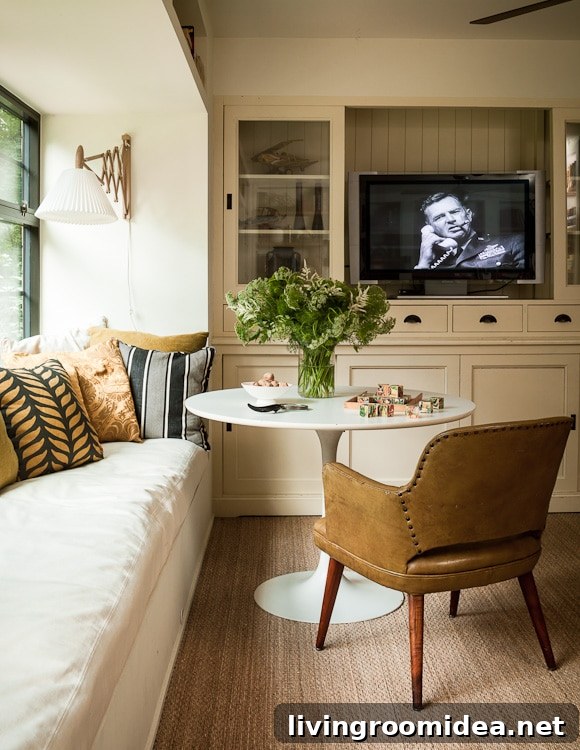 Lauren Liess
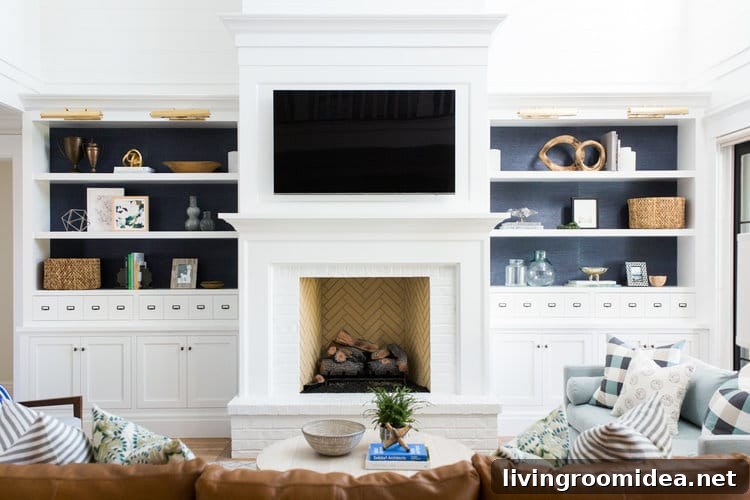 Studio McGee – Windsong Project
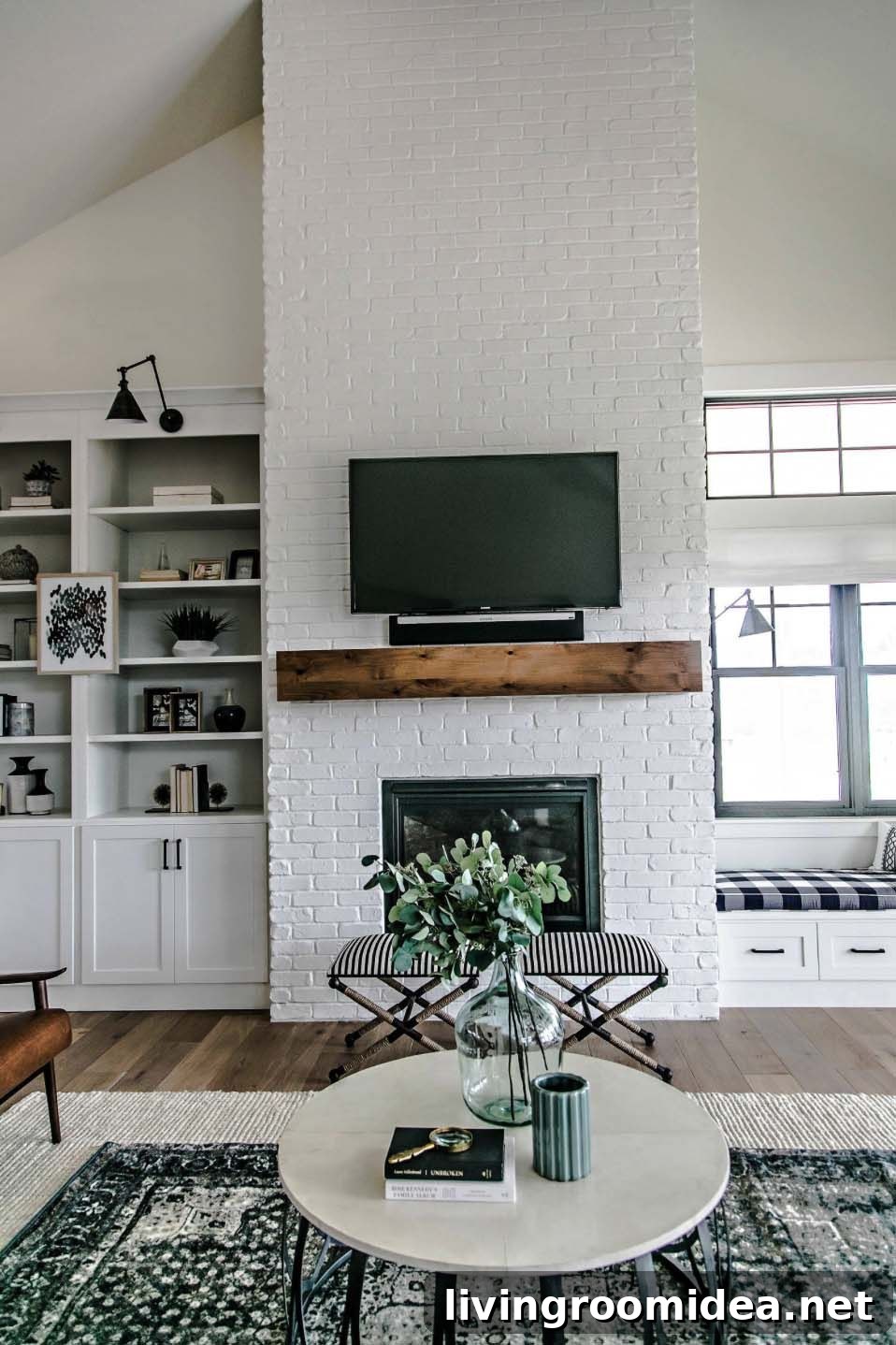 Sita Montgomery Interiors
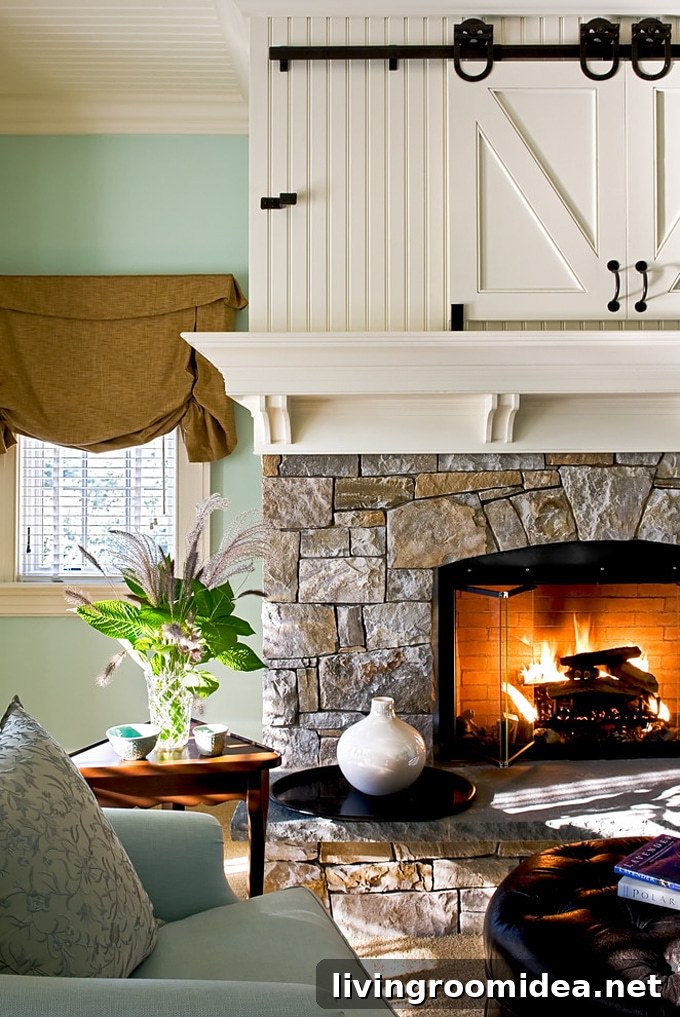 Crisp Architects
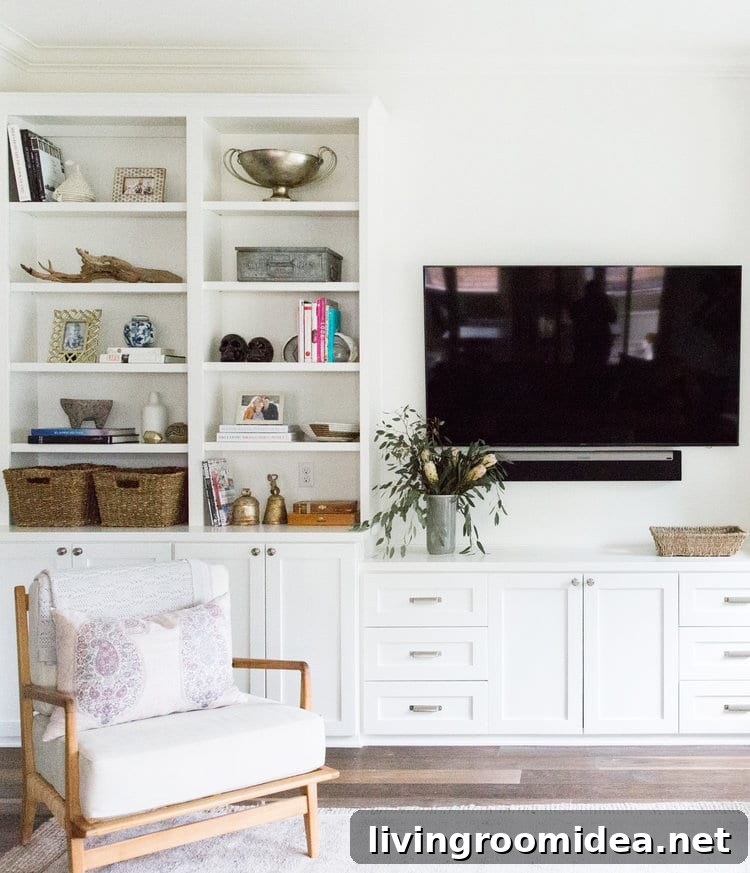 Studio McGee
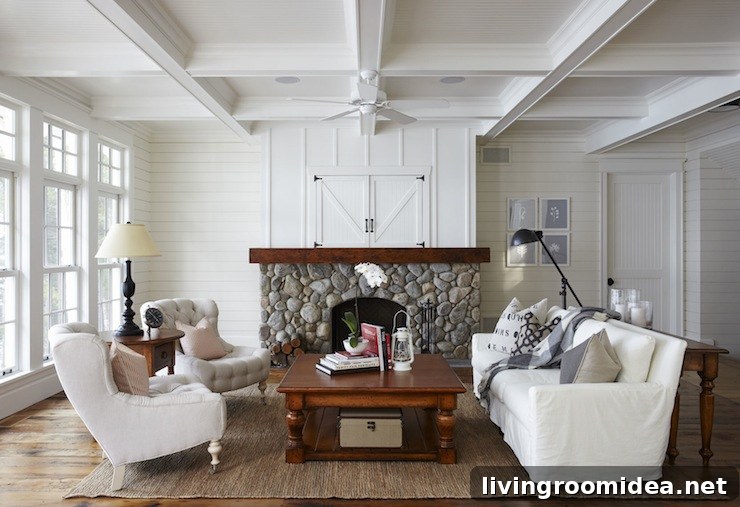 Muskoka Living
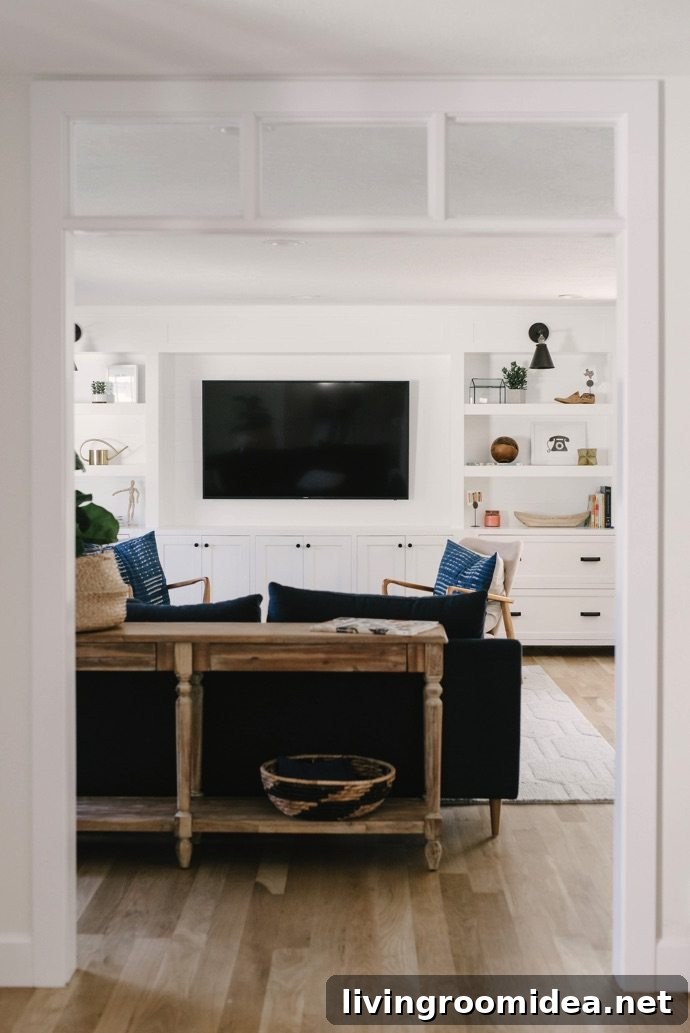 The Glitter Guide
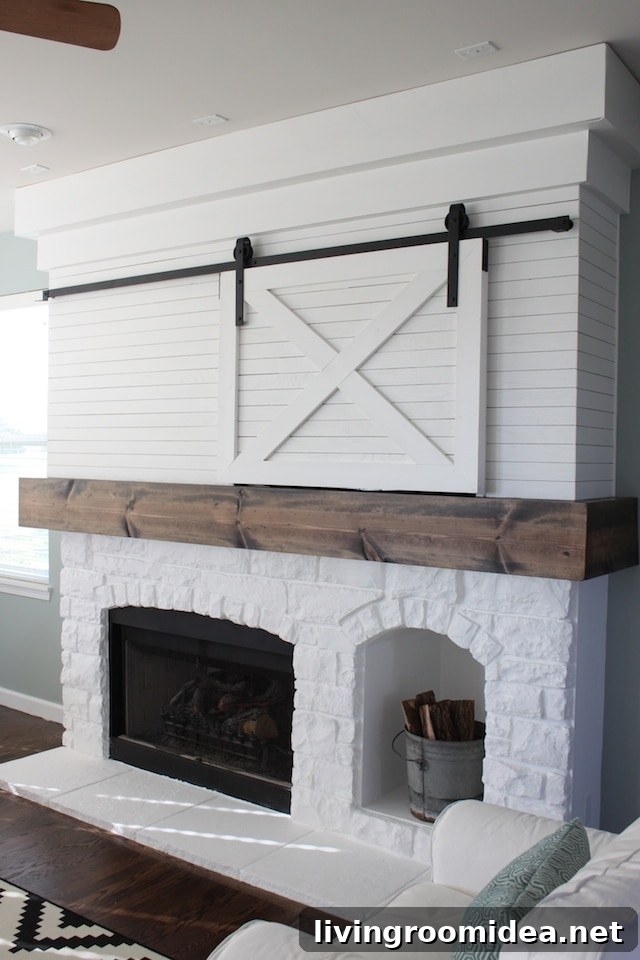 Colors and Craft
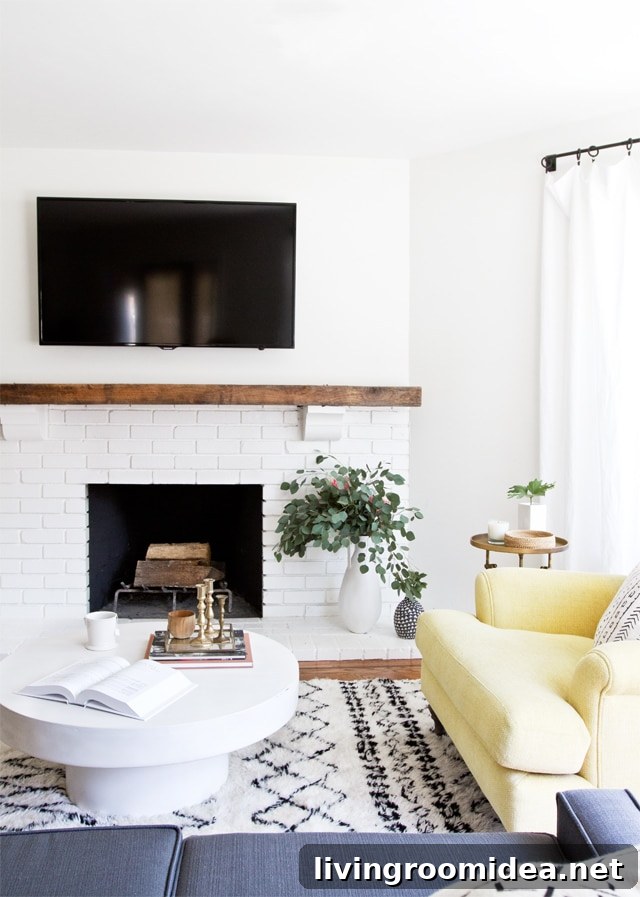 Sarah Sherman Samuel
PS. I also like the idea of a hidden TV behind a map, a clever solution that keeps the room looking tidy when the screen is off.
Related Posts:
My White Painted Fireplace Makeover
Fireplace Makeover in My Previous Home
7 Clever and Charming Built-Ins