
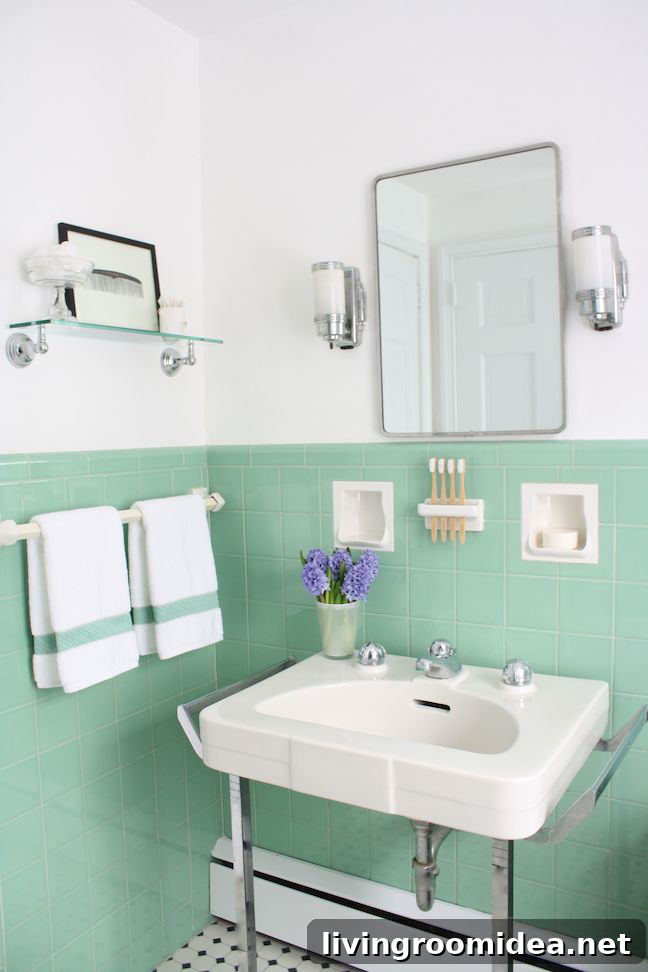
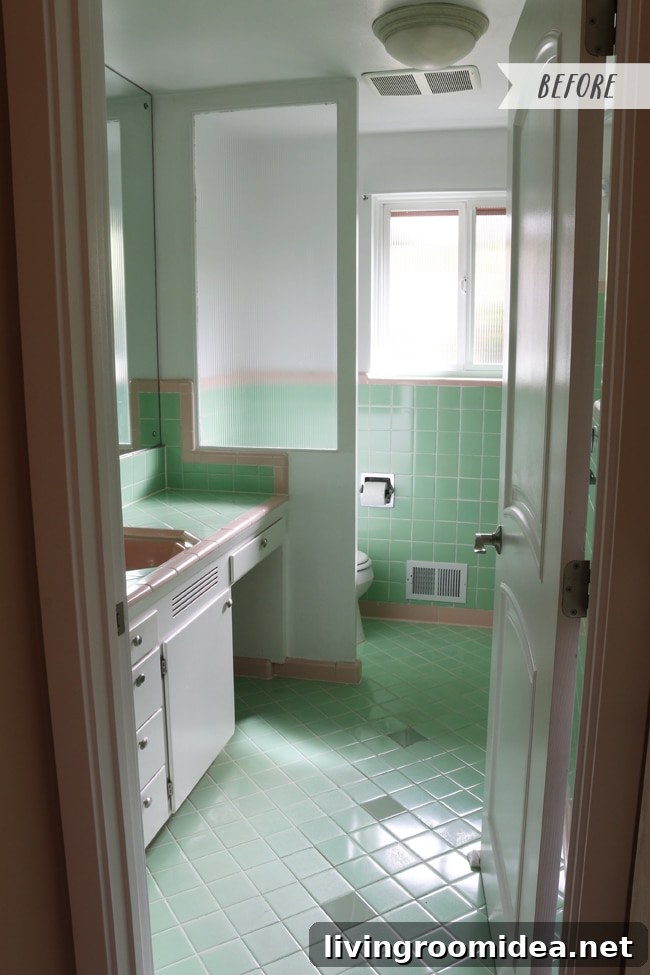
While I’m still waiting to finish the kitchen (thanks for your patience), I thought it would be fun to focus on another unfinished space: the mint-and-pink bathroom. Several of you asked to see it after I mentioned the pink tub, so here’s a clear look at the room and my thoughts about it.
Would I choose mint green and pink together for a bathroom on purpose? Probably not. I like vintage charm and unusual color schemes, but this particular combination doesn’t sing to me. That said, when we bought the house the room was clean and well cared for, which I appreciated.
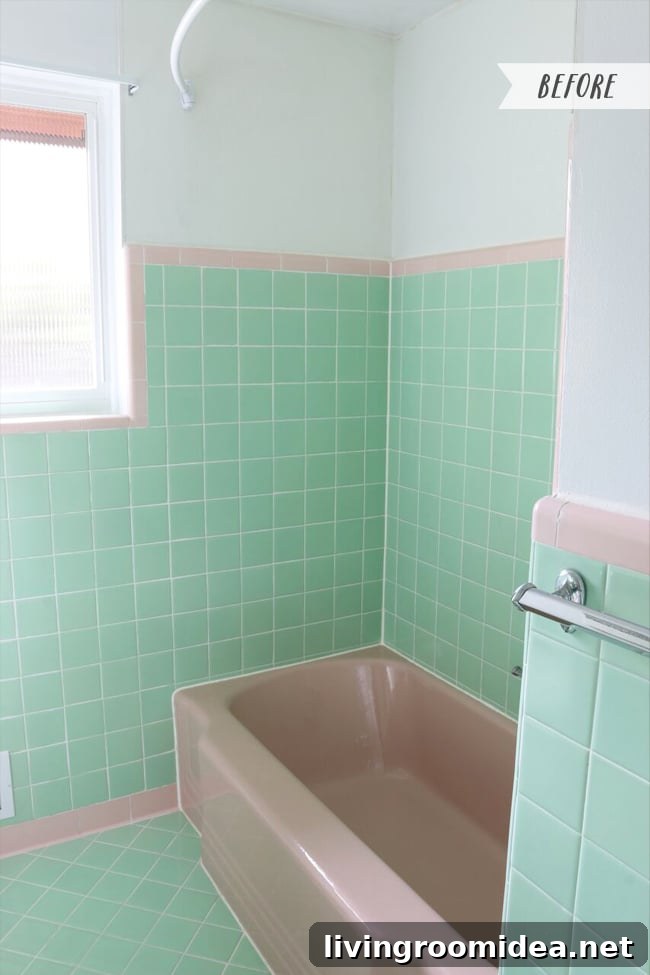
There’s the pink tub. Together with the mint walls and tile, the colors remind me of those multi-colored antacid tablets—hardly the most calming image when you’re heading into a bathroom. If you love this palette, don’t be offended; vintage bathrooms can be fantastic when they feel intentional.
I actually have a soft spot for vintage bathrooms. I grew up with one that had yellow and black tile and always thought it was charming—like a bumblebee bathroom. In our old English Tudor we preserved several period bathrooms, and some of them were real highlights of the house.
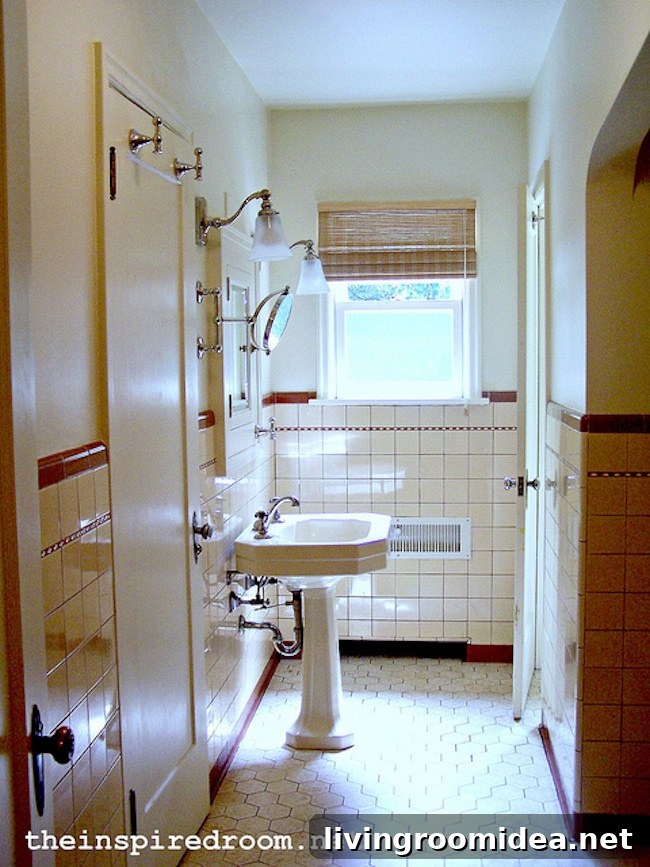
One 1930s bathroom had terrible wallpaper when we moved in, so we stripped it, painted the walls, cleaned thoroughly, and added vintage-inspired faucets, lights and a built-in medicine cabinet. We left the original tile and the room kept its character.
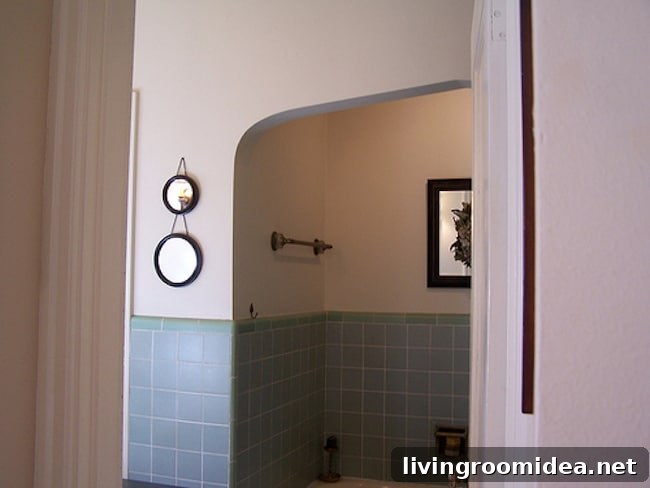
Another mint bathroom in the Tudor had black velvet wallpaper when we moved in—dark and strange—but after stripping and cleaning, we kept the green tile and paired it with black soapstone counters and natural wood blinds. The contrast felt thoughtful and cozy.
Right now, though, I’m unsure what to do with this green-and-pink bathroom. Pink is trendy, and a pink clawfoot tub can be lovely, but this room still feels off to me. Since taking the before photos I’ve added only a shower curtain, a leftover bamboo shade and a black doorknob. That’s it—improvements, but not enough.
Old bathroom tile is not like modern tile: it’s often set in place and not easy to remove. That’s one reason keeping original tile can be desirable. But even if I accept the tile, there are other problems:
- The vanity is very short (and I’m only 5’2″), with tiny, inefficient drawers.
- Some floor tiles are loose or not well attached, suggesting past repairs.
- Large mirrors covering the wall around the vanity are semi-broken and unsafe to remove without help.
- Grout is thick in places and seems to have been repainted or renewed inconsistently, making cleaning difficult.
- The tub is cast iron and firmly set in place; I don’t mind the quality, just the color.
- The toilet is a newer Kohler, which is a win.
Long term, I’d like to reconfigure this space into a small master suite if possible. We have another bathroom downstairs, so turning this one into a private master bath would be ideal, but the current layout makes that challenging. I did get a quote to gut the space and rework the layout, but it was about $45,000 for such a small room—too expensive for me.
There are several lower-cost options to consider: resurfacing the tub and tile, replacing only certain elements like the vanity while keeping the tile and tub, or simply accessorizing to make the space feel more intentional. But I’m undecided on which route to take.
HELP! What would you do?
Below are some inspiring photos and a short list of practical ideas for updating a vintage bathroom without losing its character.
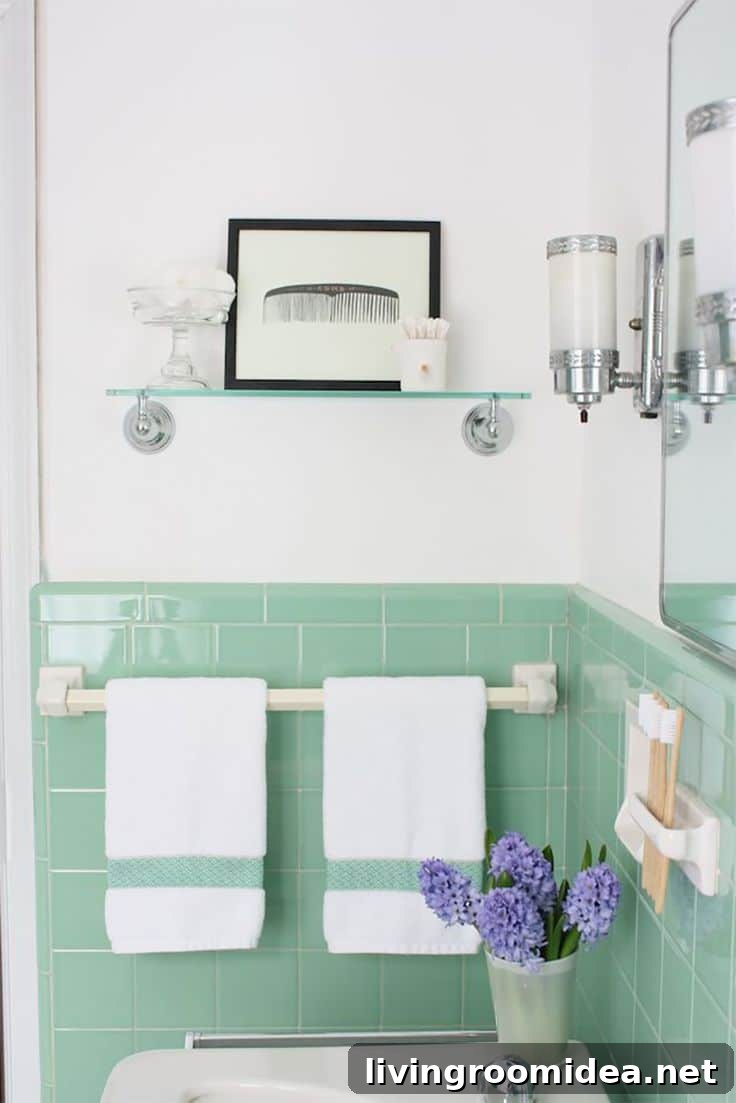
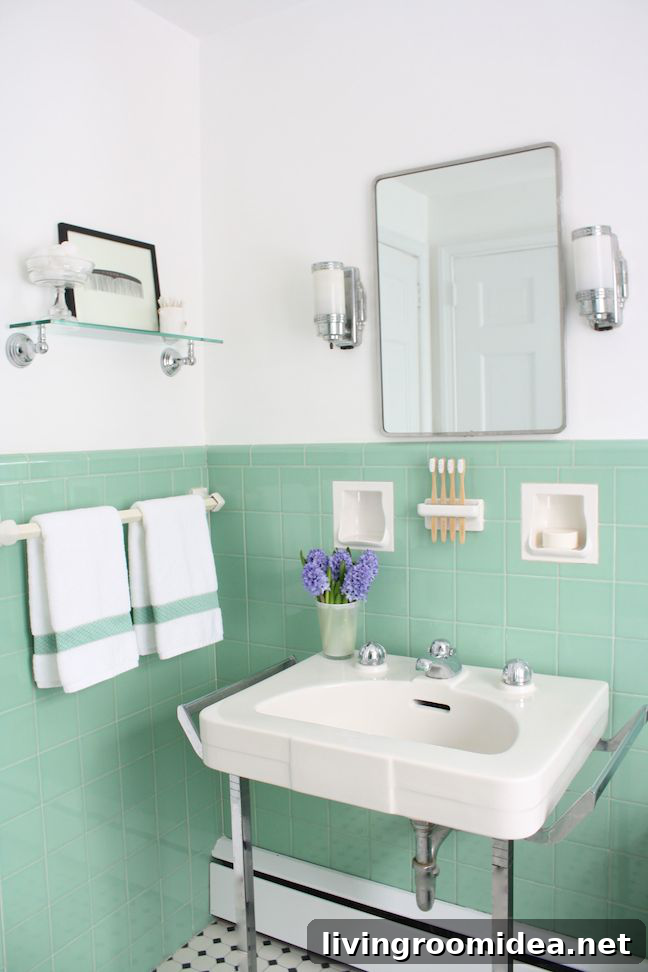
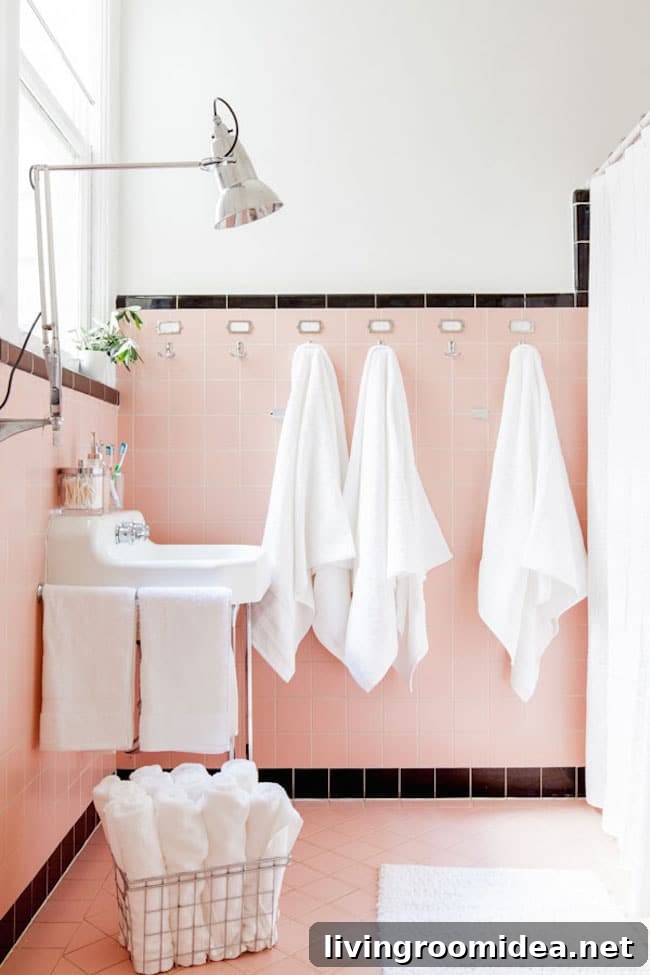
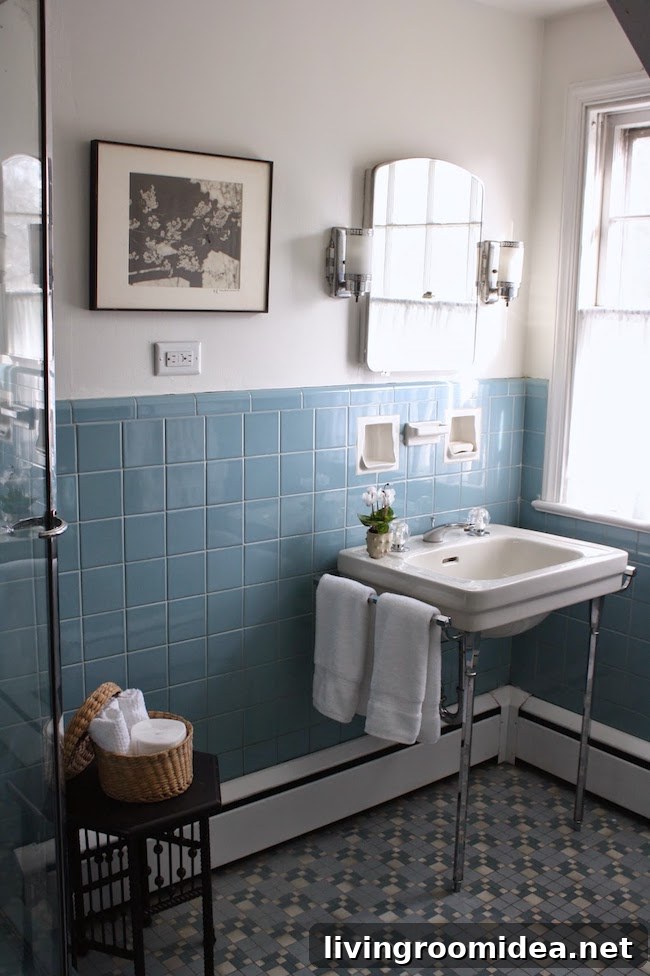
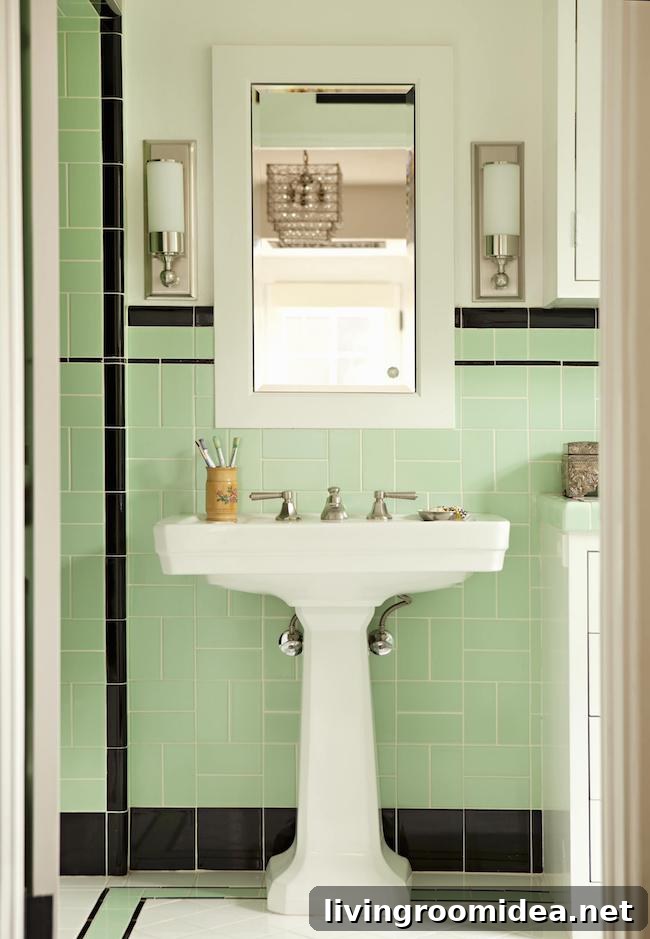
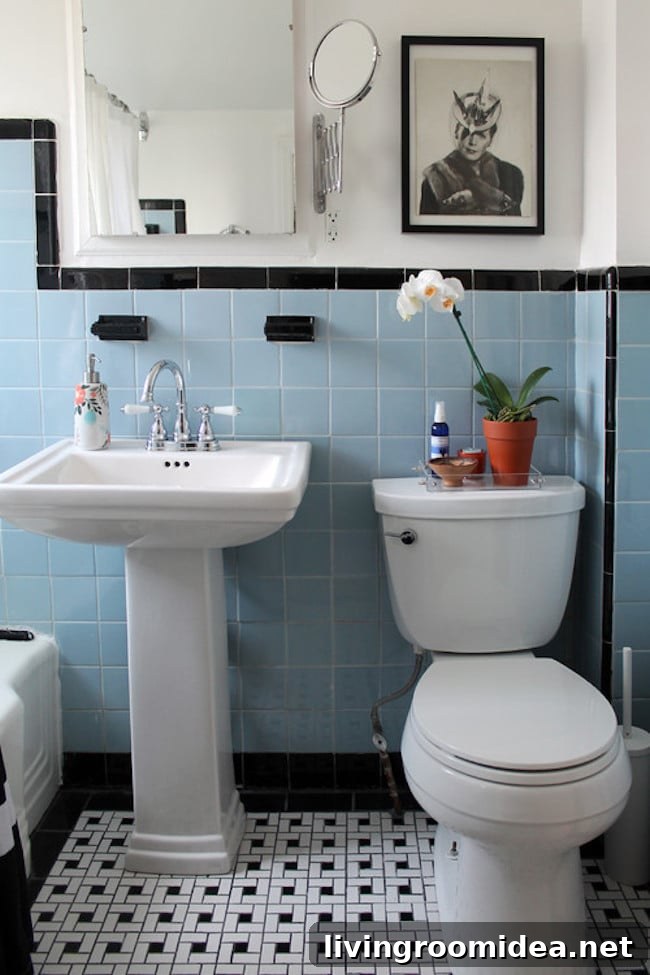
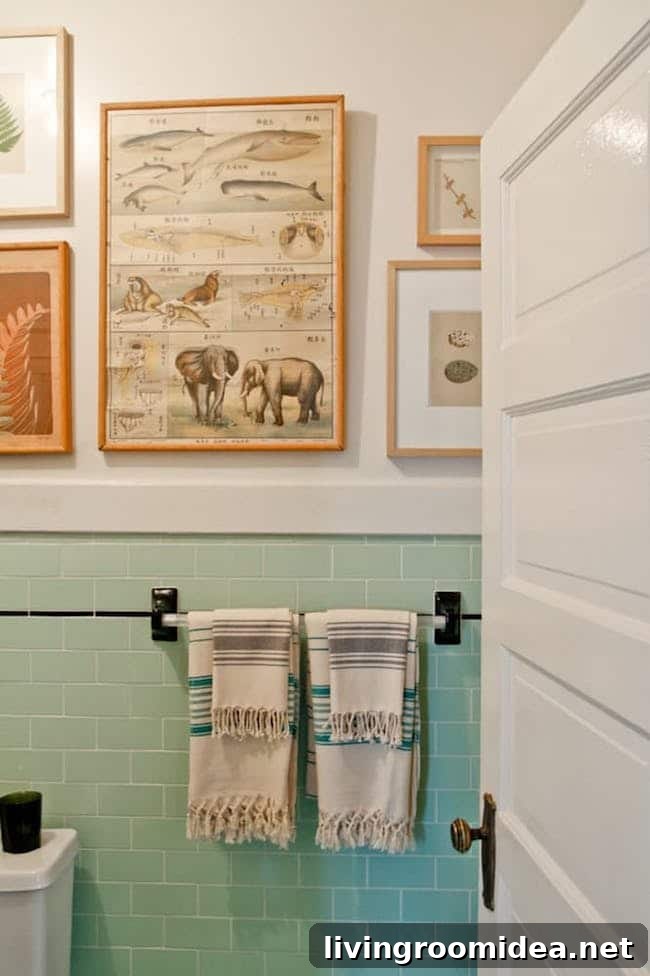
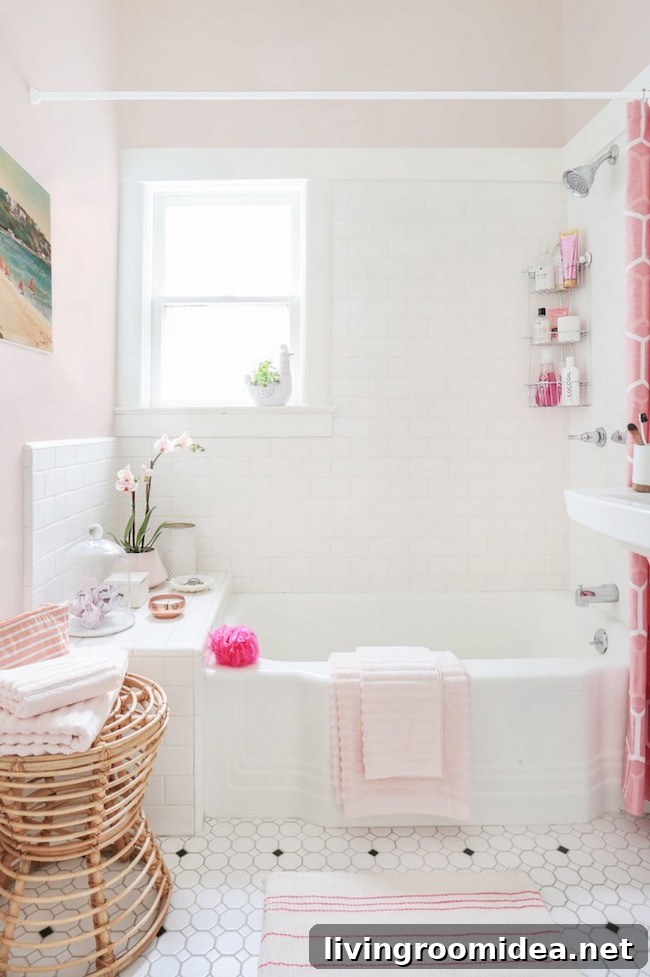
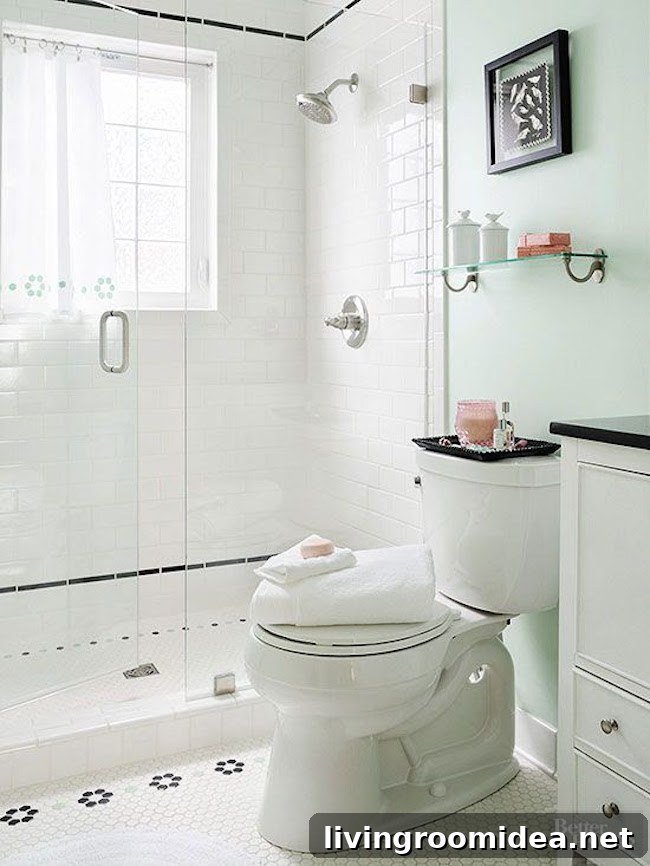
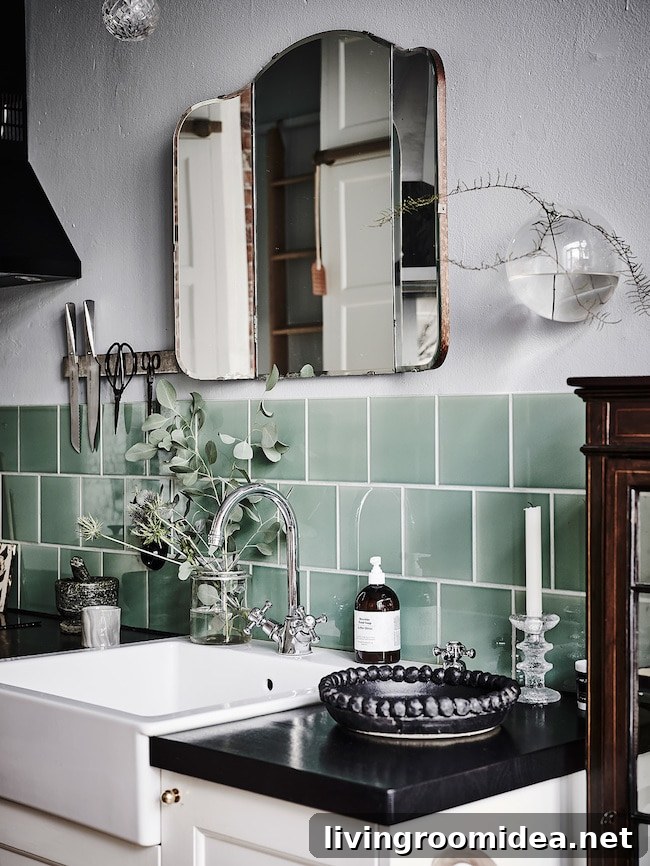
The image above is actually a kitchen, but it captures the same vintage feeling I loved in the Tudor: black and white contrasts, dark wood, metal accents and natural greenery to warm the palette.
Simple ideas for updating or accessorizing a vintage bathroom
Play up the good
Lean into the vintage charm and make it feel deliberate with thoughtfully chosen accessories: window treatments, rugs, artwork and curated decor.
Tone down the parts you don’t like
Use rugs to cover floor tile, consider tile paint to neutralize an unwanted color, or create a strong focal point like bold wallpaper or a patterned shower curtain to draw attention away from features you dislike.
Keep it classy
Introducing black accents—frames, hardware, a dark door or a tray—can ground a pastel-heavy scheme and add a more sophisticated feel.
Freshen up with paint
Brighten and simplify the space with clean white walls, new towels, and a fresh shower curtain to reduce visual clutter.
Add warmth with texture
Natural materials—bamboo or wood blinds, woven baskets, rattan stools and wooden frames—soften a room dominated by tile and add inviting warmth.
Bring in a new sink or vanity
A new vanity is one of the most transformative changes you can make: it improves both style and function while leaving the tile intact.
Update fixtures
Swapping lighting, faucets, mirrors and cabinet hardware is a relatively affordable way to change the room’s look.
Resurface the tub
Refinishing an old tub or sink can deliver a fresh, clean surface without full replacement. It’s a durable solution if you’re willing to maintain the finish carefully.
So…what do you think I should do with my vintage pink and green bathroom?
PS. I’m considering shopping for accessories to try a few different directions—sometimes small changes help you decide the next step.