
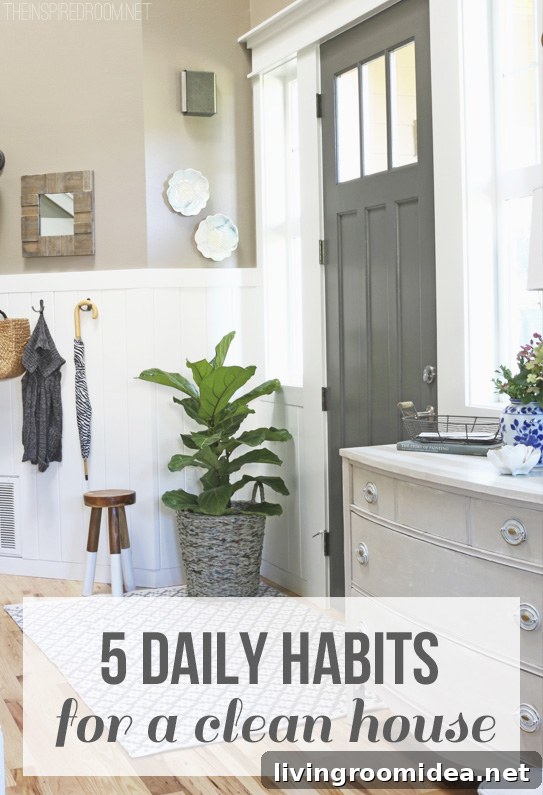
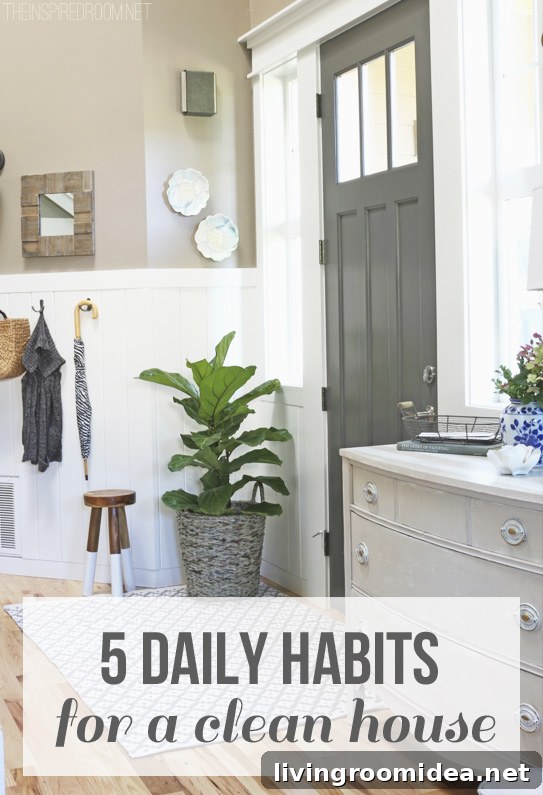
I don’t know about you, but when my home becomes cluttered and chaotic I feel out of sorts and less productive. The condition of my living space has a real effect on my emotional well-being and daily focus.
Do you notice the same thing when clutter builds up?
Because clutter has such an impact, establishing simple daily routines helps me keep stress and mess under control. Some seasons are more hectic than others, and it can be tougher to maintain order then. Ironically, the busier my life gets, the more important it is to stick to small daily habits.
Where do we begin forming new habits?
Below is a straightforward 30-day plan I use to build clutter-busting routines. It removes a lot of stress and helps me maintain a calmer home. Use it as a flexible guide — adapt it to your needs and pace.
Ready?
It’s simple:

1. Identify four indoor clutter hotspots.
Start by noticing where clutter tends to accumulate each day. Pick four specific problem spots that bother you most. Focus on manageable surfaces or small areas rather than entire rooms. Examples include kitchen or bathroom counters, the dining table, the entryway floor, laundry baskets, a nightstand, or a frequently used countertop.
If more than four areas cause trouble, choose the ones that are most visible or create the most frustration. If a single room is the main issue, you can select four surfaces, drawers, or closets within that room to make the task easier.
2. Choose one outdoor or mobile hotspot.
Next, think about spots outside the main living areas that also cause daily stress—items like a purse, your car, a front porch, or a mailbox area. Pick the one that annoys you most and add it to your list. You’ll tackle other problem areas later.
Now you should have five priority clutter hotspots to focus on: four inside and one outside. That gives you a clear starting point.
Doesn’t it feel better to narrow down the biggest trouble spots? Keep your focus narrow at first — solving everything at once is overwhelming. Small steady changes are more sustainable.
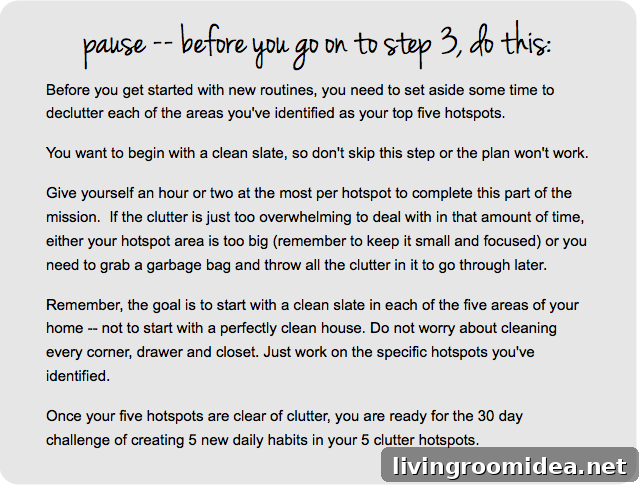
3. Create five simple daily habits tied to those hotspots.
With your five hotspots identified, develop one easy daily habit for each area. The goal is to prevent clutter from piling up again with a short, repeatable routine you can realistically do every day.
Write down one small habit per hotspot. Keep each habit short — a few minutes or a quick action — so it’s easy to follow through. Here are some practical examples:
- Clear kitchen counters and put dishes away every night before bed.
- Wipe bathroom surfaces and put toiletries back in their spots after use.
- Clear the dining table after meals and run a quick sweep with a cloth.
- Drop keys, mail, and daily items into a designated basket at the entry when you come in.
- Empty loose items from your purse or car into a tray and sort them every evening.
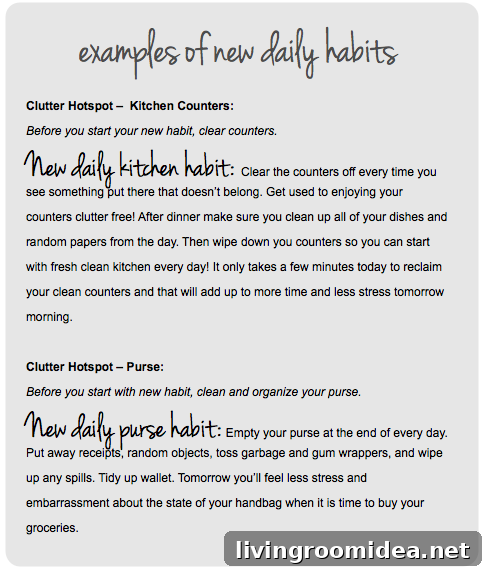
These habits are intentionally small and achievable. Consistency matters more than intensity.
Keep in mind it often takes about 30 days to establish a new routine. Aim to practice each of your five habits every day for a month. After 30 days, they’ll feel more automatic and less like work.
You can do this. Start with the simple steps: pick your hotspots, choose one habit for each, and commit to 30 days. The process is straightforward and effective when you stick to it.
- Three easy steps to start: select your hotspots, plan one habit per spot, and follow those habits for 30 days.
- Five focused areas and five daily habits keep the plan manageable and practical.
Photos: from my home and a visit to the Street of Dreams in 2009.

If you want more ideas, consider checking books and resources for additional routines and inspiration.
Related posts:
How I Keep My House Clean with 4 Daily Routines
Speed Cleaning: Tips for More Efficient Housekeeping
The Cleaning Frenzy: 15 Minutes to a Tidier House