
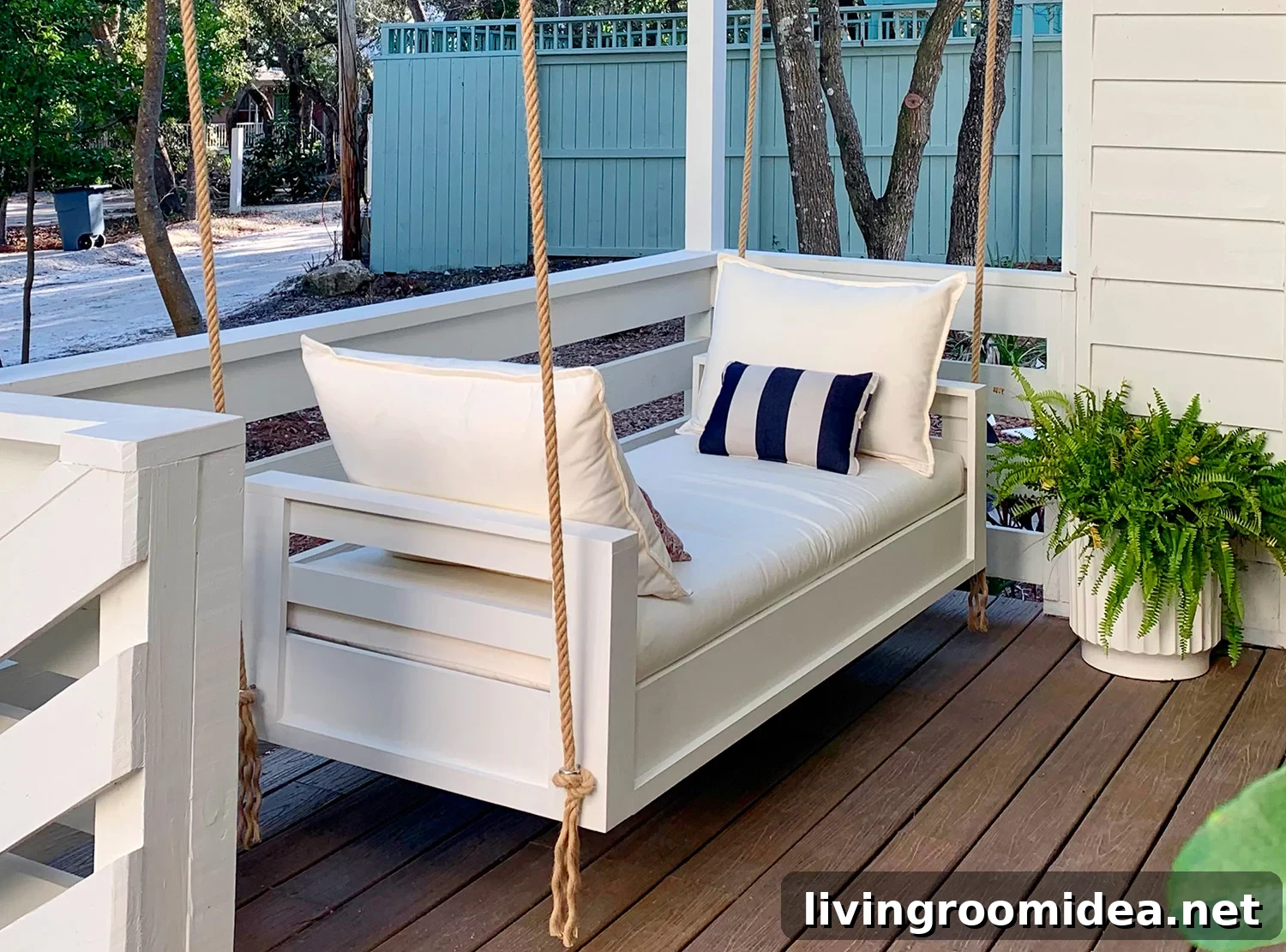
Last week we showed the DIY outdoor hanging daybed we installed on our front porch. As promised, here’s how we hung it—because if you’re like me, suspending something that needs to support the weight of a person (or two) can feel a little nerve-wracking.
It turned out to be very simple. In fact, we re-hung it once to refine the motion so it wouldn’t pitch forward and backward like a playground swing. The second approach produced a smooth, level sway and was easy enough that documenting it felt worthwhile—so you can skip straight to the better method on your first try.
After our initial hanging attempt the bed swung noticeably front-to-back: when you sat on the front edge it wanted to tip forward, and when you lay down it rocked in a shallow U-motion. We preferred a subtle, even sway with the bed remaining flat, so we upgraded to four ceiling anchor points—and it made all the difference.
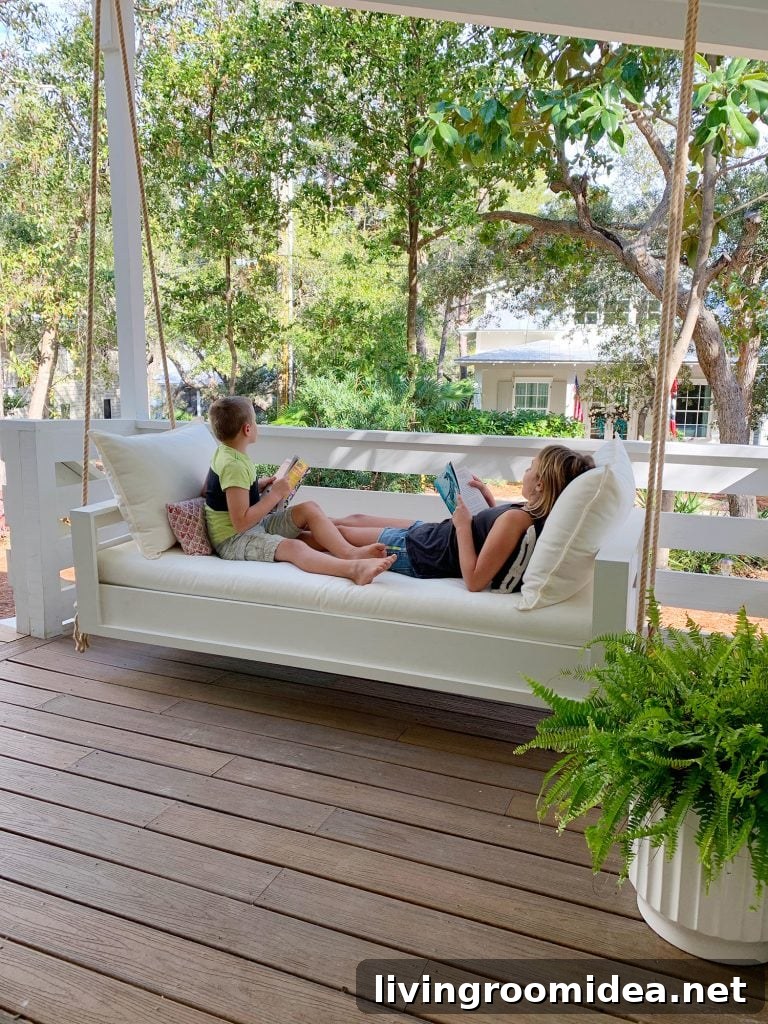
Suspending the daybed from four points keeps everyone level while reclining, reading, or relaxing. The bed still gently moves, but it no longer pitches forward and back. It’s a small change with a big impact.
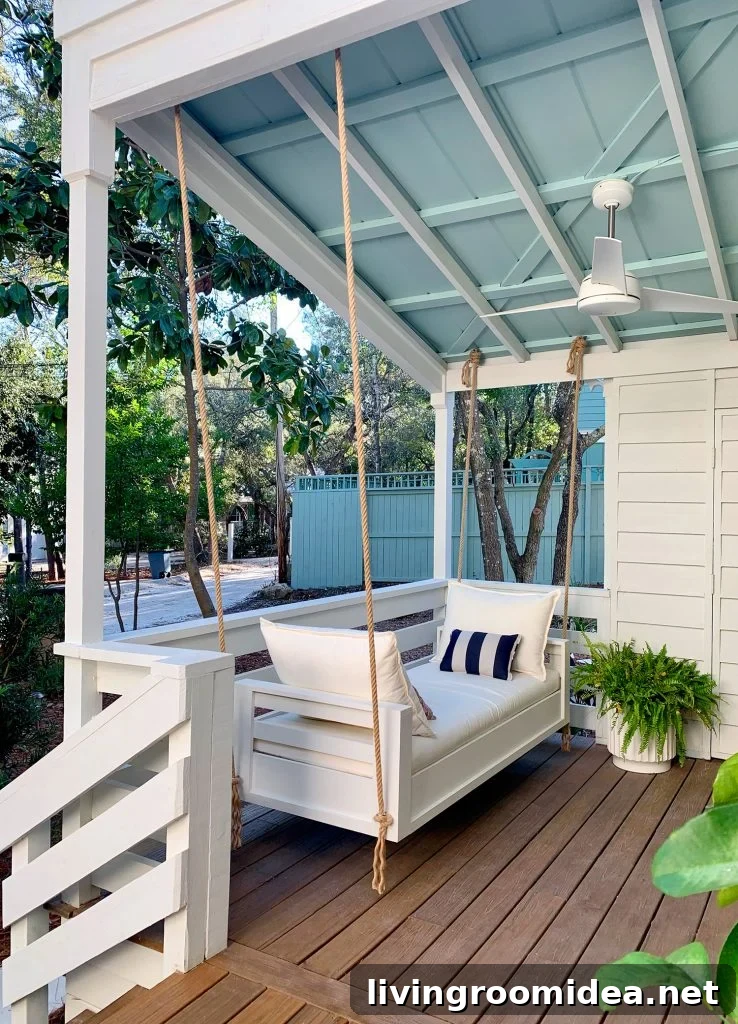
We filmed the process to make it easier to follow: the video covers the hardware we used, how to accommodate rope stretch, and the simple knots that make the whole setup adjustable and secure. If you can, watch the video while you’re preparing to hang your daybed—it will help you avoid common mistakes.
Note: You can also view the video on YouTube where auto-generated captions are available.
Daybed Hanging Materials
The materials list is straightforward:
- Four 5-gallon buckets to prop the daybed at the correct height during installation
- Four heavy-duty screw eye hooks for the ceiling
- Four screw eye hooks for the bed itself
- 3/4″ natural hemp rope (we used a 48-foot length)
- Scissors to cut the rope
- A tape measure
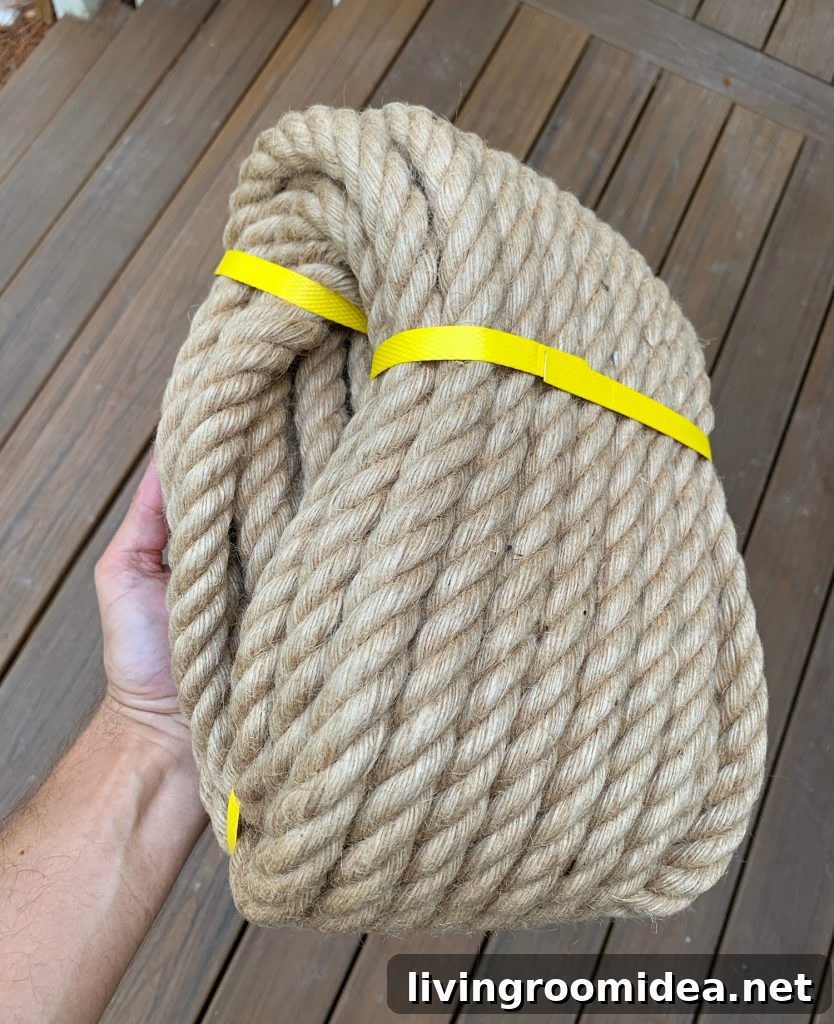
Important: the hemp rope stretches noticeably under load, so you must hang the bed considerably higher than your final desired height while tying everything off. That’s where the buckets come in—once you remove them the ropes will relax to the correct level.
How To Hang Your Daybed
Many tutorials recommend using 5-gallon buckets to prop the bed during installation, and for good reason: although the bed will look too high at first, the ropes will stretch and settle once the buckets are removed. If you skip this step, the bed can end up much lower than intended.
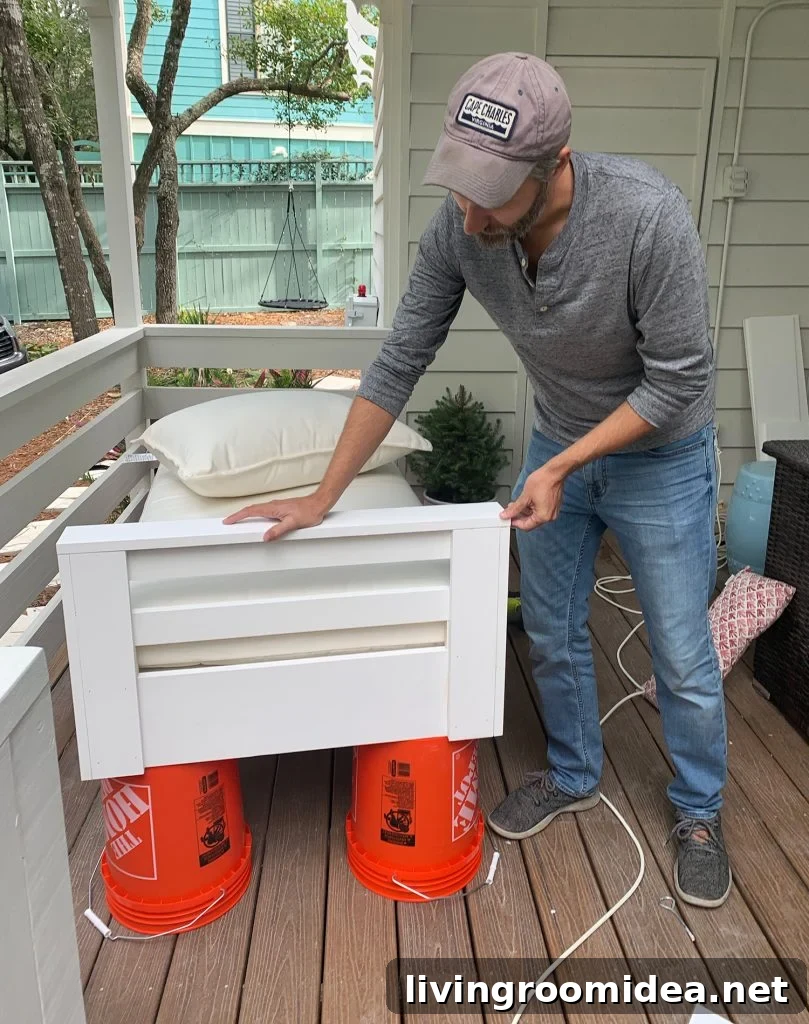
We screwed heavy-duty eye hooks into strong ceiling framing. If your porch ceiling is finished, use a stud finder to locate solid attachment points. Install one hook for each corner and make sure they match the spacing of the hooks attached to the bed below.
Tying Your Rope
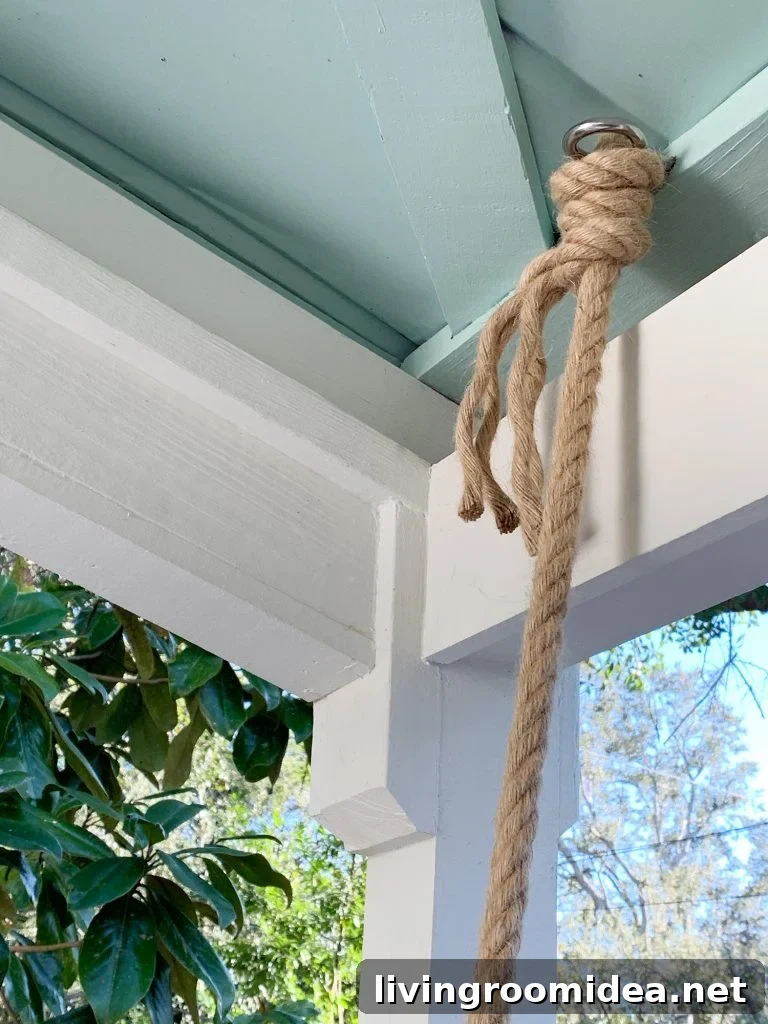
We used a midshipman’s hitch to attach the rope to the top eye hooks because it’s adjustable, letting us fine-tune each corner if the bed becomes uneven. The midshipman’s hitch is easy to follow in the video; there are also many knot tutorials online if you prefer a visual guide.
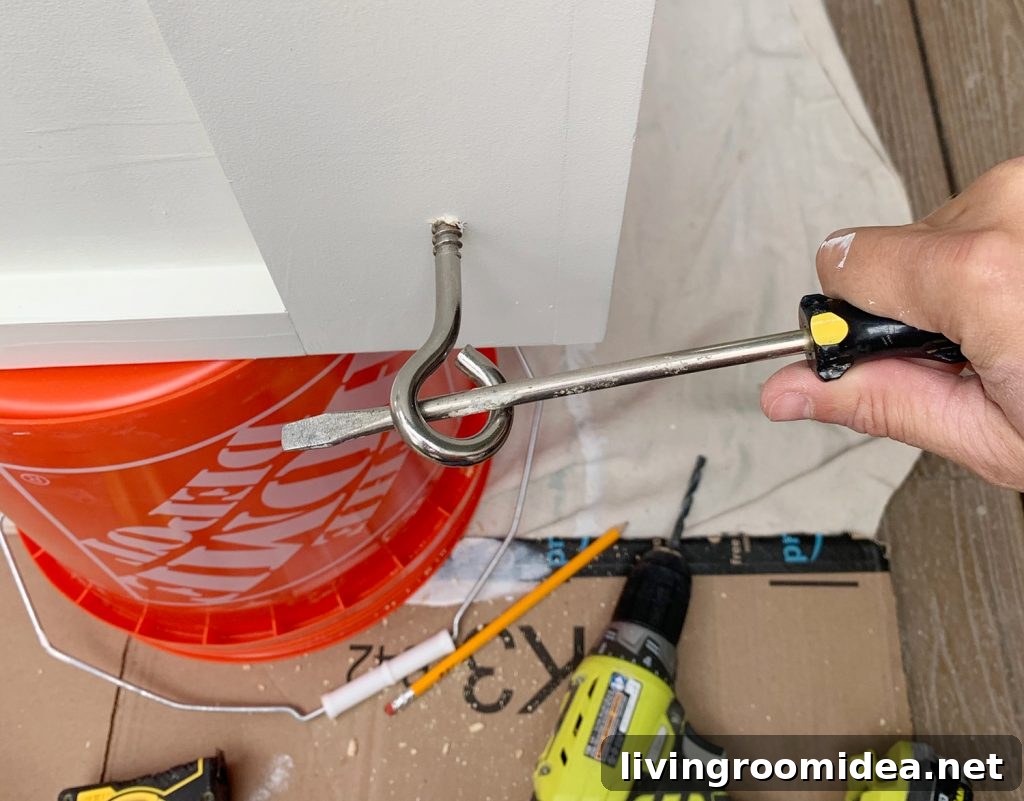
On the bed itself we used slightly smaller eye hooks sized to fit the 3/4″ rope. Drill pilot holes first, and use a long screwdriver or similar tool as a lever to twist the eye hook fully in for a secure fit.
With the rope tied to the top hook, thread it through the bottom hook and leave about two feet of excess before cutting. Before finishing the bottom knots, use a tape measure to confirm the bed is centered and not skewed. We tied a simple, tight knot just under each bottom eye hook to lock the length in place.
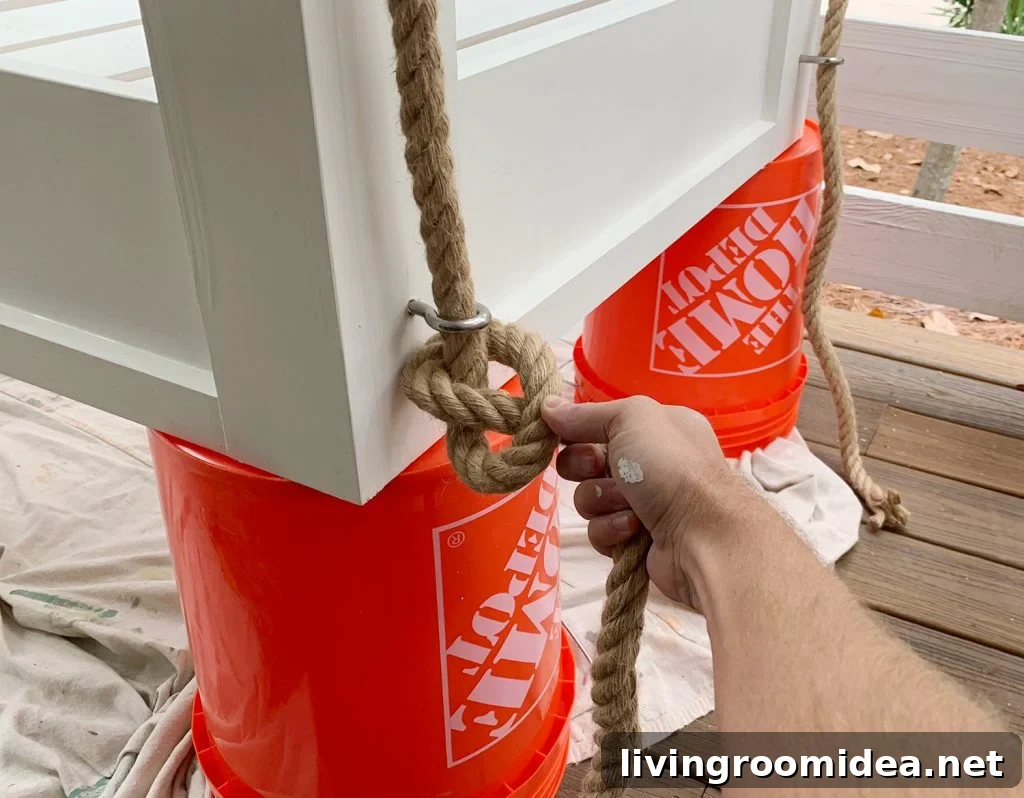
After tightening all four bottom knots we removed the buckets and let the daybed hang. Sitting on it for the first time is the most revealing moment—listen for the rope creaking as it stretches and relaxes, and expect the knots to cinch up against the bottom eye hooks.
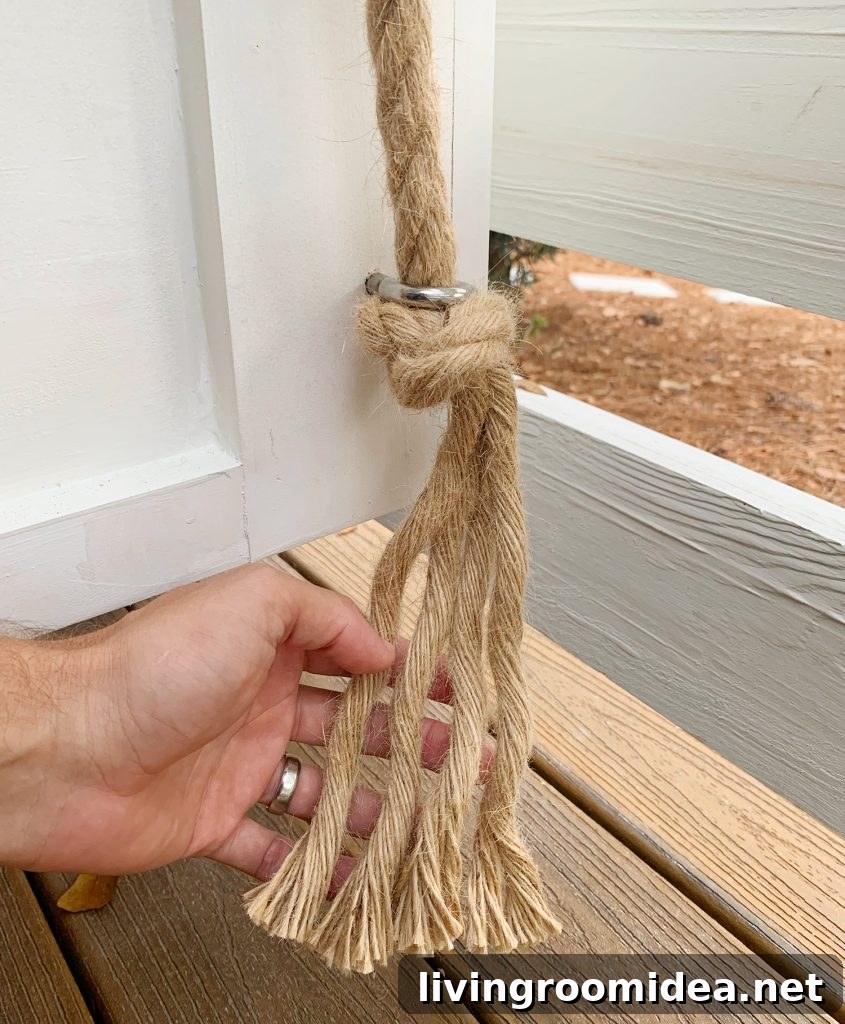
We trimmed and frayed the remaining rope so it hangs above the decking rather than dragging. This keeps it cleaner and prevents the rope from making noise as the bed sways.
Finishing Touches
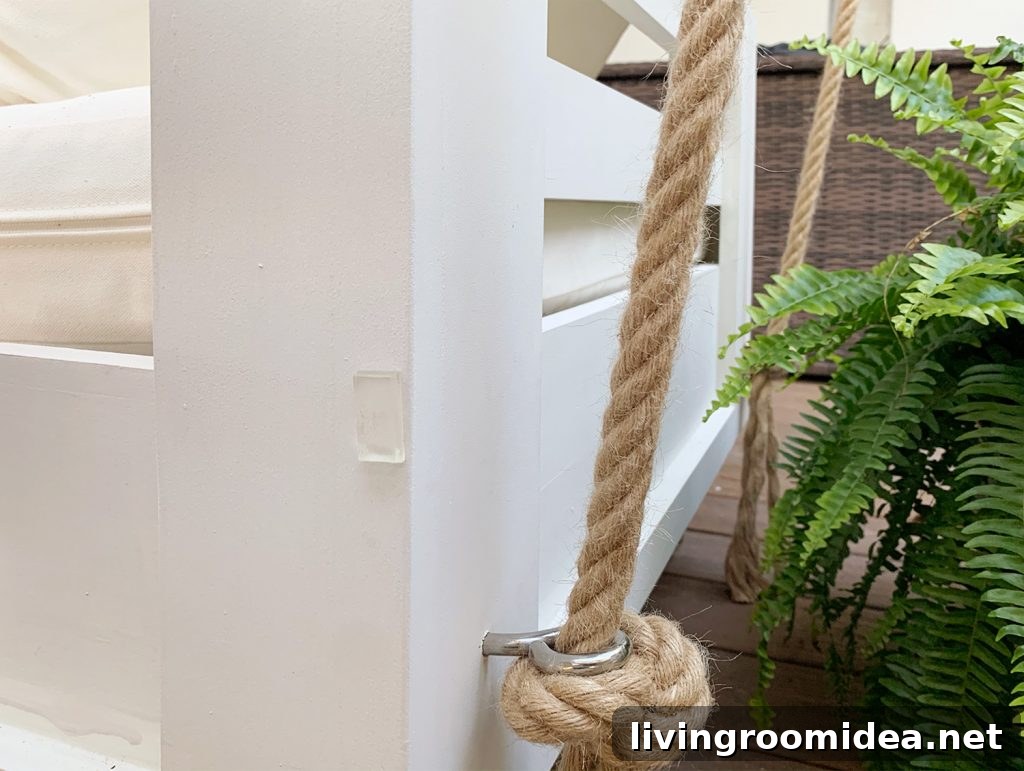
The bed can brush the railing if you push it deliberately, but with gentle use it doesn’t contact the rail. Out of caution, we added a few clear furniture bumpers along the back edge to protect the daybed corners from occasional knocks.
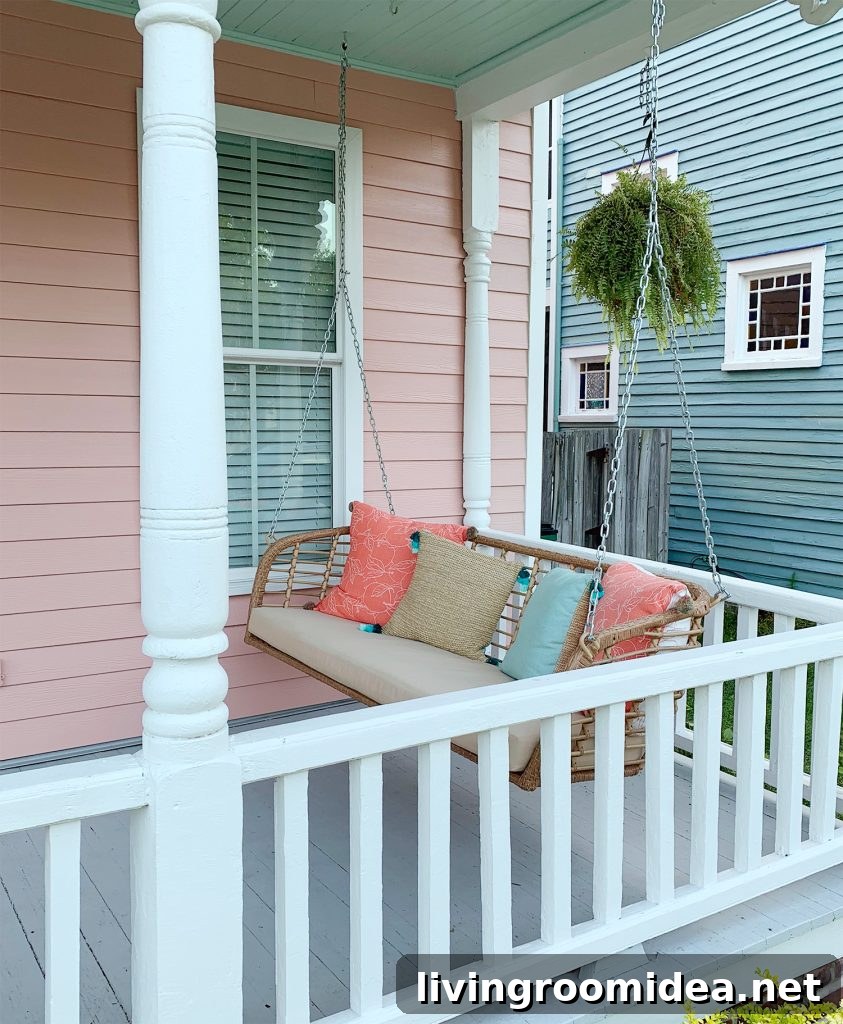
We love how this finished porch daybed turned the space into a more comfortable lounge area. It’s great to be able to fully extend your legs and relax outside instead of sitting in a chair.
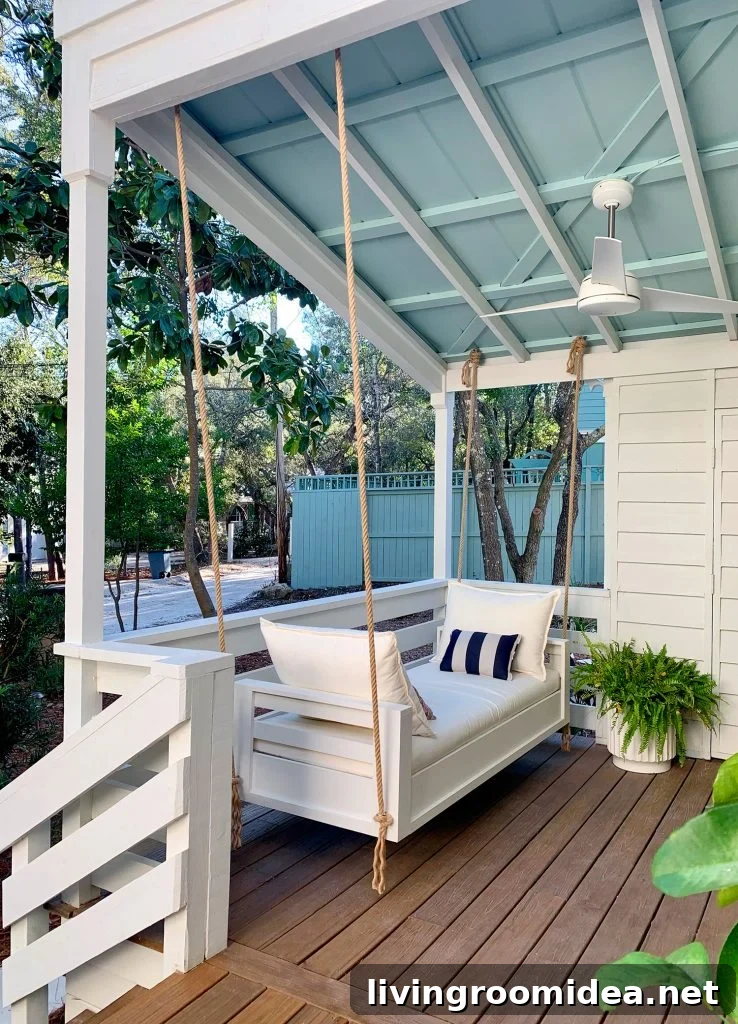
For perspective, here’s a before photo of the same angle from when we first saw the house: the porch was screened in and weathered, and the renovation has made a dramatic difference.
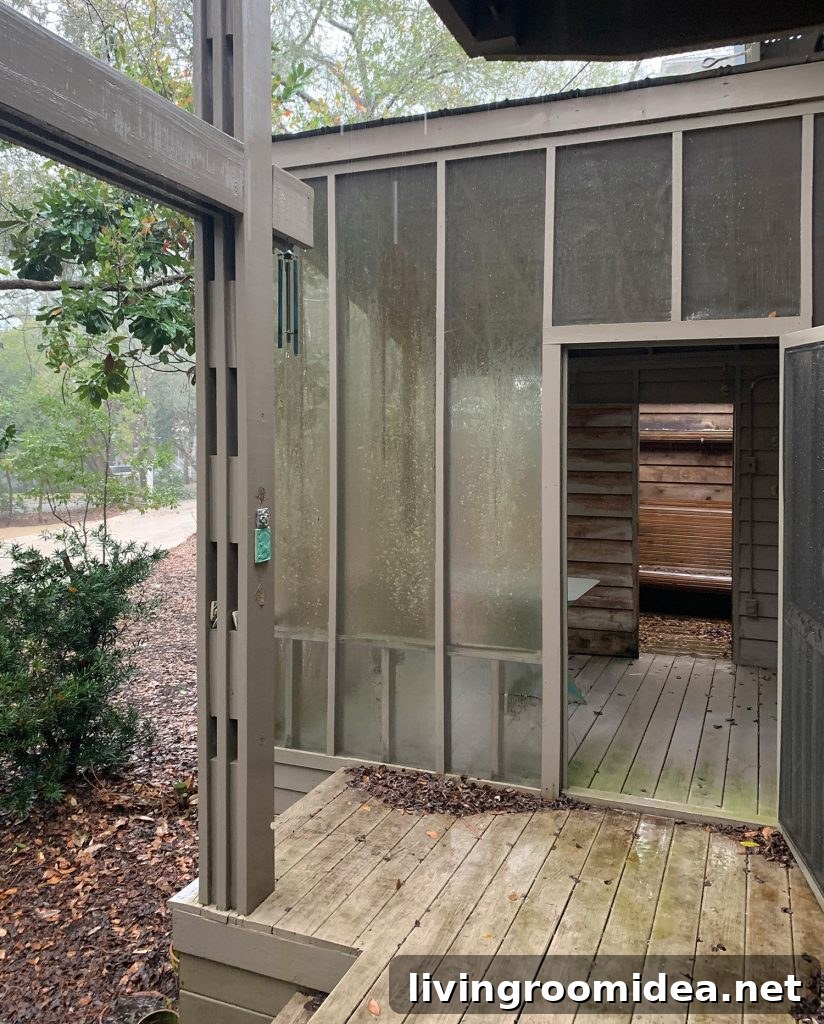
It’s been almost a year since we first saw this house, and seeing the porch transformed has been really satisfying. We don’t miss the old screens—the outdoor ceiling fan keeps the bugs away by moving the air.
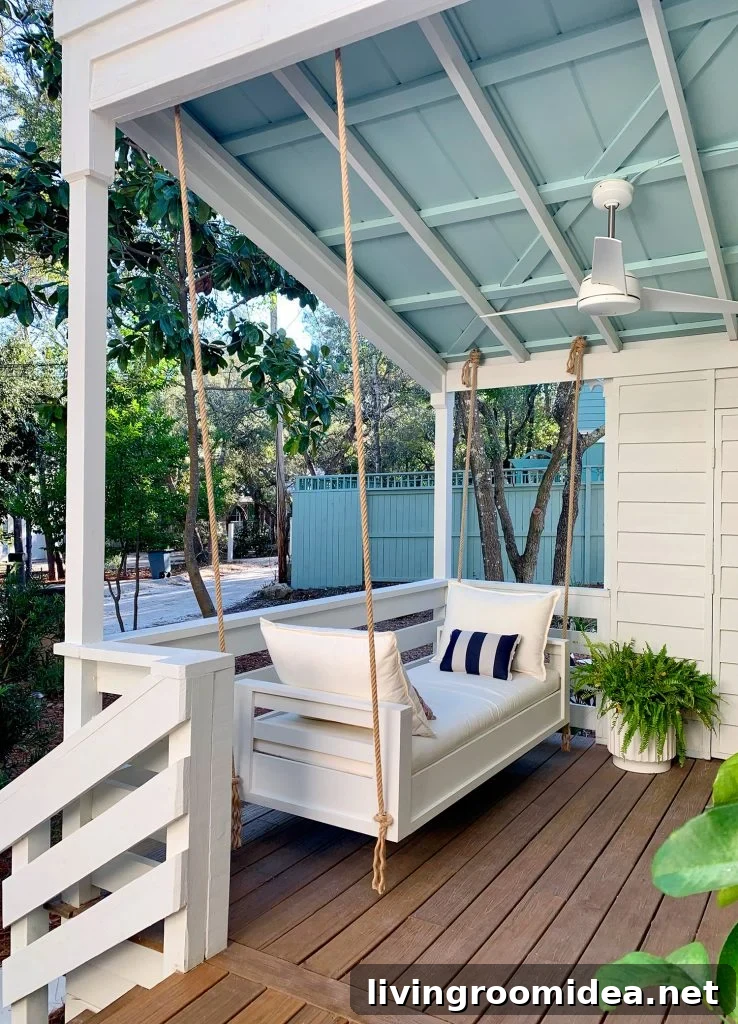
Now we’re just waiting for warmer weather so we can lounge out here even more. Thanks for reading—and good luck hanging yours.
*This post contains affiliate links; we may earn a small commission if you buy through links on our site at no extra cost to you.