
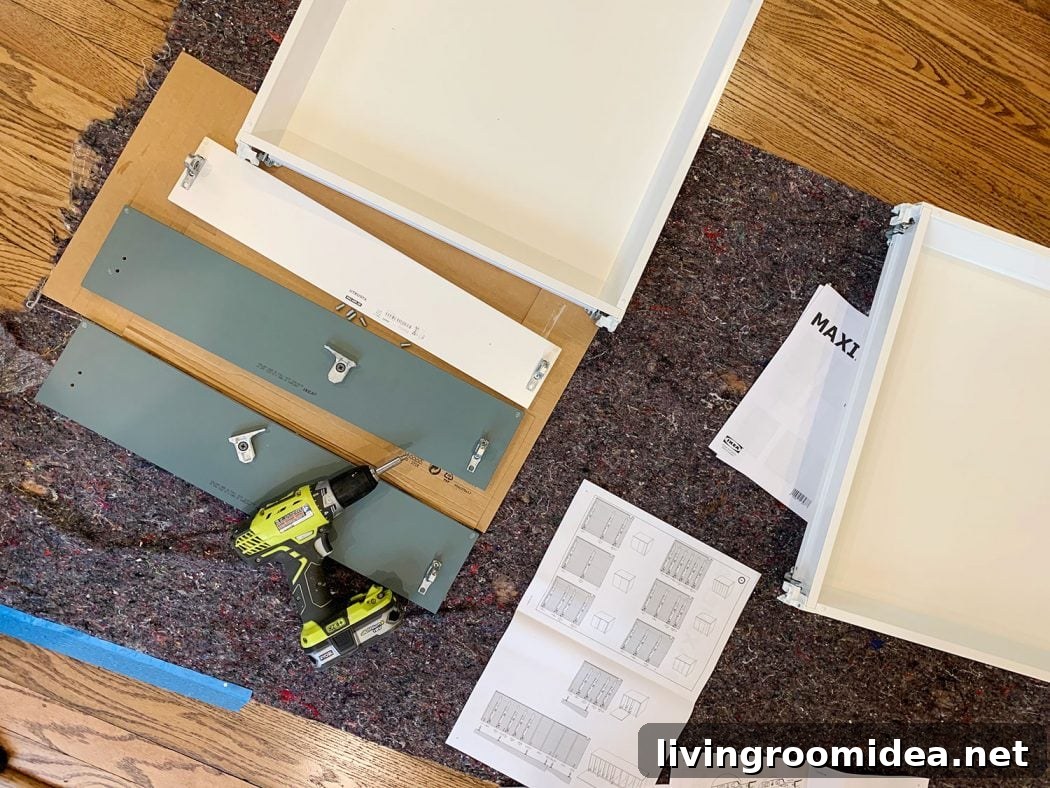
Many readers have asked for tips to make installing IKEA kitchen cabinets go more smoothly. After installing multiple kitchens over the past few years, we’ve learned a lot about what speeds up the process and improves the final result. Below are twenty practical tools and tips that can make a real difference.
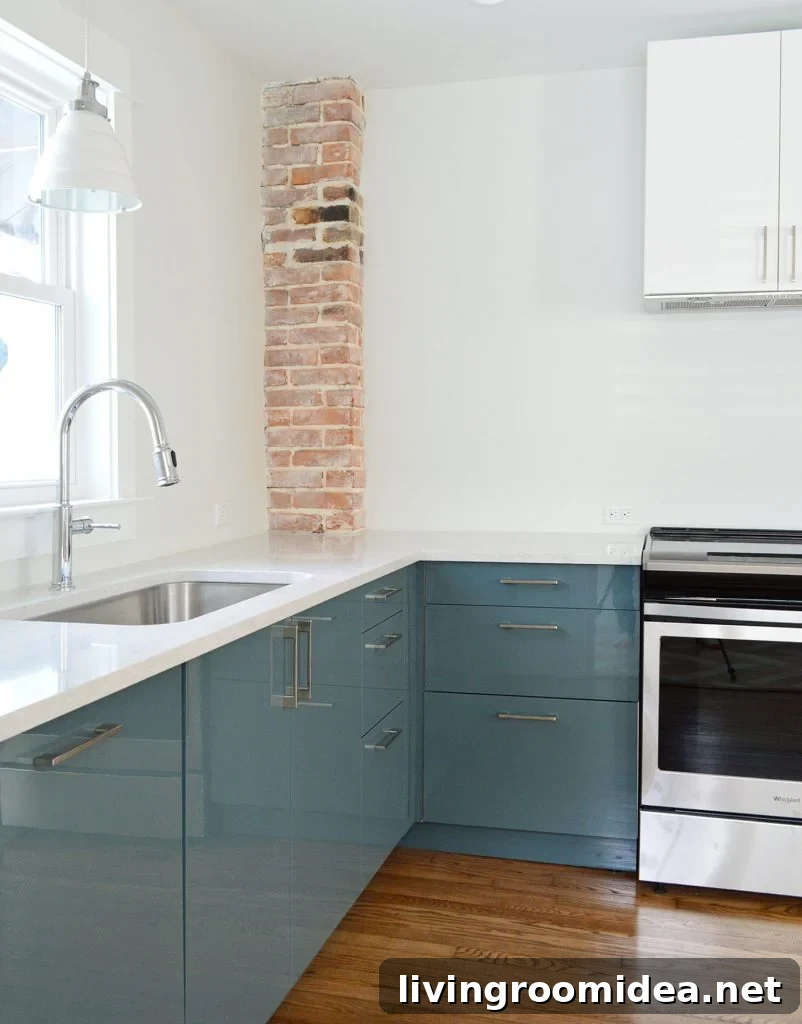
We’re fans of IKEA cabinets and have installed them in several rooms: our laundry room and bonus room at home, our beach house kitchen, and two duplex kitchens. They’re well designed, durable, and backed by a long warranty. Compared with many custom options, they’re often far more affordable while offering features like soft-close drawers and many configuration options. While some IKEA products can feel lightweight, the cabinets have worked very well for us.
This post focuses on tools and tips to make an IKEA cabinet install easier. Some tools are essential and others are optional but time-saving. As you read, you’ll also get a sense of the step-by-step process and common challenges, which will help you plan your project.
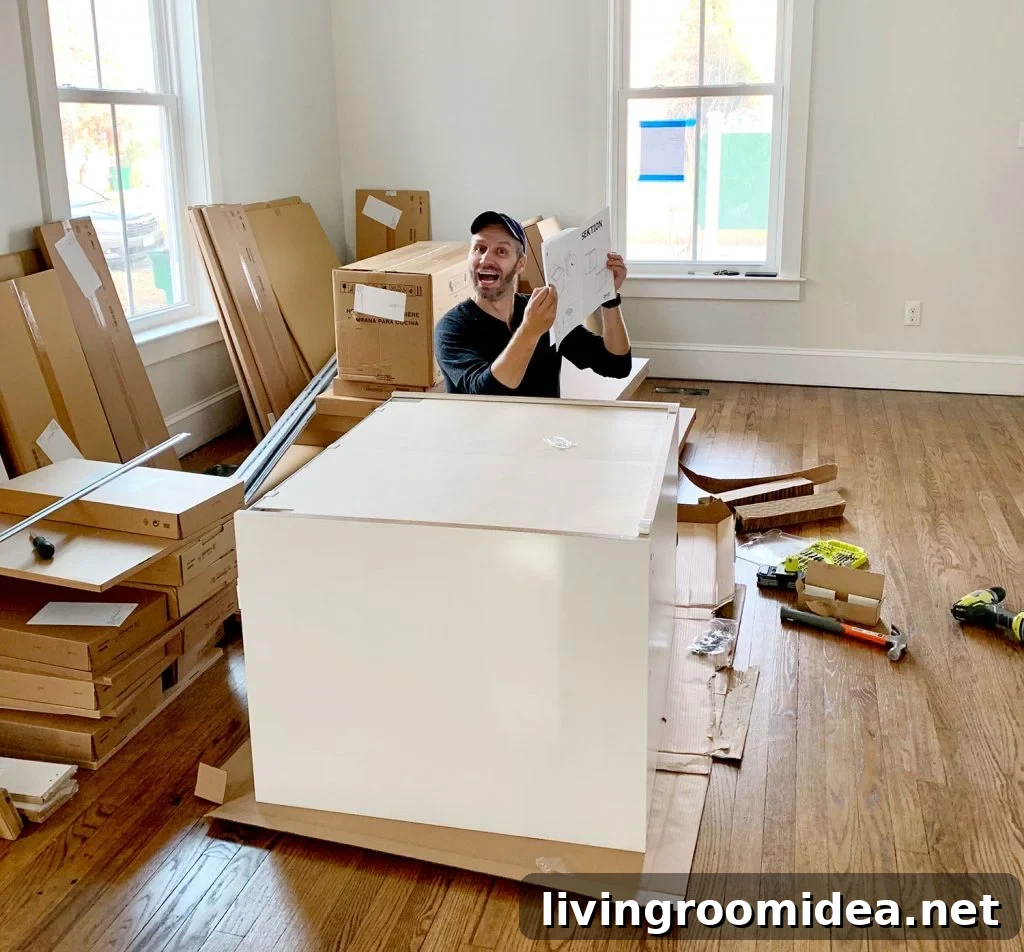
At the end you’ll find a concise checklist you can use to gather everything before you start. Now let’s get into the details.
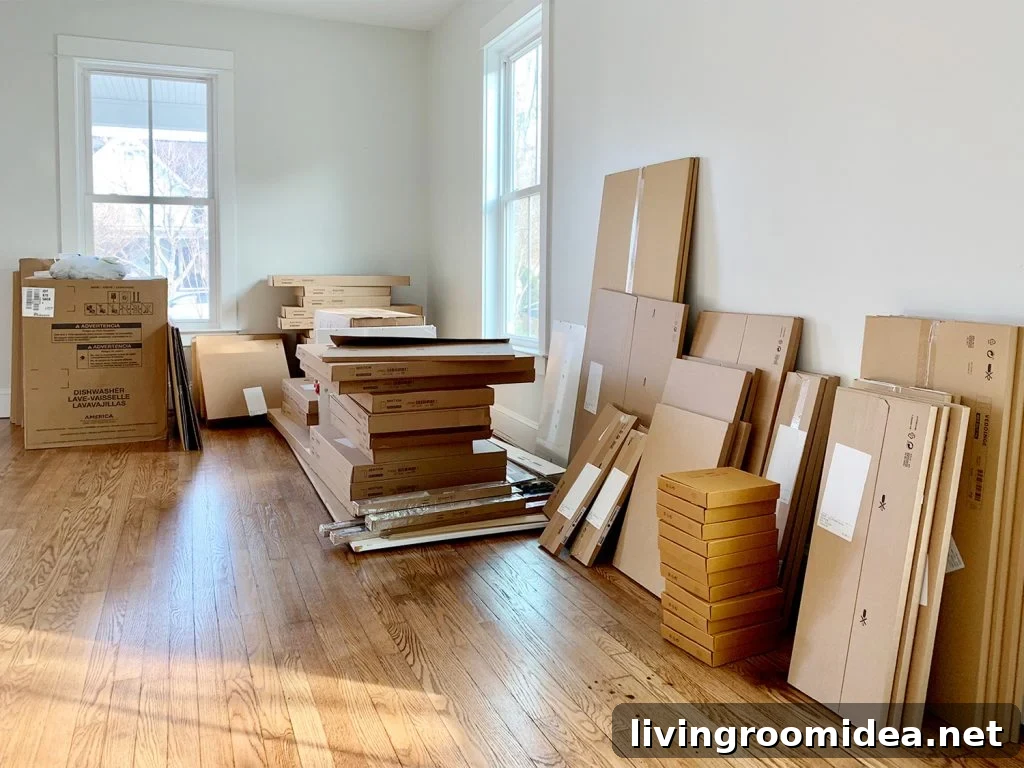
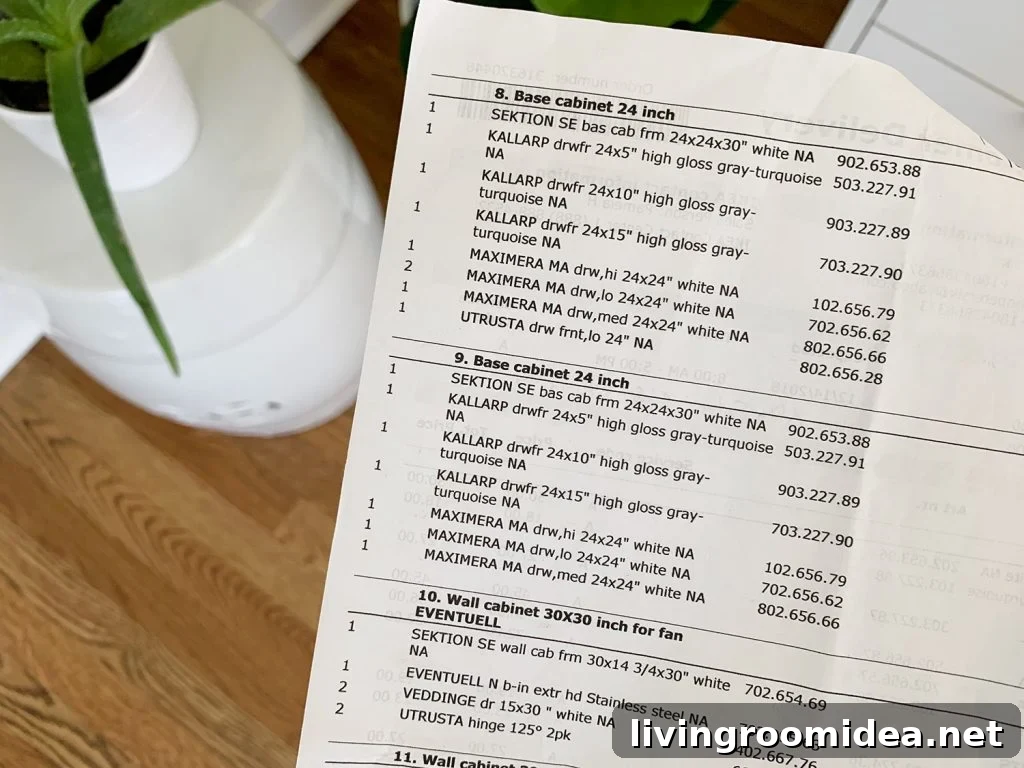
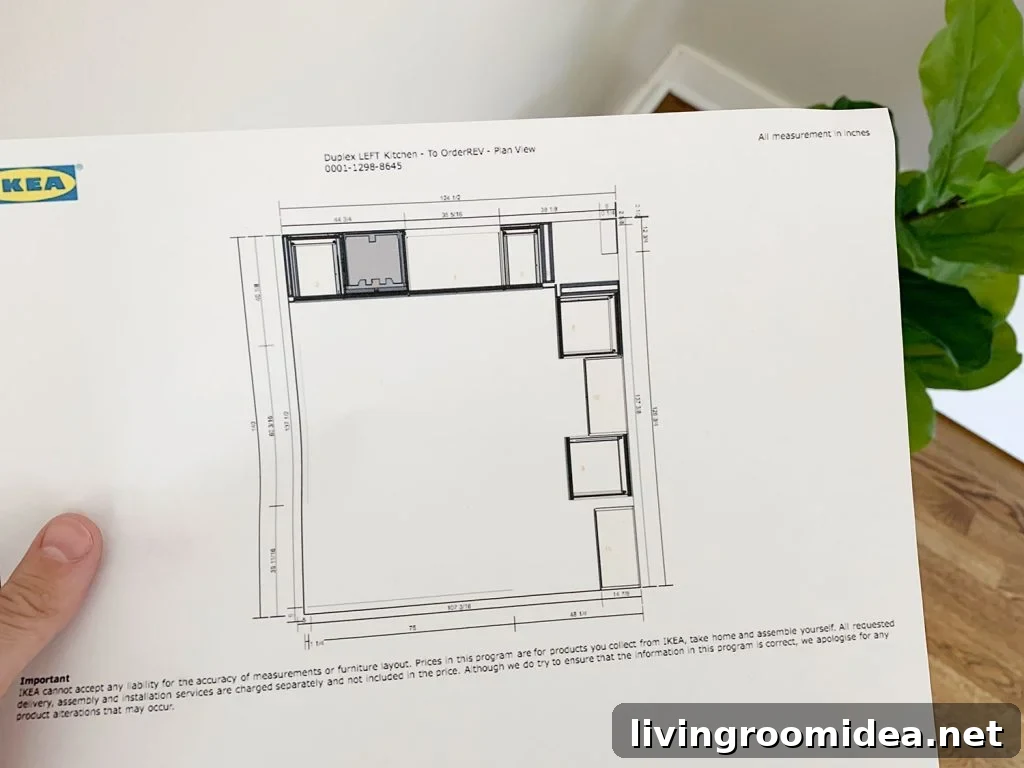
1. Your Itemized Receipt/Order
Before building, inventory and organize all boxes. For two duplex kitchens we received over 200 boxes, so sorting ahead of time saved a lot of time. You can sort by item type (cabinet boxes, drawer units, fronts) or by cabinet (keep the box, drawer, hinge, and front for each cabinet together). This helps identify missing parts and speeds up assembly.
2. Power Driver (with Phillips Head)
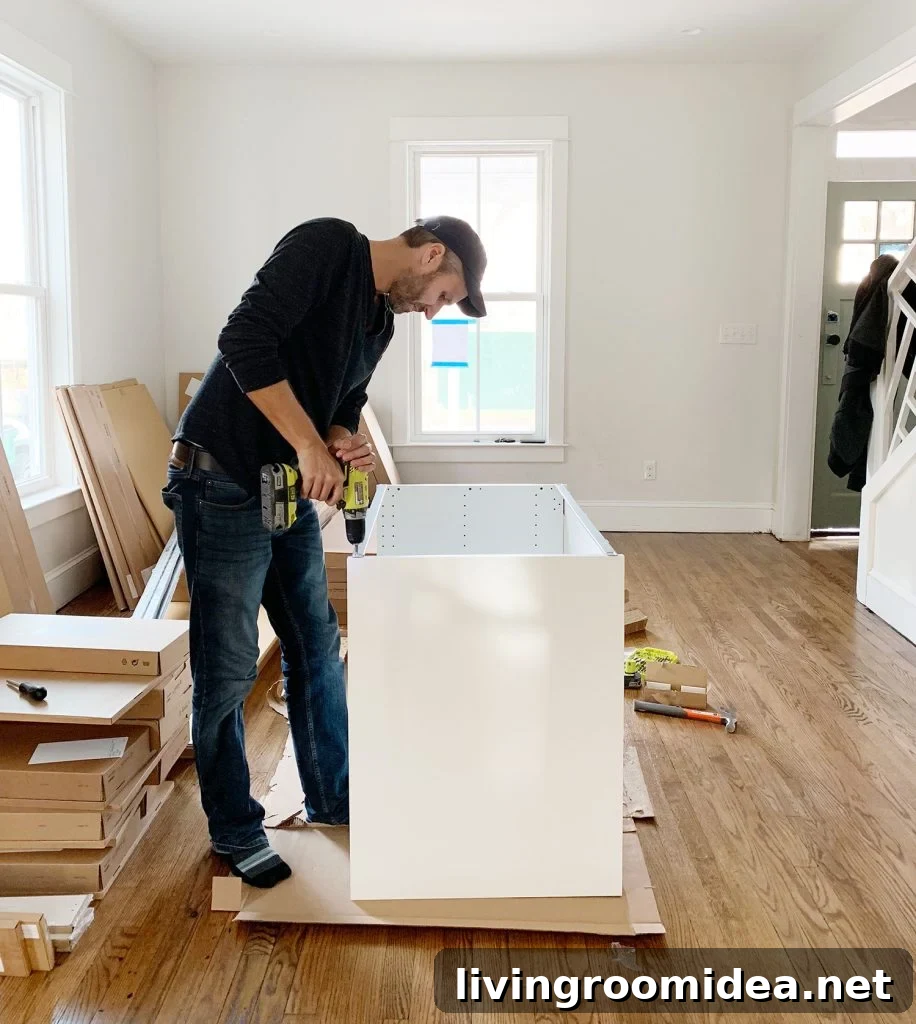
A power driver is heavily used for constructing cabinet boxes and attaching components. Contrary to what many expect, you won’t use the tiny allen wrenches much during a typical kitchen install; a standard Phillips head bit is the primary driver for most screws.
3. Hammer
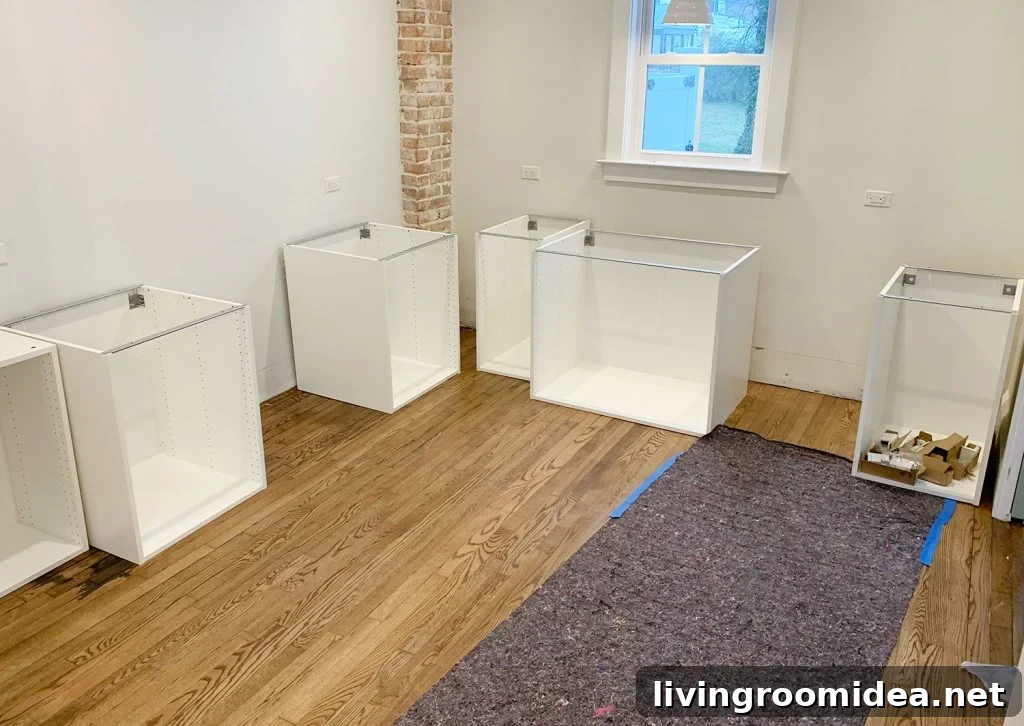
A hammer is useful for nailing MDF backings onto cabinet backs and for tapping anchors into drywall when hanging cabinets.
4. Magnetic Drill Bit Holder
A magnetic bit holder on your drill holds screws in place so you can drive them in tight spots where your fingers can’t reach. They’re inexpensive and very helpful when assembling cabinets and drawers.
5. Measuring Tape
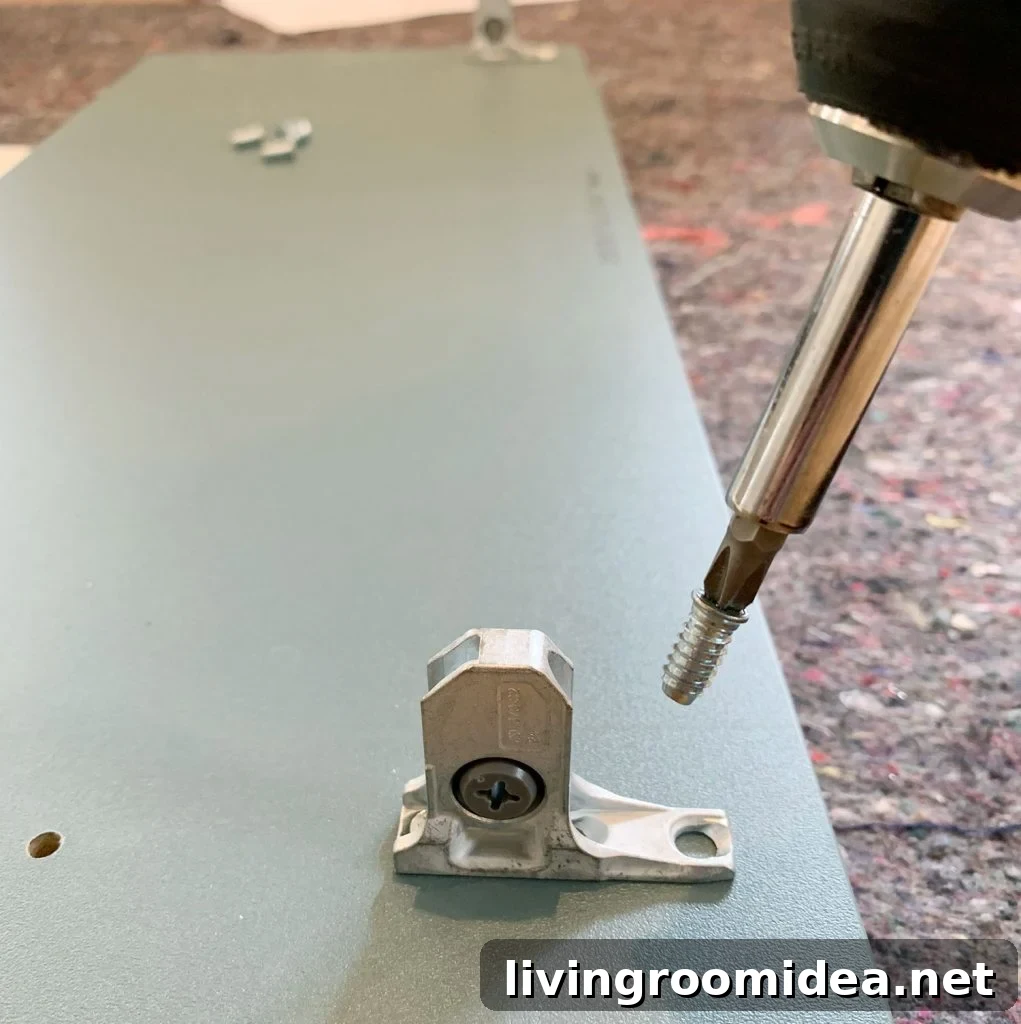
The measuring tape is essential for laying out your cabinet runs and determining rail height. IKEA’s system uses a metal suspension rail that you attach to the wall; if the rail is level, the cabinets that hang from it will be level. Keep your kitchen plan or schematic handy while measuring.
6. Dremel or Hacksaw
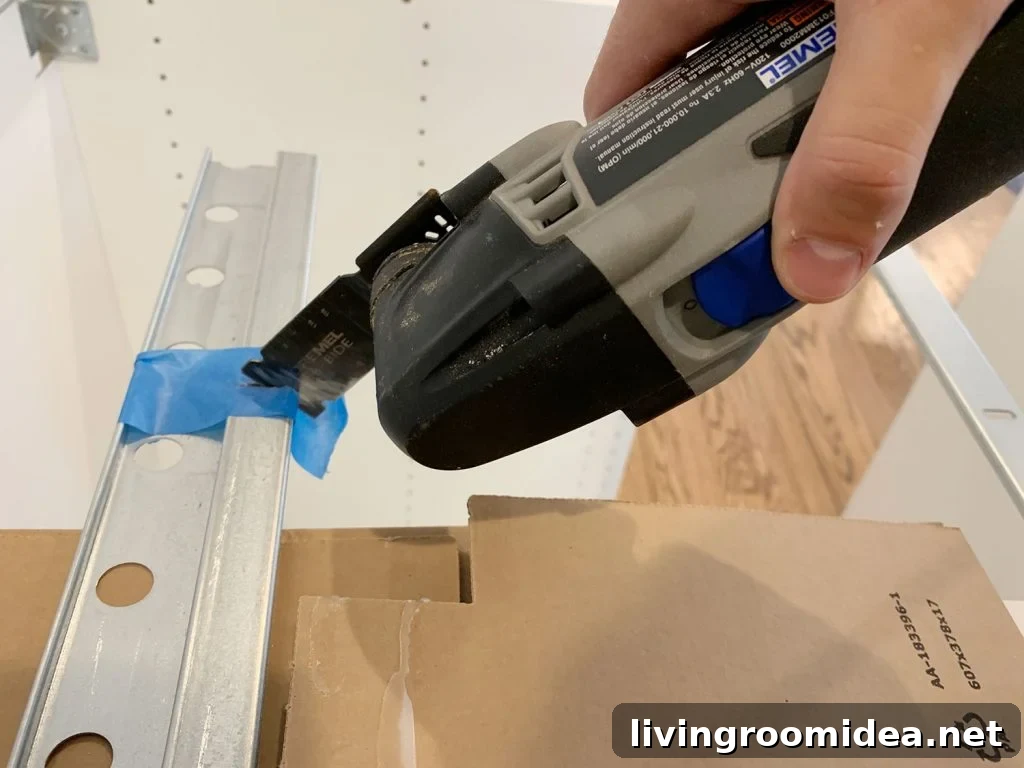
You’ll need to cut the suspension rails to fit runs of cabinets. Rails come in 7-foot lengths, so cut to size with a hacksaw or a Dremel with a metal-cutting blade for faster, cleaner cuts. Mark cuts with painter’s tape and protect the cabinet surface when cutting nearby.
7. Stud Finder
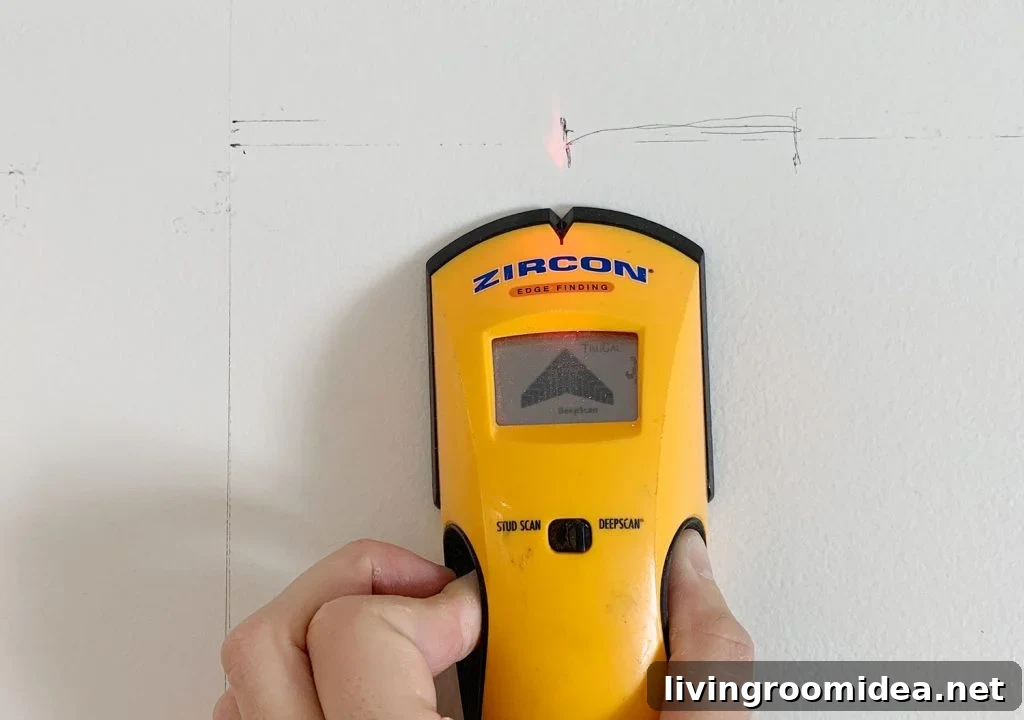
Locate studs to anchor the rail into solid framing. Mark the stud width since the rail holes may not line up exactly where you expect. Aim to secure at least a couple of screws into studs for a strong hold.
8. Medium-Size Level
Use a medium level to mark the rail line and align holes with studs. A 24″ level is easy to handle when marking and positioning the rail.
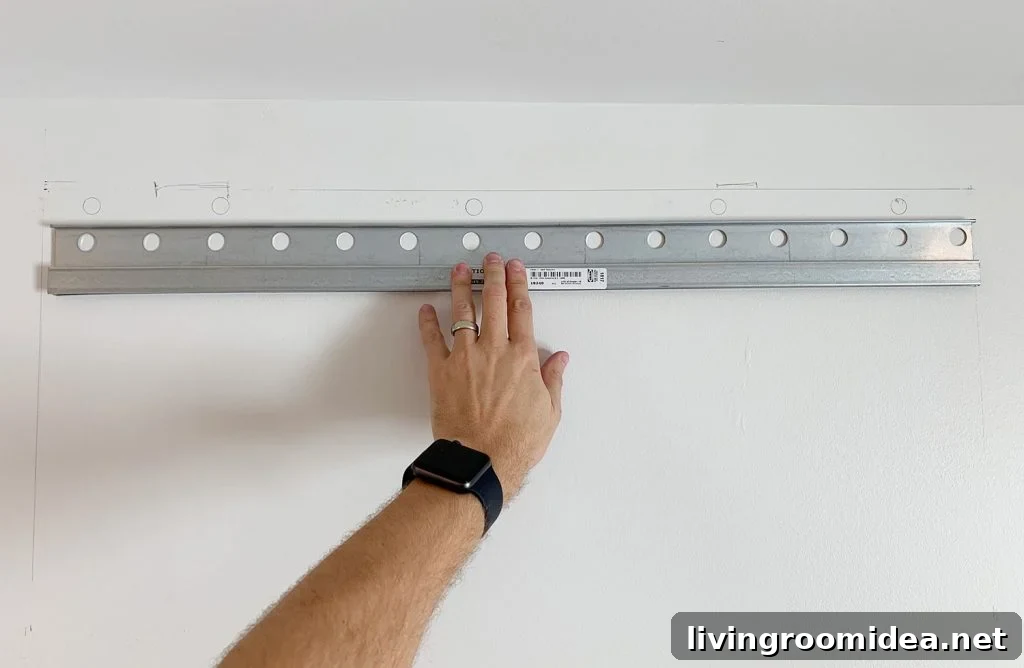
Plan to place screws into studs where possible and add screws with anchors at the rail ends, following ICA instructions for spacing.
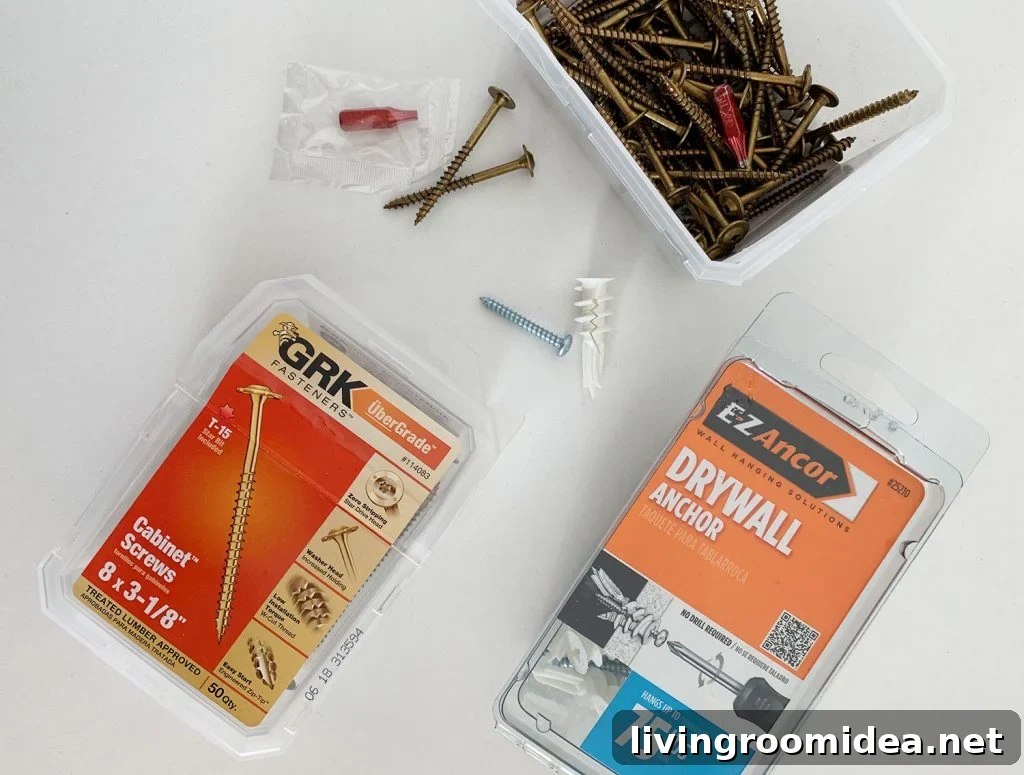
9. Heavy-Duty Screws & Anchors
Invest in strong cabinet screws that drive easily and resist head stripping. We prefer high-quality fasteners for the rail-to-stud connections. Keep anchor screws on hand for additional support where studs aren’t available.
10. Long Level
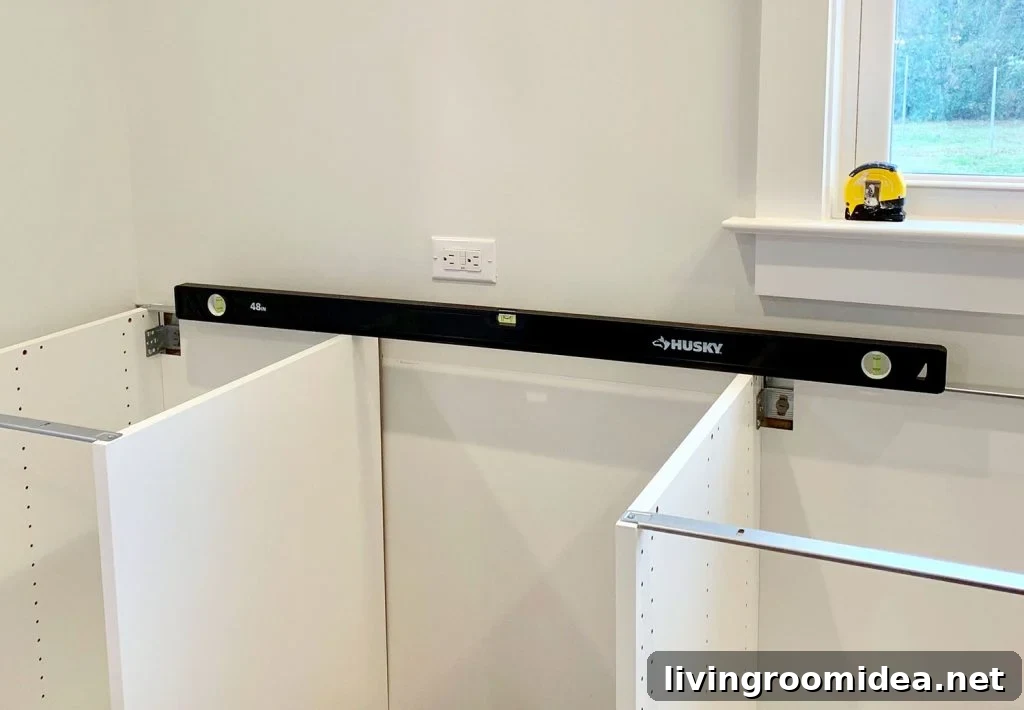
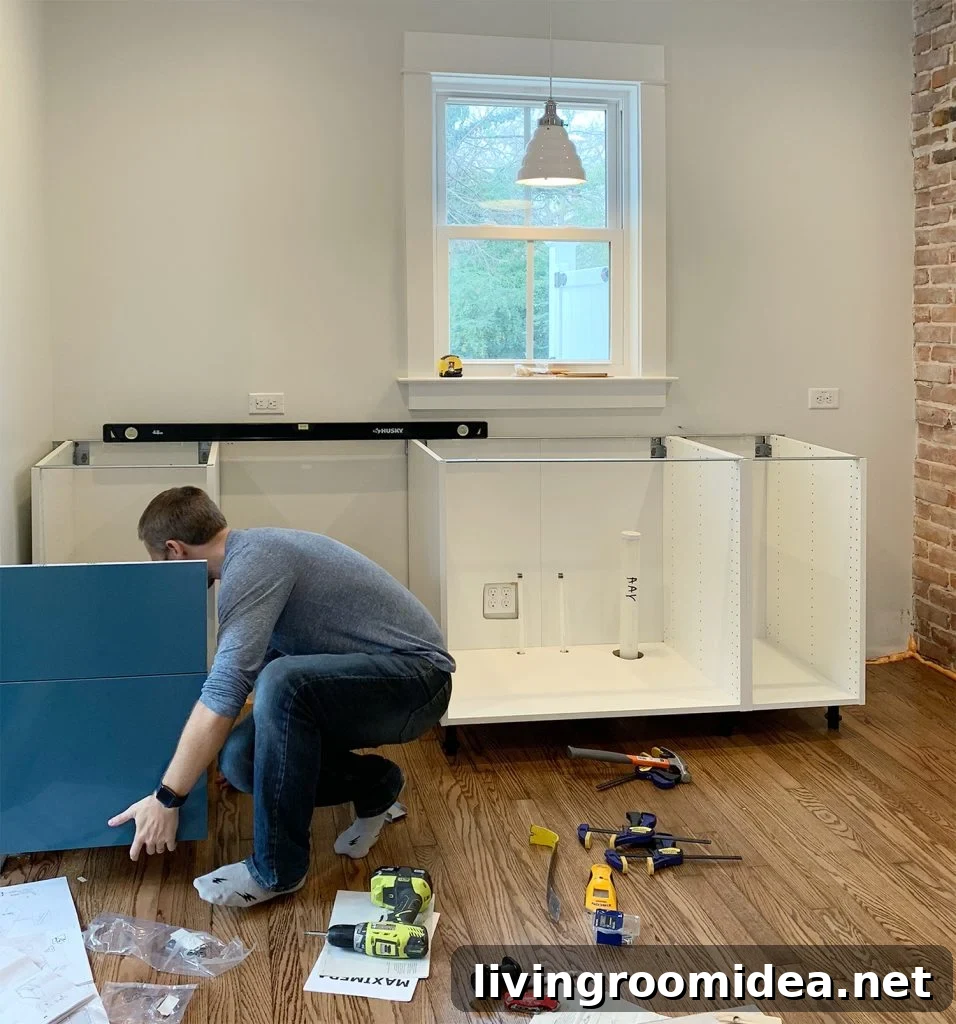
Long spans of cabinets and uneven floors require a longer level to identify and correct issues across multiple cabinets. A 4-foot level is a practical choice for checking across appliance gaps and runs of cabinets.
11. Shims
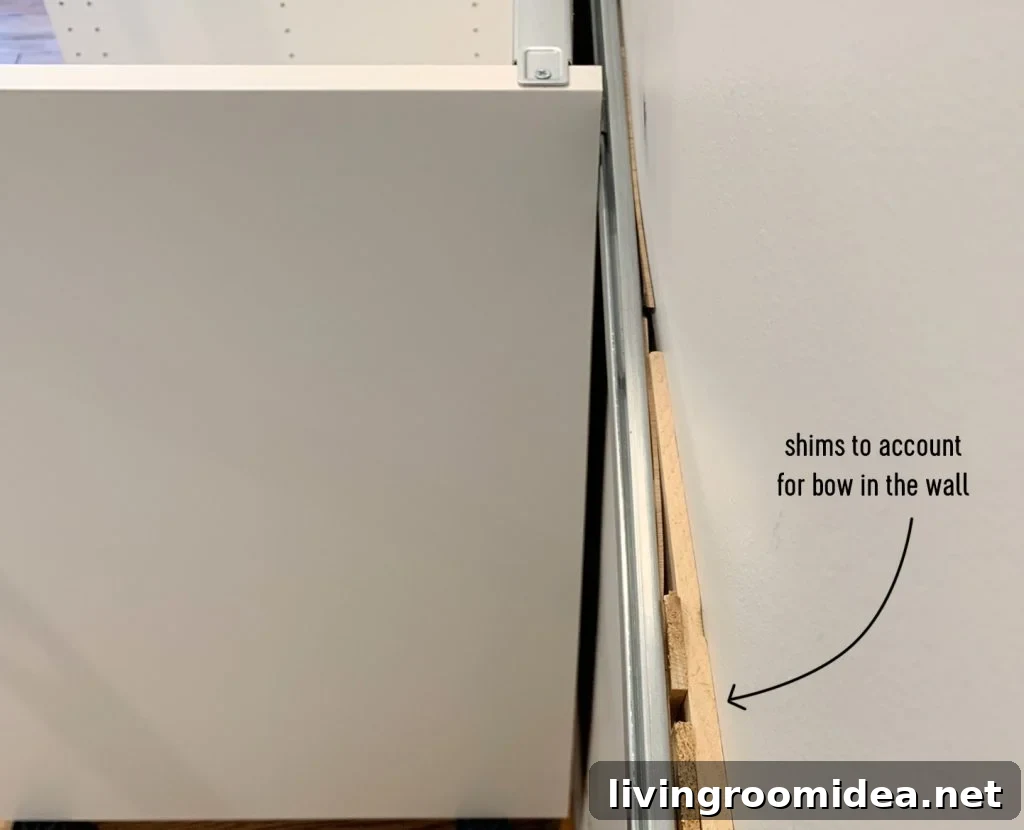
Wood shims help correct wall bows and irregularities where the rail meets the wall. Adjustable cabinet feet help level base cabinets, but shims behind the rail are often needed in older homes.
12. Jigsaw
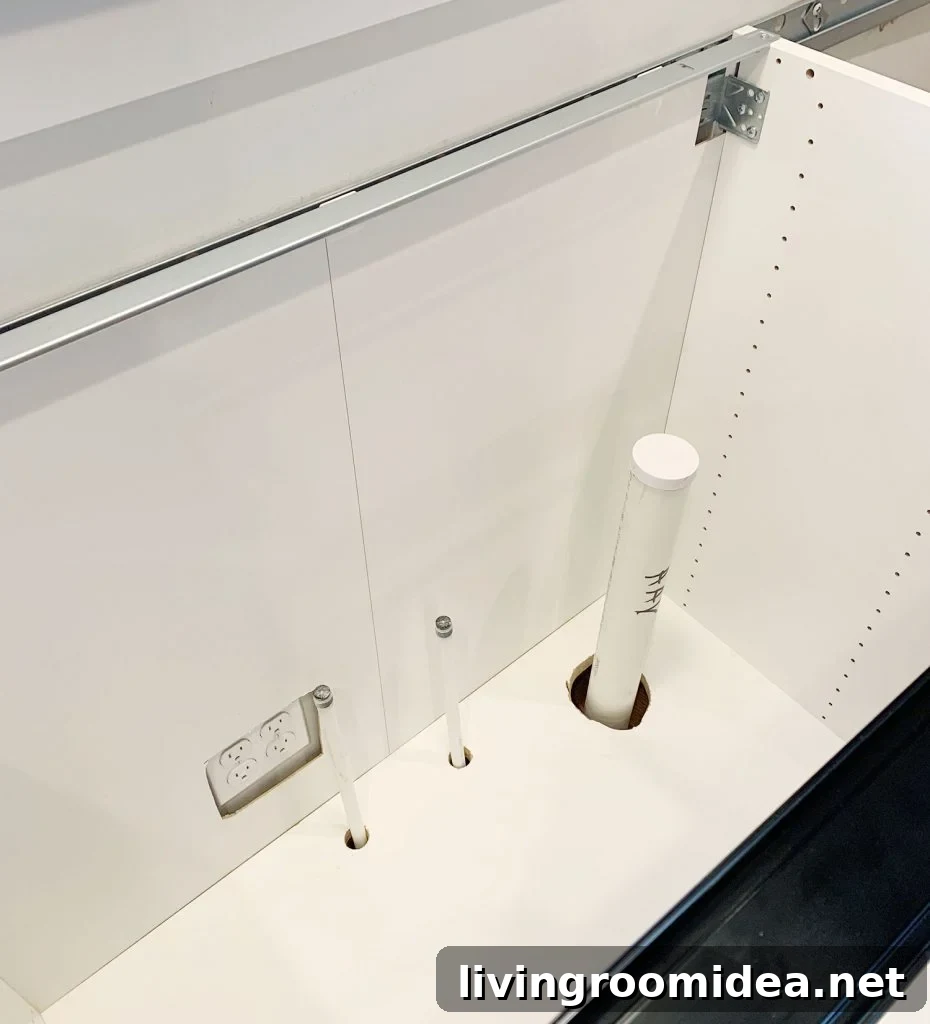
For plumbing and outlet cutouts in sink base cabinets, a jigsaw provides flexibility for larger or irregular openings. For smaller supply lines, a large drill bit can work, but the jigsaw is useful for drains and outlet access. Protect cabinet surfaces with painter’s tape and measure carefully before cutting.
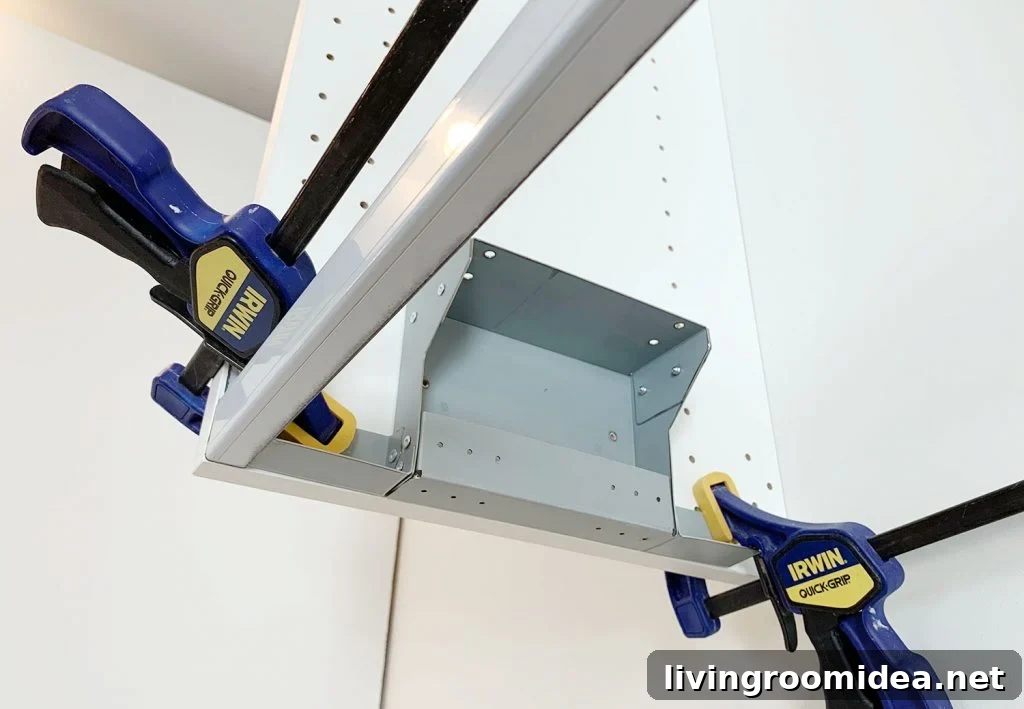
13. Clamps
Clamps are essential for holding adjacent cabinets tightly together while you secure them with screws. They act as an extra set of hands and are especially useful when installing heavy brackets or aligning tall pieces.
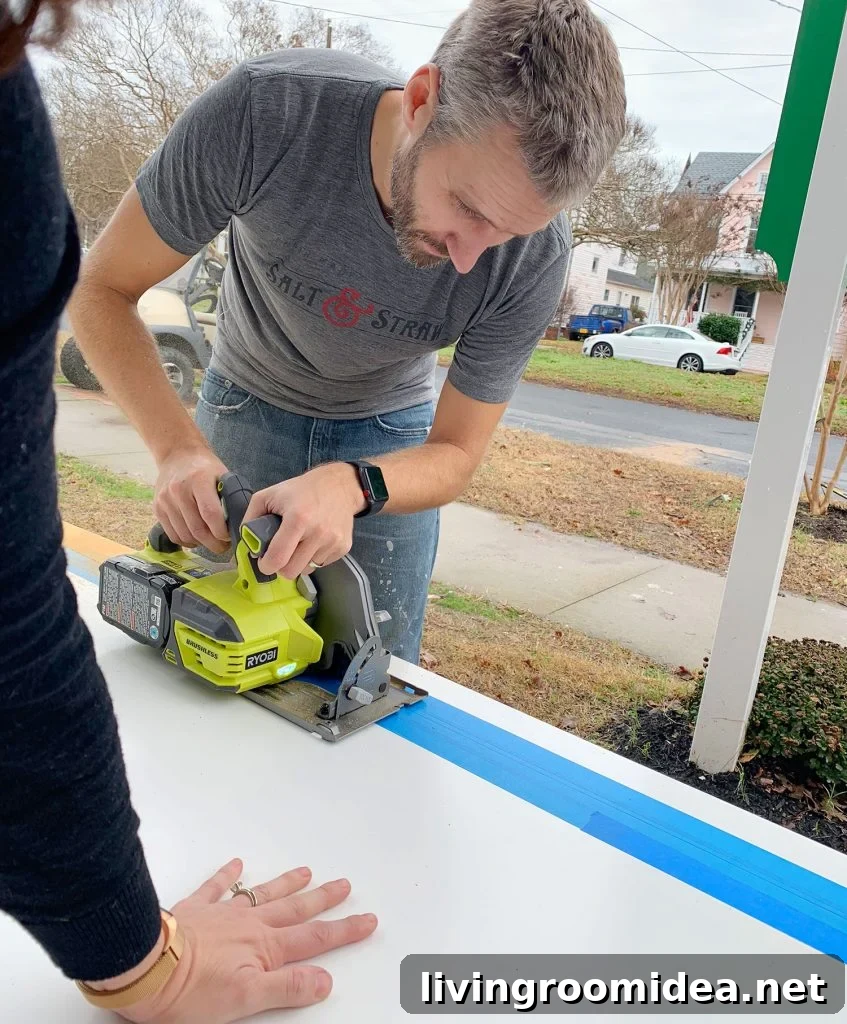
14. Circular Saw and/or Table Saw
Cutting cover panels, fillers, and other long pieces calls for a circular saw or table saw. A circular saw works well for tall panels that are difficult to run through a table saw, while a table saw is handy for precise rip cuts on shorter pieces.
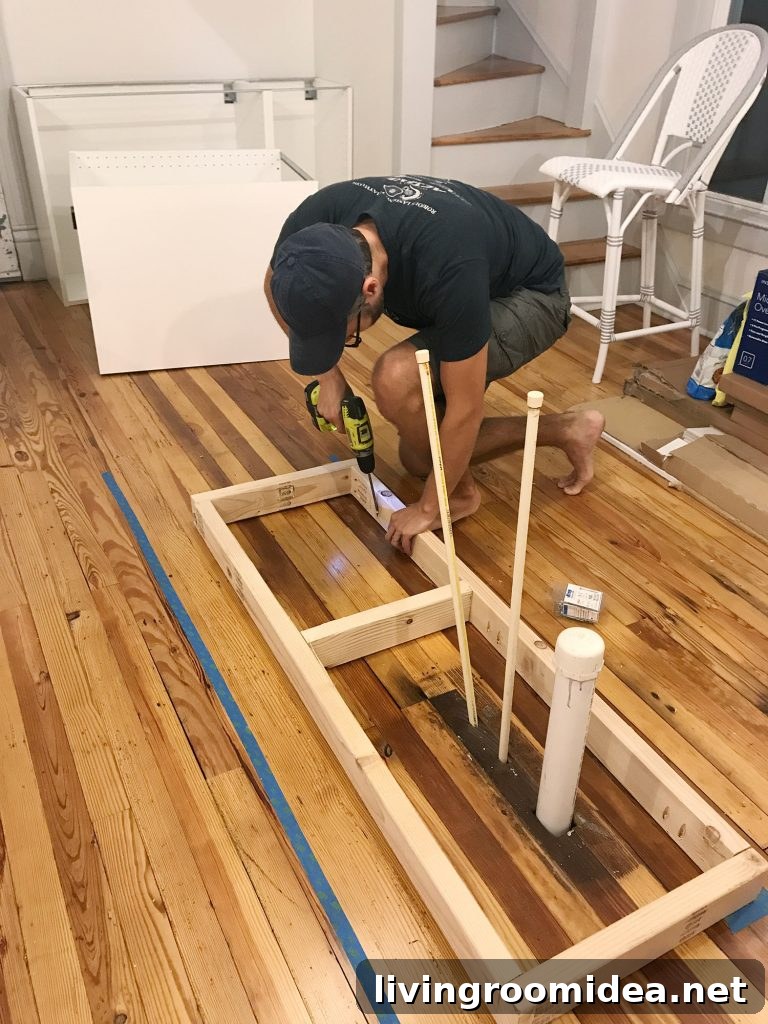
15. 2 x 4 Boards
2x4s are handy for building support bases, island frames, or extension boxes behind cabinets. We’ve used them to raise island bases and to create sturdy backing for mounting rails or cover panels.
16. Kreg Jig
A Kreg Jig makes pocket-hole joinery quick and strong when building support boxes or frames from 2x4s. It’s optional but speeds assembly and creates clean, sturdy connections when you need custom bases or extensions.
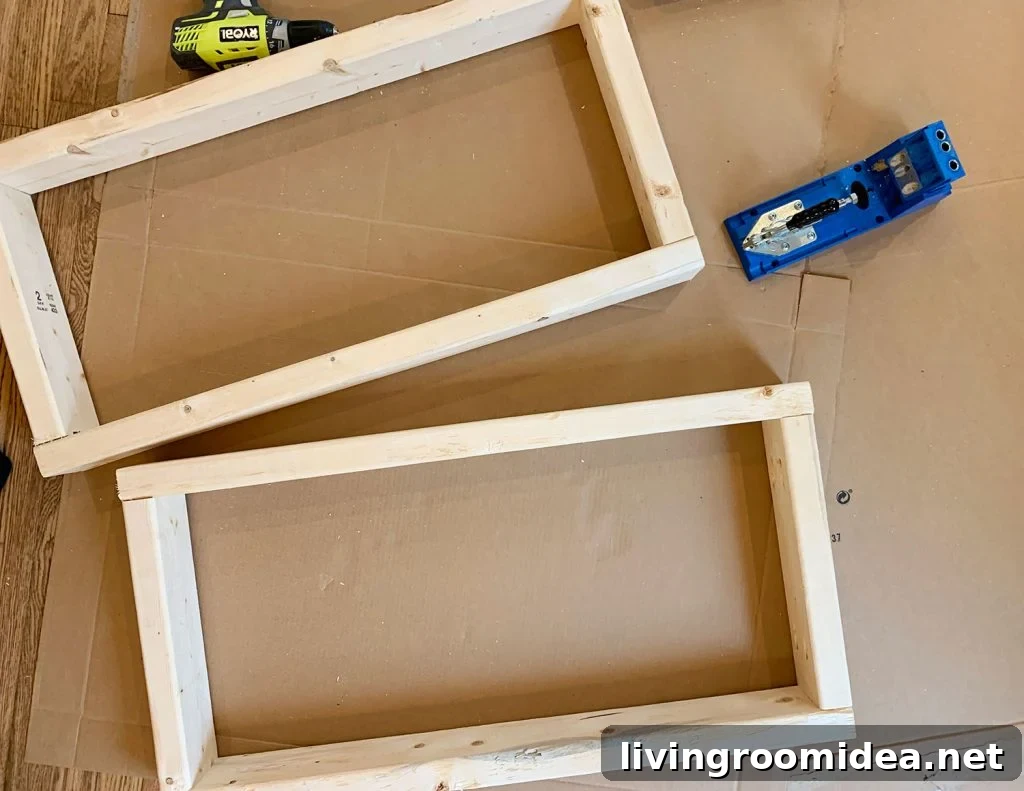
These support boxes can act as wall extensions for mounting rails or as stable bases so cabinets sit properly and don’t tip.
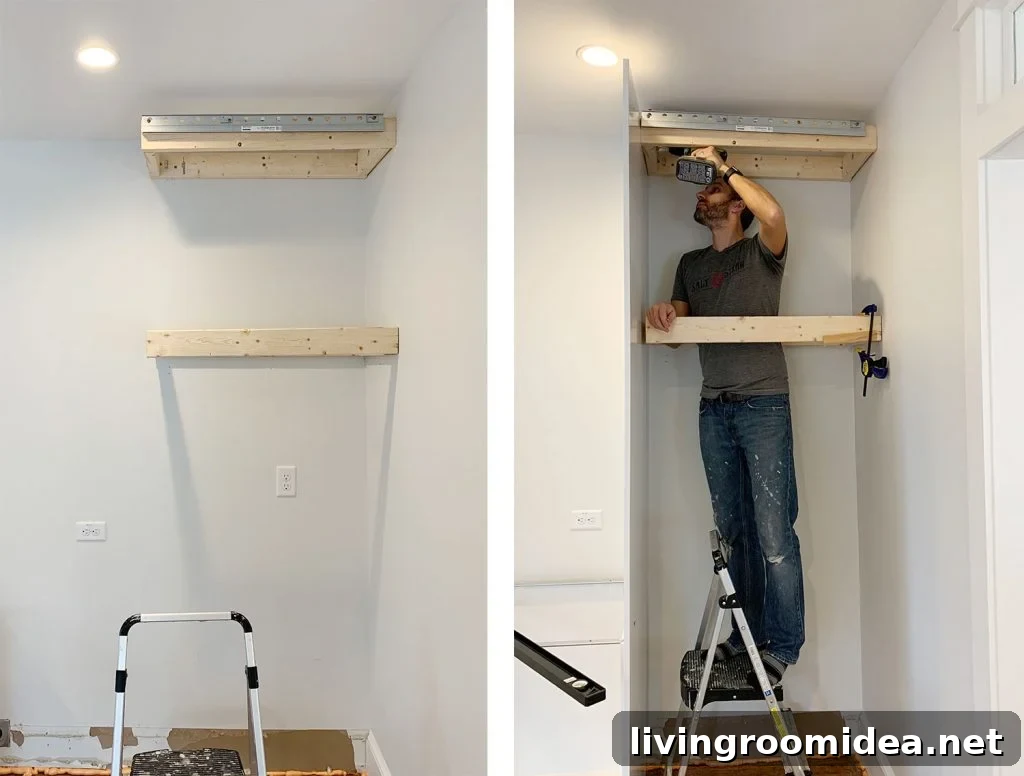
A step ladder is also useful for working at upper cabinet heights, so include that in your kit.
17. Manual Screwdriver
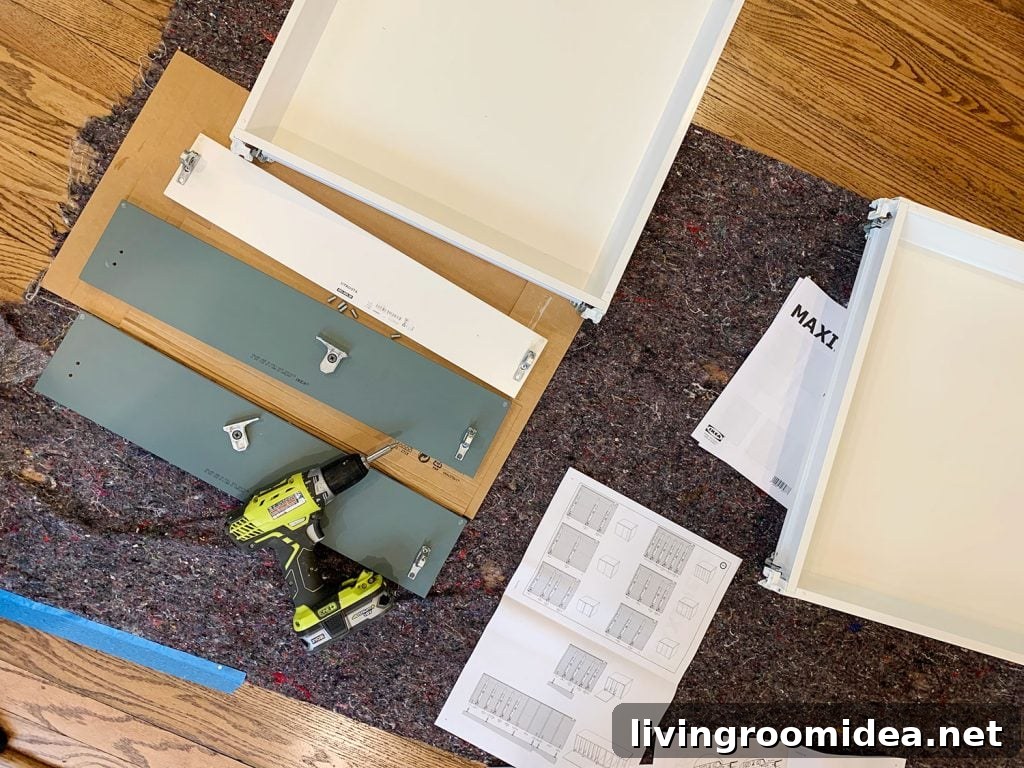
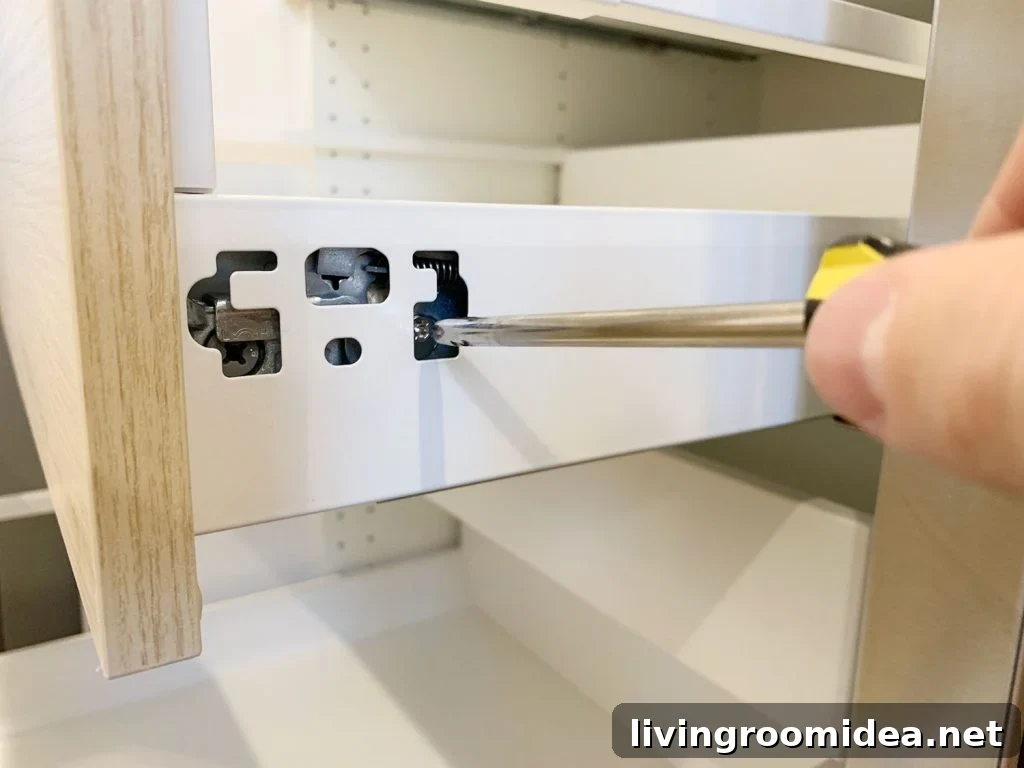
After the cabinets are hung and secured, you’ll attach doors and drawers. A power driver speeds assembly, but a manual Phillips screwdriver is important for fine adjustments to door and drawer alignment. Small tweaks to the hinge and drawer mechanisms are best done by hand for precise spacing. A flathead screwdriver is useful for engaging the plastic locks that secure cabinets to the rail.
18. Miter Saw
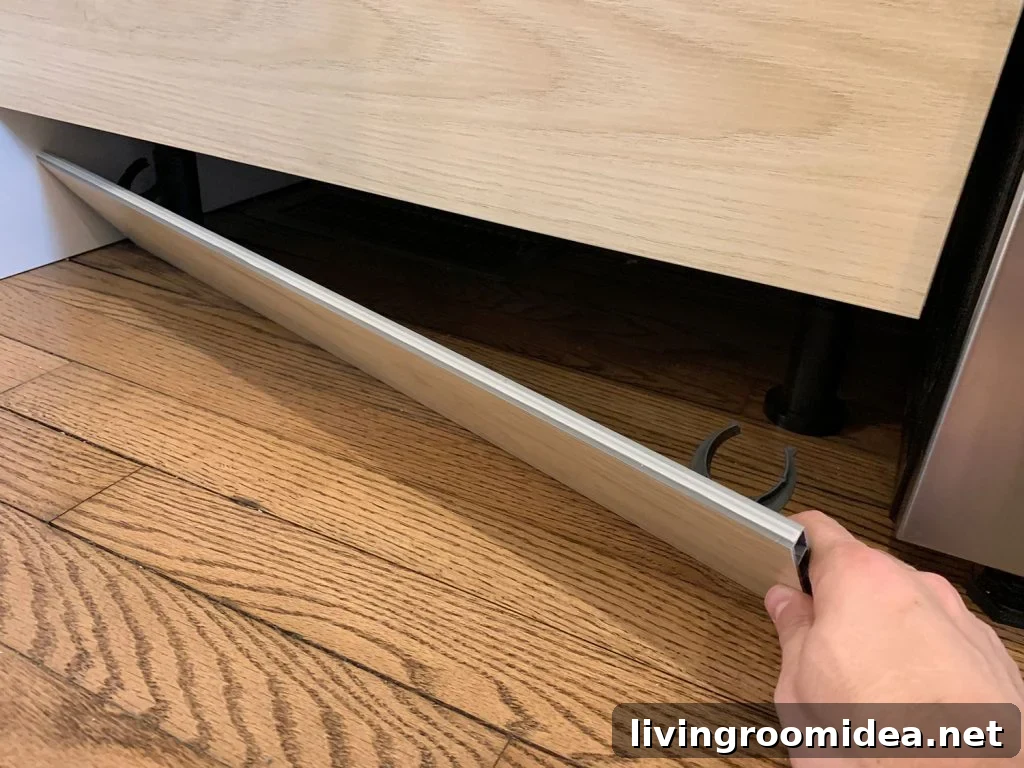
A miter saw makes cutting 2x4s, toekicks, and trim pieces faster and more accurate. It’s especially helpful when installing baseboard trim or quarter-round to disguise small floor-level differences.
19. Nail Gun
A nail gun is handy for attaching thin filler pieces or trim that won’t accept screws. It speeds up trim installation and gives a clean finish when applied carefully.
20. Other Tools
Additional items to have on hand:
- Pen or pencil
- Painter’s tape
- Step ladder
- Utility knife or scissors (for opening boxes)
- Crowbar (for removing baseboard or molding if needed)
- Broom, dustpan, or vacuum with hose for cleanup
Your IKEA Kitchen Installation Tool Checklist
Here is a consolidated checklist of the tools and supplies mentioned so you can gather everything before starting:
- Your itemized receipt / order
- Hammer
- Manual screwdrivers (Phillips & flathead)
- Crowbar
- Measuring tape
- Pen or pencil
- Painter’s tape
- Step ladder
- Power driver
- Drill bit set with magnetic bit holder and a 3/4″ bit for plumbing holes
- Dremel or hacksaw
- Stud finder
- Medium level (24″)
- Large level (48″)
- Wood shims
- Quality cabinet screws (about 4 per cabinet)
- Screws with anchors (about 2 per cabinet)
- Jigsaw
- Circular saw and/or table saw
- Miter saw
- Utility knife or scissors
- Nail gun
- Clamps
- 2x4s (optional)
- Kreg Jig (optional)
- Broom, dustpan, or vacuum with hose
Good luck and happy installing!
*This post contains affiliate links*