
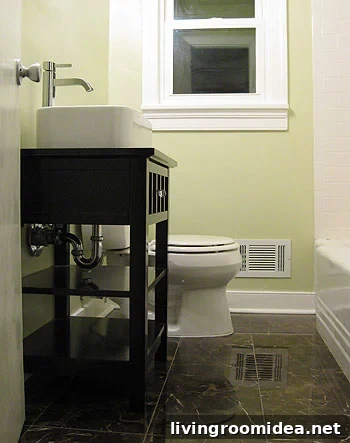
I’m back with the final chapter before next week’s big reveal. I know the suspense has been long, but this project has unfolded at a realistic pace—no fast-forwarded TV-style transformations here. You’ve seen the step-by-step progress as we lived it, which is a bit dustier and slower than a polished show, but also more honest. Meanwhile you’ve been enjoying daily showers at home while we’ve been making do with gym facilities. Today we finally took our first shower in the finished bathroom after about a month of that — bliss. So hang tight a little longer while I walk you through last weekend’s major task: building the vanity.
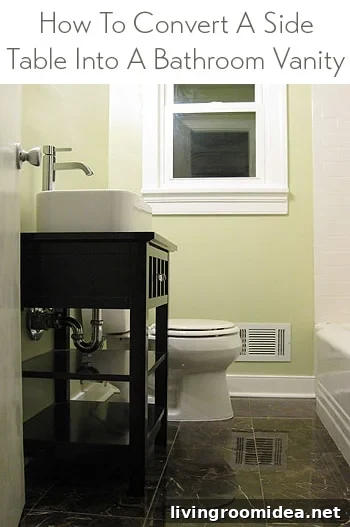
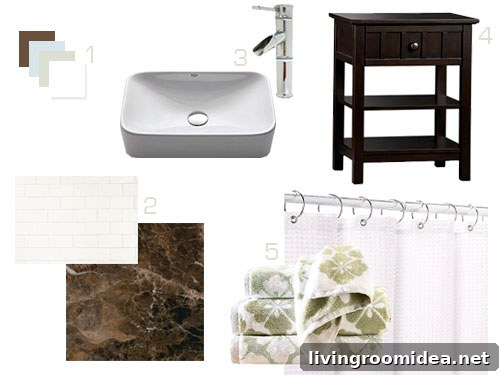
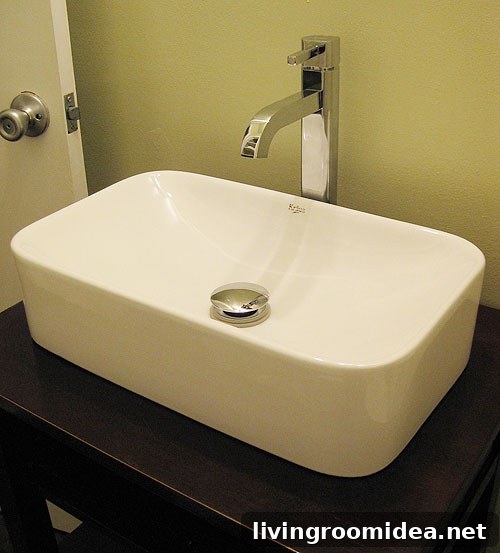
Following our original plan, we decided to convert a piece of furniture into a DIY vanity. We admired high-end examples, but didn’t want to spend $1,500. After some online searching and a day of thrift and home-decor shopping, we found a clean-lined white vessel sink and a sleek chrome faucet on sale, and paired them with a discounted Crate & Barrel nightstand purchased with a coupon. The combination gave us a modern-traditional look for roughly $400—considerably less than prebuilt options at big-box stores, which often don’t include faucet or sink.
The nightstand required some assembly, but it was very straightforward. Because a standard nightstand finish isn’t built for moisture, we added protection with three coats of a water-resistant lacquer. We opted for Safecoat Acrylaq as a lower-VOC alternative to oil-based polyurethane. Sherry applied the coats after a light sanding on our porch for maximum ventilation. So far it’s held up well: water beads on the surface and it appears quite resistant to moisture—an important quality in a bathroom.

The trickiest part was cutting precise openings for the faucet, sink drain, and the plumbing. Once the lacquer had dried and the bathroom floor was in, we moved the table into position to check where the pipes and trap sat. Fortunately the p-trap fit neatly beneath the drawer and upper shelf, so both bottom shelves could remain intact. However, the hot and cold water pipes entered right into the back of the drawer, so we needed to remove sections of wood to make room.
I marked the areas to remove and cut them out. Instead of relying solely on power tools, I drilled pilot holes and used a handsaw where appropriate; most panels were thin and easy to modify. To ensure the sink drain lined up with the p-trap, we used a trimmed paper towel tube as a mock pipe, centered it, and marked through it with a marker to transfer the location to the tabletop. After a small pilot hole, I used a hole-boring bit—well worth the few dollars—to cut a clean, accurate opening for the drain.
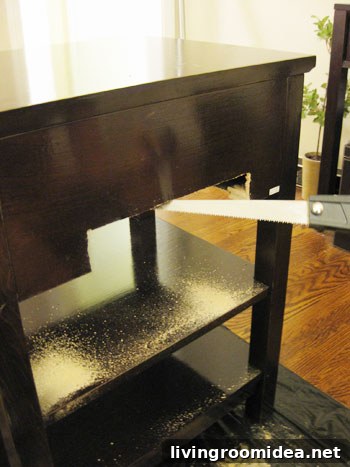
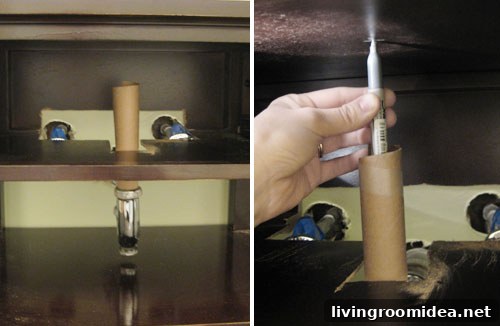
We positioned the vessel sink temporarily to check the stopper and to mark where the faucet would sit, then drilled the faucet hole. Before final installation, we attached the faucet and its braided hoses from above so we could tighten the mounting nut from underneath without the wall getting in the way. That required trimming a small section underneath so the nut could sit flush. My cuts aren’t pretty, but they’re hidden against the wall and will be concealed by the drawer once finished.
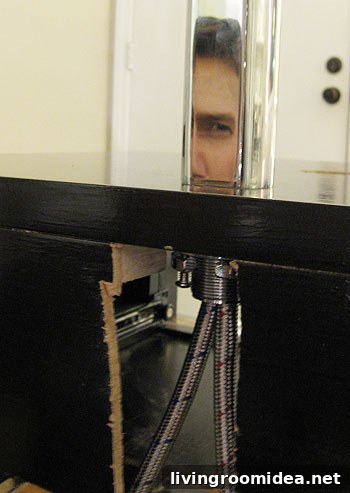
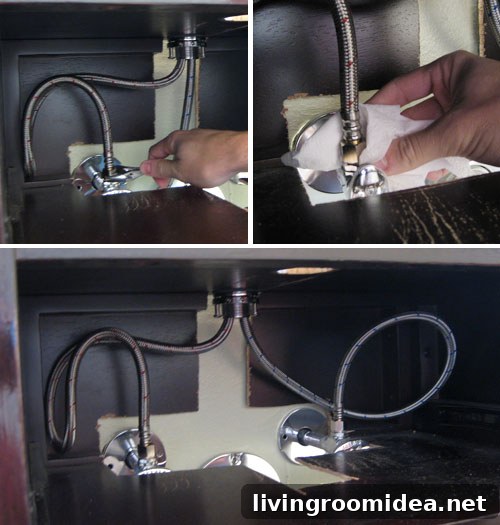
With the faucet attached, we carried the vanity into the bathroom and connected the water lines to the wall plumbing using plumber’s tape and careful tightening—tight, but not overtight. I checked for leaks using a simple paper towel method: hold a dry towel under the connection for a minute; if it stays dry, you’re good. With no leaks, we fed the hoses back into the drawer cavity and moved on to set the sink in place.
Before permanently bonding the sink, we did a dry fit to confirm measurements. We needed a short extension piece for the drain, so we ran back to the store and then returned to glue the sink down with clear waterproof silicone caulk. The caulk serves as both adhesive and a moisture barrier. We applied beads of silicone only where the sink bottom meets the vanity—leaving a small gap at the back intentionally, so any future leak would escape visibly rather than silently pool between sink and counter.
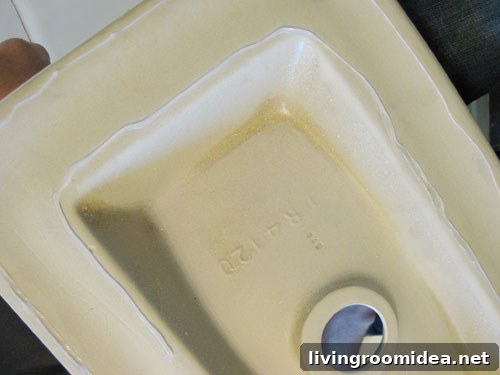
After seating the sink and connecting the drain components—washer, nut, and trap with plumber’s tape—we tested the system. A couple of small adjustments later and we had a dry, leak-free sink. We finished by sealing the sink base with the same clear silicone, again leaving that small back gap for leak visibility. The vanity looked complete and solid.
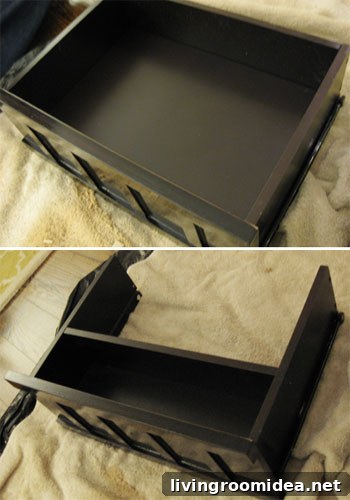
Two final steps remained. First, we anchored the vanity to the wall with L-brackets and long screws hidden under the drawer base so the unit wouldn’t shift—especially important since plumbing now helps hold it in place. Second, we modified the drawer to clear the plumbing. We removed the drawer back and bottom, cut the base to a shorter depth using a circular saw for a straight, secure cut, and reattached the back panel at the new depth. The drawer still holds daily essentials like toothbrushes, toothpaste, contact cases, and deodorant.
With the drawer reassembled and everything secured, the vanity was finished. The entire process took only a few hours and saved us several hundred dollars compared to buying a prebuilt unit. We’ll share the full reveal in the next post, along with a budget breakdown and whether we’d take this route again. We’ll also follow up with other details from the renovation, like reglazing the tub and creating new artwork. The toilet reinstall is already done and documented elsewhere, so we skipped repeating that here.
Have you ever repurposed a piece of furniture to make it more functional? We’d love to hear about furniture hacks you’re trying. Sherry’s mom converted an old cabinet into a sink years ago on a tight budget, so the inspiration runs in the family. Tell us what you’ve been up to.