
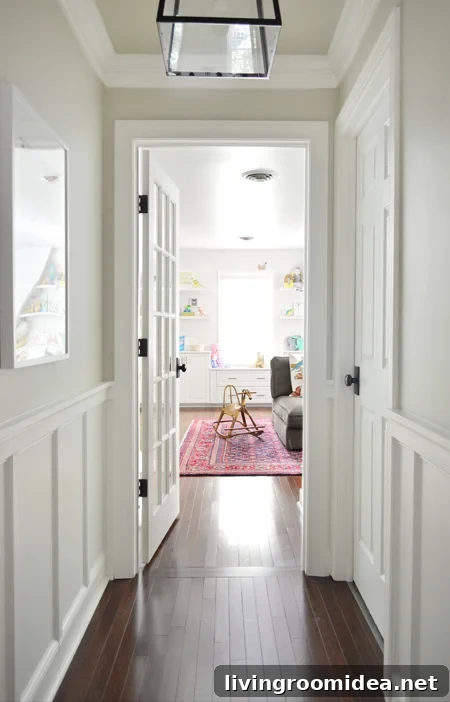
At this point you’ve probably seen our finished and furnished bonus room above the garage, but here’s a clear, practical account of how we installed the oak hardwood flooring. We touched on this briefly in our first post about the space and promised a more detailed how-to. This was our first traditional nail-in installation (we’d previously done a floating hardwood install), and while it wasn’t overly difficult, it presented some real challenges. If you’re taking on a similar project, this is what we did and why.
Choosing Our Floors
Originally we planned wall-to-wall carpet for the bonus room because it seemed cozy and we didn’t have enough hardwood left over from when we finished the rest of the second floor. But we couldn’t shake the idea of the wood flowing down the hall into the bonus room, so we decided to match the hardwood instead of switching to carpet.
Finding a matching product was the first hurdle. The upstairs had Lono Oak from Lumber Liquidators, which had been discontinued shortly after our initial purchase. Fortunately, small quantities of that same flooring still existed in a few warehouses across the country. We ordered boxes from multiple locations — not the fastest or cheapest option — but the deep clearance pricing made it worthwhile.
Because the wood was on final closeout, the discounted price more than covered the extra shipping. When the boxes arrived we were relieved not to have to transport them ourselves — lesson learned from past experience.
Preparation
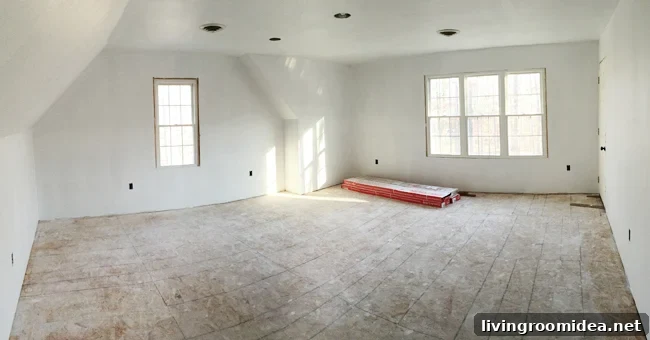
Once the boxes were delivered we moved them into the bonus room to acclimate for several days. Hardwood should sit in the space for a bit so it can adjust to the moisture and temperature, which reduces later movement after installation. We let ours acclimate for five days.
Next we rolled out an underlayment to act as a vapor barrier and reduce squeaks between the hardwood and the plywood subfloor. Many installers use roofing felt, but we used a silicone-based white underlayment because it’s less messy. We overlapped the strips slightly and trimmed them at the walls with a utility knife.
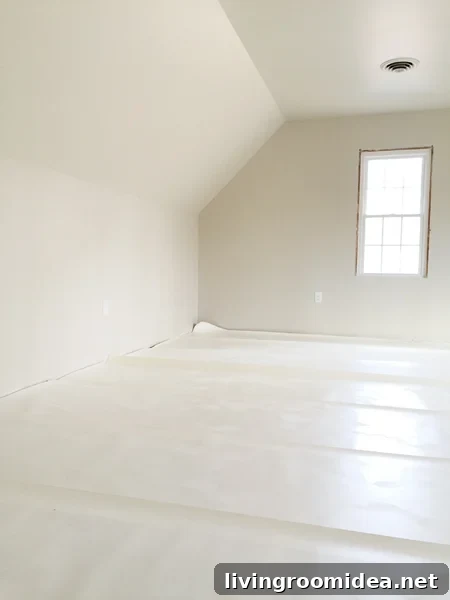
Laying the First Rows
The first rows require the most careful planning. Solid and engineered hardwood need an expansion gap around the room’s perimeter so the floor can expand and contract with humidity and temperature changes. We left a 3/4″ gap — the same as the board thickness — and marked the first row’s outside edge with a ruler at both ends of the room. Then we snapped a chalk line between the marks to keep the first row parallel to the wall. A chalk line tends to be more reliable than spacers when walls are not perfectly straight.
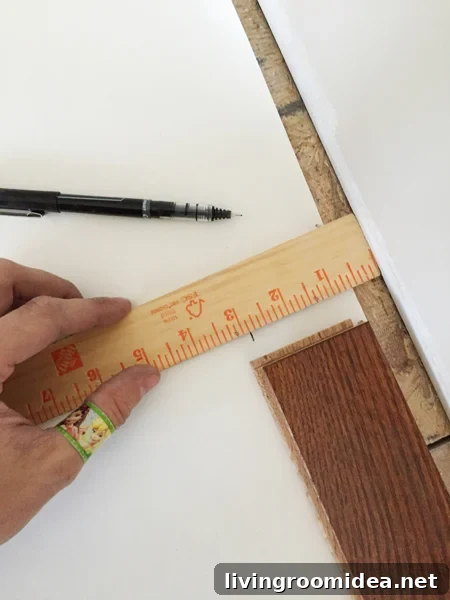
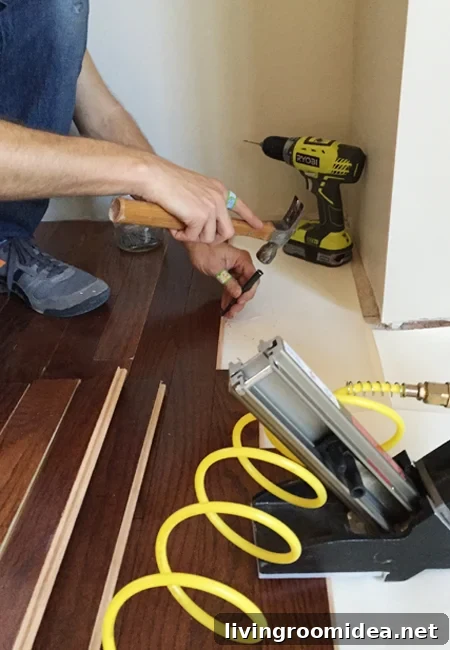
We temporarily secured the top inside edge of the first row with small finish nails that would later be hidden by quarter round. The very first few rows must be hand-nailed because a power floor nailer is too large to get close to the wall. We drilled pilot holes about every 10–12″, hammered in finish nails, and used a nail punch to set them flush. It’s tedious work but necessary.
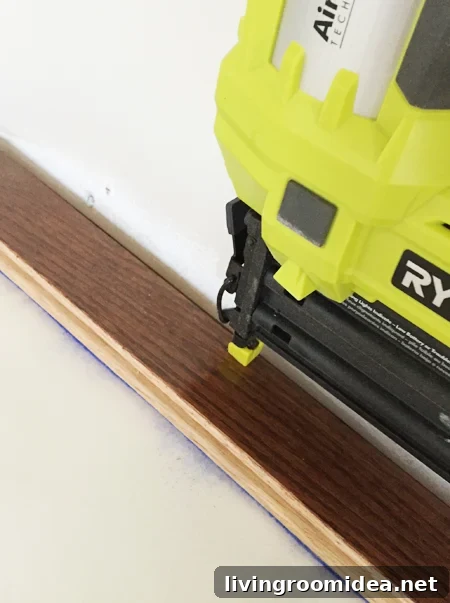
After installing three full rows by hand we had enough clearance to use the power nailer, which sped up the process considerably, although the entire room still took us about two days.
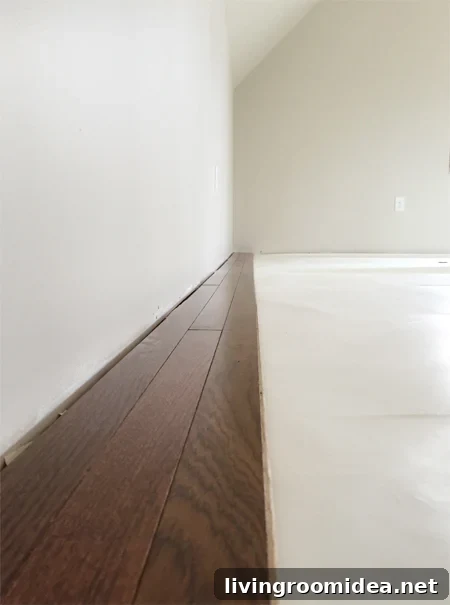
Using the Floor Nailer
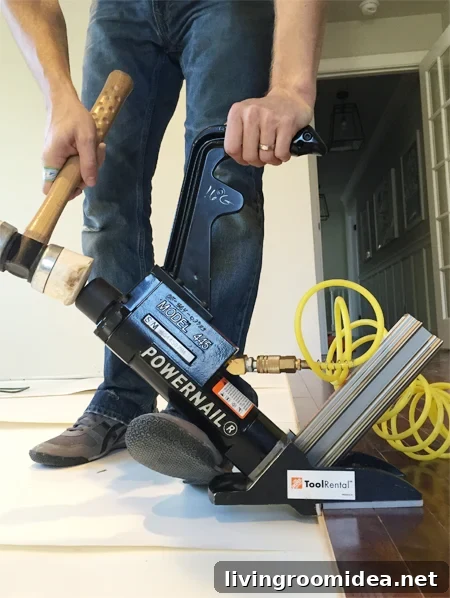
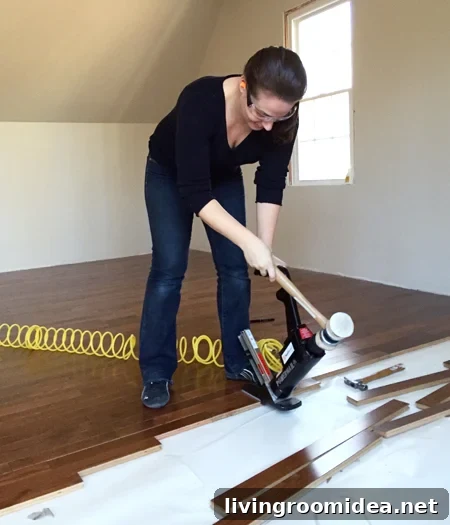
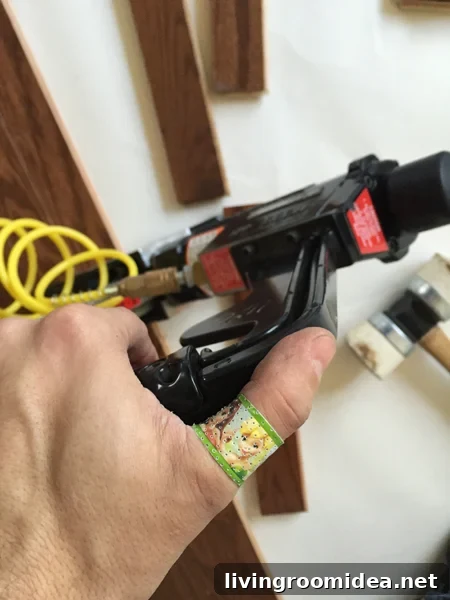
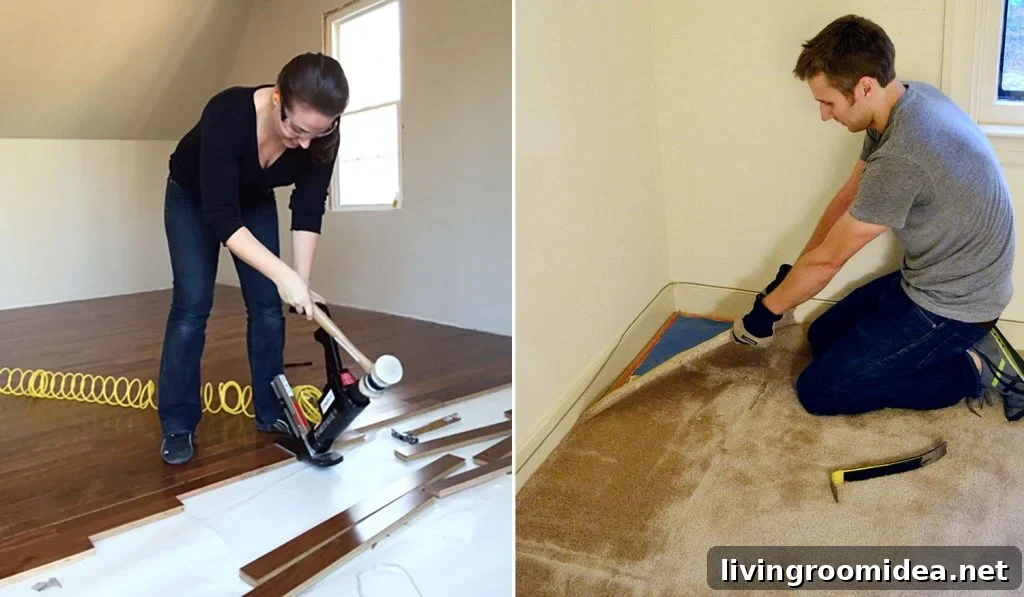
We rented an air-powered floor nailer rather than buying one. Rental was cost-effective for a one-off project. The floor nailer drives cleats into the tongues of the boards, pulling the planks tightly together while fastening them to the subfloor. Cleats come in strips that you load into the nailer. Operating the tool requires sliding it over the board edge, pulling the trigger with one hand and tapping the plunger on the back with a mallet to set the cleat. It takes more than a light tap but doesn’t require extreme force.
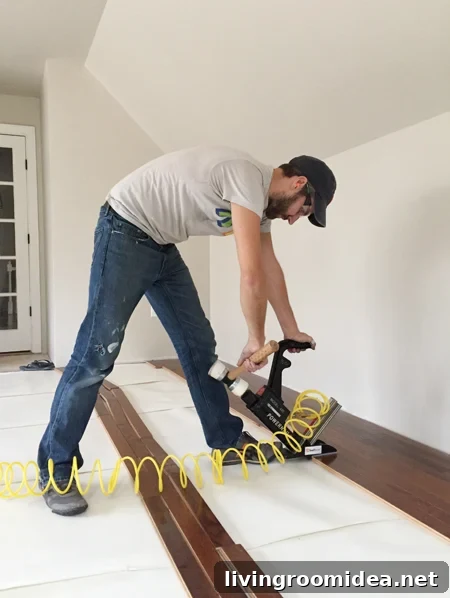
The nailer made the bulk of the work much faster, though it can be tiring after many hours. We used over 1,000 cleats across the install, switching off tasks to manage fatigue and reduce strain on backs and shoulders. While one person operated the nailer, the other laid out boards and kept the workflow moving.
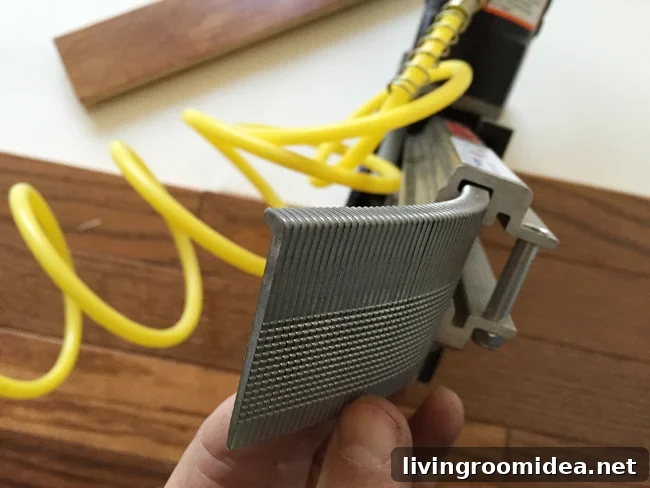
Staggering board lengths and pulling planks from different boxes as you go prevents a banded or uneven appearance if there’s color variation between boxes. This creates a more natural, random-looking pattern.
Cutting Boards
Most rows require at least one cut at the end. We kept a pile of boards with visual flaws and used those as end pieces after trimming the imperfections away. When cutting an end board, rotate it 180 degrees, press it against the end wall, and mark the cut about 1/2″ from the end that will sit against the wall. The 1/2″ plus the 1/4″ tongue equals the 3/4″ expansion gap we maintained.
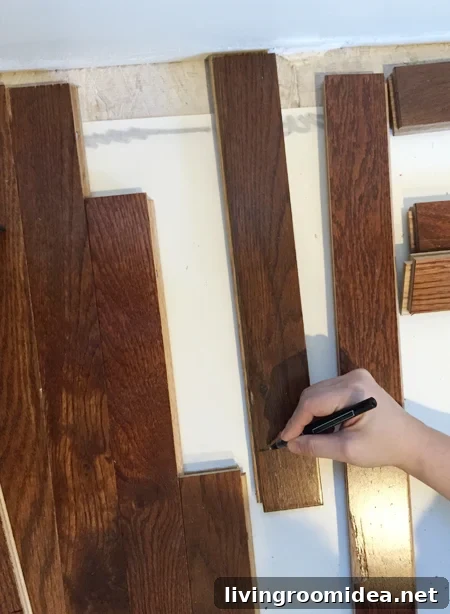
We cut boards on the miter saw downstairs and tried to cut several at once to minimize trips. It’s repetitive work, but planning ahead keeps the process efficient.
The Last Rows
The final few rows also need to be hand-nailed because the floor nailer can’t reach that close to the wall. We used the drill, hammer, and nail punch to finish the edges. It’s slow and a bit frustrating after the speed of the nailer, but it’s necessary to keep the finish neat and undamaged.
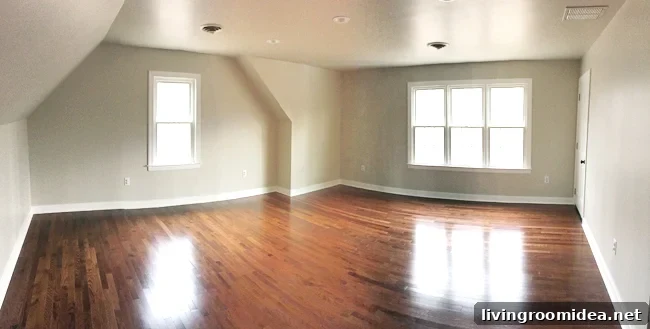
When the boards were all in place we cleaned the space, then installed baseboard, quarter round, and window trim. After that we added built-ins and other finishing touches, and finally furnished the room. The result is the bonus room we use every day — it was worth the effort.

If you’re preparing for a hardwood floor installation, expect heavy lifting, some tedious hand-nailing near the walls, and plenty of mallet work when using a floor nailer. Proper acclimation, a reliable chalk line, careful staggering of boards, and patience during the hand-nailed rows will help you achieve a professional-looking result.
More Flooring Projects
For other flooring projects and guides we’ve completed, see our related posts below:
- Refinishing Hardwood Floors 101
- How To Select Hardwood Flooring
- How To Install Hardwood Floors Without Nails
- How To Install Click-And-Lock Cork Flooring
- How To Paint A Floor
- How To Stain A Concrete Floor
- How To Remove Carpet
*This post contains affiliate links