
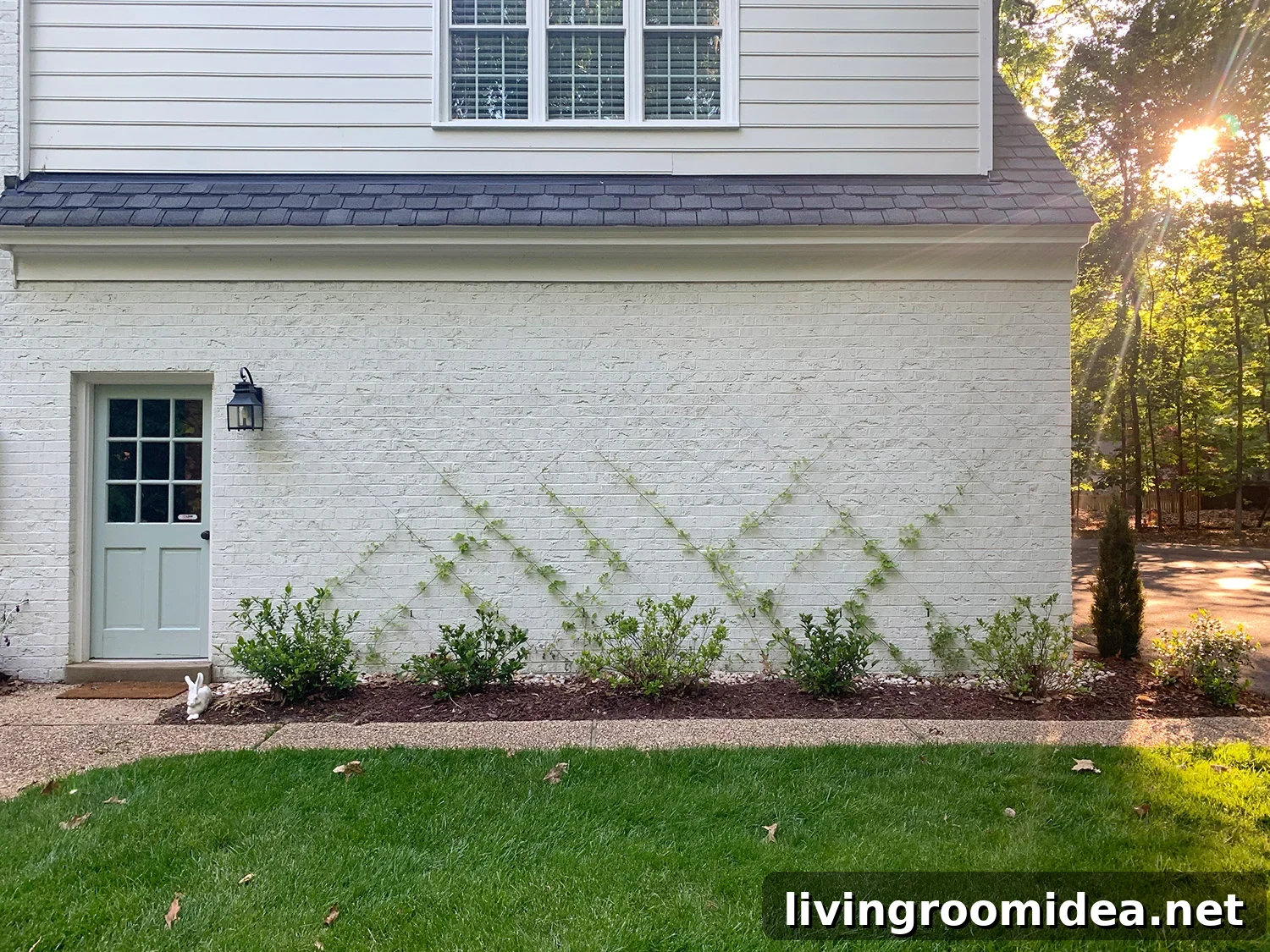
Behold our DIY wire trellis! I’d wanted to try this project for years, and I’m thrilled with the result. With a few basic tools, wire, anchors and a climbing vine, we transformed a plain brick wall into a stylish garden feature. It took some planning and careful measuring, but the process is straightforward. Here’s how we built ours and what we learned along the way.
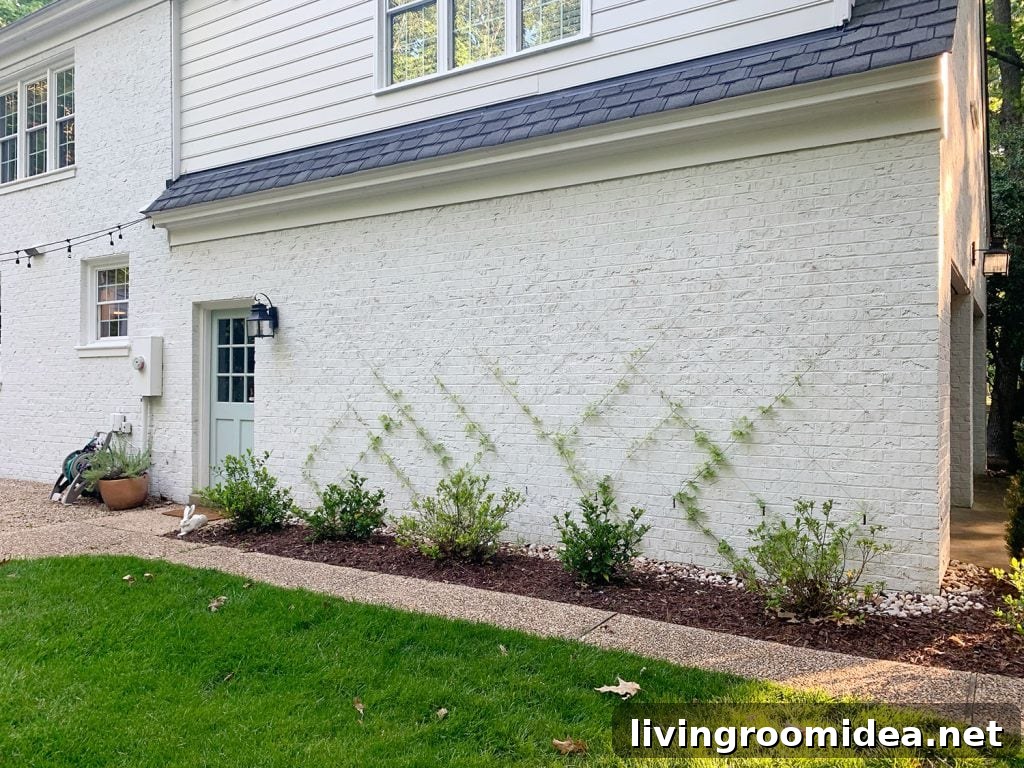
After we painted the house white last fall, the back of the garage begged for something decorative — a diamond trellis felt like the perfect accent. It added a subtle architectural detail and gave the wall a refined, finished look.
Wire Trellis Before & After
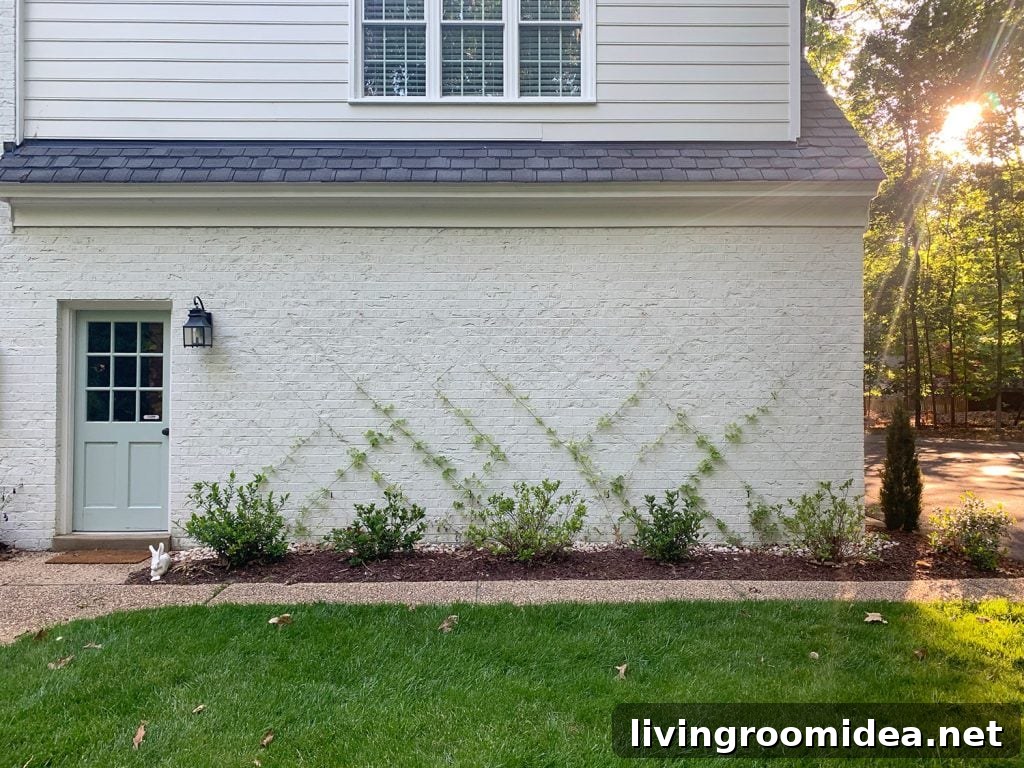
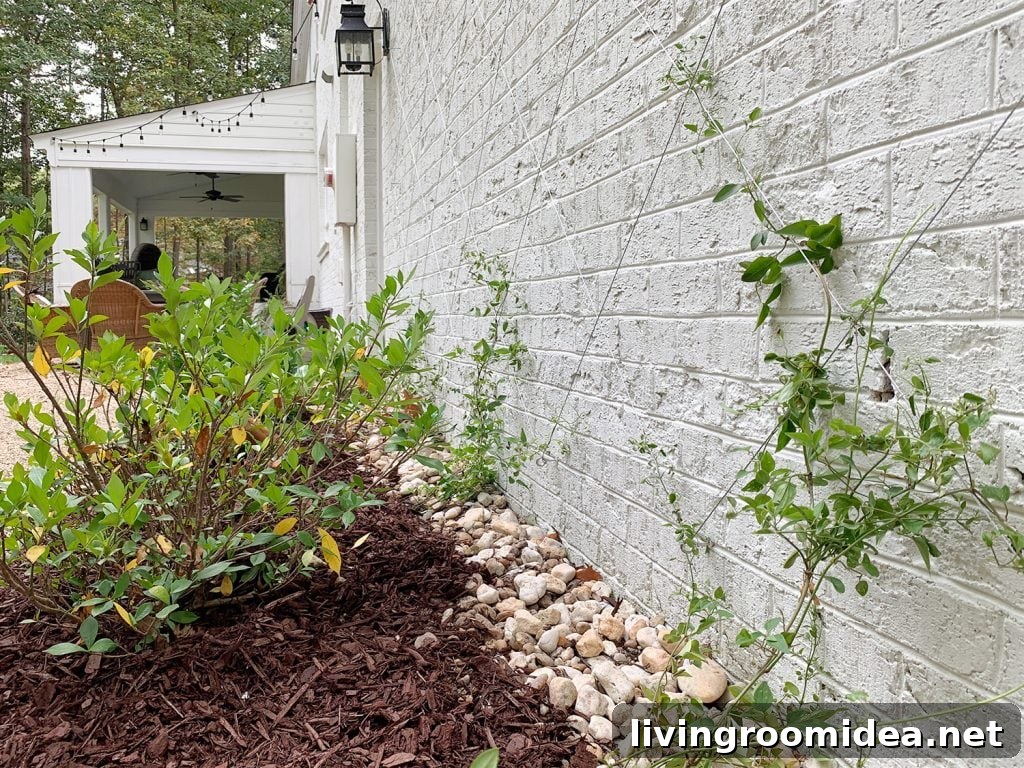
To show the impact, here are photos from before we installed the trellis and the early stages after installation. Initially the clematis we planted were barely visible behind other plants, but given a season they filled in nicely.
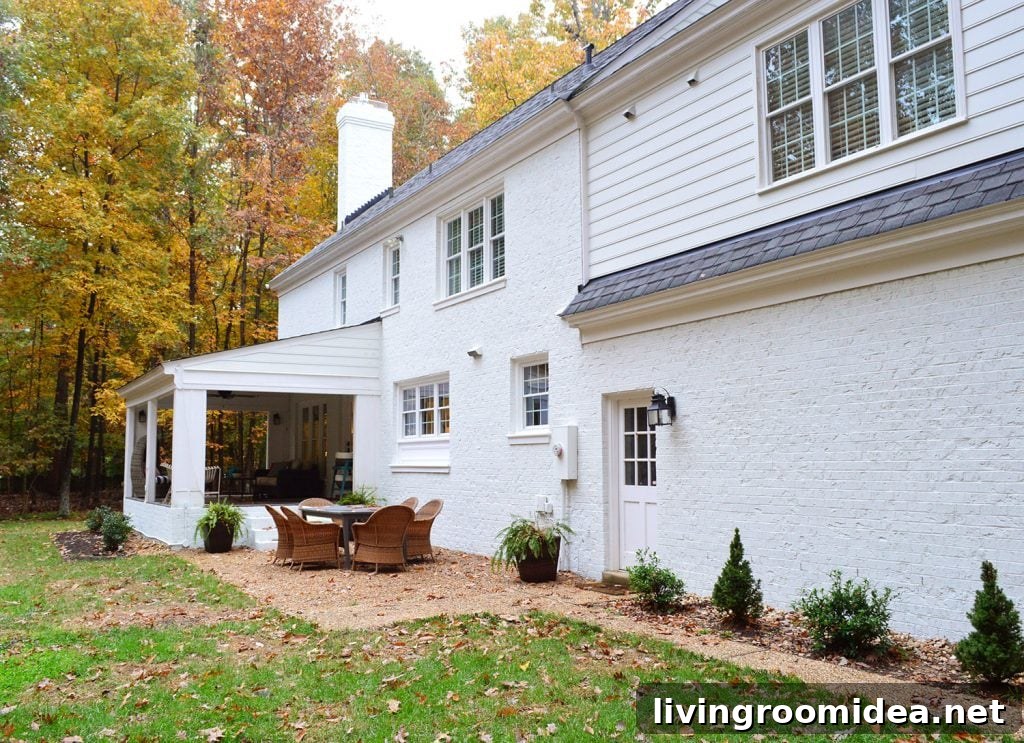
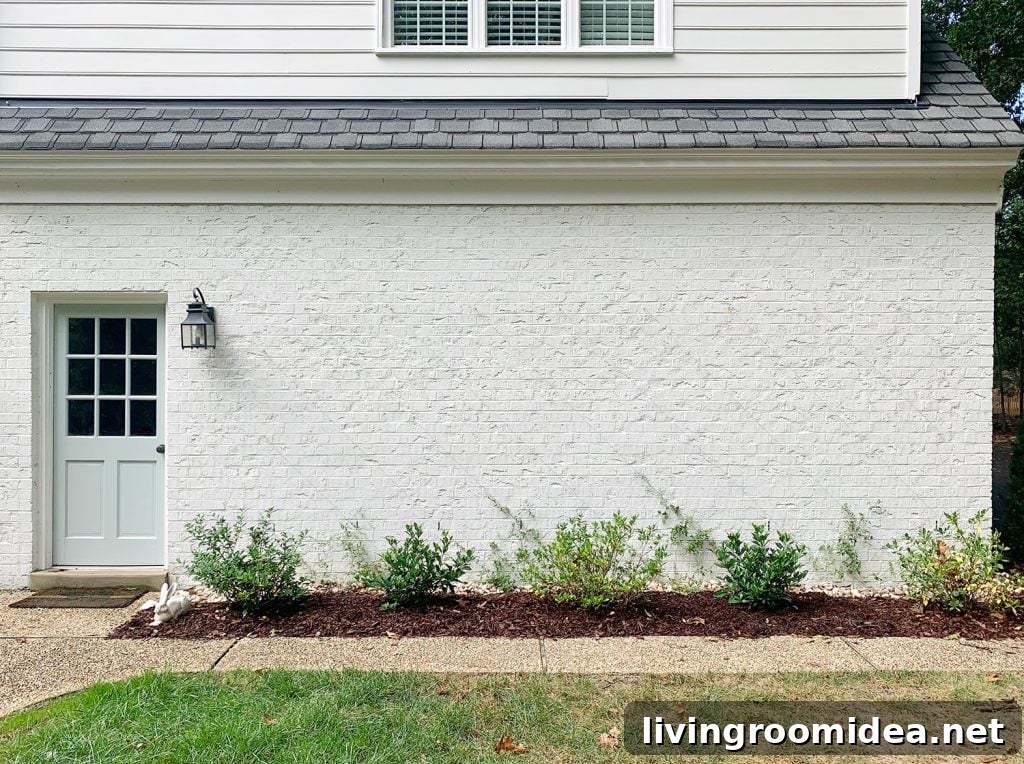
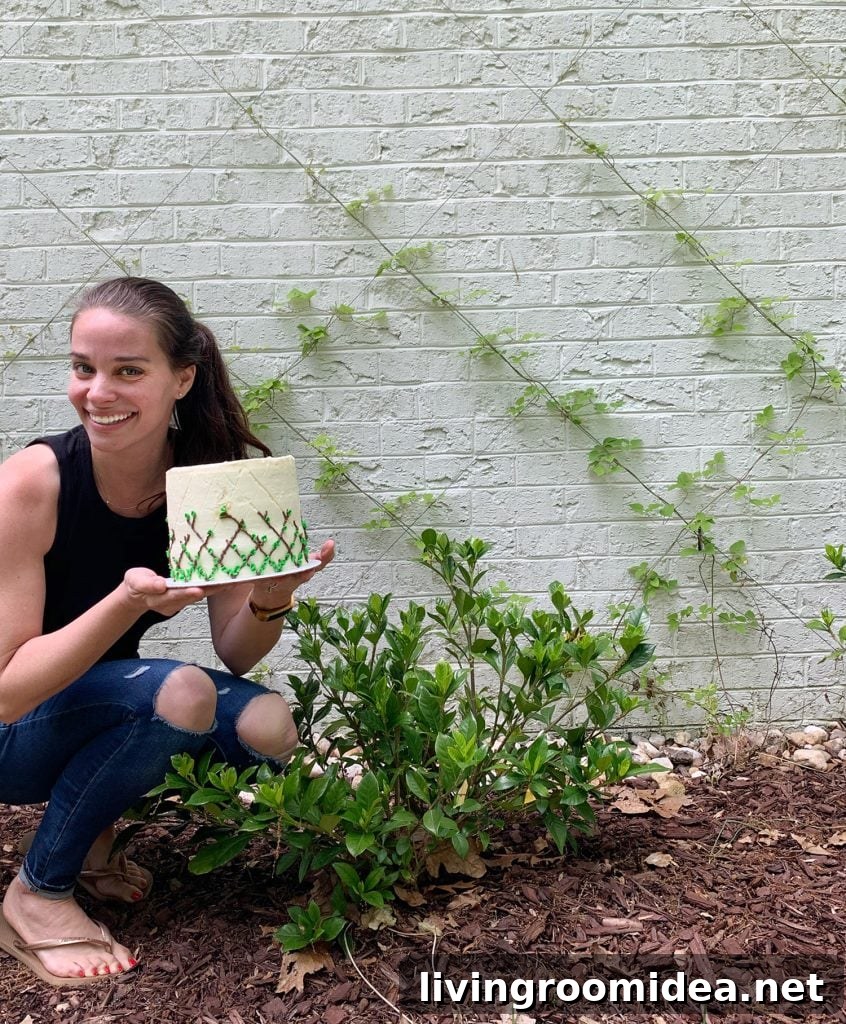
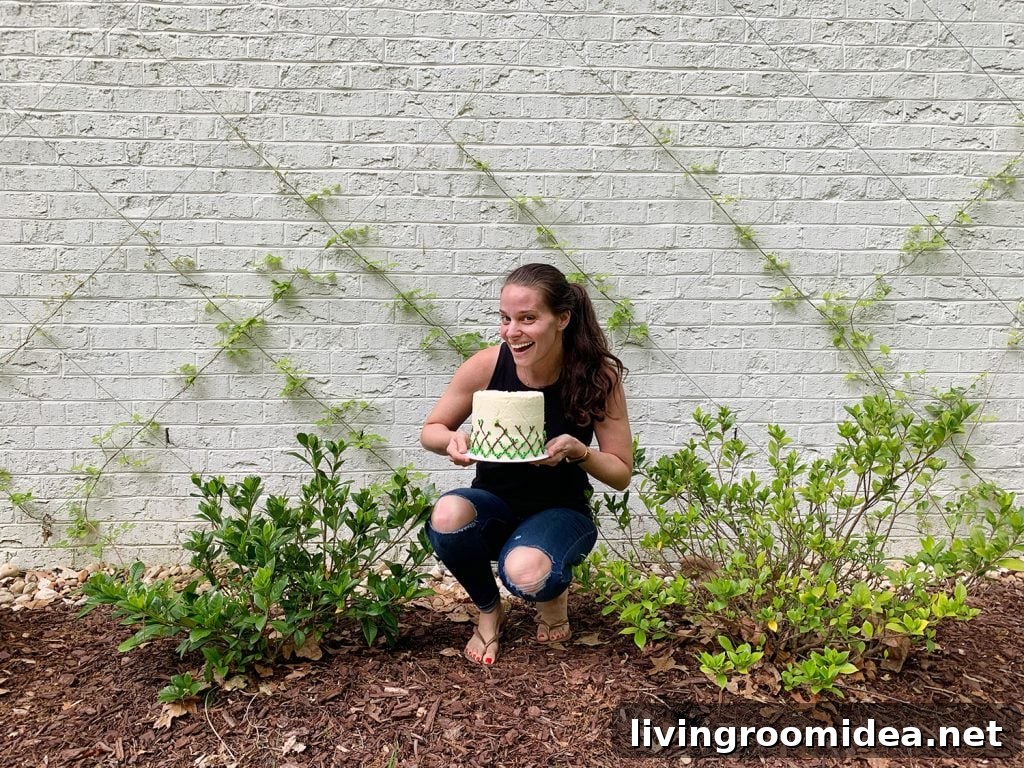
A friend even baked a cake to celebrate the progress — plant friends are the best kind of friends.
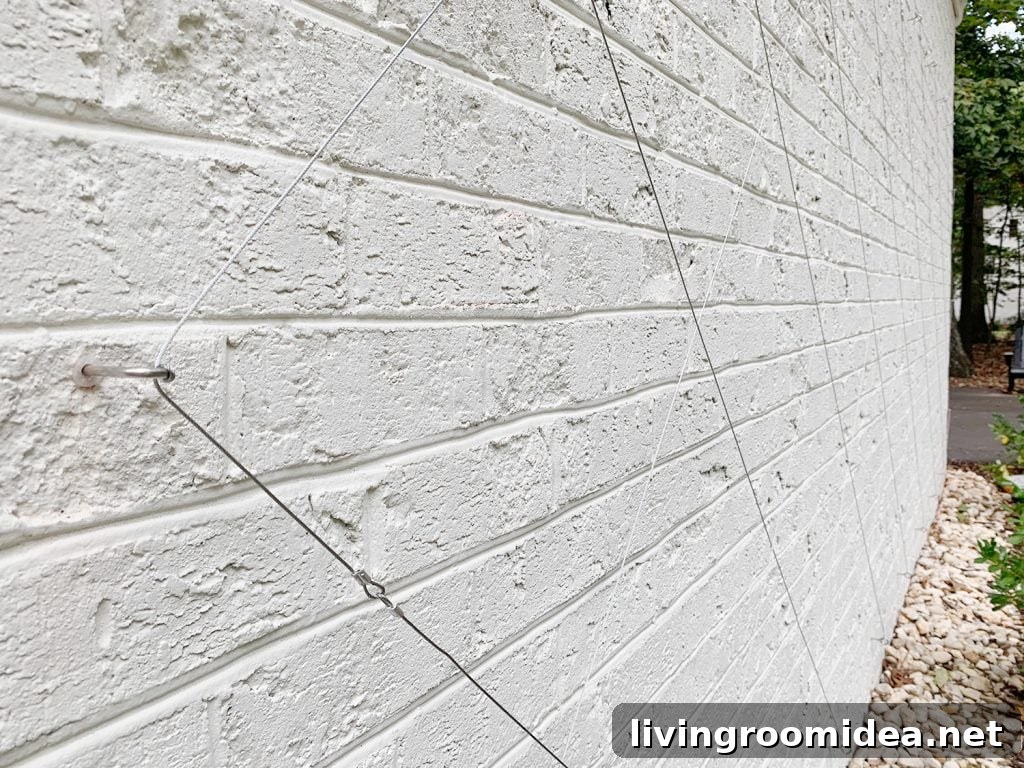
Below are a couple of shots showing the diamond pattern and a side view so you can see how the wires sit off the wall to give vines room to climb.
There are commercial kits available, but we sourced materials separately. In hindsight the inexpensive kits would have been easier — but building it yourself allows flexibility in size and spacing.
Materials & Tools
- 1/16″ galvanized steel wire rope (we used three 50 ft packs)
- 1/16″ aluminum ferrules to create loops
- Stainless steel screw eye hooks (we used 22)
- Plastic brick anchors (for masonry installation)
- Hammer drill and masonry bits (for brick)
- Wire cutters
- Needlenose pliers
- Hammer
- Level
- Painter’s tape
- Marker or pen
- Climbing plant (we chose clematis)
Note: anchors and a hammer drill are for installing on brick. Different siding or fences will require different fasteners and tools.
Step 1: Plan Your Wire Trellis
Start by visualizing the design, placement and scale. We mocked up several versions to find a diamond scale that fit the wall and aligned with nearby elements like doors and windows. Planning helped determine the number of anchors and spacing required.
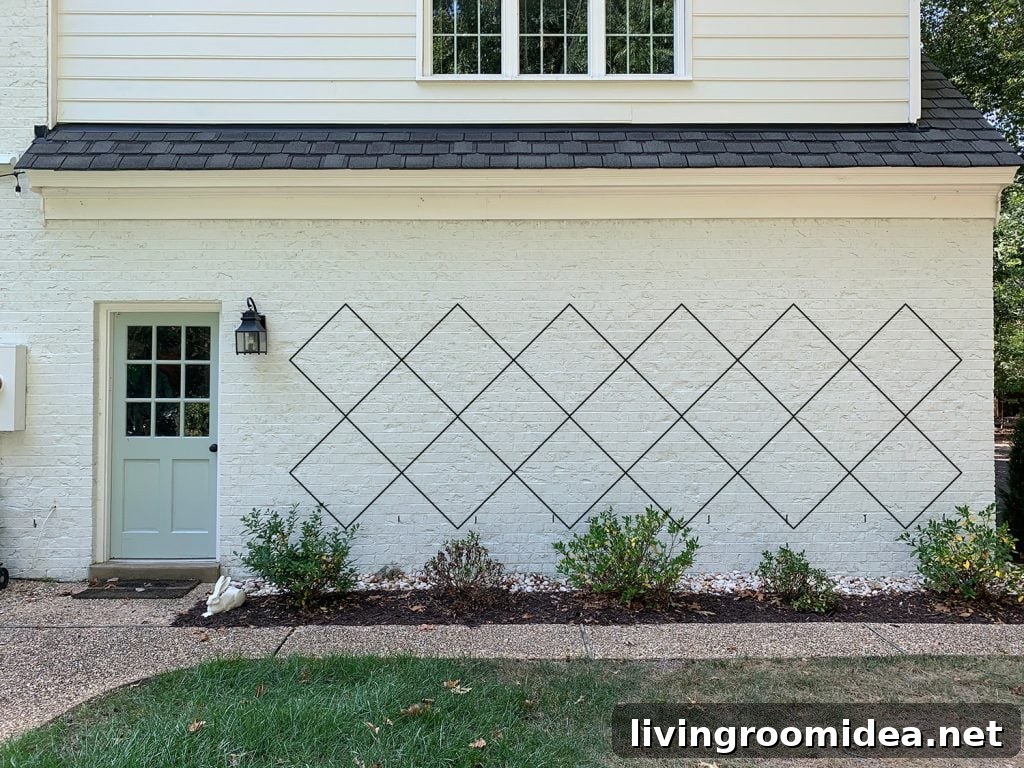
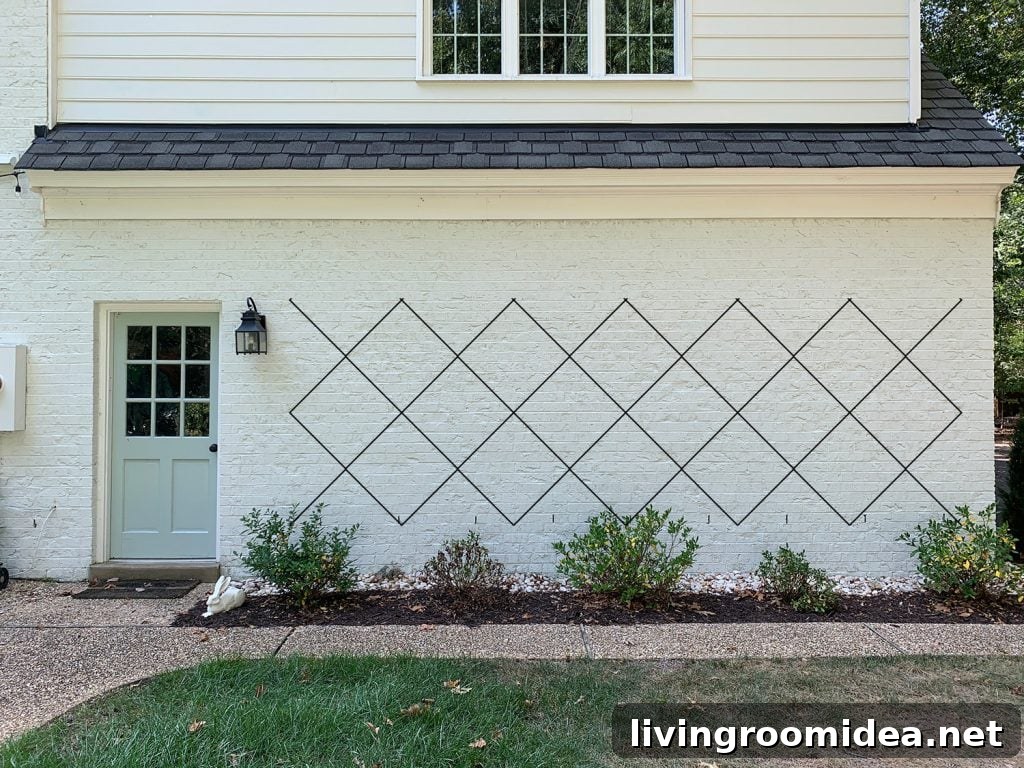
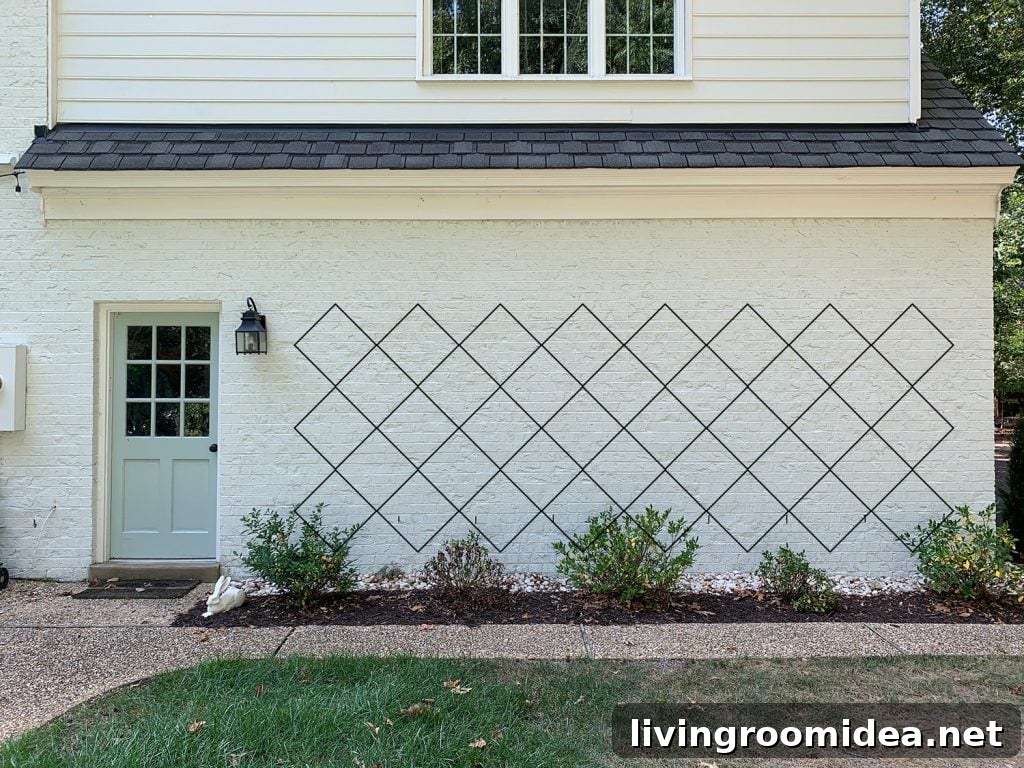
Tip: include a measuring tool in your reference photo to help transfer dimensions to the wall later.
Step 2: Map Out Your Pattern On The Wall
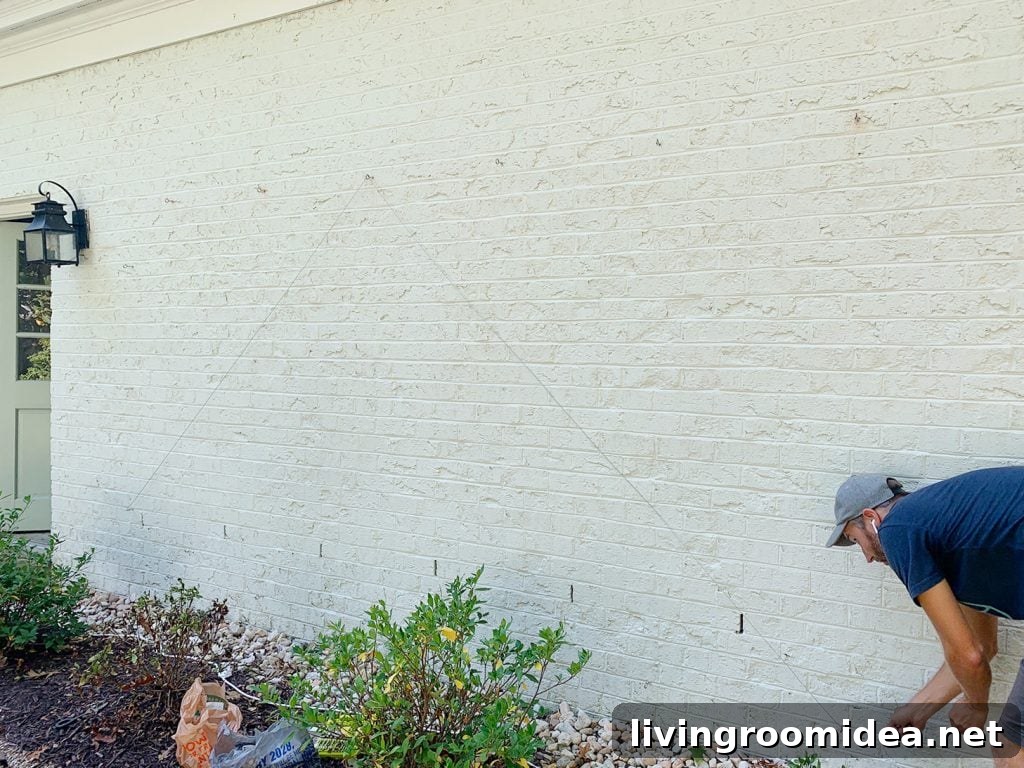
Transfer your design to the wall using a level, tape measure or yardstick and painter’s tape. We determined our diamond centers were 25″ apart and marked each anchor point with tape and a small marker dot to avoid writing directly on the brick. Double- and triple-check measurements—accurate spacing keeps the pattern looking clean.
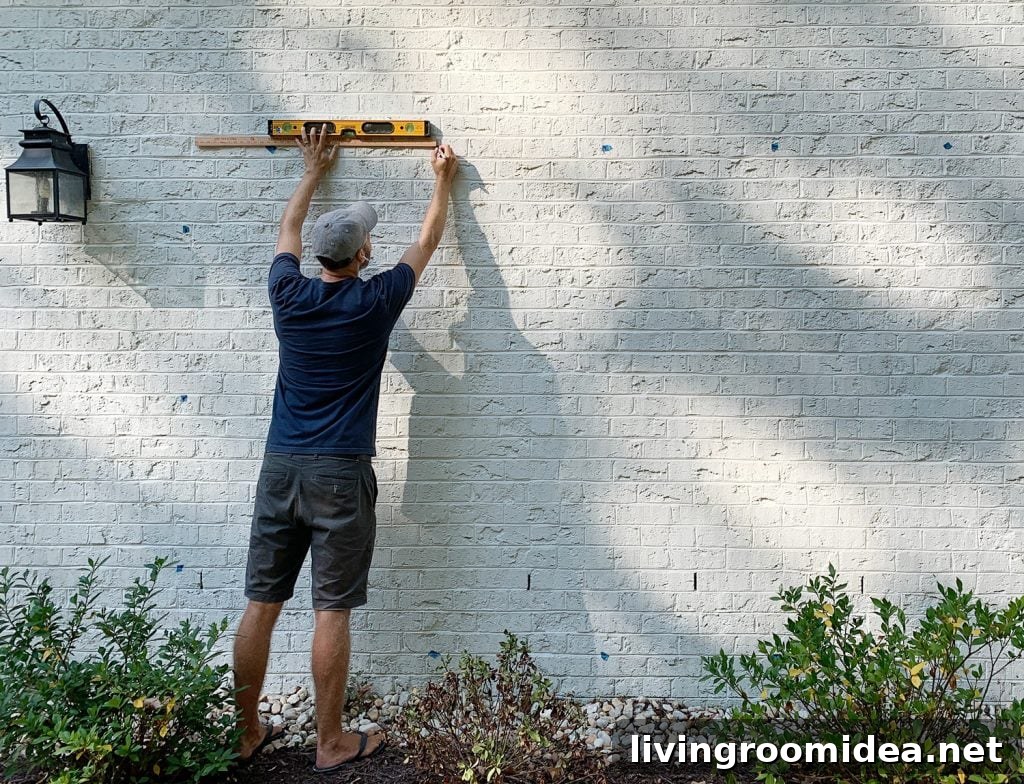
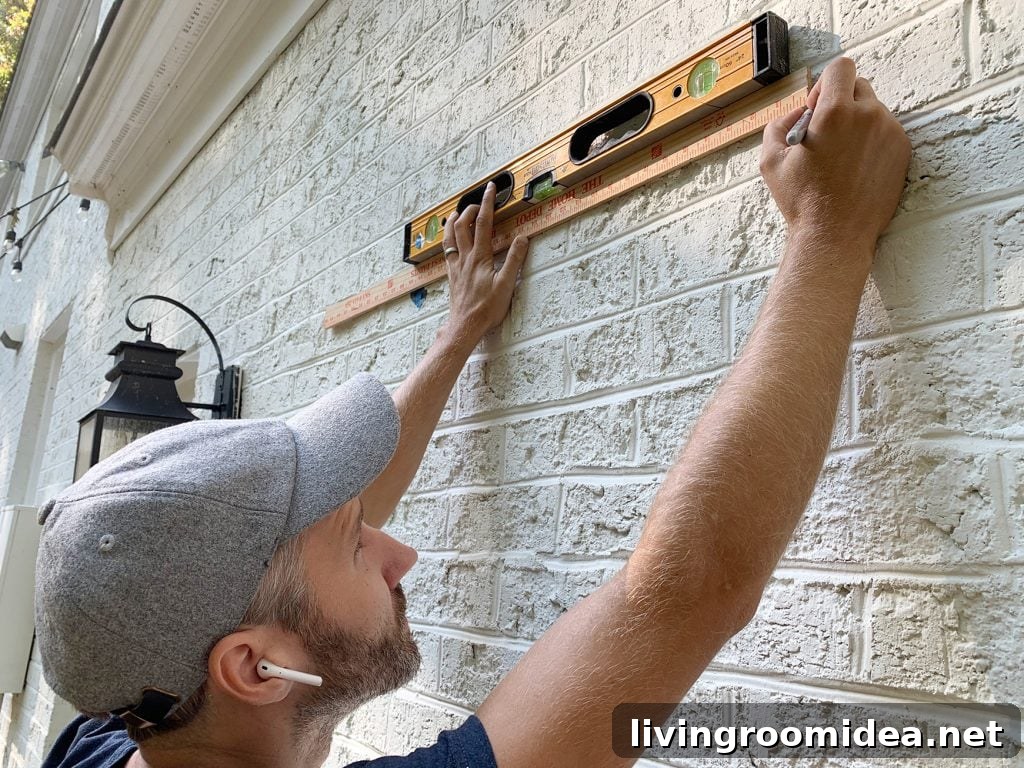
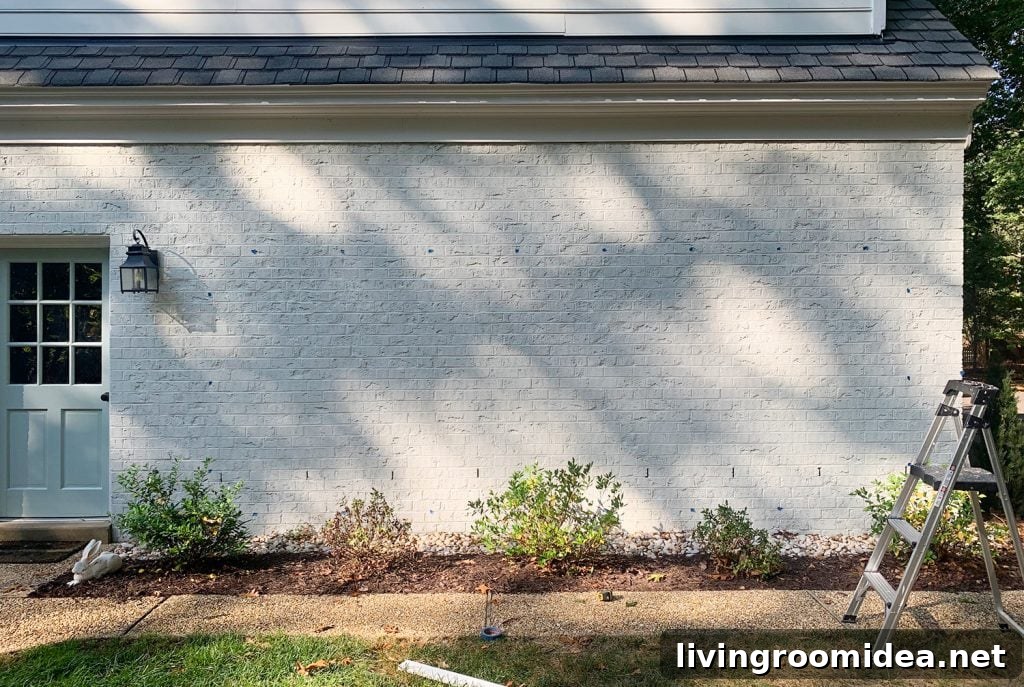
Step 3: Install Your Anchor Points
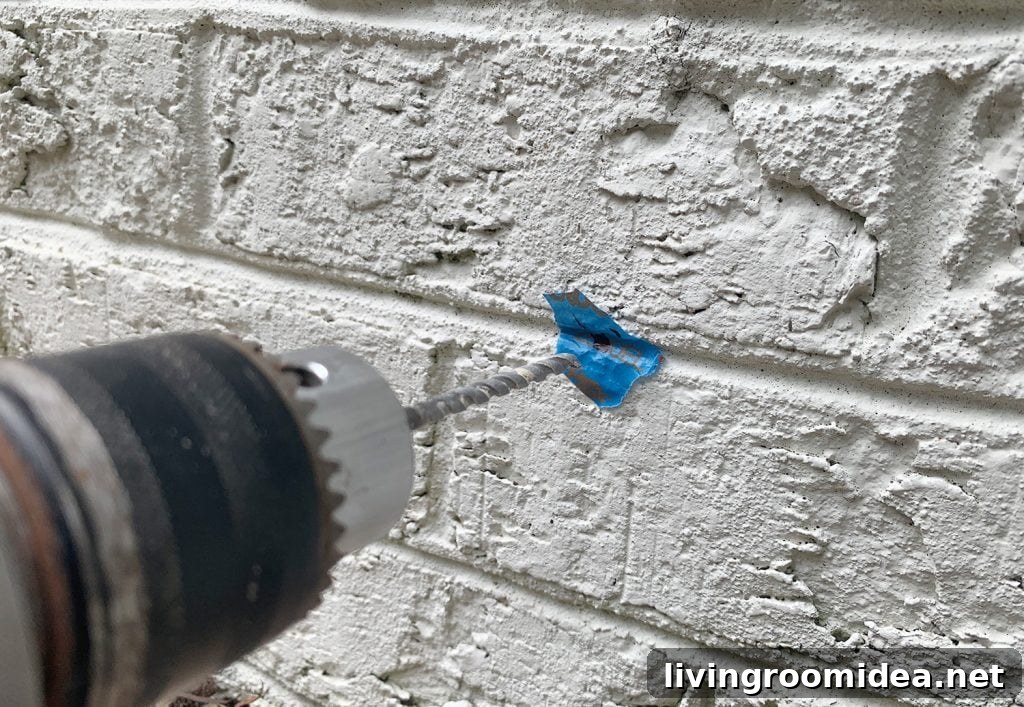
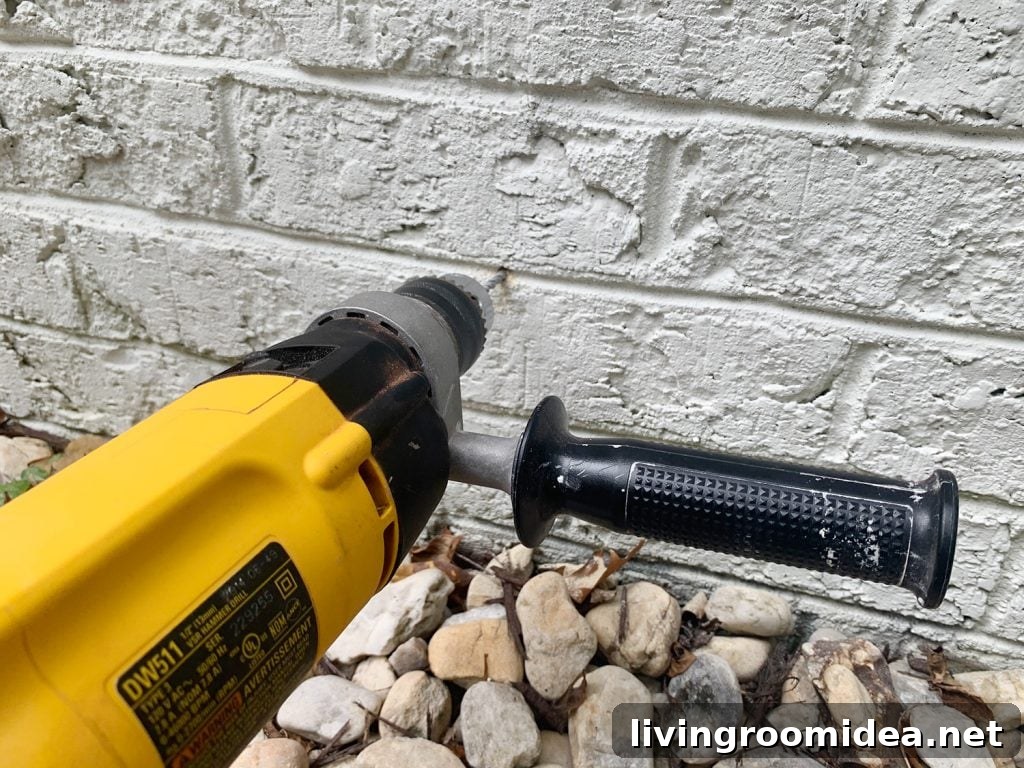
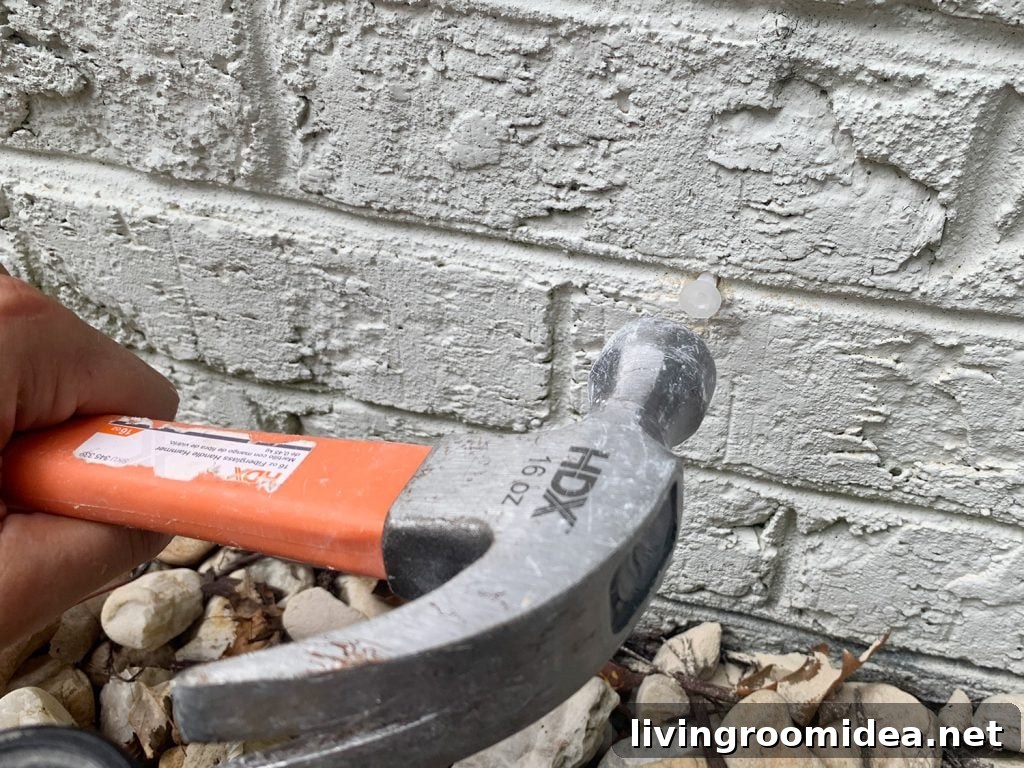
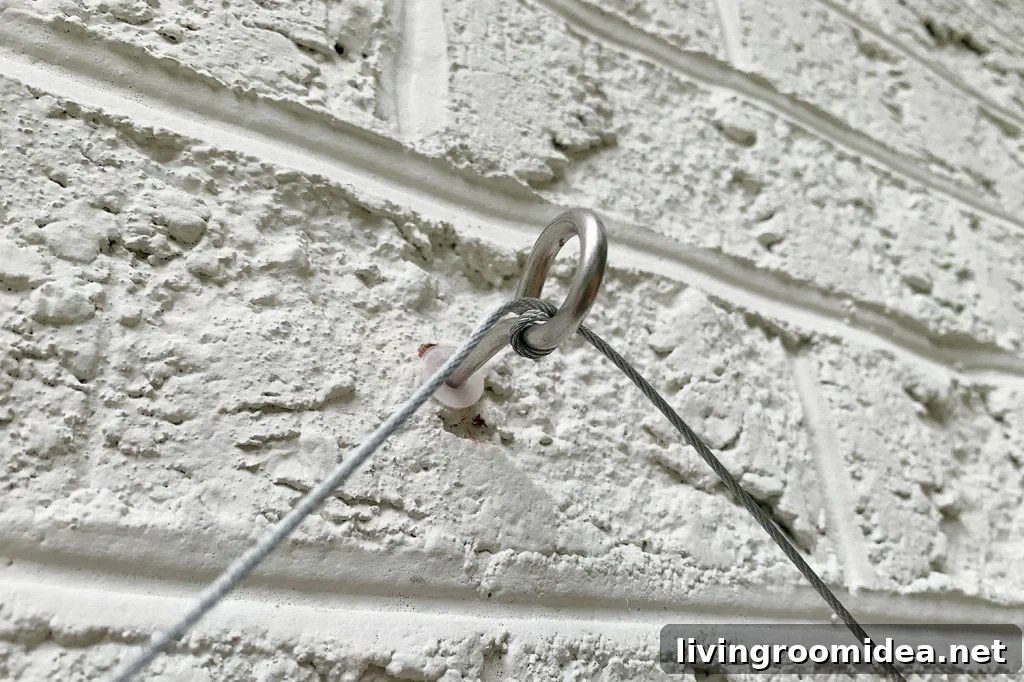
Use a hammer drill and appropriate masonry bit to make pilot holes at each mark. Make the holes to the diameter and depth recommended for your plastic anchors. Lightly tap anchors into each hole, then screw in the eye hooks. We chose 3″ eye hooks so the wires would sit slightly off the wall and vines could wrap around both sides.
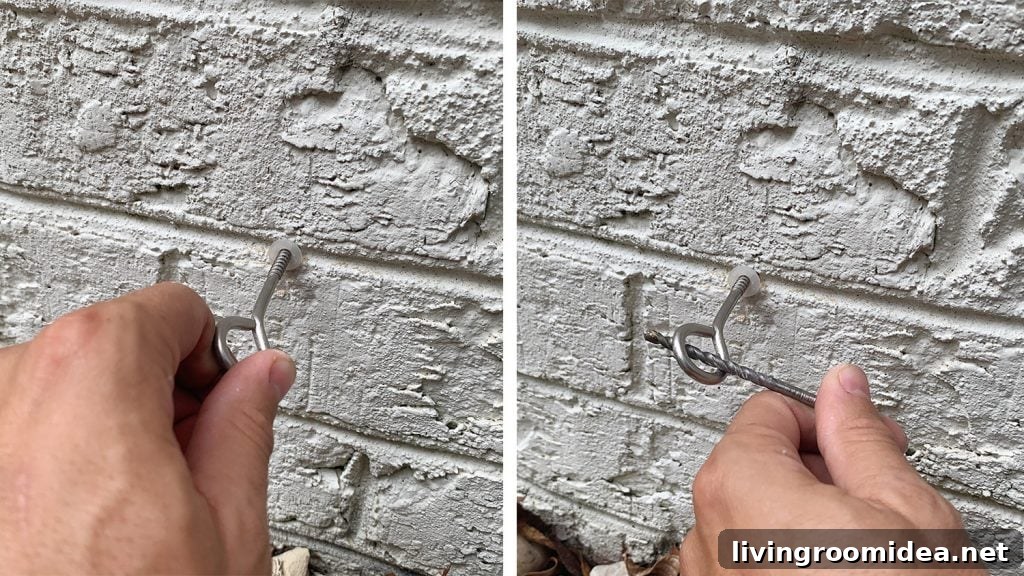
If hand-tightening becomes difficult, use a length of metal (a spare drill bit works) as a lever to twist the eye hooks the last few turns.
Step 4: Attach Your Wire
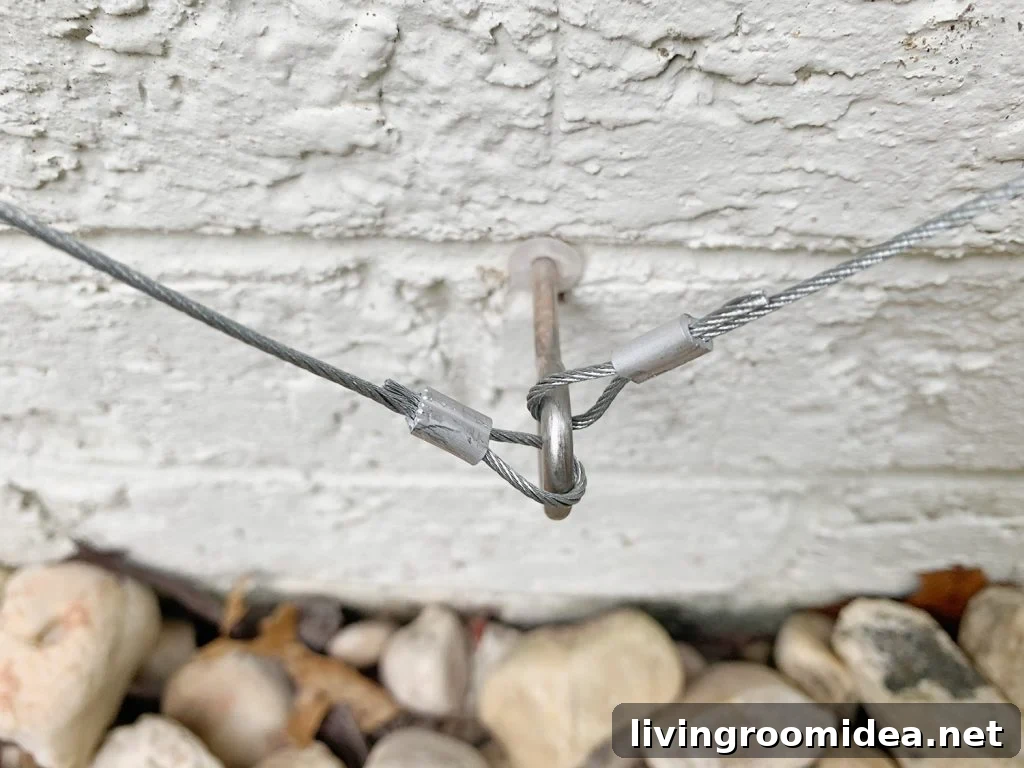
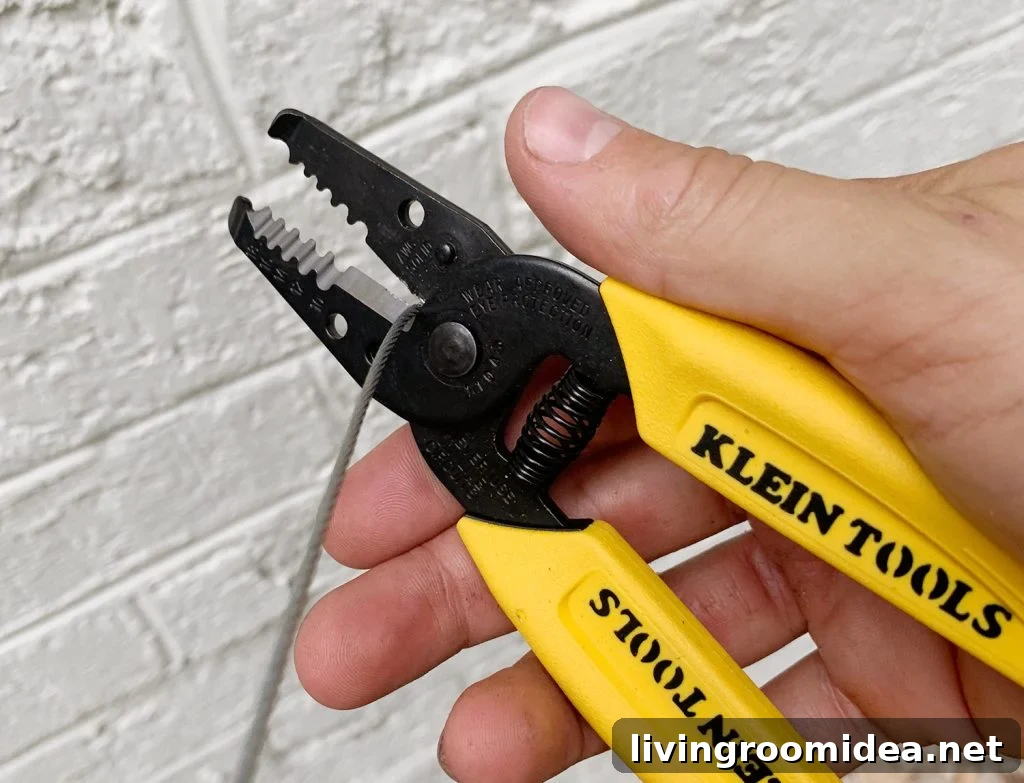
We used 1/16″ galvanized steel cable. Unwind the lengths before you start to avoid tangles. Create loops at the ends of each wire section using aluminum ferrules: thread the cable through the ferrule to form a loop, then crimp the ferrule closed with pliers or wire cutters. Loop these over the eye hooks to secure each run of wire.
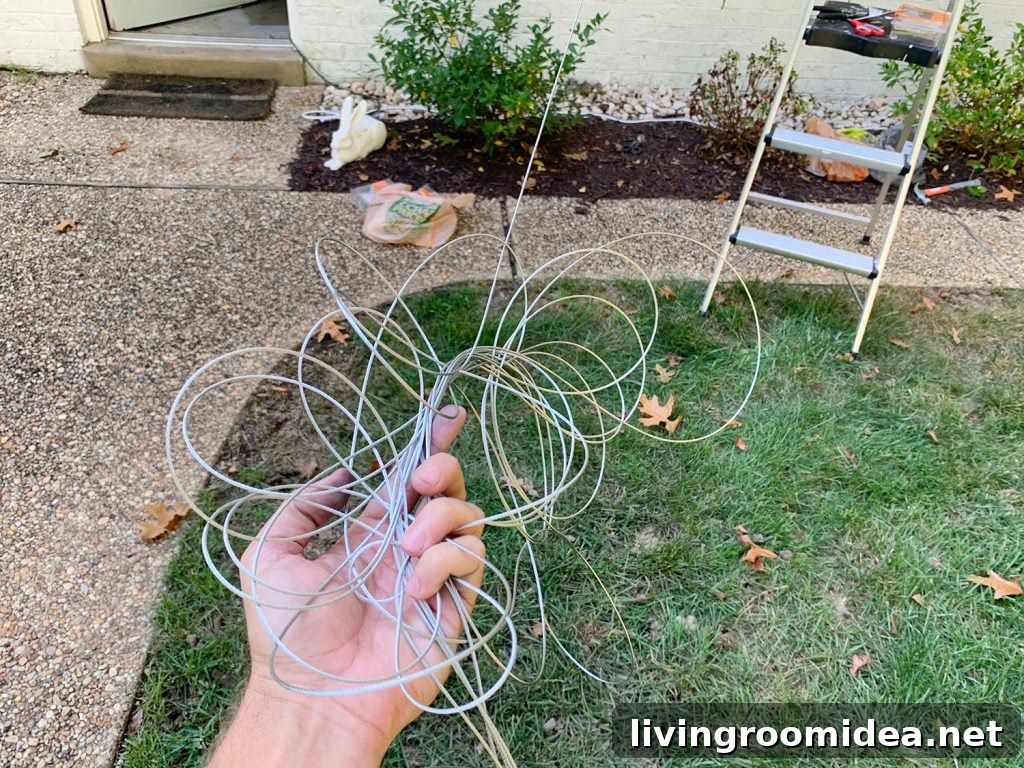
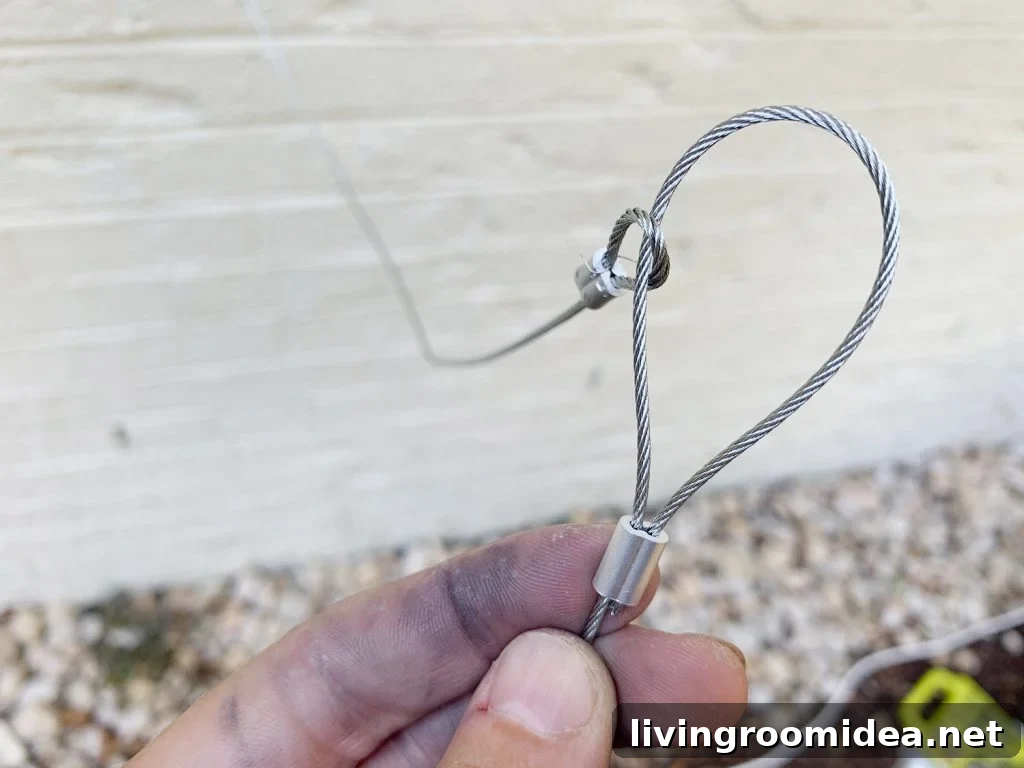
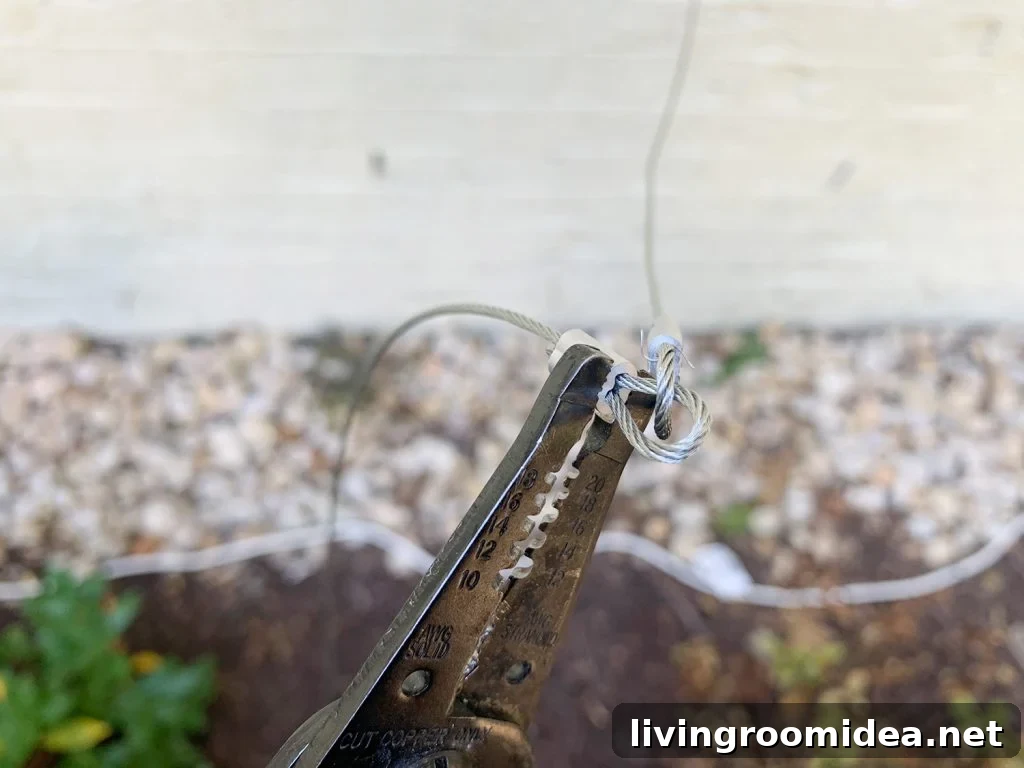
To cut cable, use quality wire cutters. Repeated cuts can dull inexpensive snips; an alternative is placing the cable on a hard surface and using a chisel and hammer to sever it cleanly (protect the surface you use).
Step 5: String The Wire
String the wire through the eye hooks to form the diamond pattern, following your marked layout. We wrapped the wire through each eye twice to keep tension while working. Some kits include turnbuckles to maintain long-term tension; we skipped them initially but may add one later if the wires loosen with time. It helps to have a second person pull the wire tight while you crimp ferrules into place.
Step 6: Add Your Vining Plant
Choose a vine suited to your climate and the surface it will climb. Our local nursery recommended clematis because it grows quickly, flowers beautifully, is less attractive to deer in our area, and is safer for brick than some adhesive vines. We planted four clematis along the bottom edge, gently unwound them from their nursery supports and trained the stems around the wire. If needed, use plant tape or soft ties to secure young shoots until they begin to hold themselves.
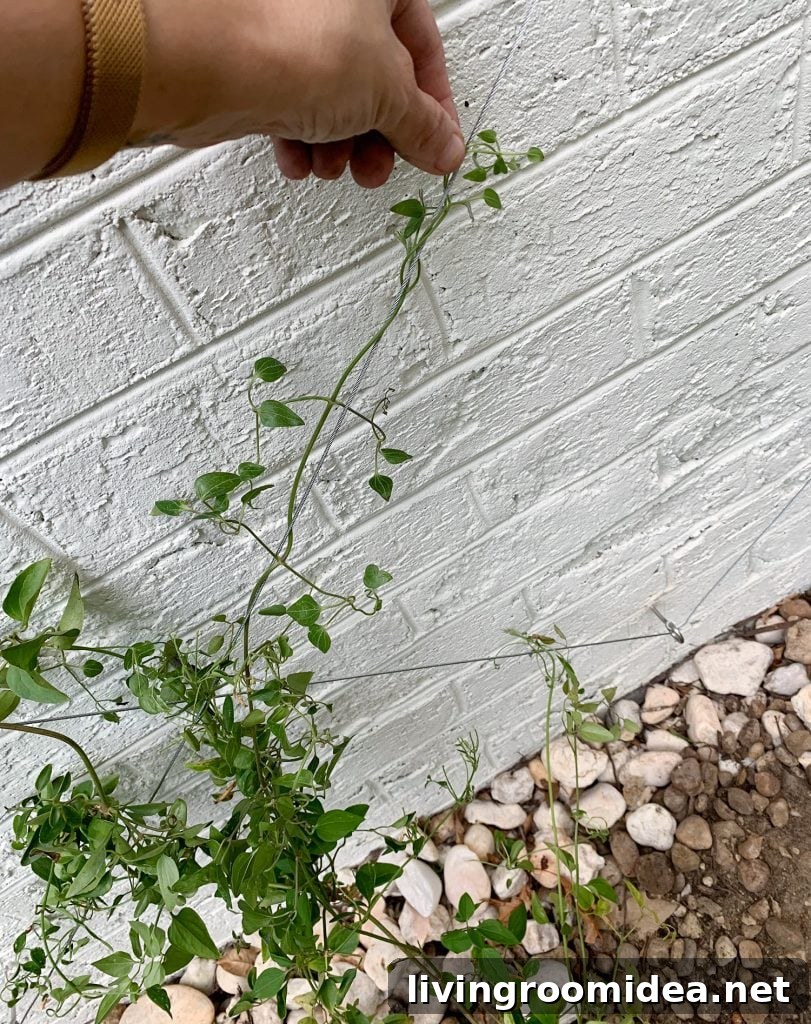
Water regularly while the plants establish and apply mulch to retain moisture between waterings.
Step 7: Watch It Grow
This step takes patience, but it’s rewarding. Within weeks our clematis was climbing the wires and filling the diamond shapes. Spring accelerated the growth and the trellis started to look like a living wall — a small, steady transformation that made a big visual difference.
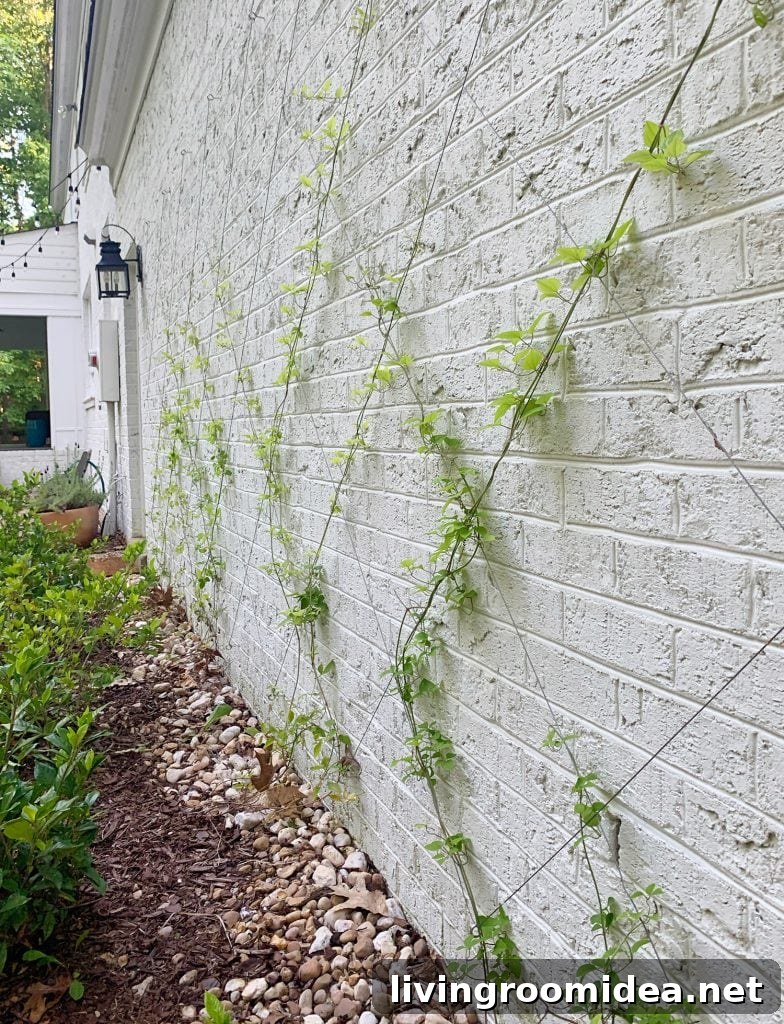
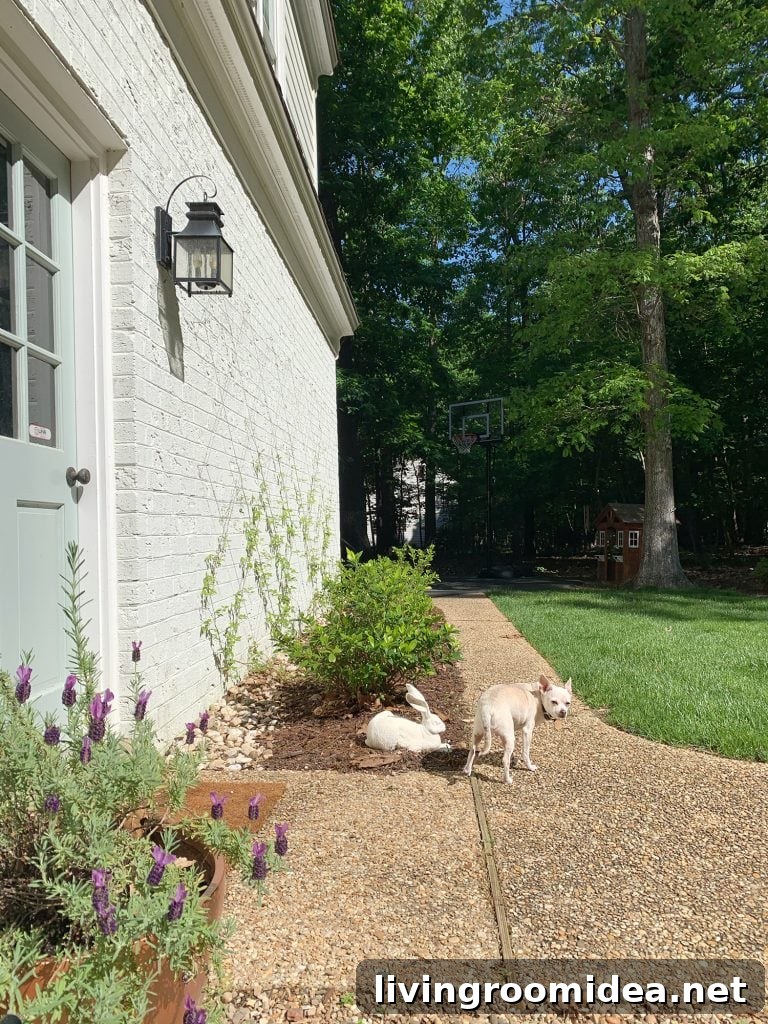
Even our little dog looked impressed with the new greenery.
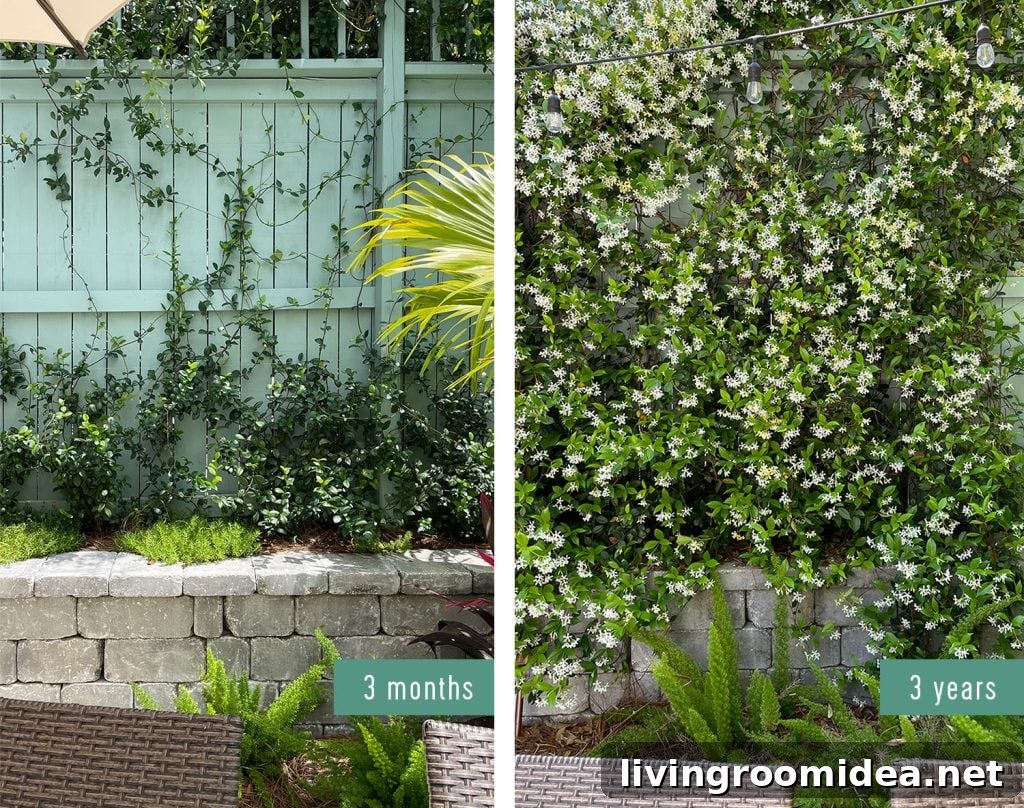
We later used similar wire techniques for horizontal supports on a pool fence to train star jasmine, which became lush and full in a few seasons.
More Trellis & Plant Projects
- Easy DIY privacy trellis ideas
- DIY outdoor plant shelf
- How to build a window plant shelf
- Tips for drip irrigation and protecting plants in a freeze
- Care guides for common houseplants like fiddle leaf figs, philodendrons, monsteras and snake plants
Building a wire trellis is an affordable way to add dimension and life to a blank wall. With careful planning, the right anchors and a fast-growing vine like clematis, you can create a long-lasting feature that improves dramatically each season.
*This project used affiliate-sourced materials in some references.