
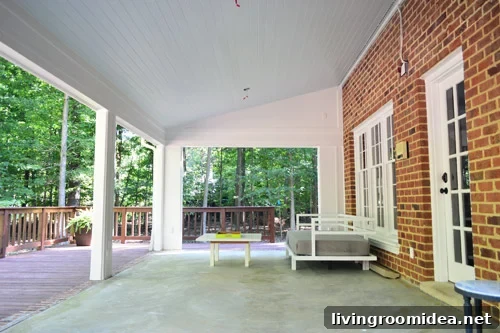
First, thank you all for the overwhelming well-wishes after our announcement yesterday. It was wonderful to share the news with you. While we tried to keep up with the 3,000+ comments, our afternoon post got delayed, so here’s the follow-up. Sherry is compiling questions from yesterday’s comments for Friday’s Q&A, and I’m sharing progress on a few more sunroom tasks we completed this week.
Three relatively simple steps took our sunroom from feeling half-finished to genuinely complete: adding trim, caulking, and painting. These tasks aren’t glamorous, but they matter—carefully installed trim, neat caulk lines, and fresh paint tidy a space in a way furniture alone can’t. I originally meant to focus on caulking and painting, but a trim misstep turned into a useful lesson worth sharing.
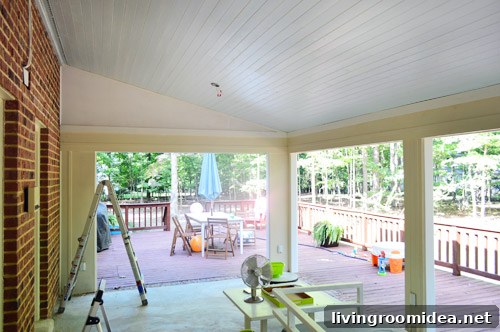
We needed trim to finish off our newly installed tongue-and-groove planked ceiling. At first I considered a quick solution: use small lattice-like trim to match the room’s existing trim and avoid the complexity of crown molding against the angled ceiling. But after installing a 1×2″ piece along the top and quarter-round against the brick, it looked weak next to the chunkier 1×4″ piece we used along the base of the triangle. The scale was off.
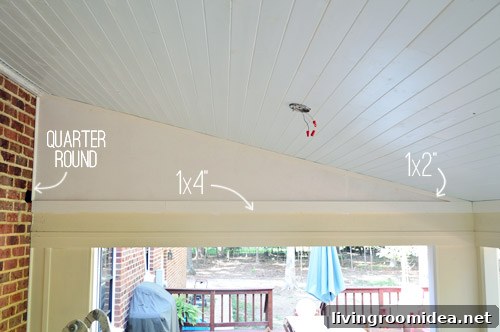
Because the thicker 1×4″ matched the visual weight of the room better, we decided to remove the smaller pieces and install 1×4″ trim all the way around each triangle so the top trim didn’t look skimpy. That meant taking down the pieces we had just installed and replacing them—an awkward extra step, but worth it for the improved look.
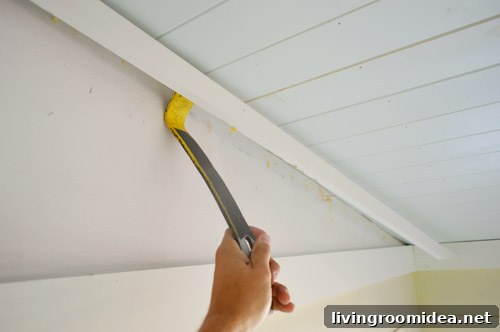
Hanging long boards high on a ladder is easier with two people: one holds the board while the other nails it in place. I also used a bit of wood glue behind each piece for extra hold. The angled cuts around the triangles were more challenging than a straight trim job, but an angle-finder made the process straightforward. We used the same angle finder we purchased with our Kreg Crown Pro to transfer the triangle angles to the boards, marked the cut lines, and trimmed them with a circular saw.
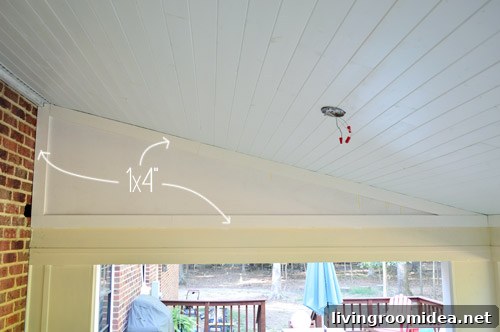
Most cuts weren’t perfect, but that’s where caulk comes in. Overall the trim phase moved quickly despite redoing two triangle sections.
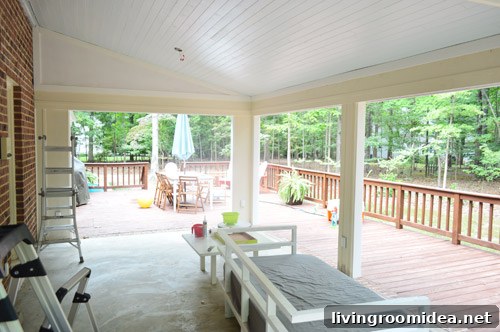
Next up was caulking. I handled this solo because outdoor caulk has strong VOCs and I didn’t want to risk exposure around the baby. We caulked all the seams around the trim and sealed dozens of nail holes in each ceiling plank. It took a couple of hours, but sealing those holes was worth it for long-term protection from the elements and temperature changes. My method: apply a small bead of caulk, press it in with a finger dipped in water (keeps caulk from sticking to skin), then smooth it with a damp sponge. The sponge made for a smooth finish and sped things up.
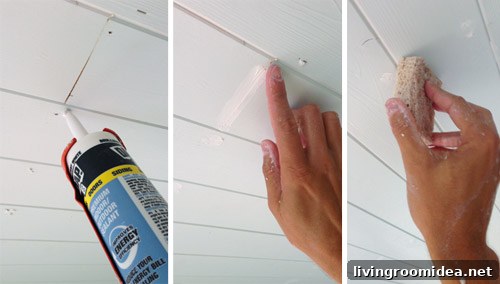
The difference from caulking is subtle in photos but noticeable in person—those little details quiet visual distractions and make the ceiling feel finished.
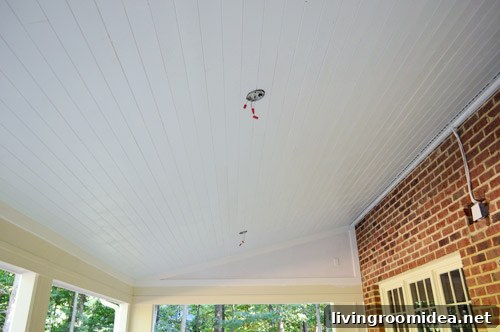
Painting followed. We stuck with Snowbound by Sherwin Williams to match our existing exterior trim. Painting seemed simple—there’s very little wall surface—but the numerous mullions on the 15-paned door and three large 15-paned windows added time. It took about four hours to apply two coats to those window and door frames. I tried a specialty brush for mullion work, but we preferred our usual short-handled brush; still, it was worth testing to see if there was a better tool.
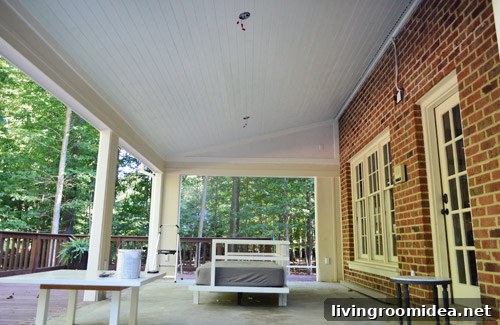
After the windows and door, the walls were mostly a roller job with a small foam roller and an angled brush for tight spots. Then I painted a final coat of the ceiling color to hide any visible caulk lines. Although white caulk blended well with the light blue ceiling, unpainted caulk can flash at certain angles, so the final coat made everything uniform. Painting the ceiling was quick since it only needed one coat and didn’t require extensive edging.
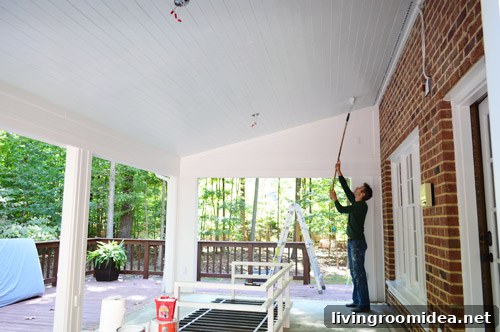
These finishing touches aren’t the most exciting steps of a renovation, but they made a big difference—transforming our “done” ceiling into a genuinely completed one. We still need to install the missing fans, but for now, here’s a look at before and after the trim, caulk, and paint.
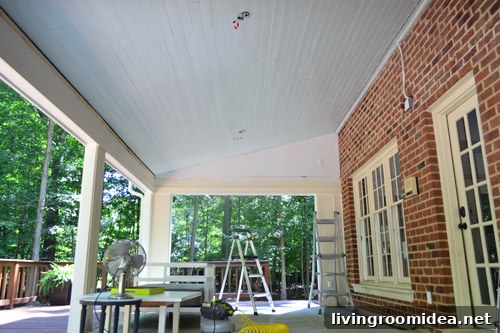
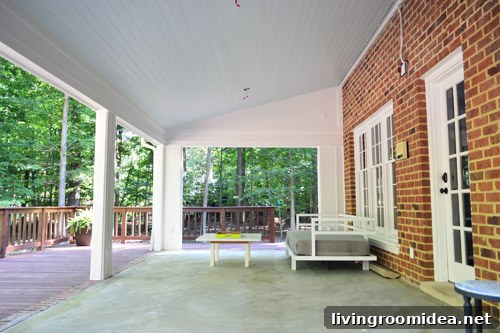
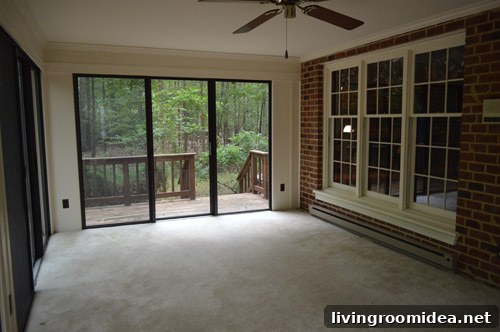
We crossed two more items off our list and are closer to the part we’re most excited about: the tile floor. We hope to start that this week and share another update soon.
Rip up the old carpetingRemove the sliding doors and tracks to open things upConvert outlets to outdoor-safe, weatherproof ones with coversAdd fresh casing to openings and caulk thoroughly to waterproof everythingDemo the old ceiling to potentially loft it (with pro advice)Remove old beams, reinforce ceiling structure, and re-route electrical for two fansPrime, paint, and install our beadboard ceilingAdd trim around the ceiling and caulk/paint itRepaint the columns & interior of the sunroom with white exterior paint (it was cream)- Hang two ceiling fans
- Tile the floors with an outdoor-safe, slip-resistant option
- Get a rug, furniture, and consider outdoor curtains and lanterns/sconces
- Build an outdoor fireplace down the line
We assumed this room wouldn’t take long because it’s not a kitchen or bathroom, but it involved removing doors, redoing a ceiling, updating electrical, painting many surfaces, and more—sunroom renovations can be just as involved as other major projects. Onward to the floor!