
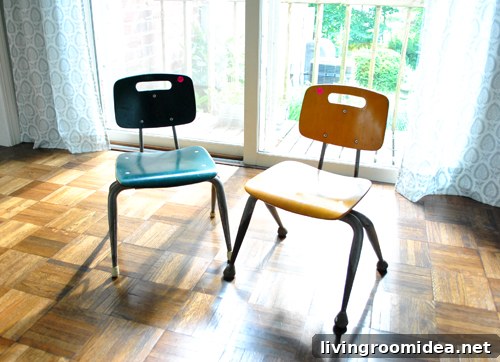
This weekend we picked up two vintage children’s chairs—each just two feet tall—at a local yard sale for $7.50 apiece. They were originally marked at $10 each, but a quick “two for $15” offer sealed the deal.
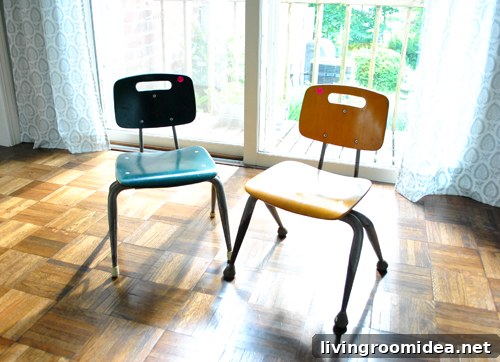
At first glance we loved their solid construction: steel legs, clean mid-century lines, and a weight that said “built to last.” When we flipped them over and saw “Brunswick” stamped on the underside, we did a bit of digging. That led to a description identifying them as original 1950s children’s chairs with a Danish-modern influence, produced by Brunswick—the same company known for bowling equipment. Apparently Brunswick was also behind machines that automated resetting bowling pins in that era. In short: these chairs are sturdy and authentic.
Even more surprising: some listings show a single chair selling for around $125.

We were pretty excited. Paying $15 for two chairs that might retail for $250 felt like a small jackpot. And there’s something charming about owning something that likely served children in the 1950s—furniture made to last, handed down through decades and now finding a new home via a yard sale.
We haven’t finalized how we’ll finish or pair them yet. We put together a small mood board to explore options: different stain colors, paint finishes, and potential table pairings. One of the chairs appears teal on some screens but is actually a murky forest green in person—definitely not our preferred hue. We also favor darker, less yellow wood tones, so a refresh is likely.
Some people avoid items from the 1950s, but we bought these to use, not to keep as mint-condition collectibles. Their design and durability make them ideal for long-term family use, possibly for multiple kids over the years. We enjoy refinishing projects—like a 1950s veneer dresser we refurbished for Clara’s nursery—so these chairs fit into that mindset. That said, our playroom currently doubles as a storage room, so the makeover may wait. Still, it’s fun to plan ahead.
Update: On closer inspection we discovered the forest green chair had been previously painted; it was originally a lighter blonde wood like the other chair. So for those who prefer original finishes, note that at least one of ours was already repainted. We’re not thrilled with the scratched blonde and the murky green, so we’ll likely stain or paint them to better match our home—though others might choose differently if these were theirs.