
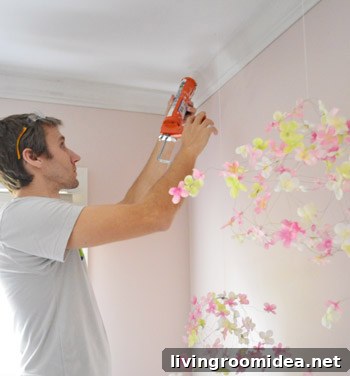
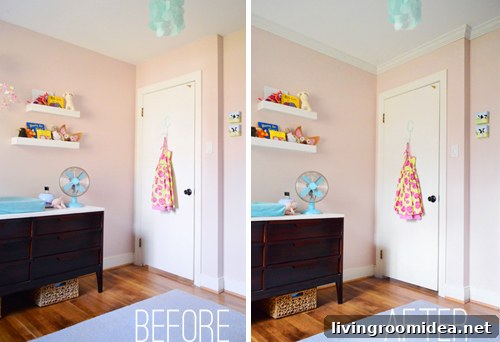
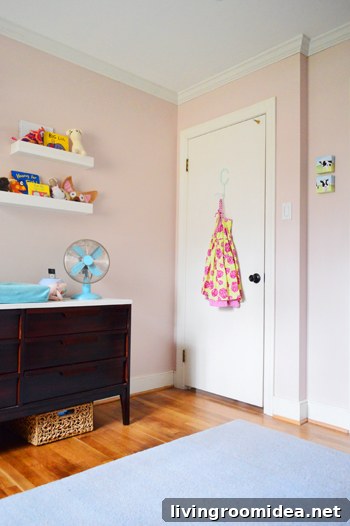
Feeling intimidated by installing crown molding yourself? We were too, but we recently installed crown molding in our daughter’s bedroom and were surprised by how affordable and straightforward the project was—materials cost less than $100. With the right tools and a bit of patience, it’s very achievable for a DIYer.
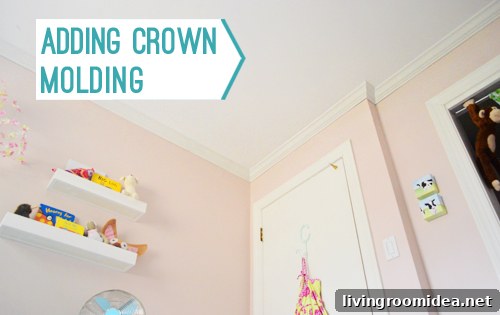
Below I’ll walk through what we did and explain how crown molding went from a dreaded job to one I’d happily tackle again.
Steps To Install Crown Molding
Here are the essential steps to installing crown molding in any room. A more detailed photo and video tutorial follows.
- Select the molding profile
- Determine the cutting angles
- Set up your cutting platform and saw
Adding Crown Molding: Video Tutorial
The photos in this post document the installation in our daughter’s room. The video shows each step in motion and is helpful if you prefer to watch the process as it happens.
Selecting Your Crown Molding
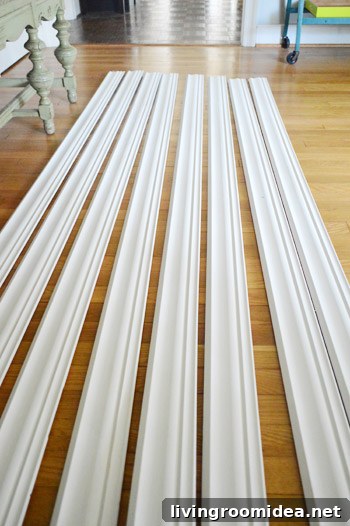
We chose a standard 3 5/8″ pre-primed crown molding from Lowe’s because it matched the molding already in other rooms and was budget-friendly. Prices and profiles vary, so pick a style that complements your trim. Each 8-foot piece we used was about $9.50; with a few extras on hand our total material cost was under $75.
Tools & Materials Needed
You can install crown molding without power tools, but a few simple tools speed the job considerably. We used a miter saw, a nail gun, and the Kreg Crown-Pro, which proved especially helpful. Other essentials include measuring tape, stud finder, caulk and paint.
- Miter saw
- Nail gun
- Kreg Crown-Pro or similar cutting platform
- Measuring tape
- Stud finder
- Pencil
- Caulk and caulk gun
- Paint and a short-handled brush
- Ladder or step stool
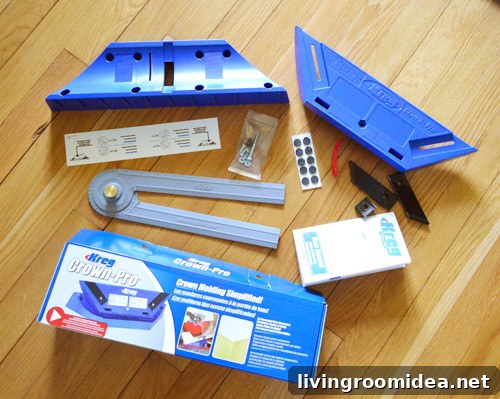
We already owned the saw and nail gun but purchased the Kreg Crown-Pro for about $30. It proved valuable and sped up the process.
How To Use A Kreg Crown Pro
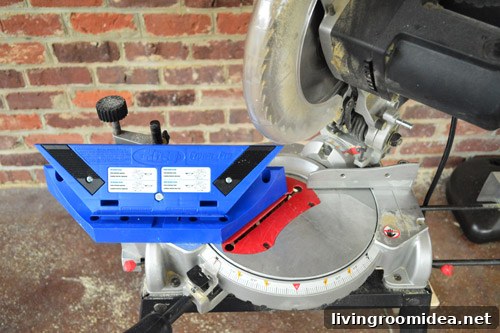
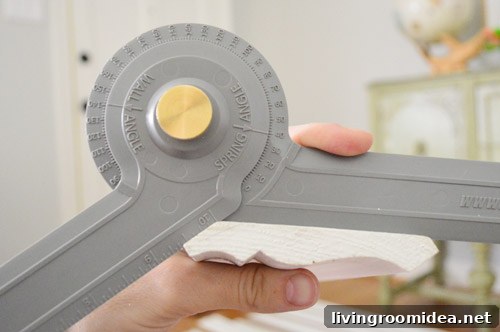
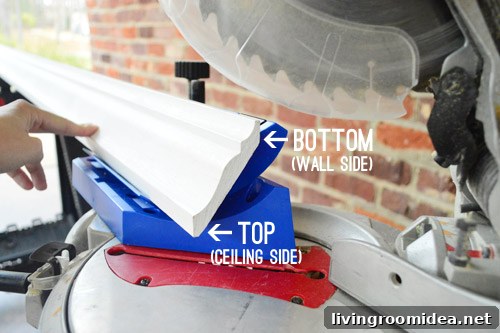
The Kreg Crown Pro creates an angled, adjustable platform that matches the way crown sits against the wall and ceiling. It includes an angle-finder tool to determine the spring angle of your molding—common values are 38°, 45°, and 52°. Once you match the spring angle on the guide, the platform helps you make consistent, accurate cuts on the miter saw.
Determine Your Wall Angles
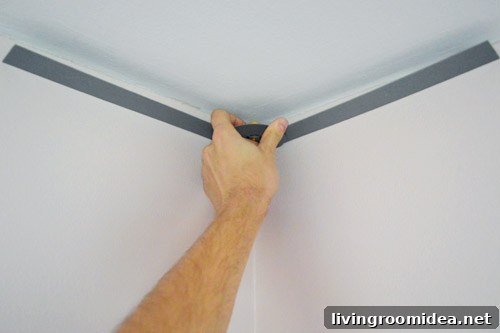
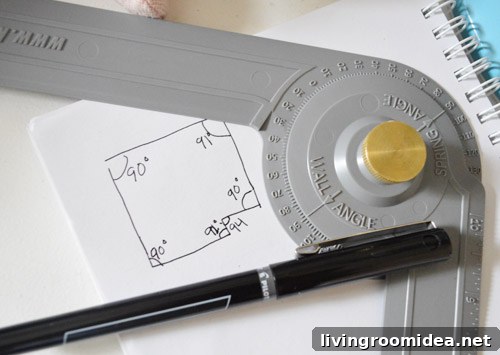
Measure and record the angles of every corner before cutting. Rooms are rarely perfect squares, and small deviations from 90° can affect your cuts. Use an angle finder to capture each corner’s angle, then translate those measurements to the saw settings. In our room most corners were close to 90°, so a 45° saw setting worked for most cuts. For unusual angles, consult the Crown Pro instructions for guidance.
Measure Your Wall Lengths
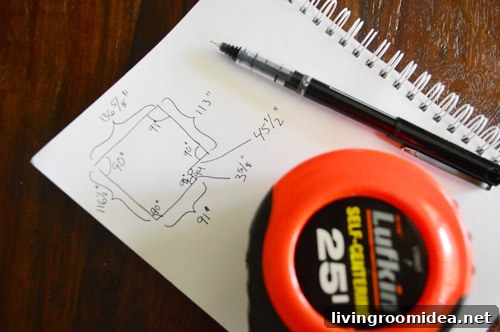
Measure each wall from corner to corner and record the lengths on a simple sketch. Working with a helper makes this faster and more accurate. If you prefer, a laser tape measure will speed things up and improve precision.
Set The Angle of Your Miter Saw
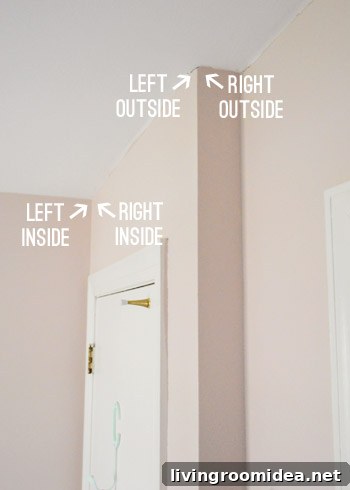
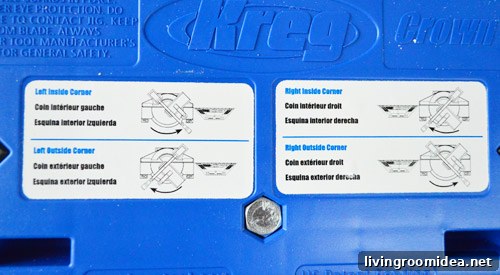
Rotate your miter saw to the left or right depending on the corner type (inside or outside) and which side the molding piece will occupy. The Crown-Pro guide shows common blade angles and where to place the molding for the four most frequent cuts. Double-check the guide and your settings before each cut to avoid mistakes.
Cutting Your Crown Molding
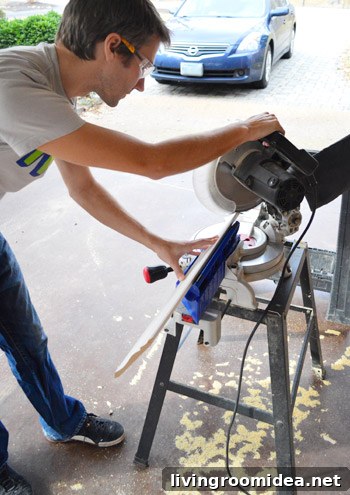
When cutting, place the crown molding upside down on the Crown-Pro so the ceiling edge is down. With measurements taken and the saw correctly set, proceed cautiously. Measure twice, cut once, and leave a bit of extra length on initial cuts so you can trim for a perfect fit.
Nail Your Crown Molding In Place
Attach molding using a brad nailer or finish nails and a hammer. We used 2″ 18-gauge brad nails, placed every 12–16 inches, and nailed into both the top and bottom edges of the molding to secure it to studs and the ceiling. A helper is useful for holding long pieces while you fasten them.
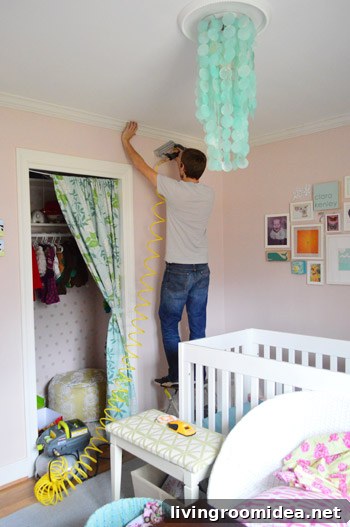
The total installation for this room took about two hours for cutting and nailing once we had everything set up.
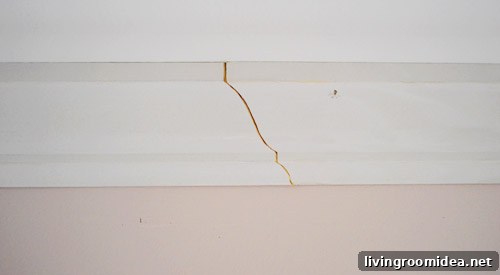
How To Make A Scarf Joint
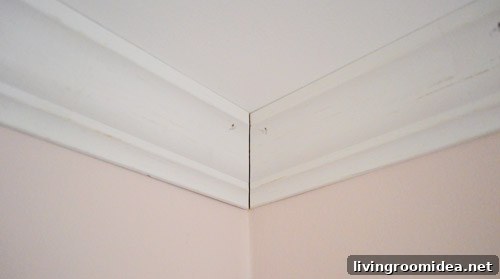
When a wall is longer than your molding lengths you’ll need a scarf joint rather than simply butting two pieces together. Overlap the ends for a smoother transition—cut one with an inside-left profile and the other with an outside-right profile (or vice versa), so they mate cleanly and create a less noticeable seam.
Finish With Caulk & Paint
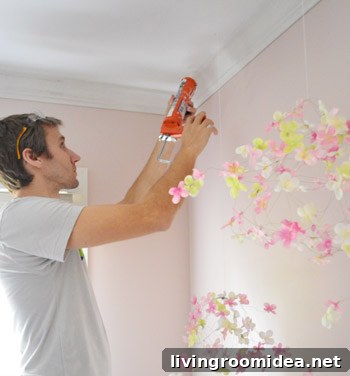
After hanging the molding, caulk seams, gaps, and nail holes with paintable caulk. Focus on:
- Where the crown meets the ceiling
- Where the crown meets the wall
- Where two molding pieces meet
- Any nail holes (or use wood putty/spackle)
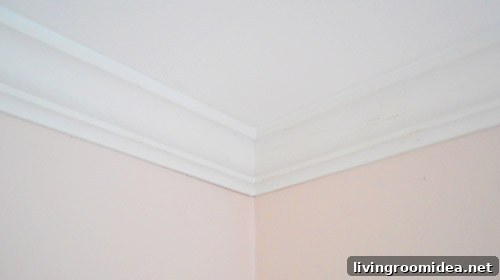
This fills small imperfections and creates a seamless surface for painting. After the caulk dries, paint the trim with semigloss or your preferred trim paint using a small angled brush for neat edges.
Total Crown Molding Project Cost
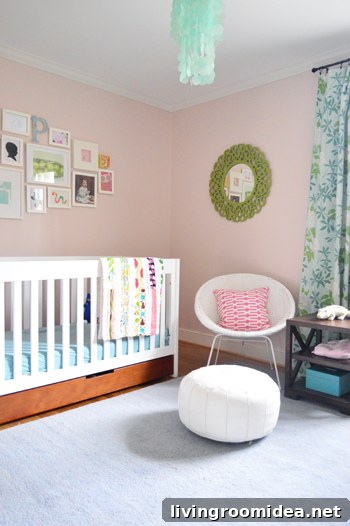
Our material cost was $67 and the Kreg Crown Pro added about $30, bringing the total to roughly $97. It’s an affordable upgrade that instantly elevates a room and adds curb appeal.
More Crown Molding Projects & How-Tos
Since completing this installation we’ve done additional crown projects, including techniques for creating a chunkier, more custom look and adding trim to cabinets and built-ins. If you’re planning multiple rooms, the experience and tools pay off quickly.
- How to install chunkier crown molding for an upgraded look
- Adding crown molding to kitchen cabinets
- Installing crown molding around built-in bookcases
Have your own tips or a crown molding success story? I’d love to hear what worked for you or any tricks you’ve learned along the way.